

How much tax are you going to have to pay on your #Bitcoin , DeFi, and crypto gains?
It actually will be different for everyone!
Tax %'s are dependent on the amount of time you held your crypto as well as your personal income tax bracket.
Let's break it down in this thread 👇
It actually will be different for everyone!
Tax %'s are dependent on the amount of time you held your crypto as well as your personal income tax bracket.
Let's break it down in this thread 👇
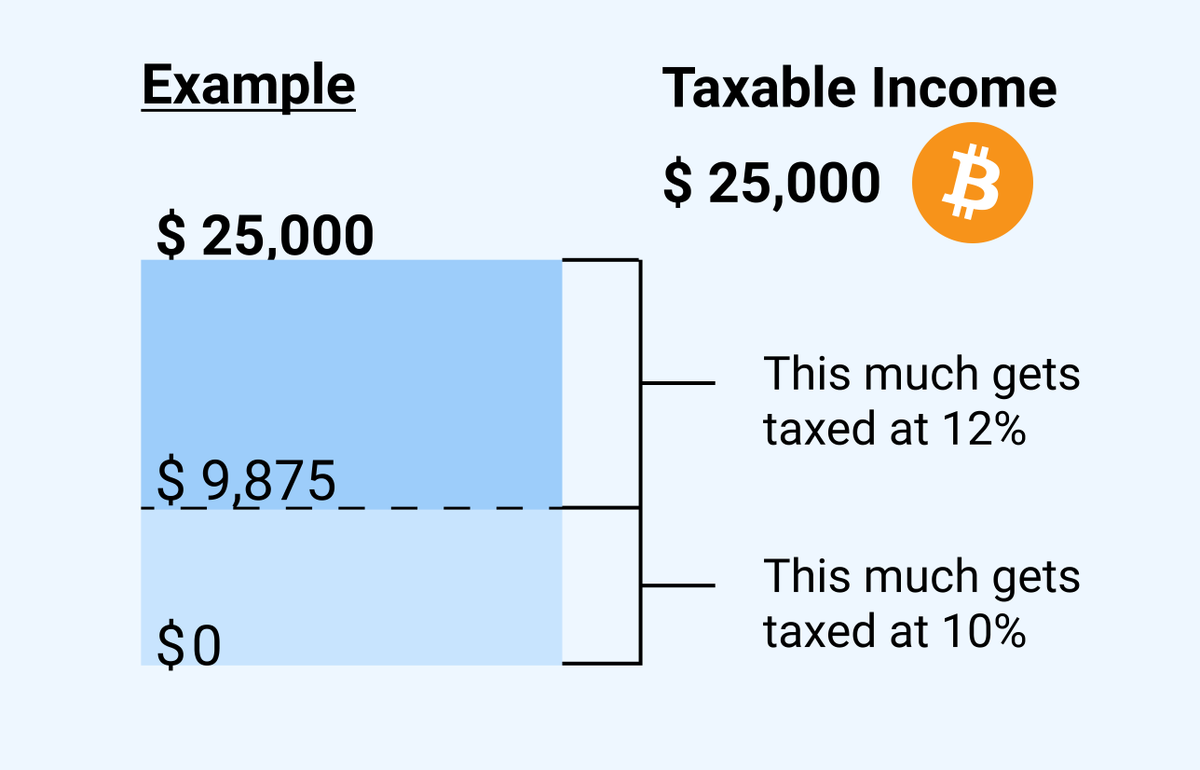
1/ Before diving in, you should have a high level understanding of how cryptocurrency-related income is taxed. We walked through that in this thread:
https://twitter.com/CryptoTraderTax/status/1356626875603447809
2/ If you generated gains from your investing activity (buying, trading, and selling crypto) this gets classified as capital gains income.
Capital gains income can either be short term or long term.
Capital gains income can either be short term or long term.
3/ Short term capital gains apply for any crypto that was held for less than 12 months.
Long term capital gains apply for any crypto that was held for greater than 12 months.
Tax %'s are lower for long term cap gains (because the gov. wants to incentivize long term investing)
Long term capital gains apply for any crypto that was held for greater than 12 months.
Tax %'s are lower for long term cap gains (because the gov. wants to incentivize long term investing)
4/ Short term cap gains don't get any special treatment.
They are simply taxed at your personal income tax bracket level (pictured below for single filing separately).
They are simply taxed at your personal income tax bracket level (pictured below for single filing separately).
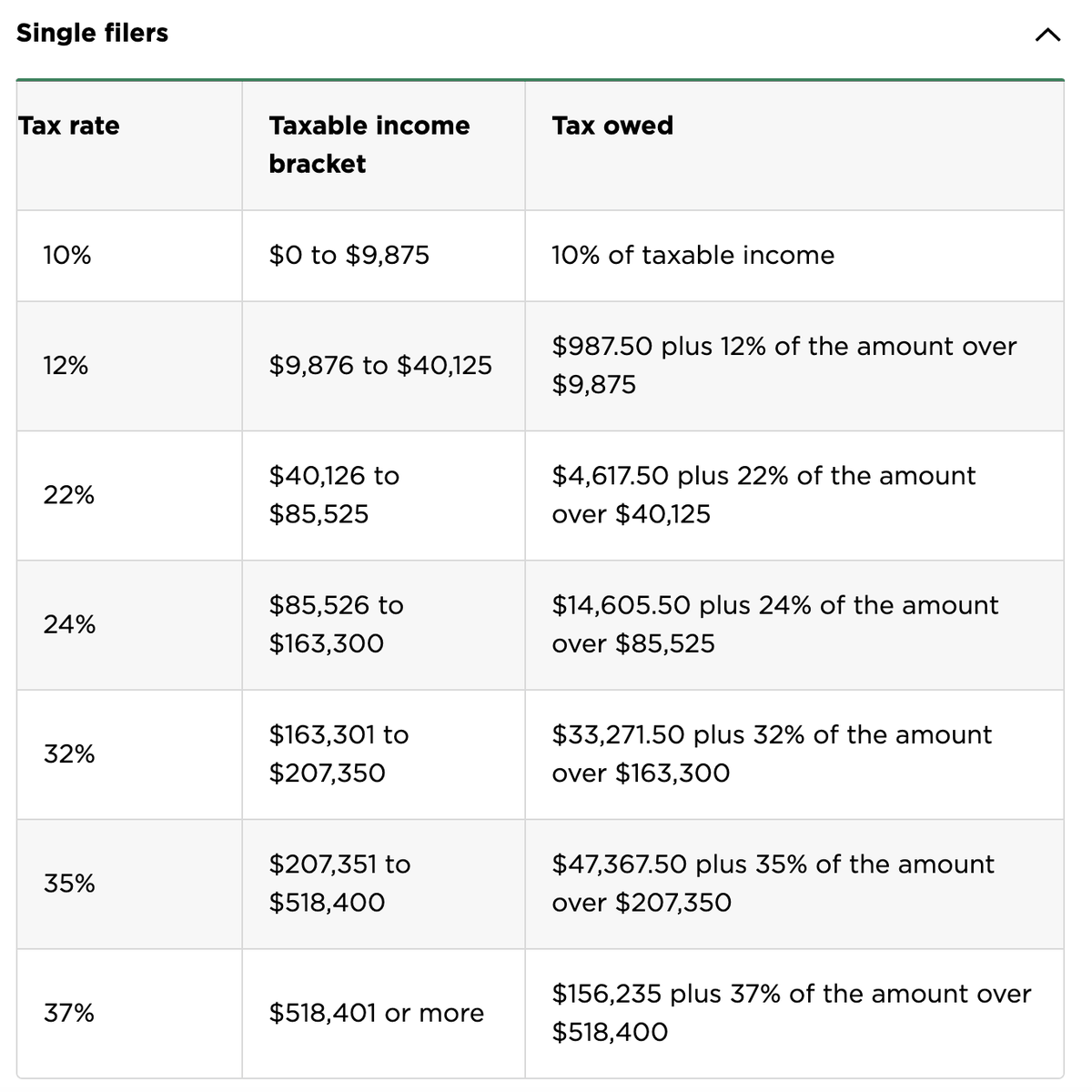
5/ So if you made $80,000 from your day job and then $20,000 in short term capital gains from flipping alt coins on Uniswap, this $20,000 gain would simply get added to your total income making your taxable income for the year $100,000.
6/ Following the personal income tax bracket chart above:
- The first $9,875 of your 100K would get taxed at 10%
- $30,250 at 12%
- $45,400 at 22%
- $14,475 at 24%
Your 100K of total income gets marginally taxed as you ascend the tax brackets.
- The first $9,875 of your 100K would get taxed at 10%
- $30,250 at 12%
- $45,400 at 22%
- $14,475 at 24%
Your 100K of total income gets marginally taxed as you ascend the tax brackets.
7/ The same logic applies for long term gains, but with more favorable tax rates.
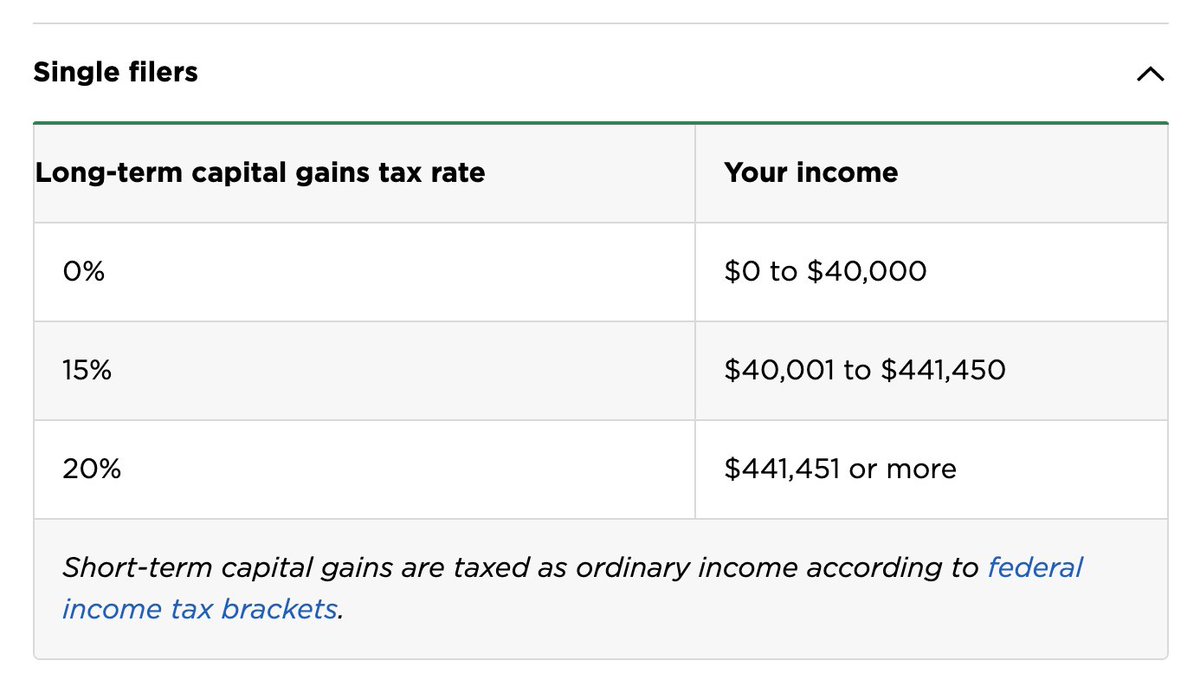
8/ Let's say you made that same $80,000 from your job, but this time your $20,000 gain was actually a long term capital gain from hodling #Bitcoin.
9/ In this case, your first $80,000 would still get taxed at your personal income tax bracket as seen earlier, but your next $20,000 of long term capital gains income would only be taxed at 15%! (as opposed to the 22%-24% seen w/ a short term gain)
10/ For big whales, understanding and planning for this nuance between short term vs. long term capital gains can save a TREMENDOUS amount of money in taxes.
We've seen certain investors save tens of thousands in taxes.
We've seen certain investors save tens of thousands in taxes.
11/ So what's the best way to plan for and minimize your tax liability when considering short term vs. long term gains?
EASY! Use @CryptoTraderTax
EASY! Use @CryptoTraderTax
12/ @CryptoTraderTax is cryptocurrency tax software that connects to your exchanges and crypto platforms to automate ALL of your crypto tax reporting.
You can use the platform to optimize your short and long-term tax positions from your crypto trading.
Sign up for free!
You can use the platform to optimize your short and long-term tax positions from your crypto trading.
Sign up for free!
13/ That's all for now! Follow for future crypto tax savings tips!
And if you're looking for more crypto tax info, we break down EVERYTHING you need to know in our Ultimate Crypto Tax Guide:
cryptotrader.tax/blog/the-trade…
And if you're looking for more crypto tax info, we break down EVERYTHING you need to know in our Ultimate Crypto Tax Guide:
cryptotrader.tax/blog/the-trade…
• • •
Missing some Tweet in this thread? You can try to
force a refresh


