
Along with police, well-connected and well-intentioned people arrived at the Lindbergh estate. Military colonels offered their aid, although only one had law enforcement expertise—Herbert Norman Schwarzkopf, superintendent of the New Jersey State Police. The other colonels were 

Henry Skillman Breckinridge, a Wall Street lawyer; and William J. Donovan, a hero of the First World War who would later head the Office of Strategic Services (OSS), the forerunner of the CIA. Lindbergh and these men speculated that the kidnapping was perpetrated by organized
crime figures. They thought that the letter was written by someone who spoke German as his native language. At this time, Charles Lindbergh used his influence to control the direction of the investigation.
The deepest banking crisis of the Great Depression was touched off by the pending failure of two Detroit banks in early 1933. For several weeks, by law, every bank in the entire state of Michigan was closed for business. It was from these beginnings that a national banking
crisis engulfed the final days of the Hoover Administration. What transpired to bring on such a calamitous event? How did individuals cope in that interval without a banking system?
In April 1932 he arrived in Detroit with Frida Kahlo and both of them produced much work there over the course of their stay. Rivera was commissioned to produce murals of Ford's factory for the Detroit Institute of Art. The unveiling of these murals enraged some Detroiters and

inspired others. The two mixed uneasily amongst the high society of Detroit. Kahlo especially disliked the city ("Mr. Ford, are you Jewish?" she asked at a social function), but when the two left for New York in 1933, they possessed a check for the princely sum of $25,000. The
commissioner of the murals? Edsel Ford. By February 1933, First National and Guardian National were on the verge of death. Through their official channels, they reached out for a loan from the Reconstruction Finance Corporation, a newly created initiative by Herbert Hoover to
provide financing and support to struggling American businesses. The Secretary of Commerce, Roy D. Chapin (himself an auto man from Michigan), was dispatched to Detroit to ascertain the situation and to make a decision.
Ford had already done this on previous occasions, and his own company was coming off of the huge financial losses of 1932 mentioned above. He explained that he was unable to provide further assistance, even after much pleading and negotiating from Mr. Chapin and from banking
leaders. He also asserted that should the banks continue to waver, he would be forced to withdraw Ford's assets from them. By February 13 it was clear that Mr. Ford's mind could not be changed. Furthermore there was an imminent threat of Ford triggering the collapse of these two
banks himself (to save his own assets) upon resumption of business the next day, after a long weekend.
Thus on February 14 at 1:32 in the morning a general banking holiday was declared in Michigan by Governor William Comstock. The prompt action was in direct response to the
Thus on February 14 at 1:32 in the morning a general banking holiday was declared in Michigan by Governor William Comstock. The prompt action was in direct response to the
threats of Henry Ford. Across the state of Michigan people woke up on that Tuesday morning to the knowledge that they would be able to withdraw no cash from their accounts for the next eight days.
On a national level, other papers implored their readers not to take the case of Michigan too seriously. The New York Herald Tribune stated, "... it is well to bear in mind that the banking situation in Detroit is by no means typical of that of the United States as a whole." and
continued with a litany of how Detroit's troubles were especially severe.
Unfortunately these words proved to be far from prophetic. By the time that Roosevelt was inaugurated, 37 states had suspended their banking operations. In each case there was a growing sense of dread that
Unfortunately these words proved to be far from prophetic. By the time that Roosevelt was inaugurated, 37 states had suspended their banking operations. In each case there was a growing sense of dread that
the national system was dying -- that the economic calamity of 1929-1933 was but a precursor to even darker times ahead. In many towns, the economy functioned on "scrip" or outright barter.
In any case, the two men and their confidants dined in icy silence on March 3, 1933 as the country lie in shambles. Two days later, Roosevelt declared a federal banking holiday. Within a week he had pushed the drastic Emergency Banking Act through Congress to provide some

semblance of stability. His first Fireside Chat was dedicated to explaining these measures, and most Americans approved heartily.
In this long interval, the banking system in Detroit was reorganized. The Reconstruction Finance Corporation worked with Alfred Sloan, president of
In this long interval, the banking system in Detroit was reorganized. The Reconstruction Finance Corporation worked with Alfred Sloan, president of
General Motors, to create the National Bank of Detroit. This bank received federal funding and assumed the assets of the two failing banks -- First National Bank of Detroit and the Guardian National Bank of Commerce. Sloan committed a substantial amount of G.M. capital to the
new institution while Henry Ford continued to remain on the sidelines. This perhaps ensured that the phrase, "What's good for Ford is good for America." would never enter the national lexicon.
NBD was founded in 1933 in Detroit in the midst of widespread bank failures during the Great Depression. Spurred by the Reconstruction Finance Corporation (RFC) to help stabilize the nation's banking system, NBD's shares were initially equally owned by General Motors (GM) and

by the U.S. government under the RFC. The bank opened for business on March 24, 1933.[1][2][3] Charles T. Fisher Jr., of the automobile body manufacturing family became a Director and the President in 1938, serving until his death in 1958. By 1945, GM had divested its ownership
of bank stock,[4][5] and by 1947 RFC had ended its involvement in the bank as well.
The merger was finalized on December 1, 1995 with the formation of the First Chicago NBD Corporation.[74] On that date, stock for the new company began trading on the New York Stock Exchange under the symbol "FCN".
In February 1996, First Chicago NBD sold all of their NBD offices in Ohio to Fifth Third Bancorp.
On June 17, 1858, the Bank of the Ohio Valley opened in Cincinnati. On June 23, 1863, the Third National Bank was organized. On April 29, 1871, Third National Bank came into
On June 17, 1858, the Bank of the Ohio Valley opened in Cincinnati. On June 23, 1863, the Third National Bank was organized. On April 29, 1871, Third National Bank came into

possession of Bank of the Ohio Valley
In 1888, Queen City National Bank changed its name to Fifth National Bank.
In 1888, Queen City National Bank changed its name to Fifth National Bank.
On June 1, 1908, Third National Bank and Fifth National Bank merged to become the Fifth-Third National Bank of Cincinnati; the hyphen was later dropped. The merger took place when prohibitionist ideas were gaining popularity, and it is legend that "Fifth Third" was better than
"Third Fifth", which could have been construed as a reference to three fifths of alcohol.[6] The name went through several changes until March 24, 1969, when it was changed to Fifth Third Bank.
In November 2008, the United States Department of the Treasury invested $3.4 billion in the company as part of the Troubled Asset Relief Program and in February 2011, the company repurchased the investment from the Treasury.
The firm, founded in 1941 by Wallace Harrison (1895–1981),[1] J. André Fouilhoux (1879–1945),[2] Max Abramovitz (1908–2004),[3] was best known for modernist corporate towers on the East coast and Midwestern cities. Most are straightforward. One notable stylistic innovation was

the use of stamped metal panels on the facade, first at the 1953 Alcoa Building in Pittsburgh, and repeated at the 1953 Republic Center Tower I in Dallas and the 1956 former Socony–Mobil Building at 150 East 42nd Street in New York City.[
Abramovitz was the son of Romanian Jewish immigrant parents. He graduated in 1929 from the University of Illinois at Urbana-Champaign School of Architecture. While a Junior at Illinois, Abramovitz was a member of the Tau Epsilon Phi fraternity.[1] He later received an M.S.


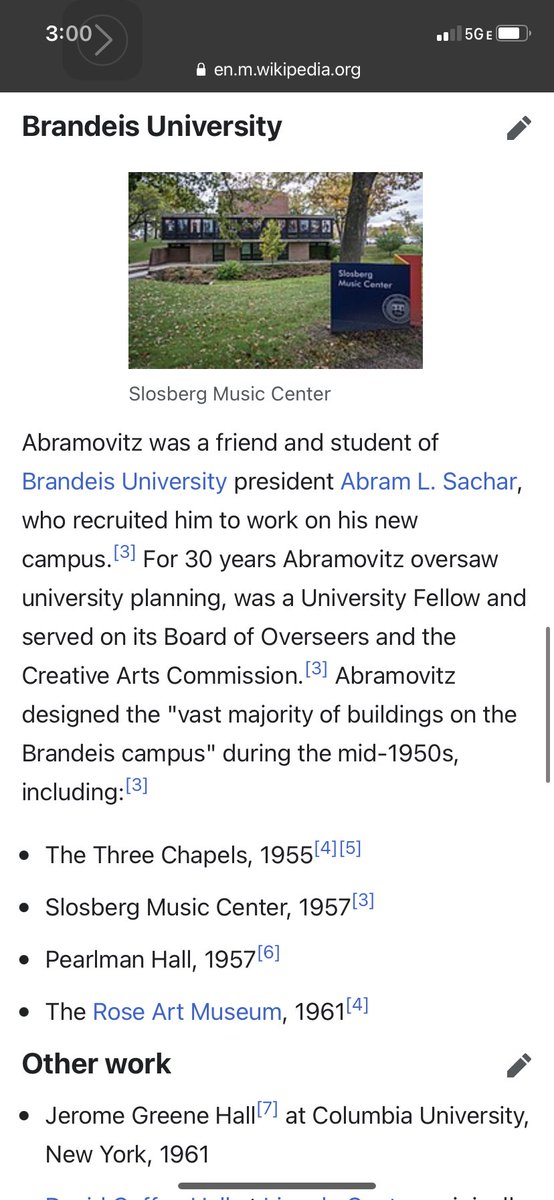
from Columbia University's architecture school in 1931.
Harrison started his professional career with the firm of Corbett, Harrison & MacMurray, participating in the construction of Rockefeller Center. He is best known for executing large public projects in New York City
Harrison started his professional career with the firm of Corbett, Harrison & MacMurray, participating in the construction of Rockefeller Center. He is best known for executing large public projects in New York City

and upstate, many of them a result of his long and fruitful personal relationship with Nelson Rockefeller, for whom he served as an adviser.[
Among Harrison's most noted projects are the Metropolitan Opera House at the Lincoln Center for the Performing Arts and the Empire State Plaza in Albany; he also served as Director of Planning on the United Nations complex, which was built on slaughter-house property contributed
by the Rockefeller family (the Rockefellers owned the Tudor City Apartments across First Avenue).
Jacques André Fouilhoux (September 27, 1879 – June 20, 1945) was a French-born architect active in the United States from 1904 to 1945.[1] He is most well known for his work on Tribune Tower (Chicago) and Rockefeller Center, early skyscrapers such as the Daily News Building and

RCA Building, and the 1939 World's Fair in New York, for which he designed the central Trylon and Perisphere.
Jacques André Fouilhoux, better known as J.A. Fouilhoux throughout his career in the United States, was born to a Catholic family in Paris, France on September 27,
Jacques André Fouilhoux, better known as J.A. Fouilhoux throughout his career in the United States, was born to a Catholic family in Paris, France on September 27,
1879. He attended the Lycée Janson-de-Sailly in Paris, and went on to earn B.A., B.S. and B.Ph. degrees from the University of Paris (Sorbonne).[7] He was then accepted into the Ecole Centrale des Arts et Manufactures, where he studied architecture as well as
civil and mechanical engineering.[4] Following his graduation, he moved to the United States in 1904 and began his architectural career as a draftsman for Albert Kahn in Detroit.[10] In 1908, he and Jean Butler Clark of Baltimore married in New York.

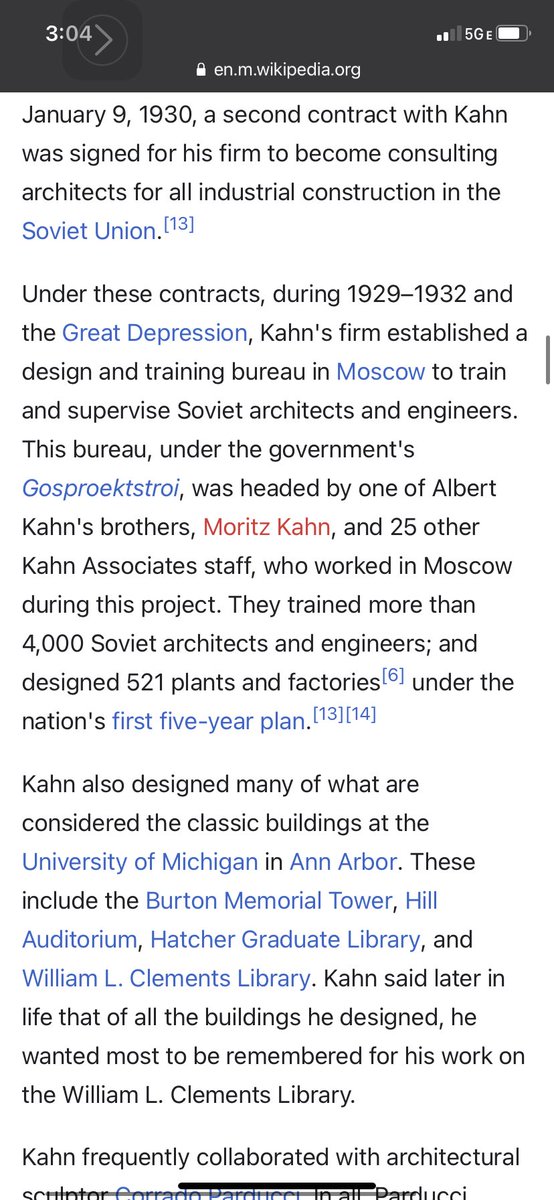
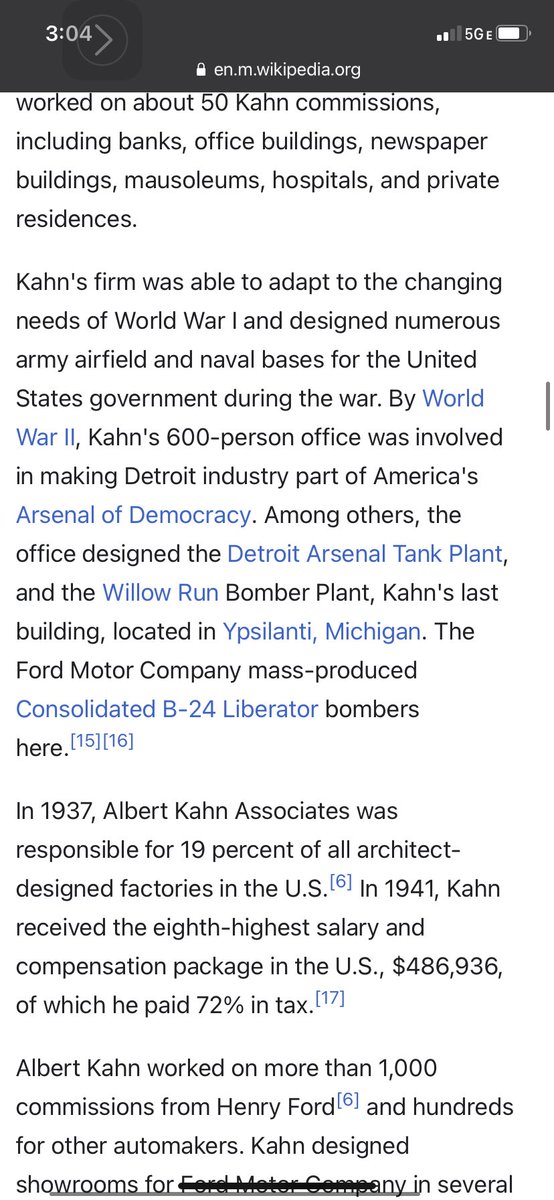

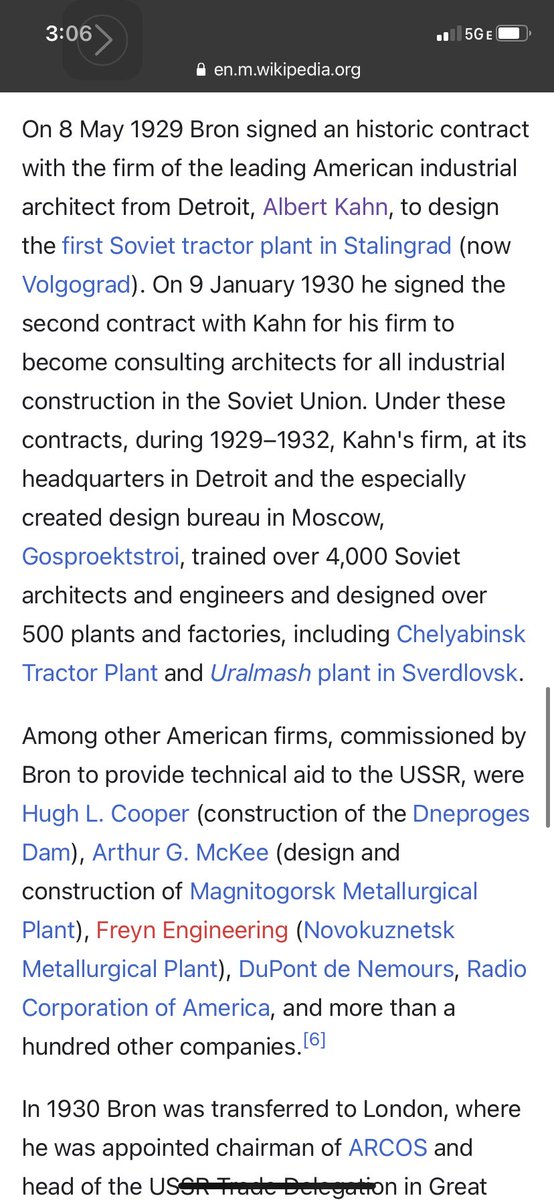
Under these contracts, during 1929–1932, Kahn's firm, at its headquarters in Detroit and the especially created design bureau in Moscow, Gosproektstroi, trained over 4,000 Soviet architects and engineers and designed over 500 plants and factories, including Chelyabinsk Tractor

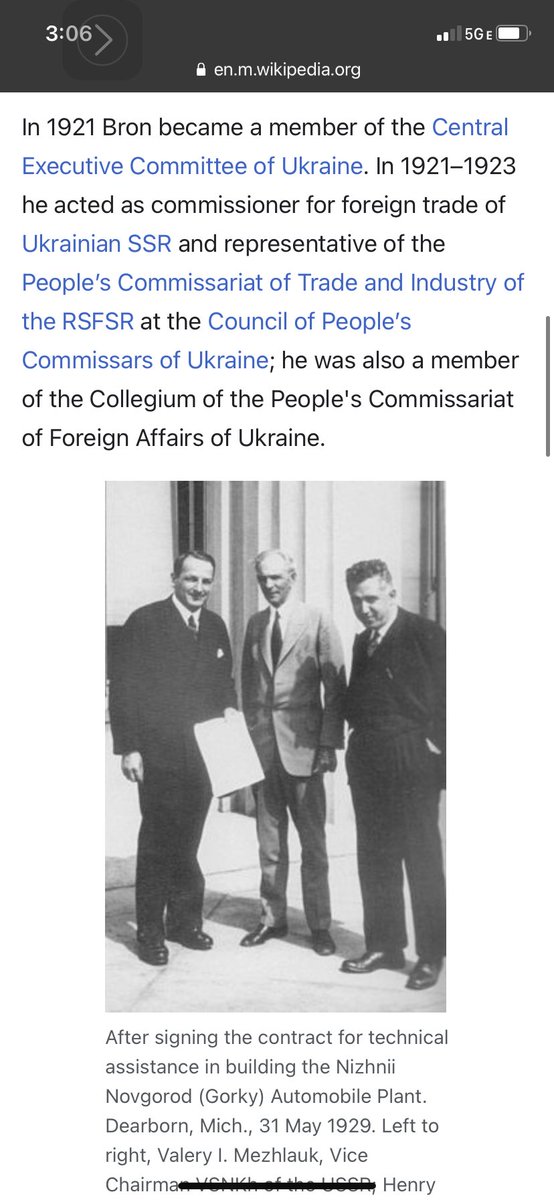
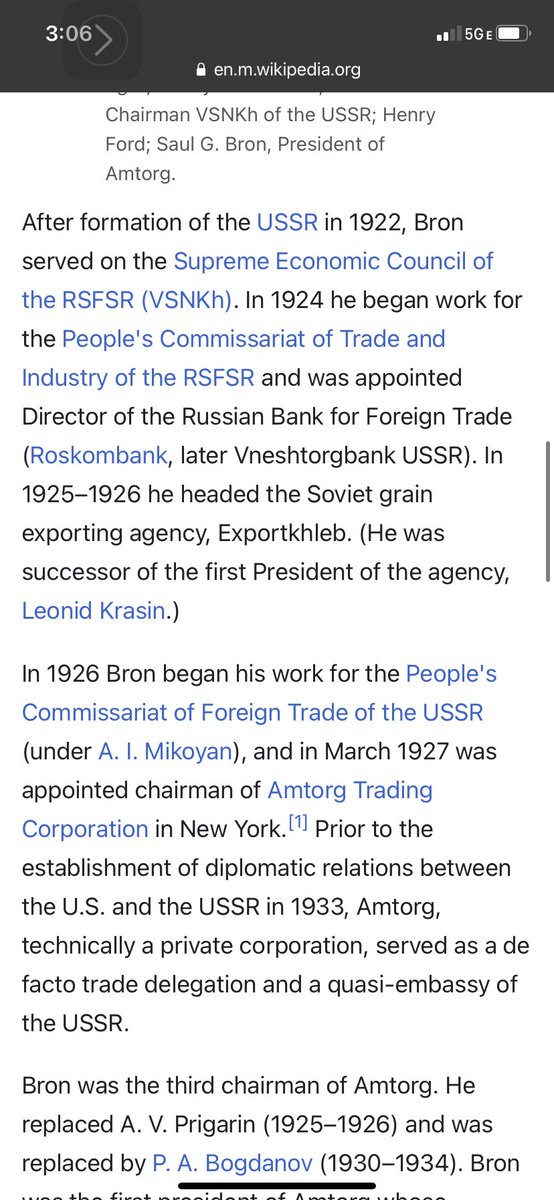
Plant and Uralmash plant in Sverdlovsk.



• • •
Missing some Tweet in this thread? You can try to
force a refresh


