Thread. The Mingana-Lewis Palimpsest

1/6. In 1895, Mrs Lewis purchased a rare manuscript in Suez. It was a palimpsest: a Christian Arabic text from the 9th or 10th CE, written on recycled parchment leaves with remnants of several different texts. Among them, old Qur’ān leaves… Image
2/6. In 1914, she and Mingana published a short study with the very attractive title: "Leaves from Three Ancient Qurans, possibly pre-‘Othmanic". But the 1st World War started, and the manuscript – which was then exhibited in Leipzig - disappeared until 1936… Image
3/6. It entered the collection of Cambridge University, and is still there today (MS Or.1287). Coincidentally, in 1936, Mingana was in Leiden and purchased half a sheet of the same manuscript for the Birmingham collection. And 2 other fragments were in Beuron’s Abbaye in Germany.
4/6. The manuscript gathers different texts, mainly in Syriac, but also Qur’ānic folios (21 ff + 3 half ff.), and, at a less extent, Greek and Arabic legal texts… Image
5/6. The Qur’ān leaves are from 2 distinct copies. They share several features: both are vertical (one smaller than the other), and are written in a script style quite similar: a variety of professional Hijazi, with tendencies to Umayyad style (O.I), perhaps 2nd half of 1st H.(?) Image
6/6. Restored between 2009 and 2011, the ms was entirely digitized under UV and IR lights. Dr. Alba Fedeli has done a stunning work for reconstructing the scriptio inferior! See here the pictures and bibliography (mostly A. Fedeli and A. George):

cudl.lib.cam.ac.uk/collections/mi… Image

• • •

Missing some Tweet in this thread? You can try to force a refresh
 

Keep Current with Dr. Éléonore Cellard

Dr. Éléonore Cellard Profile picture

Stay in touch and get notified when new unrolls are available from this author!

Read all threads

This Thread may be Removed Anytime!

PDF

Twitter may remove this content at anytime! Save it as PDF for later use!

Try unrolling a thread yourself!

how to unroll video
  1. Follow @ThreadReaderApp to mention us!

  2. From a Twitter thread mention us with a keyword "unroll"
@threadreaderapp unroll

Practice here first or read more on our help page!

More from @CellardEleonore

7 Jan
My research project the Qur’ān attributed to the caliph ‘Uthmān ended last month. I think I’ve accomplished a lot during this last year, in accessing all of the dispersed fragments of this manuscript. But so much remains to be discovered about its fascinating history… Image
I examinated a total of 942 leaves, dispersed in Paris, Gotha, Cairo, Istanbul and Detroit.. That's many materials for me, used to work on fragments of dozen of folios! And actually, Codex Amrensis 22 is not one but two manuscripts, mixed together at one moment of their history! ImageImage
Read 7 tweets
28 Sep 20
1/5. The Codex Topkapı Sarayı Medine nr.1 could be the Qur’ān attributed to Caliph ‘Uthmān, once kept in the Mosque of Medina, next to the Tomb of the Prophet. This and other Qur’āns and objects were removed by the Ottoman troups during the 1st World War and sent to Istanbul.
2/5. This issue had a great impact. In 1918, the King of Hijaz asked for its restitution. The Qur’ān of ‘Uthmān even appeared in the Treaty of Versailles: France and Great Britain suspected Germany to have it and asked for its restitution. But Germany denied this claim. Image
3/5. In 1920, the Foreign Office concluded “The Turks must have it…[they are maybe] unable to recover it", and the case was closed. In 1920-30’s, the German scholar, G. Bergsträsser, visited the collection of Topkapi and photographed 2 mss with shelfmark Kodex Medina 1a and 1b. Image
Read 5 tweets
3 Jul 20
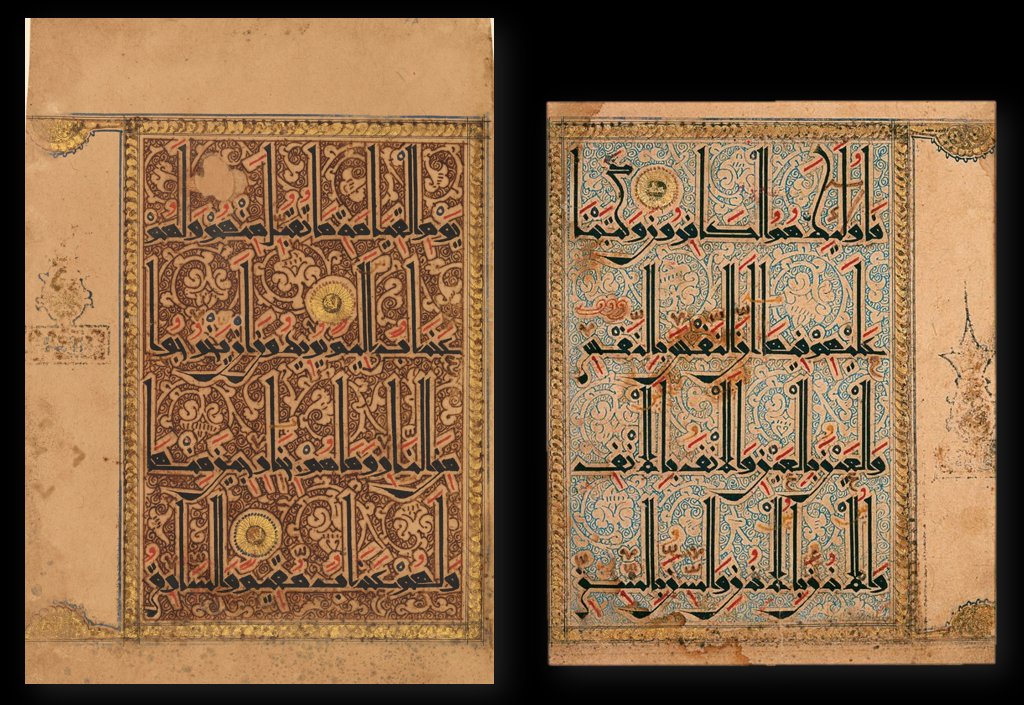
One of the most beautiful decorative forms of Eastern Kufic is the so-called Qarmathian Qur’ān, a huge multi-volume manuscript on paper, probably written in the 12th CE, in eastern Iran. The leaves (around 2200 originally) are today dispersed in many collections and libraries. Image
Safadi gave 2 explanations for the origin of the term Qarmathian : 1/. Linguistic derivation from the Arabic word qarmaṭa meaning to make the letter finer and to write the ligatures closer together. 2/. Possible relationship to the Qarmathians (al-Qarāmiṭa), the Shīa movement.
The illustrations (from right to left) are from the Aga Khan Collection (AKM256) and Freer Gallery of Art and Arthur M. Sackler Gallery (S1986.65a-b)
Read 4 tweets
20 May 20
Thread. Parchment, papyrus, paper : which materials for ancient Qur’ān manuscripts?

1/11. The writing material is the 1st basic component of a codex.. And a very significant feature for shedding light on the history of the Qur’ān but also on the history of writing technology.
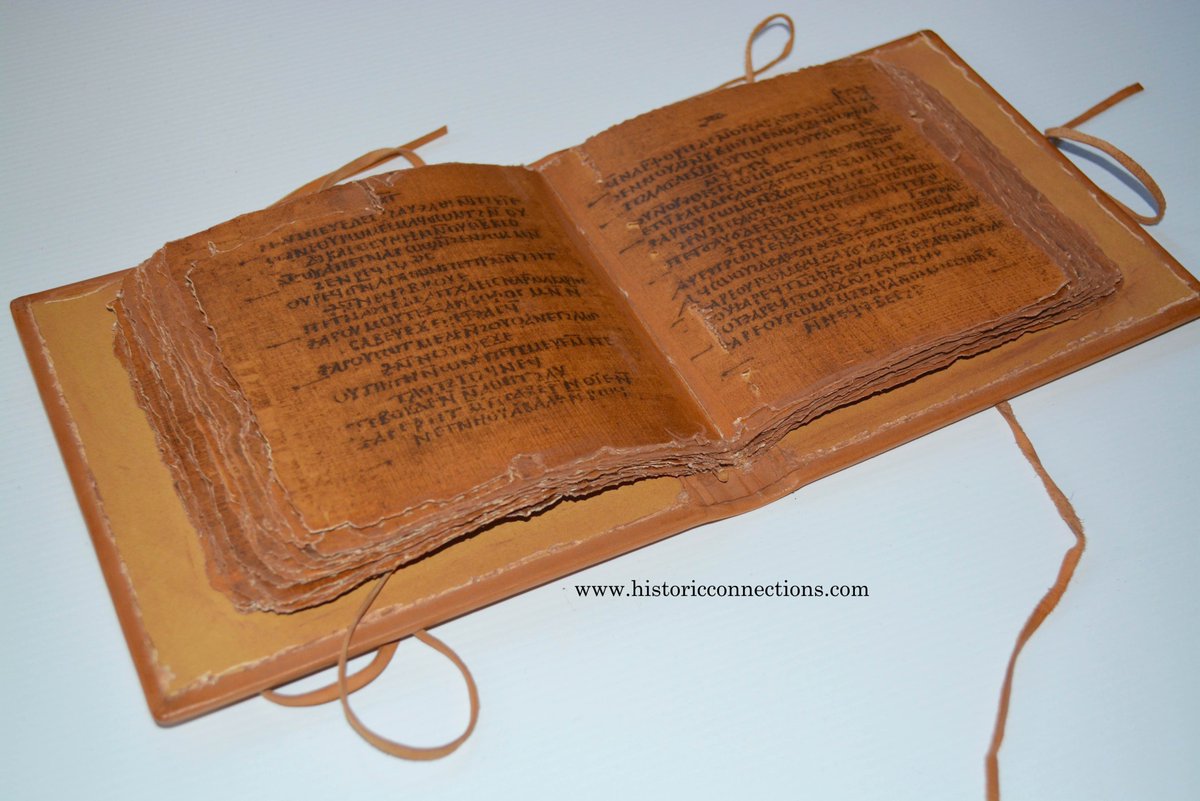
2/11. One of the most ancient writing materials, inherited from Antiquity, is of course papyrus. But already in the 4th CE, papyrus isn’t anymore the most suitable material for producing books, as its physi-cal properties aren’t well adapted to the codex’s shape.
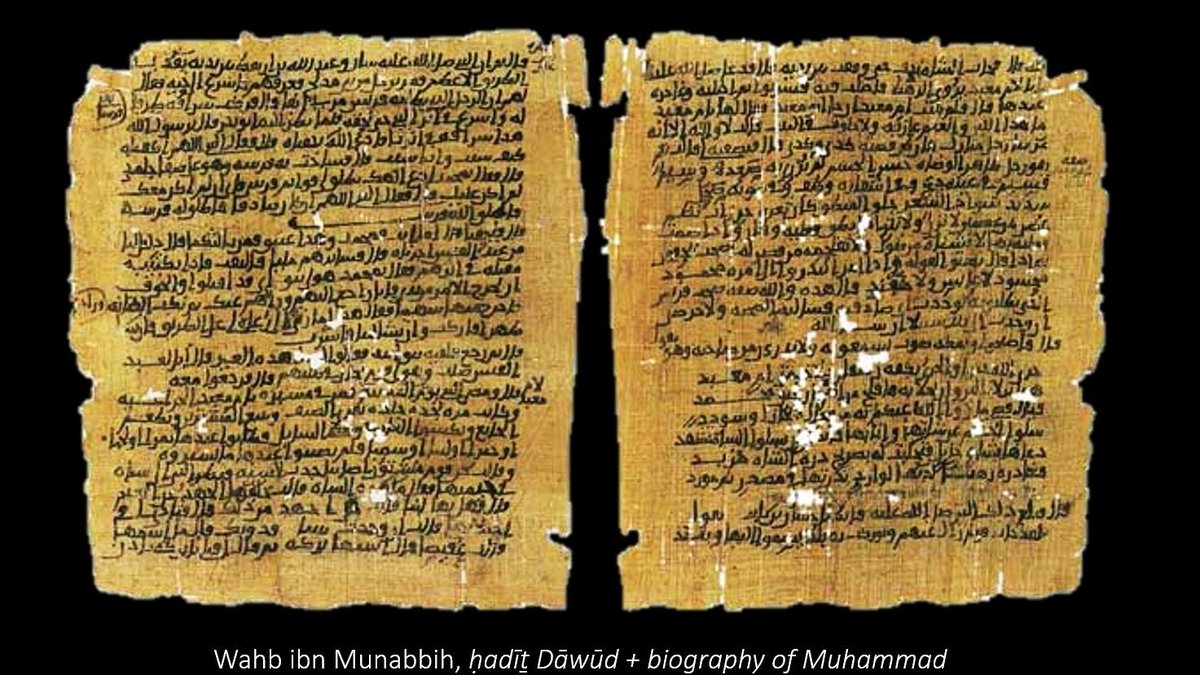
3/11. Yet papyrus has been used for Arabic literary codices. Fragments of traditions, grammatical or poetical texts, from the 8th to the mid. 10th CE, are still existent today. The oldest dated codex on papyrus is from 229/844. What about the writing of the Qur’ān on papyrus?
Read 11 tweets
16 Apr 20
Thread. Codex Amrensis 1

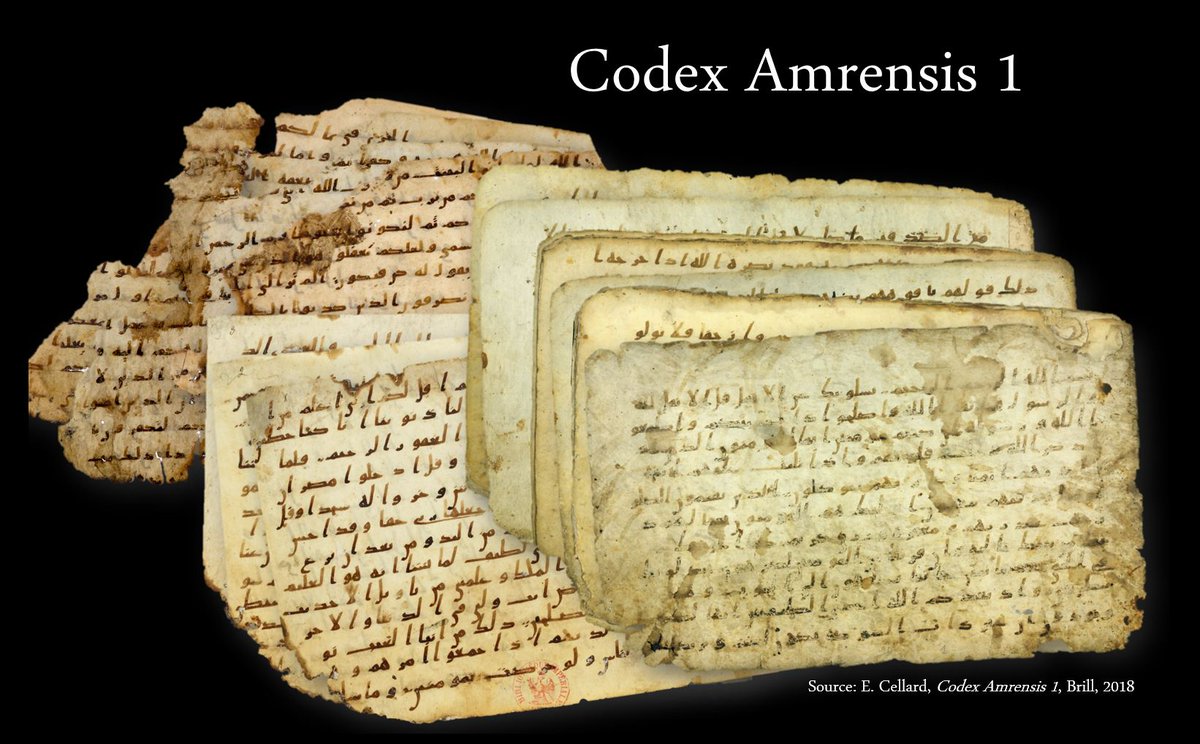
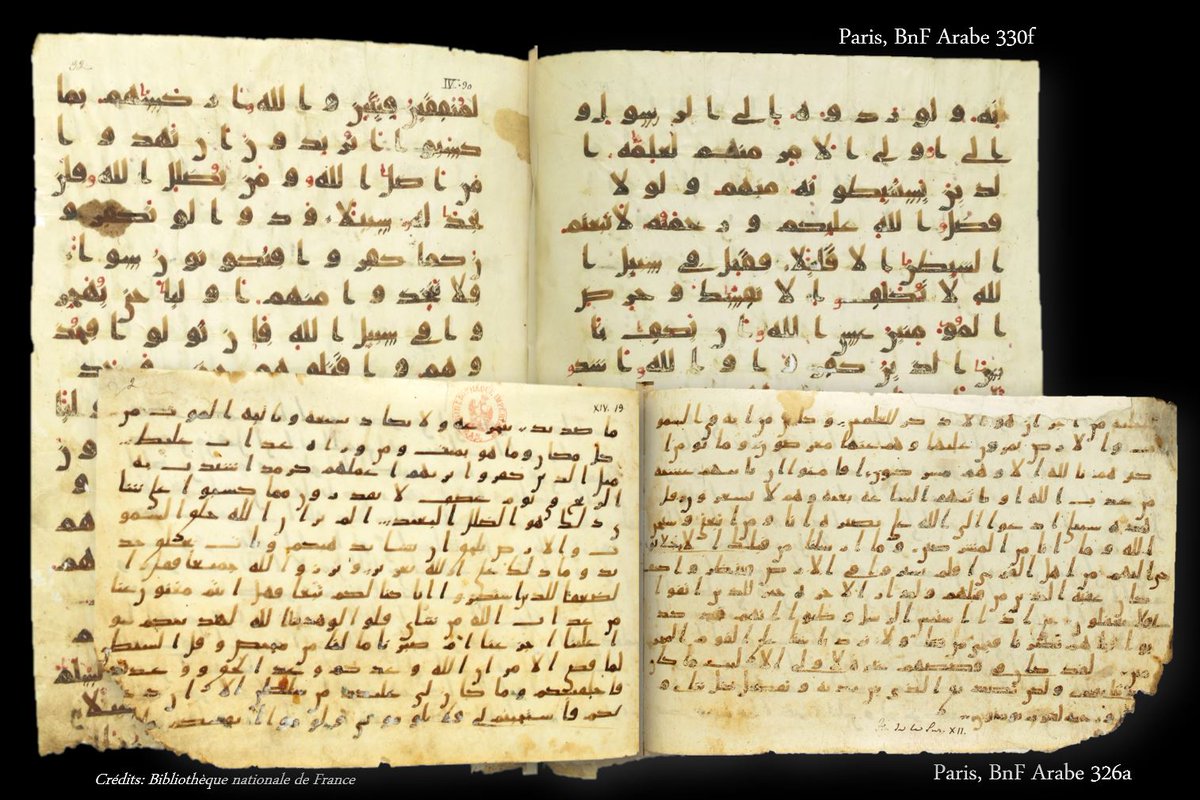
1/10. This Qur’ān is the 1st edited volume of the Serie Documenta Coranica. In the early 19th, groups of leaves, kept in the 'Amr mosque in Fustat, were collected by French scholars and antiquities dealers. The ms is now scattered in several collections.
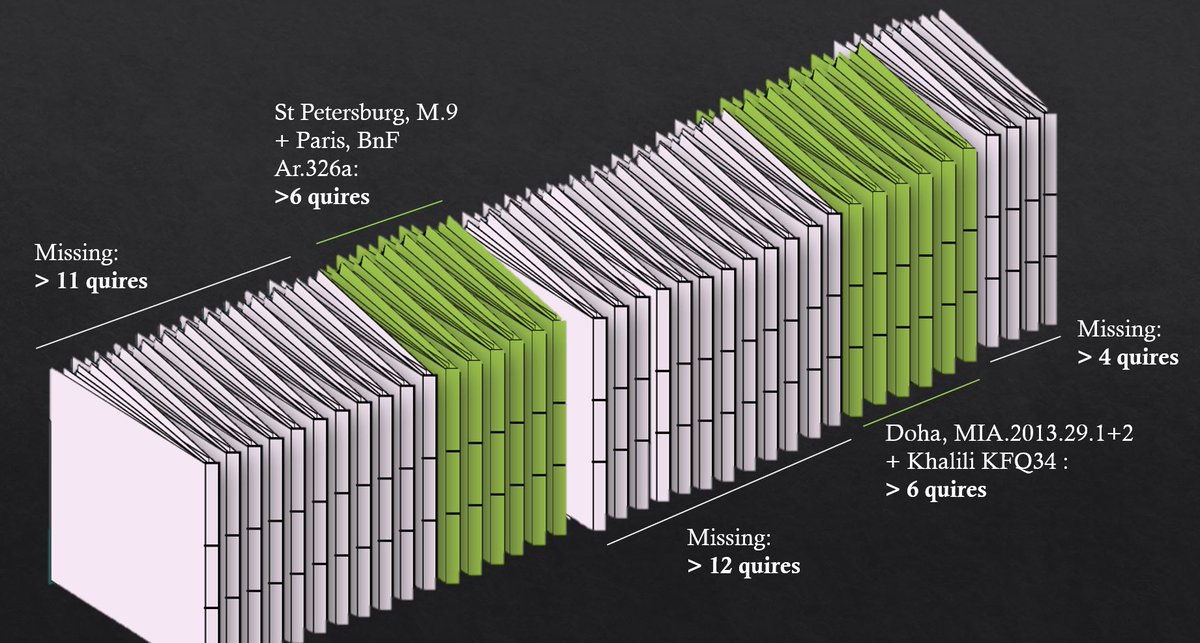
2/10. In total, there are 75 leaves (about 20% of the Qur’ān). Their preservation actually could be partly explained with codicology. On 2 occasions, groups of 4 quires (each with 8 leaves) were collected together. Probably because these were still stitched together.
3/10. CA1 is a medium-size volume, different from the early Qur’āns as the Birmingham one. Actually, CA1 is exactly half (in height) of a standard Professional Hijazi or early Kufi volume. As I see it, that could explain its horizontal orientation:

Read 11 tweets
7 Apr 20
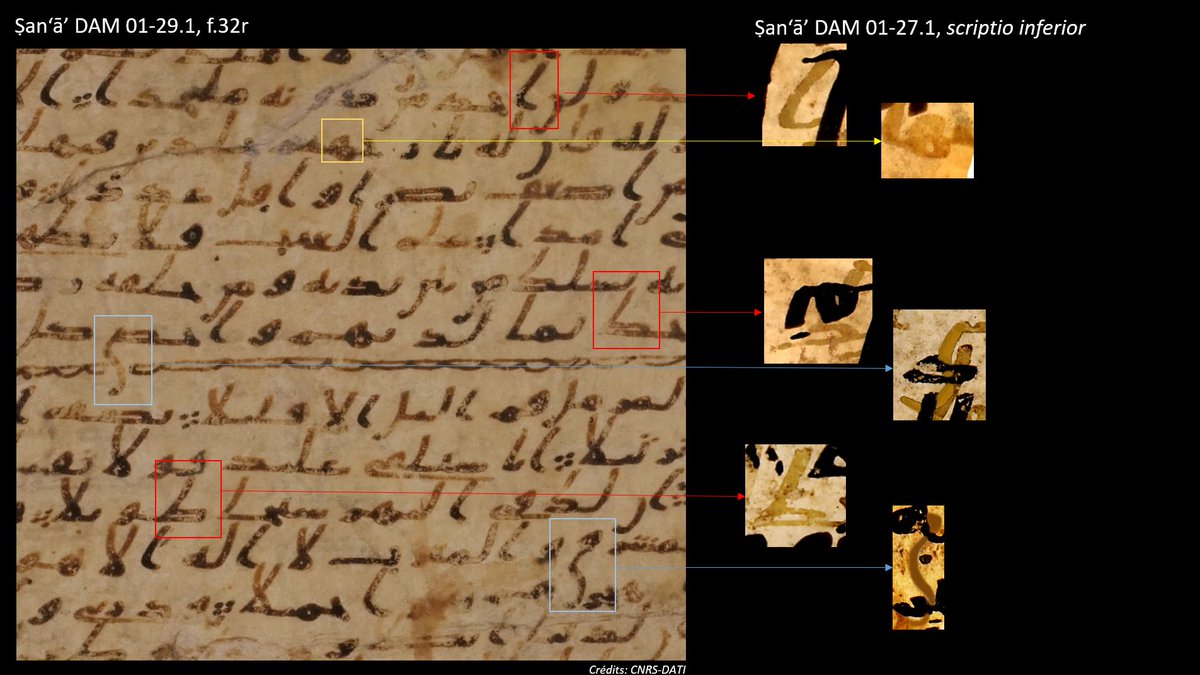
Thread. Ṣan‘ā’ DAM 01.29-1

1/12. We know today dozens of very early Qur’āns. All of them have only slight consonantal variants and follow the same order of the sūras (identical to our current edition). There are very few exception, the most famous one is the Ṣan‘ā’ palimpsest.
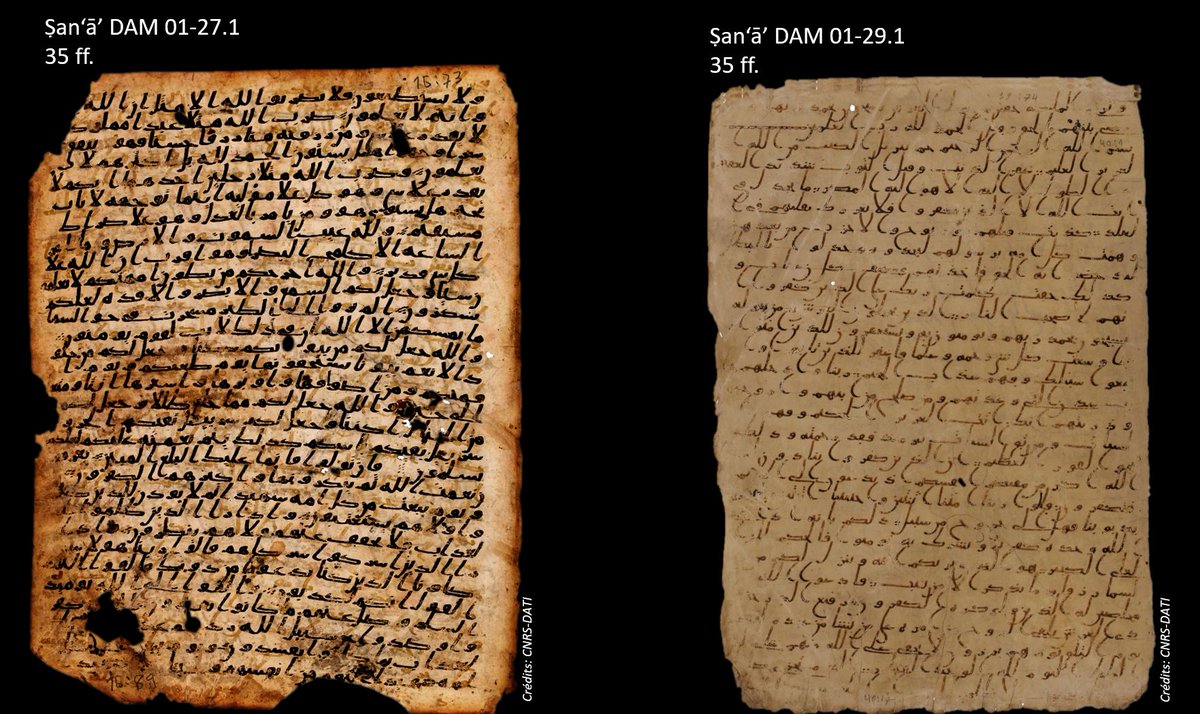
2/12. For now, the Ṣan‘ā’ palimpsest is very difficult to understand, because it is an isolated witness. But another ms, DAM 01-29.1, could help in our understanding of the palimpsest and shed light on its connection to ‘Uthmanic text.
3/12. DAM 01-29.1 is indeed related to the palimpsest in various ways. They came from the same deposit. Materially speaking, both are quite similar: almost same size and codex’s structure, same layout. Script styles of 01-29.1 are close to the under script of the palimpsest.
Read 13 tweets

Did Thread Reader help you today?

Support us! We are indie developers!


This site is made by just two indie developers on a laptop doing marketing, support and development! Read more about the story.

Become a Premium Member ($3/month or $30/year) and get exclusive features!

Become Premium

Too expensive? Make a small donation by buying us coffee ($5) or help with server cost ($10)

Donate via Paypal Become our Patreon

Thank you for your support!

Follow Us on Twitter!