

Rambo (2008 film) - Wikipedia
Amid the political protests of the Saffron Revolution in Burma, ruthless SPDC officer Major Pa Tee Tint leads Burmese junta army forces to pillage small villages in a campaign of fear. His soldiers sadistically slaughter en.wikipedia.org/wiki/Rambo_(20…
Amid the political protests of the Saffron Revolution in Burma, ruthless SPDC officer Major Pa Tee Tint leads Burmese junta army forces to pillage small villages in a campaign of fear. His soldiers sadistically slaughter en.wikipedia.org/wiki/Rambo_(20…
abduct teenage boys to be drafted into his army and hold women hostage to be raped as sex slaves. Meanwhile, 20 years after the events in Afghanistan, Vietnam War veteran John Rambo is still living in Thailand, making a meager living as a snake catcher and by providing boat
rides. A missionary doctor from Colorado named Michael Burnett hires Rambo to use his boat to ferry their group up the Salween River into Burma on a humanitarian mission to provide medical aid to a village inhabited by the Karen people. Rambo initially refuses, then agrees when 


requested by Michael's fiancée Sarah Miller.
During the trip, the boat is stopped.
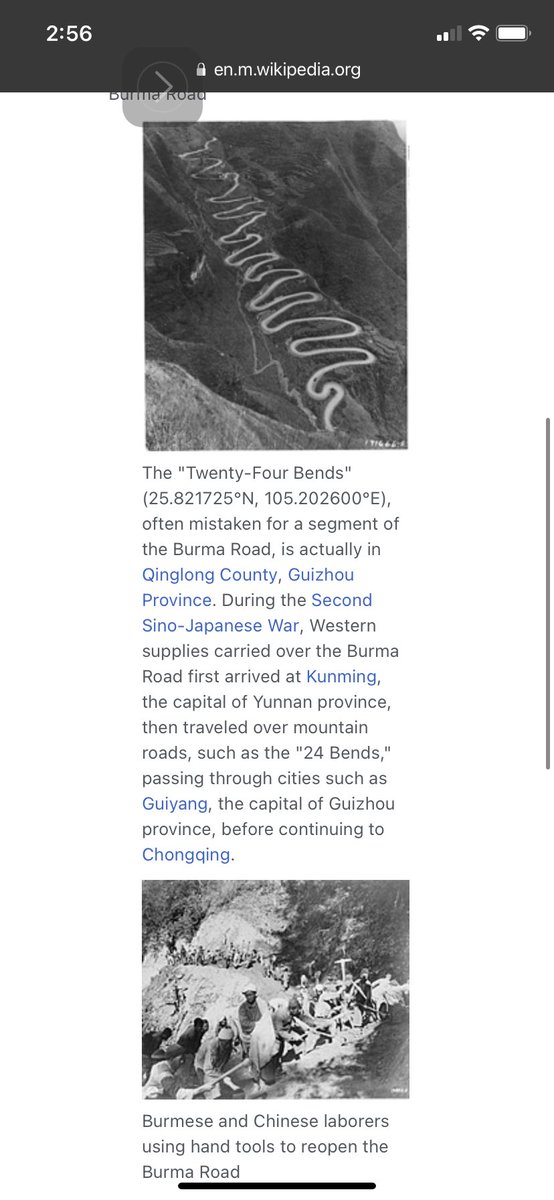
to transport materiel to China, especially after China lost sea-access following the loss of Nanning in the Battle of South Guangxi. Supplies were landed at Rangoon (now Yangon) and moved by
During the trip, the boat is stopped.
to transport materiel to China, especially after China lost sea-access following the loss of Nanning in the Battle of South Guangxi. Supplies were landed at Rangoon (now Yangon) and moved by
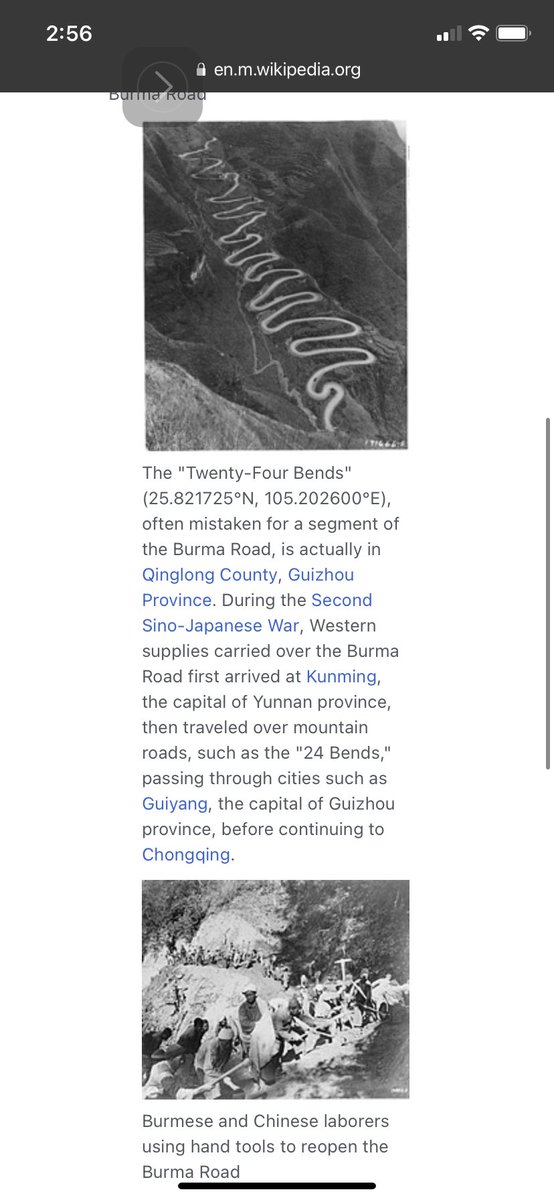
rail to Lashio, where the road started in Burma.
In July 1940, Britain yielded to Japanese diplomatic pressure and closed the Burma Road for three months.[4]:299 The Japanese overran Burma in 1942, closing the Burma Road. The Allies thereafter supplied China by air, flying "over
In July 1940, Britain yielded to Japanese diplomatic pressure and closed the Burma Road for three months.[4]:299 The Japanese overran Burma in 1942, closing the Burma Road. The Allies thereafter supplied China by air, flying "over

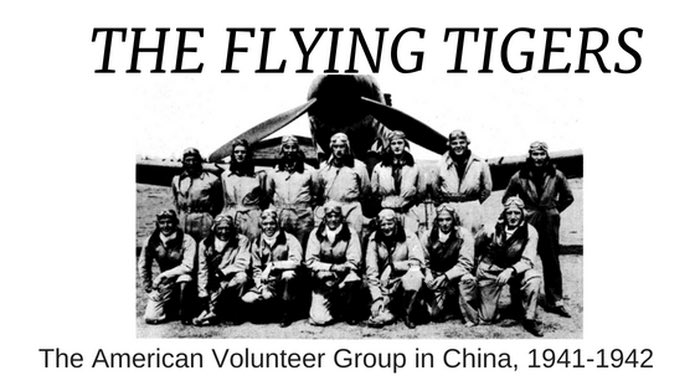

The Hump" from India. The Allies recaptured northern Burma in late 1944, which allowed the Ledo Road from Ledo, Assam to connect to the old Burma Road at Wandingzhen, Yunnan, China. The first trucks reached the Chinese frontier by this route on January 28, 1945.
Three weeks later, 10 June, the steepest section was opened to vehicles, though they needed assistance from tractors to get up it. The road allowed passage of a convoy without leaving the vehicles on June 10, in time for the UN-imposed cease fire, but it required repair as
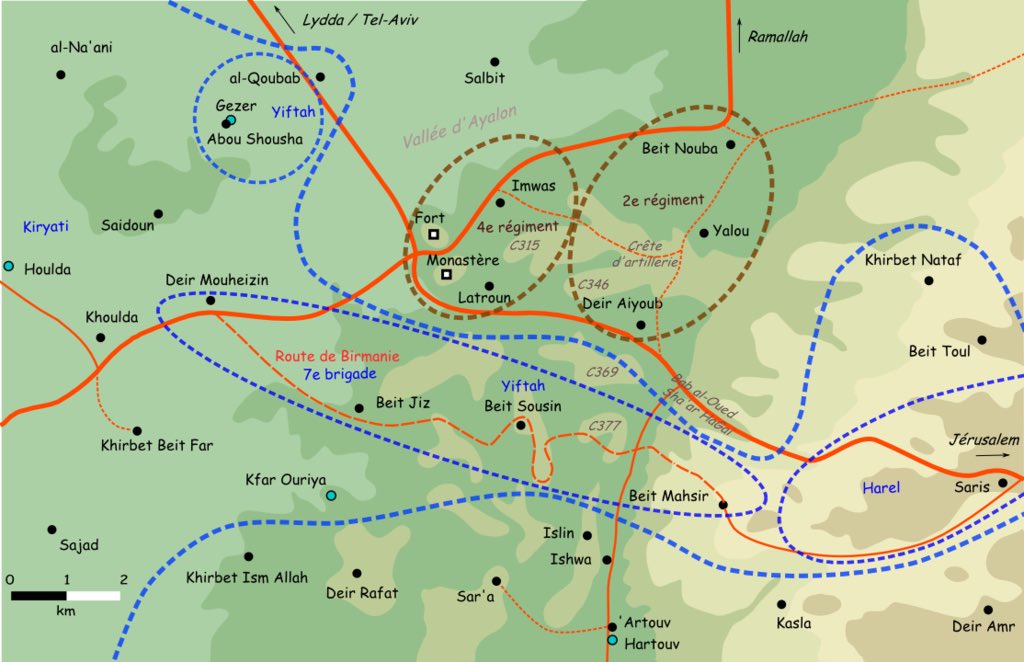
vehicular passage opened new pot holes. The road was finally completed on June 14, and water and fuel pipes were laid alongside it.[2][3] Amos Horev, later President of Technion, was an Operations Officer, and was instrumental in creating the road.[4][5] By the end of June the
usual nightly convoy delivered 100 tons of supplies a night.[6] Harry Levin, in his diary entry for 7 June, wrote that 12 tons a night were getting through and he estimated that the city needed 17 tons daily. On 28 July he noted that during the first truce, 11 June to 8 July,
8,000 truckloads arrived.[7] This remained the sole supply route for several months, until the opening of the Valor Road (Kvish Hagevurah).
The initial plan for construction of motorways dates back to 1973, when the government of Socialist Bulgaria approved a resolution to
The initial plan for construction of motorways dates back to 1973, when the government of Socialist Bulgaria approved a resolution to


build a motorway ring, encompassing the country and consisting of three motorways - Trakia, Hemus and Cherno More. In 2012, the Bulgarian government announced talks with Qatar to build a South–North motorway/expressway as a PPP from Svilengrad, at the Turkish/Greek border, to

Ruse, at the Romanian border. The route is part of the Pan-European Corridor IX. In October 2012, a tender for a feasibility study was announced.
Struma motorway connects near Kulata with the Greek A25 motorway (Serres – Lagkadas – Egnatia Odos). The route is part of the Pan-
Struma motorway connects near Kulata with the Greek A25 motorway (Serres – Lagkadas – Egnatia Odos). The route is part of the Pan-
European Corridor IV. The Romanian PM Victor Ponta made a statement after the inauguration of New Europe Bridge that Romania plans to build a motorway between Craiova and Calafat.[23]
Also, in long terms, Cherno More motorway is planned to connect with the future Romanian A4
Also, in long terms, Cherno More motorway is planned to connect with the future Romanian A4
motorway to Constanţa (interchange with A2 motorway, leading to Bucharest). Maritsa motorway (A4) connects near Kapitan Andreevo with the Turkish O-3 motorway, heading to Istanbul. A 31.5 km section of the Kalotina motorway from Sofia to Kalotina was tendered in 2012 and is
expected to connect with the future Serbian A4 motorway to Niš. The route is part of Pan-European Corridor X. Dupnitsa-Kyustendil expressway branching off from Struma motorway is planned to connect with North Macedonia.
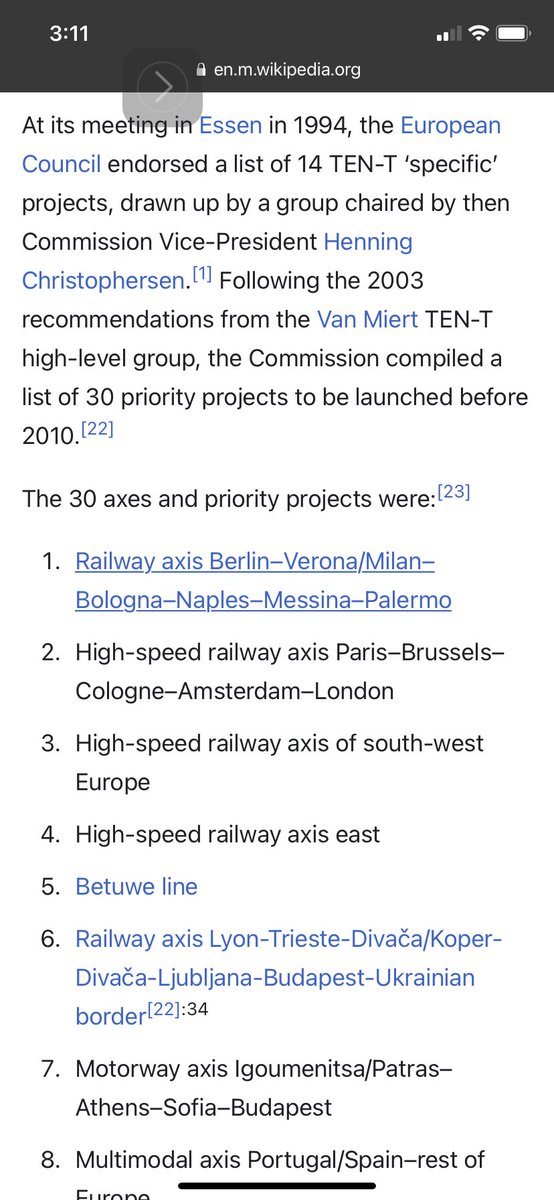
The Trans-European Transport Network (TEN-T) is a planned network of roads, railways, airports and water infrastructure in the European Union. The TEN-T network is part of a wider system of Trans-European Networks (TENs), including a telecommunications network (eTEN) and a
proposed energy network (TEN-E or Ten-Energy). The European Commission adopted the first action plans on trans-European networks in 1990. TEN-T envisages coordinated improvements to primary roads, railways, inland waterways, airports, seaports, inland ports and traffic management
systems, providing integrated and intermodal long-distance, high-speed routes. A decision to adopt TEN-T was made by the European Parliament and Council in July 1996.
These projects are technically and financially managed by the Innovation and Networks Executive Agency (INEA),
These projects are technically and financially managed by the Innovation and Networks Executive Agency (INEA),
which superseded the Trans-European Transport Network Executive Agency Agency (TEN-T EA) on 31 December 2013. The tenth and newest project, the Strasbourg-Danube Corridor, was announced for the 2014–2020 financial period.

In general, TEN-T projects are mostly funded by national or state governments. Other funding sources include: European Community funds (ERDF, Cohesion Funds, TEN-T budget), loans from international financial institutions (e.g. the European Investment Bank), and private funding.
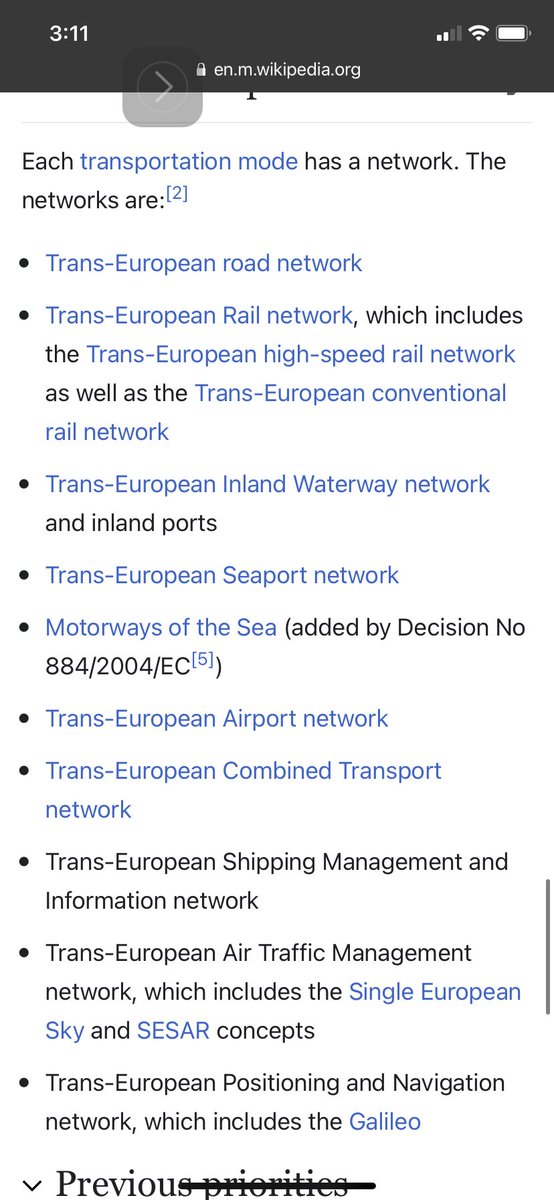


In addition to the various TENs, there are ten Pan-European corridors, which are paths between major urban centres and ports, mainly in Eastern Europe, that have been identified as requiring major investment.
The international E-road network is a naming system for major roads in
The international E-road network is a naming system for major roads in


Europe managed by the United Nations Economic Commission for Europe. It numbers roads with a designation beginning with "E" (such as "E1").
He had planned to pursue a full-time career in the newspaper business, but a chance encounter led to a position as an office boy at the
He had planned to pursue a full-time career in the newspaper business, but a chance encounter led to a position as an office boy at the
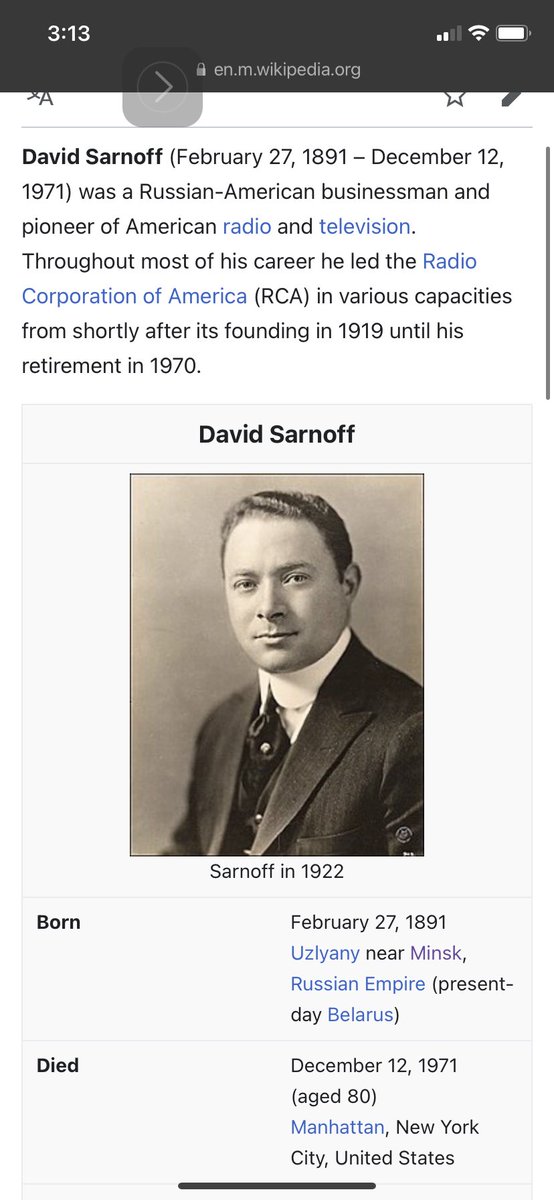
Commercial Cable Company. When his superior refused him paid leave for Rosh Hashanah, he joined the Marconi Wireless Telegraph Company of America on September 30, 1906, and started a career of over 60 years in electronic communications.
He also served at Marconi stations on ships and posts on Siasconset, Nantucket and the New York Wanamaker Department Store. In 1911, he installed and operated the wireless equipment on a ship hunting seals off Newfoundland and Labrador, and used the technology to relay the
first remote medical diagnosis from the ship's doctor to a radio operator at Belle Isle with an infected tooth.
The following year, he led two other operators at the Wanamaker station in an effort to confirm the fate of the Titanic.[1] Sarnoff later exaggerated his role as the
The following year, he led two other operators at the Wanamaker station in an effort to confirm the fate of the Titanic.[1] Sarnoff later exaggerated his role as the
sole hero who stayed by his telegraph key for three days to receive information on the Titanic's survivors.
• • •
Missing some Tweet in this thread? You can try to
force a refresh


