For anyone looking for their first job in tech: it’s a beast to get - including the first in a new country.

The story of how I was a week or two away from leaving the UK, failing to get *any* response from recruiters, despite having years of work exp and a stellar CV. Thread.
I’m from Hungary and graduated top of the class at Budapesti Műszaki Egyetem with a degree in Technical Informatics. You probably never heard of it: neither have recruiters.

It’s the #1 CS college nationwide - perhaps phrasing it like this might have helped.
I worked fulltime for 2 years as a web (.NET) developer and placed #3 worldwide at Microsoft Imagine Cup 2008 - from 200K contestants.

A pretty good resume, if I might say so.

Odd enough, applying remotely for .NET positions in the UK for no responses. So I packed up and moved.
I had enough savings to rent a place for 3 months. I figured it will be enough to get a job.

I did not need a visa. My English was close to native. I had work experience and outstanding extracurriculars. Applied to all local jobs and agencies.

For a month I got ZERO responses.
What happened? Two things, in hindsight.

First: it was 2009, a year after the 2008 crash. Tech jobs were drying up. Some similarities with entry-level jobs and COVID.

Because of the crash, many entry-level positions were filled by local, more experienced folks out of a job.
Second, my resume triggered all biases. My first line said “Hungarian”, I had my photo, my birth date, used the Europass structure... recruiters never read it. My resume screamed “not local and has no clue how to eve write a UK resume”.
After a month, I got desperate enough to put on my suit and walk into recruitment agencies with my printed resume. I was politely shown the door.

I’d call agency recruiters I sent applications to who didn’t reply anything: who would pretend they are not around or hang up.
I was a month away from running out of money and kept thinking: “if only someone gave me a chance”

I got lucky & *finally* got a call from an agency recruiter who put me through to a client. I got an offer the same day.

I hated the company and the location, but I had an offer.
I asked for two days to think and called / emailed all other recruiters to tell them I’d gotten an offer at this company and I’m dropping out immediately.

Suddenly, some recruiters got back to me. Got 2 more interviews arranged to run as ASAP & offers from all of them.
There was a company of these I *really* liked because they had the most difficult/fun interview and the people I clicked the “most” with. They didn’t pay as much as another, but I didn’t care: took the offer.
Getting that first job is tough - especially today, as an entry-level engineer.

Keep on persisting, keep your skills sharp, and know it will get much easier after this.

Once I got a job? My phone stated exploding with the recruiters who ignored me. Now it was my turn to do so.

• • •

Missing some Tweet in this thread? You can try to force a refresh
 

Keep Current with Gergely Orosz

Gergely Orosz Profile picture

Stay in touch and get notified when new unrolls are available from this author!

Read all threads

This Thread may be Removed Anytime!

PDF

Twitter may remove this content at anytime! Save it as PDF for later use!

Try unrolling a thread yourself!

how to unroll video
  1. Follow @ThreadReaderApp to mention us!

  2. From a Twitter thread mention us with a keyword "unroll"
@threadreaderapp unroll

Practice here first or read more on our help page!

More from @GergelyOrosz

25 Feb
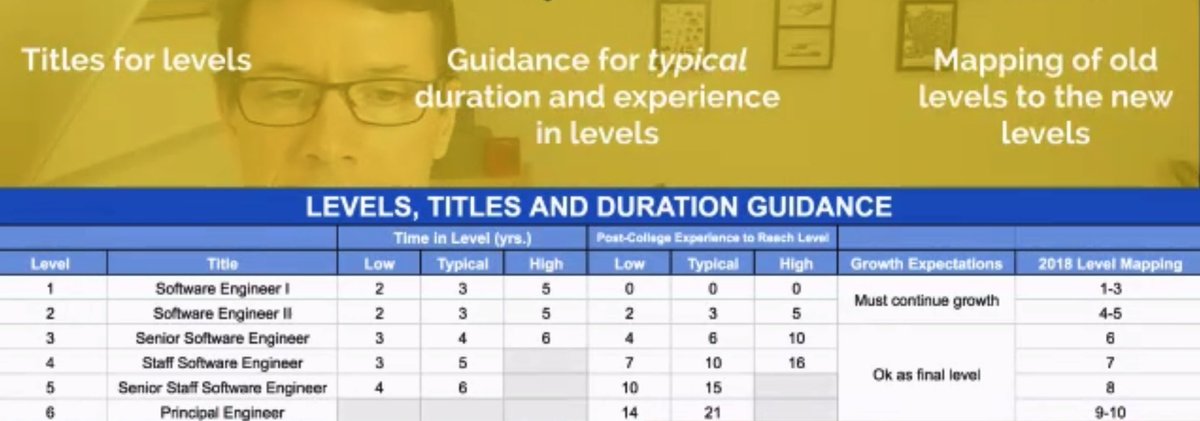
The engineering career framework for @prezi, with typical post-college experience years of experience, as shared by their former CTO. He's talking about what makes for a good software eng growth framework.

They settled on 6 levels to allow for enough space for growth. Image
They created an internal tool so people can browse definitions & examples, and for people to be able to rate themselves.

Engineers started to rate themselves, and use it as a starting point for career conversations with managers.

It worked out FAR better than they expected. Image
Promotions, merit increases are pretty standard (note to self: I'll share some details on this for non-EMs).

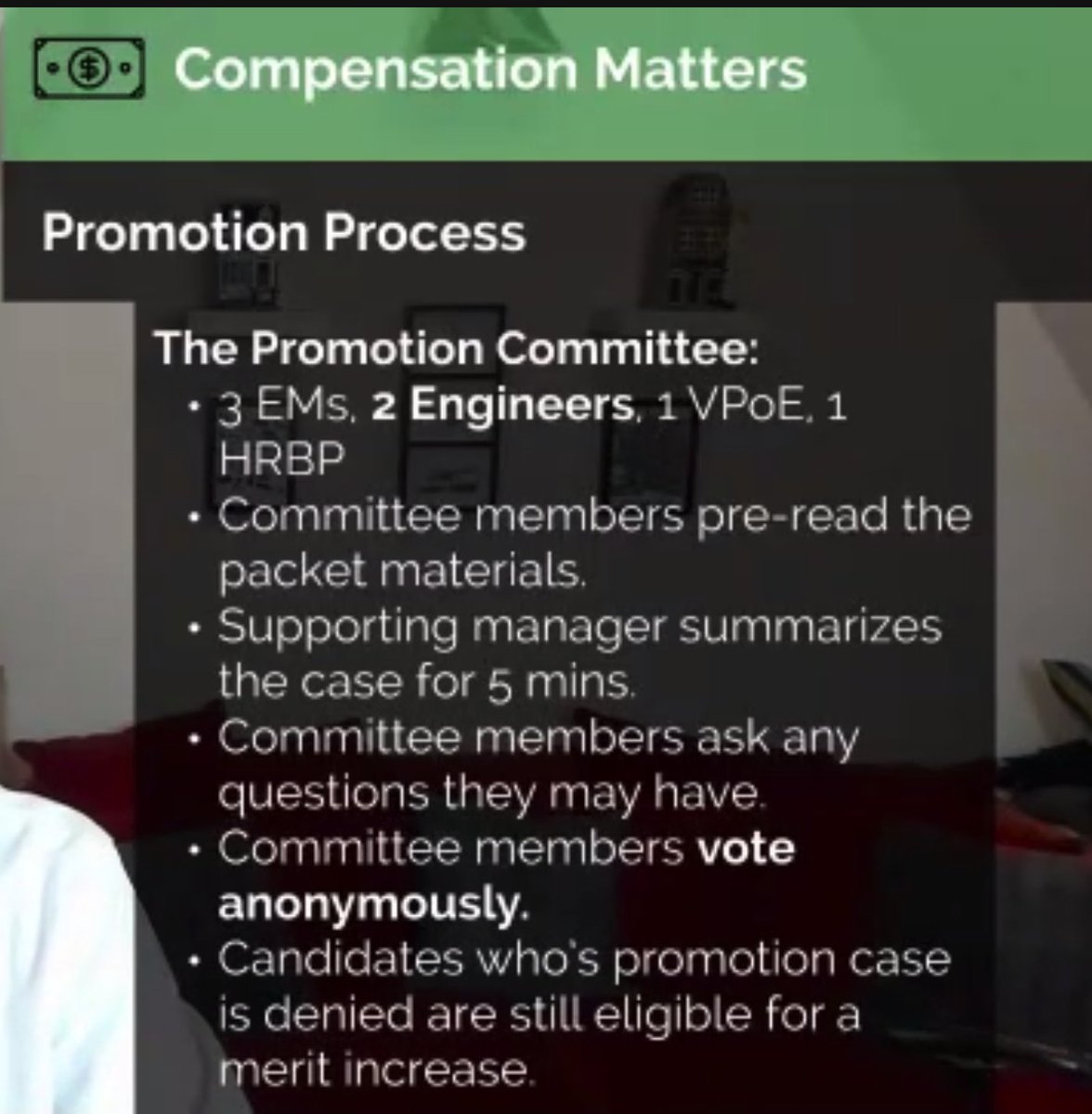
Promo committees are what you'd expect from a "modern" tech company their size.

Uber used to have more eng-heavy, as well as more manager-heavy committees: Image
Read 4 tweets
25 Feb
Today’s episode of of practical software engineering tips & tricks: load testing 3rd party services/APIs in prod.

Aka how we made sure Uber’s payments providers would also be ready for the New Years Eve surge in the early years. A thread.
Up to around 2018, Uber saw a 5-10x traffic spike on NYE. Funny enough the spike would become the new “baseline” traffic for the next September.

But the first few years this spoke would nearly cripple the company. So we started preparing ahead of time and load testing the fall.
After we’d load test most internal services and ensure they’d cope, the next failure vector: 3rd party services.

We knew what would happen on NYE and were on standby. They had no clue and though assured over email they can take a 10x load... let’s say it wasn’t always the case.
Read 6 tweets
22 Feb
Preparing for a meetup tomorrow on engineering your CV.

A reminder that there are things that could matter just as much as your skills:
- Your location (for many companies, still)
- Referrals
- Visas

The less senior you are & the more "local" the company, the more these matter.
The meetup is this one: meetup.com/Tech-on-the-Ty…

And the graphics are from my book thetechresume.com (free for any engineer currently out of a job).
You might wonder "why bother applying for local companies or ones that don't support visas when many of Big Tech does"

Well, one important part: competition. The companies hiring worldwide, offering remote work? They'll see a huge number of candidates & it's hard to stand out.
Read 4 tweets
16 Feb
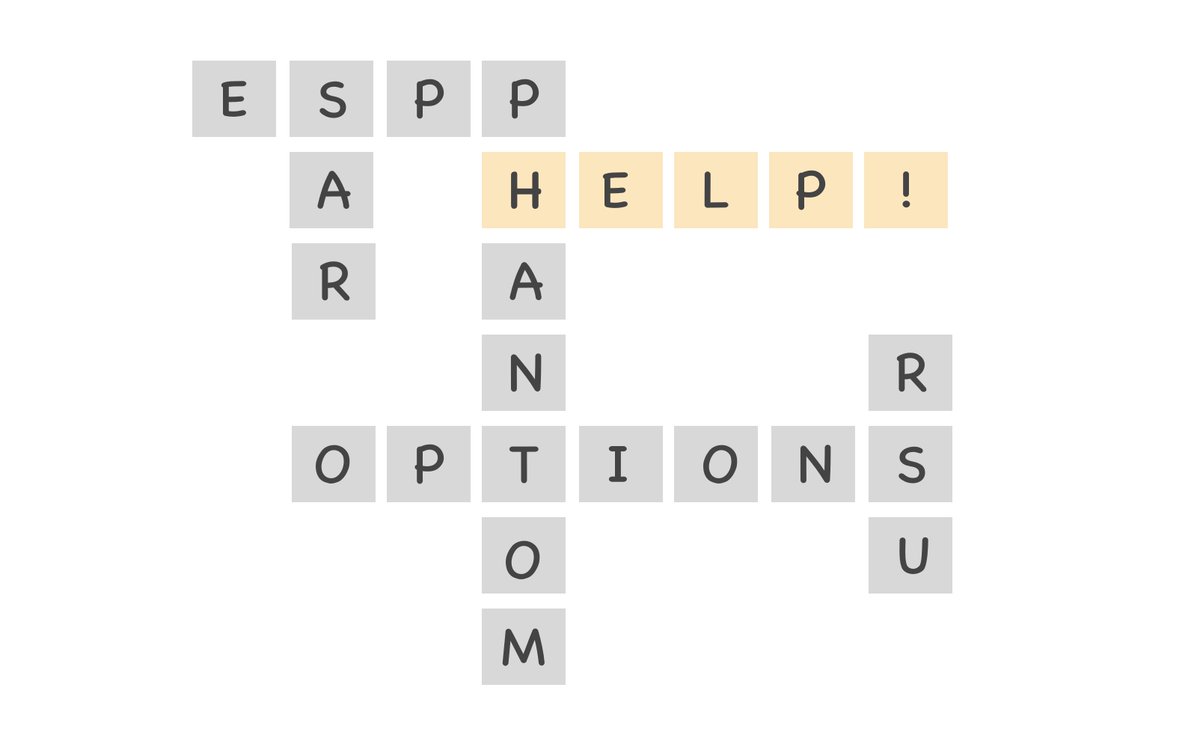
The 12 most important pieces of information and concepts I wish I knew about equity, as a software engineer.

A thread.

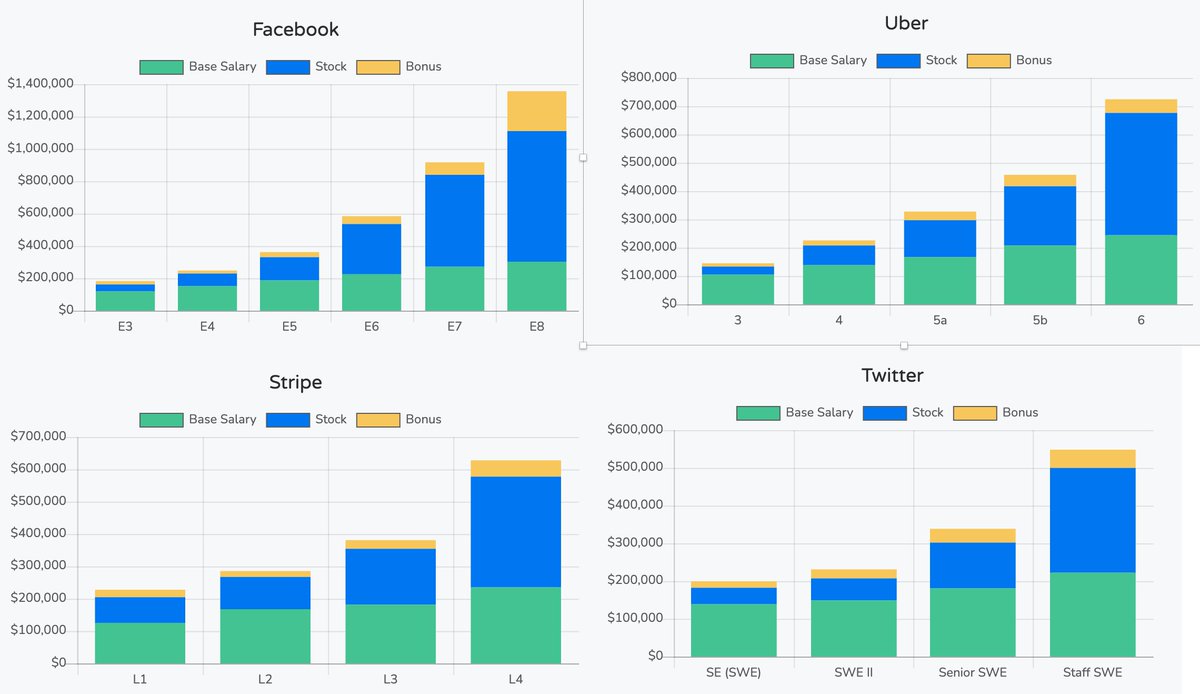
1. Equity is something Big Tech and high-growth companies award to software engineers at all levels. The more senior you are, the bigger the ratio can be:
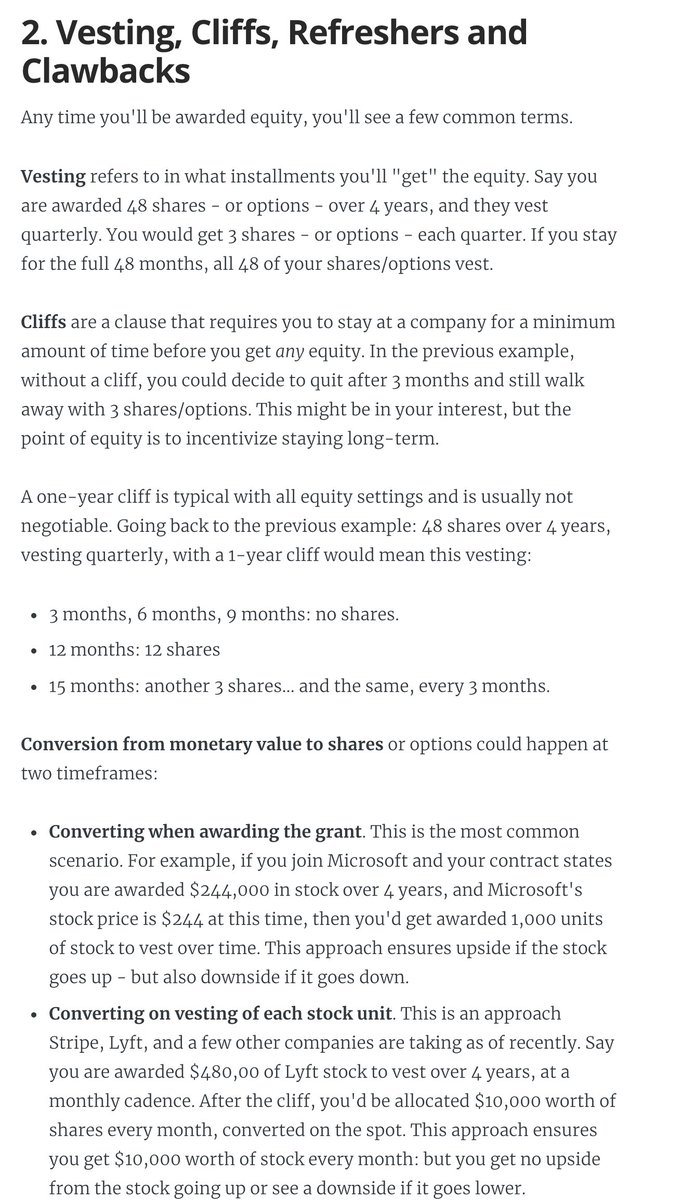
2. Vesting, cliffs, refreshers, and sign-on clawbacks.

If you get awarded equity, you'll want to understand vesting and cliffs. A 1-year cliff is pretty common in most places that award equity.

Read more in this blog post I wrote: blog.pragmaticengineer.com/equity-for-sof…
3. Stock options / ESOPs.

The most common form of equity compensation at early-stage startups that are high-growth.

And there are *so* many pitfalls you'll want to be aware of. You need to do your research on this: I can't do justice in a tweet.

blog.pragmaticengineer.com/equity-for-sof…
Read 9 tweets
3 Feb
Building well-performing (native) mobile apps: a thread.

As I'm writing the chapter on mobile performance in Building Mobile Apps at Scale, I'm doing a lot of reading on this topic.

A collection of the 9 most interesting iOS and Android app performance pieces.
1. Building a blazing fast Android app from @LinkedInEng: engineering.linkedin.com/blog/2019/buil…

I love this overview: it seems so... simple. Try doing it and you realize it's far from it. Iterating *so* key for a performant mobile app.

Bonus: they use Nanoscope! (cc: @LelandTakamine )
2. Grab speeding up their "super app": engineering.grab.com/journey-to-a-f…

Pretty cool to see the top "lower hanging fruit" they saw: app startup, tile caching, animations, binary optimizations, and detecting performance regressions.

A years' work summarized in a short article.
Read 10 tweets
25 Jan
Writing is one of the best things you can invest in, as a software engineer. The more experienced people become, the more they tend to realize this.

Here's a thread on the 6 best writing resources I've found - both to "convince" you to write more and to help you "level up":
1. My extended thoughts on why writing is an undervalued software engineering skill, and the tools (Grammarly, Hemmingway) and books (Writing Well, Sense of Style) that helped me improve my writing.

Writing becomes *so* important at larger companies.

blog.pragmaticengineer.com/on-writing-wel…
2. It's time to start writing by @alexnixon_uk . I like the story about making a technical decision, gathering around to talk.

What if they wrote instead? It would be more durable, scalable, and - with COVID - much more feasible.

alexnixon.github.io/2019/12/10/wri…
Read 8 tweets

Did Thread Reader help you today?

Support us! We are indie developers!


This site is made by just two indie developers on a laptop doing marketing, support and development! Read more about the story.

Become a Premium Member ($3/month or $30/year) and get exclusive features!

Become Premium

Too expensive? Make a small donation by buying us coffee ($5) or help with server cost ($10)

Donate via Paypal Become our Patreon

Thank you for your support!

Follow Us on Twitter!