The lead point in this article is an important one: while we haven't reached record numbers of children (that may change this month), the speed at which the number arriving has increased IS a record.
And it occurs as government capacity has been limited by the pandemic.
But there is an implication that Biden is doing something different than his predecessors by not sending the kids back. That's not quite true.
In 2019 Trump implemented a litany of deterrence-focused asylum changes, but none affected the arrival & processing of UACs.
Rather, Trump's pressure on Mexico to increase enforcement likely made the difference in bringing down the numbers.
The Trump administration did issue the Title 42 order that led to expulsions of kids, but that wasn't until March 2020-- months after the arrivals had dipped.
And in 2014, the Obama administration did implement the "rocket docket" to (in theory) accelerate the processing of kid's court cases. But it failed for a variety of reasons.
He is depending on Mexico to limit the number of vulnerable populations that reach the U.S.-Mexico border.
Yes, he isn't expelling kids under the Title 42 order, but neither did Trump in 2019 or Obama in 2014.
Let's hope that once the dust settles on this crisis, the Biden administration CAN distinguish itself from its predecessors by seeking out more permanent solutions than outsourcing our border control to Mexico.
• • •
Missing some Tweet in this thread? You can try to
force a refresh
Even those casually following immigration are likely aware of the active role Trump's attorneys general played.
This participation entailed unprecedented use of "referral & review"... a power with a problematic & twisted journey beyond Trump...
More in my report out today⬇️
Referral & review dates back to a time when the immigration bureaucracy was housed within the Justice Department.
The power helped the attorney general to manage this system - knitting adjudications, rulemaking, & other decisions into one coherent immigration policy framework.
That's not to say it wasn't without its issues!
Allowing the attorney general—the country’s chief law enforcement officer—to intercede in individual immigration cases has raised questions about the true independence of the immigration adjudication system.
Like so many of the President's orders on immigration, yesterday's new executive order didn't change anything immediately.
BUT this one provision is hinting at some changes on H-1B visas that have been a long time coming.
Before the President even took office, there were a rash of high profile cases in which U.S. companies laid off their IT staff of U.S. nationals, outsourced the work to foreign companies, & those foreign companies brought in H-1B workers to do the job.
The laid off workers frequently had to train their foreign replacements.
🚨Today the administration published the Unified Agenda-its biannual preview of upcoming regulations.
This is the Spring 2020 agenda. Delayed, I assume, because of the pandemic.
But also because of its size. This has TWICE as many new immigration regulations as the last one.
This agenda has been VITAL during the Trump administration because they accomplish SO MUCH via regulation (see migrationpolicy.org/research/immig…, and keep an eye out for its imminent update).
USCIS will reform the provisional unlawful presence waiver-an Obama-era creation that makes it easier for unauthorized spouses & parents of U.S. citizens & LPRs to legalize.
According to reports, next week's enforcement actions will focus (nearly) entirely families ordered removed on 10 immigration court "rocket dockets" the admin implemented last September.
I spoke with some attorneys this week about these "FAMU" dockets and they are A MESS ⬇️⬇️⬇️
First, off rocket dockets were used by the Obama administration too & there were serious concerns then: nbcnews.com/news/us-news/o…
BUT the FAMU docket is FAR more aggressive:
- mandates complete adjudication <1 year (Obama just mandated 1st hearing within a month)...
- The Obama admin encouraged the use of continuances & admin closure to ensure fair adjudication, but Trump has narrowed or entirely ended these tools
These variations likely (partially) explain why far fewer families show up to Trump's hearings: 82% have ended in absentia
USCIS & DOJ updated estimates on publication of the final regulations on immigrants who can be held inadmissible for public charge concerns: September 2019 & June 2019 (respectively).
ICE & HHS updated estimates on publication of the implementing regulations for the Flores settlement (which would allow for the indefinite detention of families): September 2019.
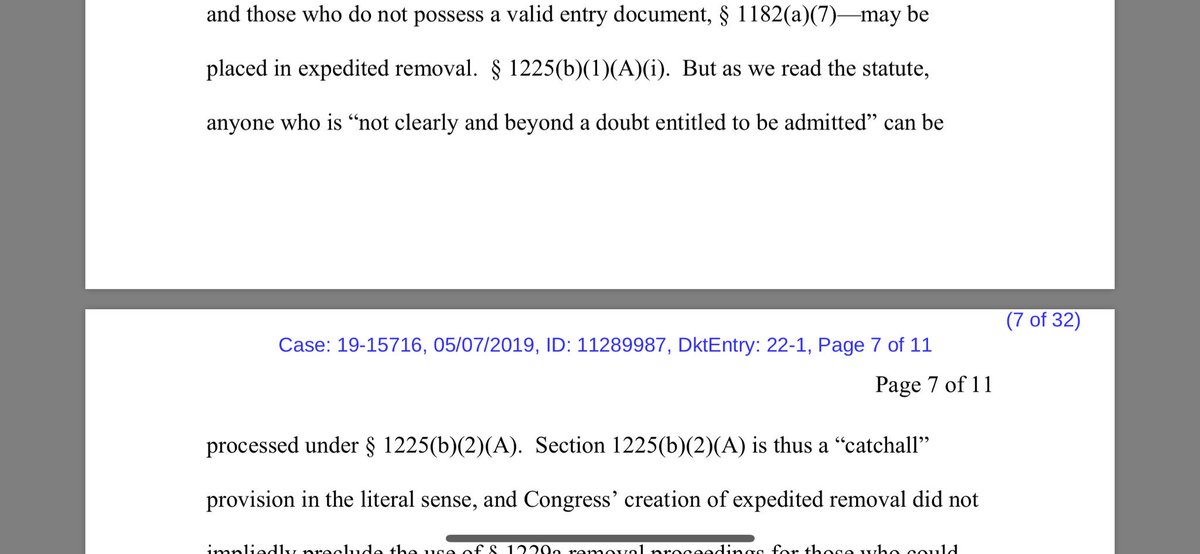
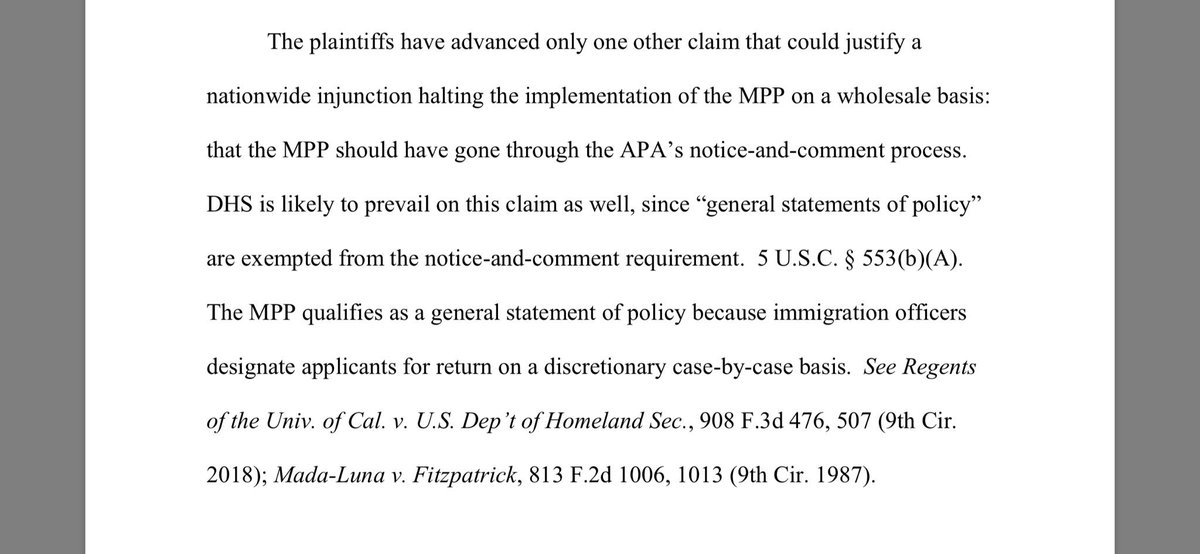
The 9th Circuit’s decision yesterday to allow MPP/Remain in Mexico to go forward pending appeal is surprising.
Perhaps the least surprising part is the Circuit disagreed w/the lower court’s interpretation of the confusing provision of federal immigration law on which it’s based.
But I am shocked they thought notice and comment procedures weren’t merited considering the elaborate and detailed procedural changes required to pull off MPP.
Not the least of which is the creation of an entirely new fear interview: the MPP assessment.
And the court seems to be operating off of misinformation on Mexico’s role— or perhaps information we don’t have.
Many MPP participants have not received humanitarian visas nor work authorization. As of now, we have no indication Mexico intends to regularly issue either.