Ministeri Jussi Saramo julkaisi eilen 24.3. kolmannen version siitä, millä tavalla tartuntoja pitäisi analysoida kun puhutaan joululomien vaikutuksesta tartuntoihin. Johtopäätös on kuitenkin pysynyt koko ajan samana.
1/x
#FactCheck
1/x
#FactCheck

Vaiheessa 1 ministeri käytti 14 päivän ilmaantuvuutta + 5 päivän itämisaikaa johtopäätöksien tekemiseen siitä, millä tavalla joululomat vaikuttivat tartuntoihin. (Se on hyvä menetelmä.)
2/x
#FactCheck
2/x
#FactCheck
https://web.archive.org/web/20210325083556/https://twitter.com/jussisaramo/status/1373297538917351427
https://twitter.com/jussisaramo/status/1373297538917351427

Tässä vaihe 1 kuvana. Tämä vaihe oli voimassa 20.3.2021 saakka.
3/x
3/x

Sen jälkeen (21.3.2021) osoitin ministerin väittämän vääräksi (käyttäen 14 päivän ilmaantuvuutta + 5 päivän itämisaikaa).
4/x
#FactCheck
4/x
#FactCheck
https://twitter.com/jukka235/status/1373521867043115010
Vähän tämän jälkeen (21.3.2021) ministeri siirtyi käyttämään päiväkohtaisia lukuja.
5/x
#FactCheck
5/x
#FactCheck
https://web.archive.org/web/20210325083202/https://twitter.com/jussisaramo/status/1373606235480727554
https://twitter.com/jussisaramo/status/1373606235480727554

Tässä vaihe 2 kuvana. Tämä vaihe oli voimassa 21.3.-24.3.
6/x
6/x

Tässä kuva, jota ministeri käytti 2. vaiheessa (21.-24.3.)
- 14 päivän ilmaantuvuuden + 5 päivän itämisajasta siirryttiin käyttämään päiväkohtaista dataa
- samalla siirryttiin tekemällä johtopäätös katsomalla kuvaa.
7/x
- 14 päivän ilmaantuvuuden + 5 päivän itämisajasta siirryttiin käyttämään päiväkohtaista dataa
- samalla siirryttiin tekemällä johtopäätös katsomalla kuvaa.
7/x
https://web.archive.org/web/20210325083122/https://twitter.com/jussisaramo/status/1373958052387360768
https://twitter.com/jussisaramo/status/1373958052387360768

Se tapa, miten ministeri vetää johtopäätöksiä muuttui toiseen kertaan 24. maaliskuuta. Tässä versiossa johtopäätökset joululomien vaikutuksesta tartuntoihin saadaan katsomalla jompaa kumpaa kuvaa. (Johtopäätös ei kuitenkaan muuttunut.)
8/x
8/x
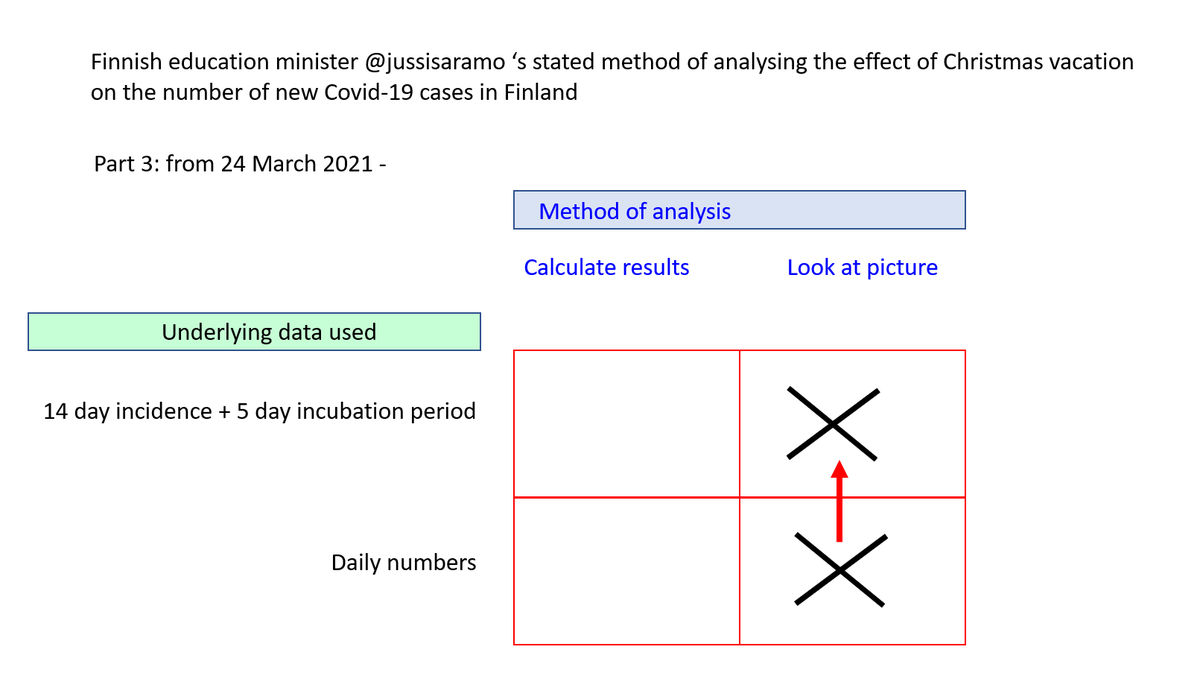
Tässä kolmannessa vaiheessa (24.3. lähtien)
- johtopäätös saadaan katsomalla kuvaa (eikä laskemalla)
- voidaan käyttää joko päiväkohtaista dataa tai 14 päivän ilmaantuvuutta
9/x
#Factcheck
- johtopäätös saadaan katsomalla kuvaa (eikä laskemalla)
- voidaan käyttää joko päiväkohtaista dataa tai 14 päivän ilmaantuvuutta
9/x
#Factcheck
https://web.archive.org/web/20210325082217/https://twitter.com/jussisaramo/status/1374680900630413313
https://twitter.com/jussisaramo/status/1374680900630413313

Tässä yhteenveto siitä, miten ministeri Saramon tapa analysoida koulujen joululomien vaikutusta Suomen koronavirustartuntoihin on tähän mennessä kehittynyt.
10/x
#Factcheck
10/x
#Factcheck

• • •
Missing some Tweet in this thread? You can try to
force a refresh