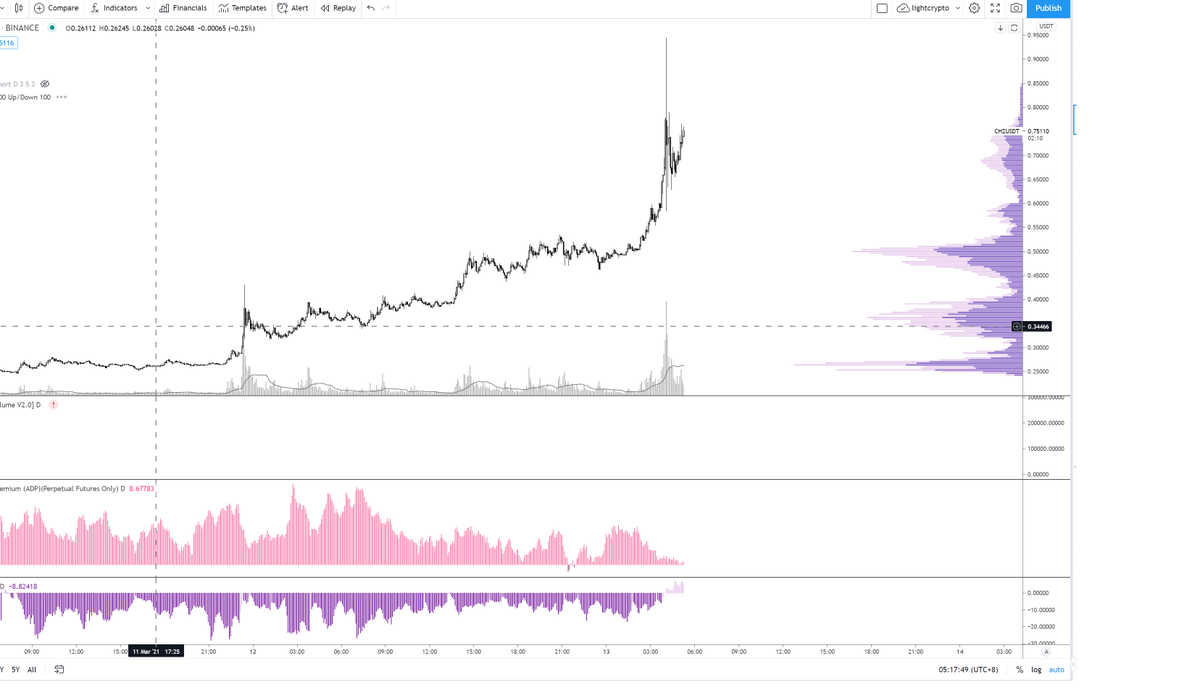
/1 Every once in a while comes along a day where you pay your tuition as trader.
Today was one of those days for me.
The loss stings a bit, as does having been the fish.
But something subsumes all of this and makes it paltry by comparison.
Today was one of those days for me.
The loss stings a bit, as does having been the fish.
But something subsumes all of this and makes it paltry by comparison.
https://twitter.com/lightcrypto/status/1382841064210395138
/2 If you let yourself, these are the days when you learn the most about markets, trading, and your own weaknesses.
A lot was lacking in my approach to this trade. I had not considered the different scenarios that could play out, and thus had no plan to meet them.
A lot was lacking in my approach to this trade. I had not considered the different scenarios that could play out, and thus had no plan to meet them.
/3 I traded from reflex, not thought. And I did so from the short side, which compounded these errors.
Maybe I won't end up being the ultimate fish when the dust settles. I expect my short will end up profitable in the next week. Retail will, as usual, get stuck with the bag.
Maybe I won't end up being the ultimate fish when the dust settles. I expect my short will end up profitable in the next week. Retail will, as usual, get stuck with the bag.
/4 You run into players who are truly exceptional. This was the case today with the individual who ran the Doge campaign. They remind me of the spoofer on Bitmex from years ago in terms of trading acumen.
For some color on how the game was played, see medium.com/@PotatoMcGruff….
For some color on how the game was played, see medium.com/@PotatoMcGruff….
/5 Every component of a mesmerizing trade was there:
- accumulate spot inventory (bitinfocharts.com/dogecoin/addre…)
- wait for an ideal moment in market conditions and narrative (
- accumulate spot inventory (bitinfocharts.com/dogecoin/addre…)
- wait for an ideal moment in market conditions and narrative (
https://twitter.com/elonmusk/status/1382552587099062272)
/6
- mark up (multiple times when this player bought into his own walls) while baiting shorts
- exit inventory into liquidations on derivatives (note the heavily negative funding, $760MM in derivatives liquidations)
- mark up (multiple times when this player bought into his own walls) while baiting shorts
- exit inventory into liquidations on derivatives (note the heavily negative funding, $760MM in derivatives liquidations)
/7 So in the end, was it worth it? Lessons are inevitable. So is paying your tuition in the market, even if you happen to be an old hand. But I learned a couple things today, and will remember the artful performance of whoever ran Doge today far longer than the money lost. 

• • •
Missing some Tweet in this thread? You can try to
force a refresh