
Is high transactions-per-second good? Not necessarily. Sometimes, high throughput creates a new set of issues.
Thread 👇
Thread 👇
1/ Ethereum has an ever-growing file, a 'state'. Full nodes have to keep hundreds of gigabytes of the state data. The cost of doing so keeps going up every year, pricing node operators out of the network. If this trend goes too fast, the network becomes less decentralized. 
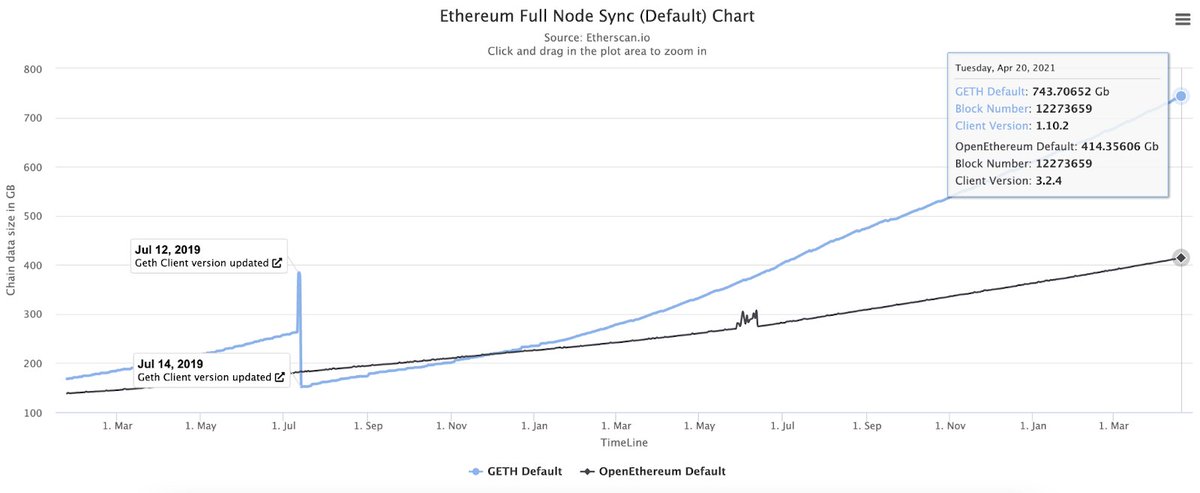
2/ Ethereum only has 20 transactions per second, at best. So the cost of providing storage goes up relatively slowly. For now, it’s still manageable to be anode operator. Ethereum devs are even thinking of possible solutions to compress the total size of the state.
3/ @karl_dot_tech provided a great example of what comprises a blockchain: transaction speed, computation, and storage. The metaphor he uses is a watering system—which needs pipes, a water processing unit, and a storage container.
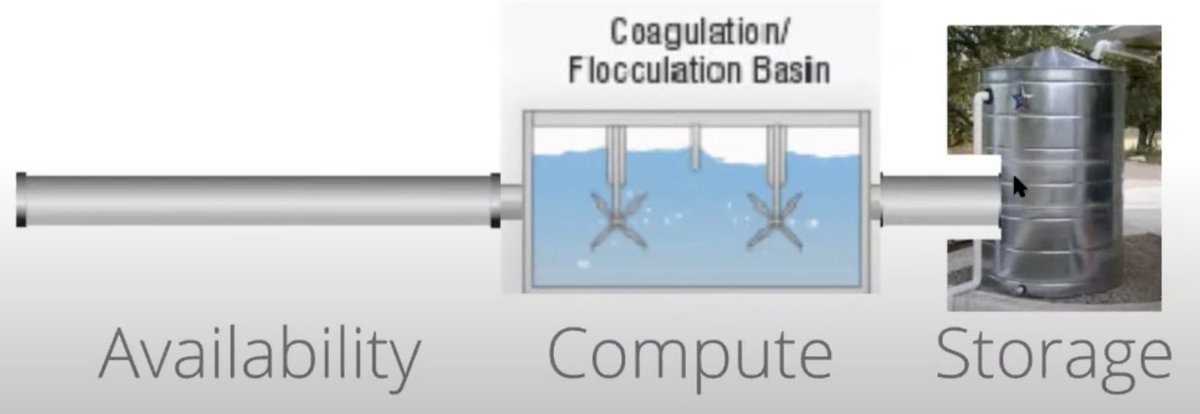
4/ When Binance copied Ethereum and increased its transaction speed, it was like building the same watering system but installing wider pipers.
Instead of making things more efficient, it simply crams more water into the system, causing malfunctions or even a potential rupture.
Instead of making things more efficient, it simply crams more water into the system, causing malfunctions or even a potential rupture.
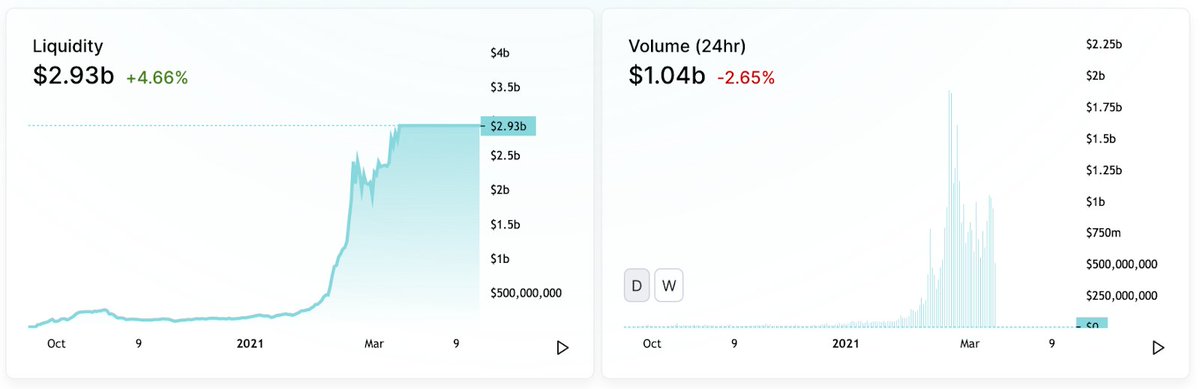
5/ Let’s look at @PancakeSwap, the go-to automated-market-maker provider on #BSC. The data on its analytics page is more than a month old.
6/ That’s not all. Remember, at the end of Karl’s water chain is limited storage. What happens if the water comes too fast?
A fast growing state substantially increases storage requirements. Hence, fewer node operators can work on #BSC, limiting its future decentralization.
A fast growing state substantially increases storage requirements. Hence, fewer node operators can work on #BSC, limiting its future decentralization.
7/ We saw the same problem with $EOS. Even in 2018-2019, the size of its blockchain was already terabytes.
As you can see, building bigger pipes doesn’t solve the problem. To beat Ethereum, #BSC has to improve the entire system: availability, compute, and storage.
As you can see, building bigger pipes doesn’t solve the problem. To beat Ethereum, #BSC has to improve the entire system: availability, compute, and storage.
Want to learn more? Head over to SIMETRI: simetri.cryptobriefing.com/news/042121-we…
• • •
Missing some Tweet in this thread? You can try to
force a refresh