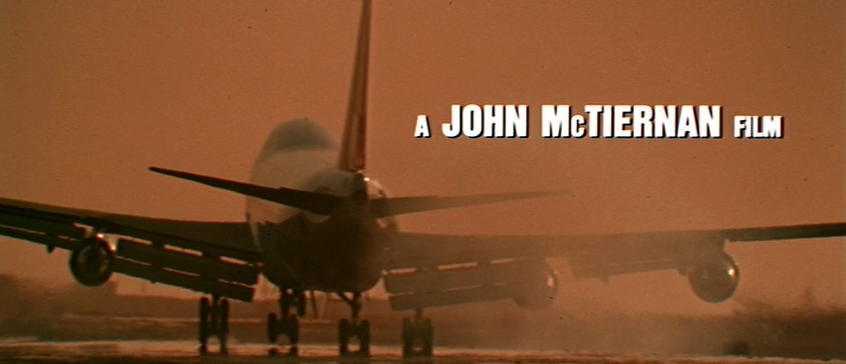
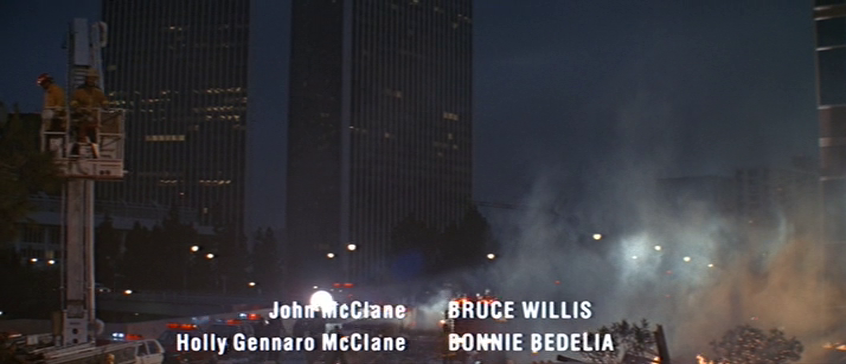
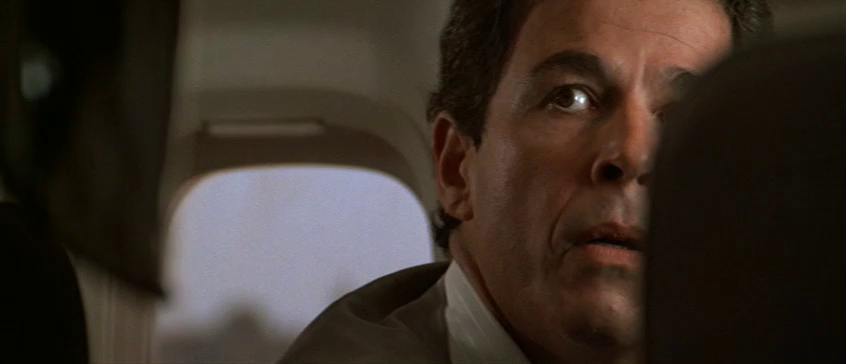
I love how DIE HARD wastes no time in establishing its tone, hero, and plot. Takes only 15 shots (≈7 setups) and 90 sec to:
-Establish classic Hollywood codes
-Introduce three major character traits
-Introduce one major plot point
Let's go through them:
The first shot is that of an arrival, which is a common trope of classic Hollywood movies. It's no accident that the last shot will show a departure. McTiernan bookends his film like this to create the sense of being welcomed into the story. We feel at ease. We feel at home.
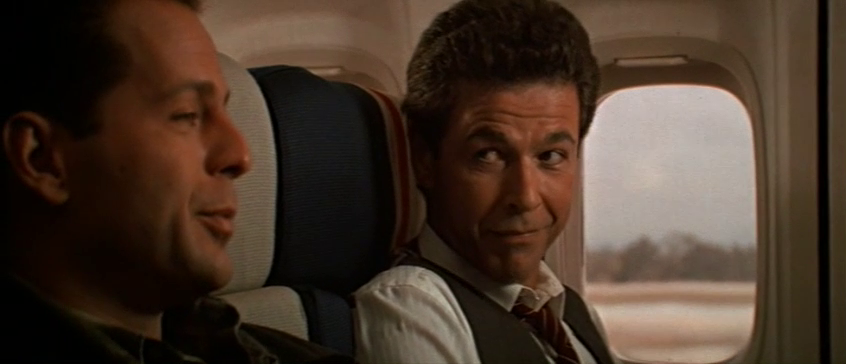
The second (!) shot starts introducing major character traits and plot points. It's rare enough to be noted. How many movies wait a whole act or more before we get to know something substantial about our protagonist? Well, we may not know our hero's name yet, but after a few...
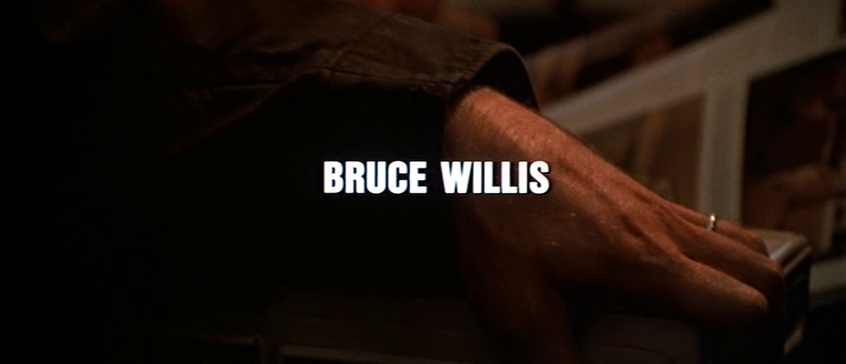
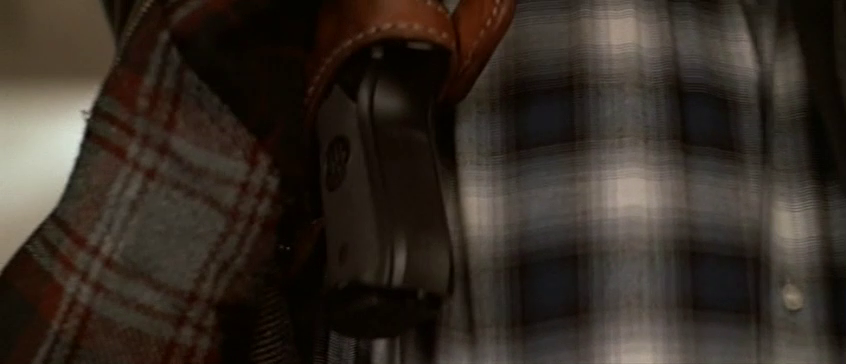
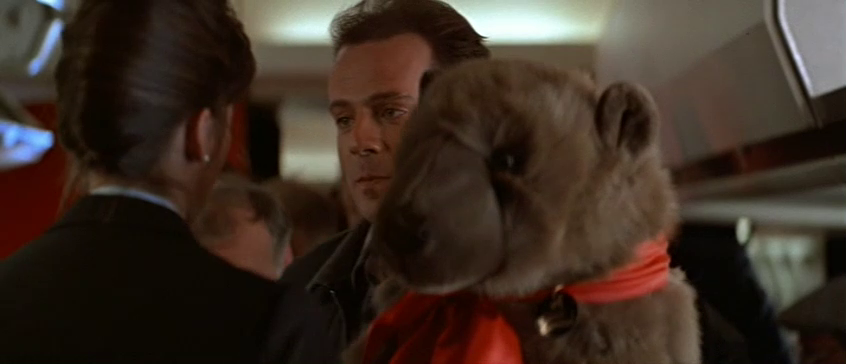
…seconds, we know that he has a ring (so, married). He hates flying (possibly heights too) and yet he's flown anyway. There must be a good reason for that, must be important. Then, we learn he's cop. And then, we learn (though the teddy) that he probably has a kid. Did he fly...
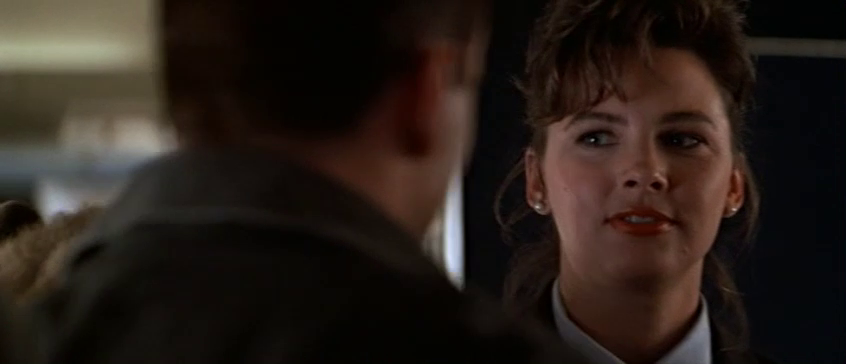
…in to see them? If so, why were they apart? And why is he making eye contact with this stewardess like this? Is he flirting? Is there trouble in his marriage? That's multiple character traits introduced on a purely visual level in mere seconds. Then, there's the words...
The man sitting next to him advises him to take off his shoes and "make fists with his toes" once he arrives. I don't need to tell you where this is leading, but what needs to be said is that…
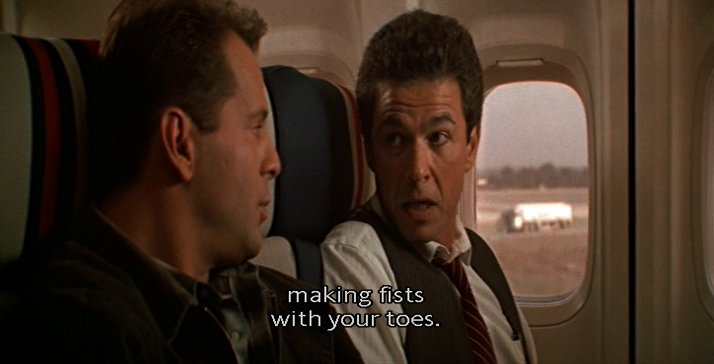
...rarely had the principle of classical economy led a director to milk this many purposes out of one setting. DIE HARD multiplies these links and echoes throughout the story with feverish enthusiasm. This one line echoes through the whole picture like a virtuoso piece of music.
So, my point is you don't always need to start your action movie with a bang. When you communicate that much essential information this efficiently in your opening shots, you've already convinced the audience something special is happening.
• • •
Missing some Tweet in this thread? You can try to
force a refresh

The Chateau fight scene from MATRIX RELOADED remains one of the most impressively crafted pieces of action cinema I've ever seen: exciting, precise, meaningful, kinetic. Every detail in this scene is important. Its place in the story, its set, its props, its direction. Thread ⬇️
I remember some friends at the time complaining that this scene was pointless: at this stage in the series, Neo is omnipotent, invincible. Why show us a fight against nameless fighters? The answer lies in the images themselves. In the matrix, the colour red is associated with...
...truth. See: the red pill, the woman in red, etc. Neo bleeds 3 times while in the matrix, once each film. In the 1st and the 3rd film, he bleeds from the mouth when fighting Agent Smith. So the truth is spoken in red: "My name is Neo" / "Because I choose to". These words...
Late to the party so sorry if it's been said before but the Bruce Lee scene in ONCE UPON A TIME IN HOLLYWOOD is shot as a one take until the very moment Cliff throws Lee into the car. Plus, the set suddenly becomes empty for no reason. It could suggest unreliable recollection or
perhaps the fact that the scene suddenly becomes a fantasy, an imagined outcome to this encounter. Why would everyone but one extra disappear from the scene after the one take ends? That makes no sense story-wise, so the reason must be something else. Maybe Cliff convinced...
himself that he "beat" Bruce Lee and the images going through his mind reflect this fictionality. It's like the set becomes a hyper-set, the stage for a new play within the film, a form of meta-narrative signifier. 🤔
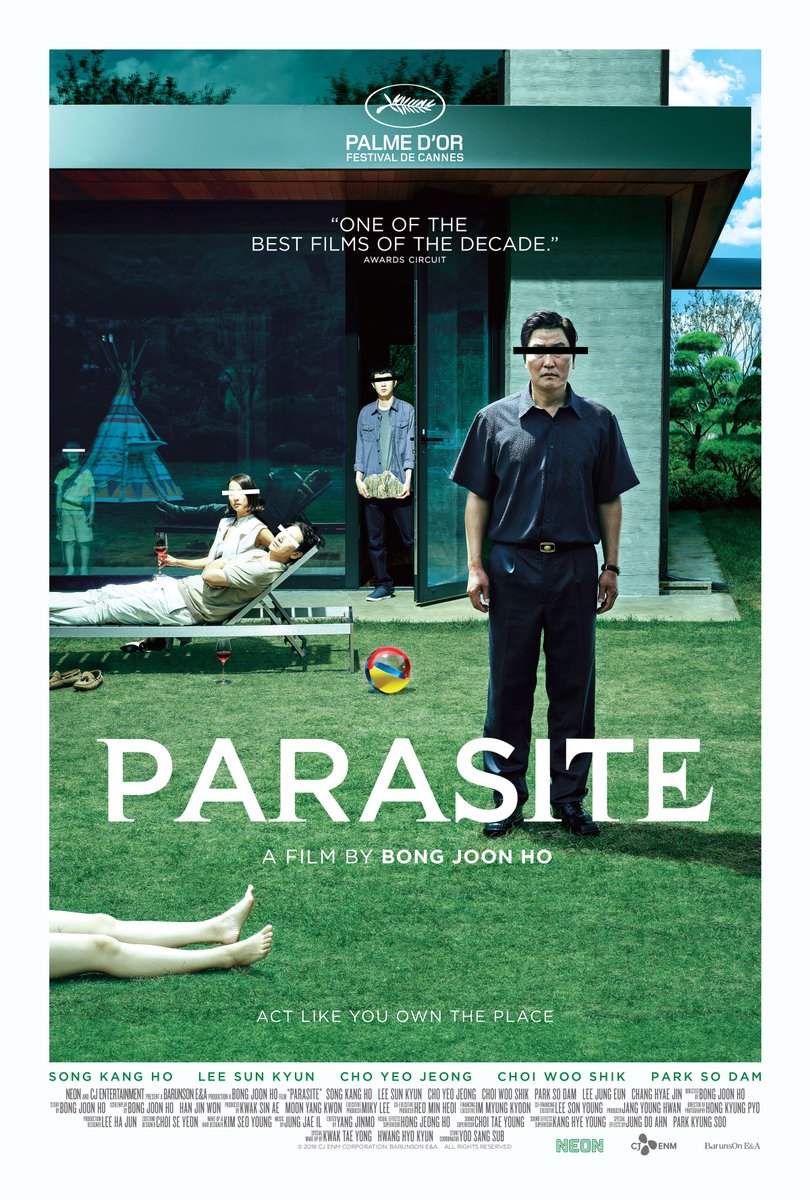
In PARASITE Bong Joon-ho uses carefully storyboarded shots to involve the viewer every step of the way. I believe the film clicks w/ many people because it makes complete sense on a sensory level. Its visual language flows better than most other films'. Let's thread an example:👇
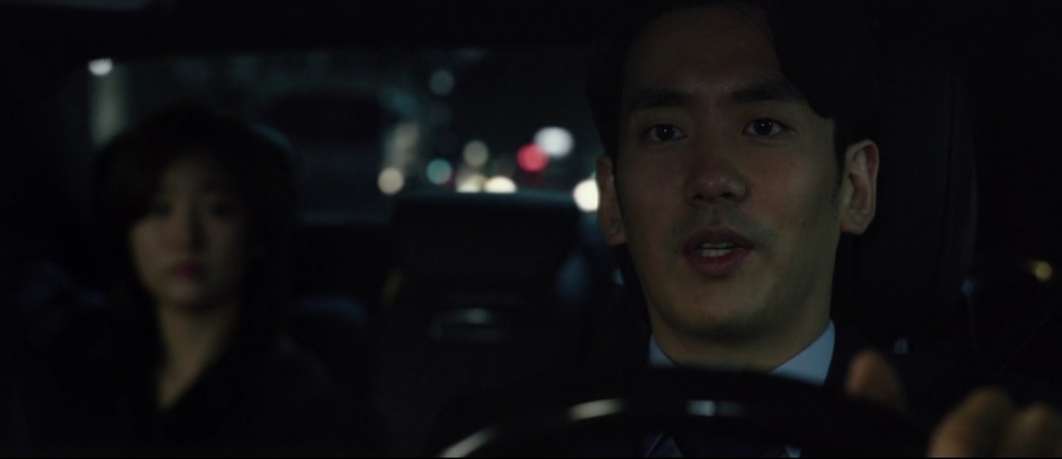
Consider the recurring series of "car scenes". Bong uses primarily 3 types of shots, and gives them various weight/meaning through editing and other techniques:
1/ The Master shot, which shows both characters at the same time, one in foreground, one in background.
2/ The Passenger's POV shot, which shows the driver as seen from the back seat.
3/ The Side shot, which can show either character from the side, with no connection to the other character in the car.
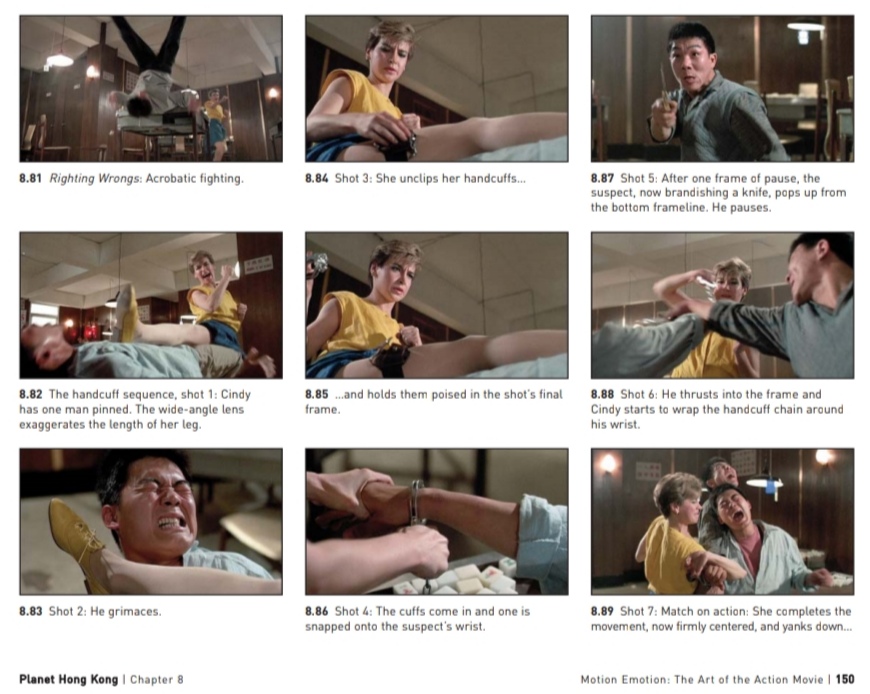
Hollywood fights are often shot by several cameramen catching action as best they can. Scenes are assembled by alternating long shots w/ closer ones. In HK, no camera position is repeated. Here each image is composed around a specific action and other actions require other setups
Brilliant break down of the scene by David Bordwell:
"The handcuffing phase of the scene gives us eighteen shots in only twenty-four seconds, making this passage as rapid-fire as any edit- happy Hollywood director might wish. Yet each shot is absolutely legible."
"The scene shows how the pause/burst/pause pattern can be modulated by the pace of editing. Often the cuts link movement smoothly across shots (8.88–8.89), but a shot can also highlight a marked beat, from the most vivid action to lesser ones (8.84–8.85)."
What are your favourite action scenes of the decade? Here are a few of mine:
SPL 2: A TIME FOR CONSEQUENCES (Soi Cheang, 2015)
Perhaps the most eloquent example of 'non-verbal dialogue' of recent memory, where each move is made in response to another. Grandiose in every aspect.
BAAHUBALI 2: THE CONCLUSION (S. S. Rajamouli, 2017)
A testament to India's willingness and ability to create subjugating cinema through images that forever seared themselves to my memory. Everything is possible, as long as it serves the spectacle.
THE TAKING OF TIGER MOUNTAIN (Tsui Hark, 2014)
After treading lightly on the fine line that separates mainstream entertainment from government-sanctioned propaganda, Tsui Hark concludes his adventure epic with the most gleefully pulpy action sequence he ever filmed.
THE BLADE (1995) features one of my favourite fight sequences. Through cinematic devices, Tsui Hark takes apart and reconfigures the wuxia pian. He creates a hybrid form of action/'cinéma vérité' where the camera has a hard time keeping up with the fighters. That's because...
...the world he creates in still in its primal years. It's a wuxia pian without jiang hu, or at least without the fully formed, heroic jiang hu that defines the genre. There is no honour, no bravery, no chivalry. That is, until this moment, the final fight, when Ding On becomes..
...the archetypal xia through his slaying of Fei Lung. It's a cosmogonic moment, the moment when the jiang hu is born and characters can start acting like they usually do in the genre. Even the musical progression of the scene conveys the same idea. It starts off with a barrage..