1/4 Our editor in chief, @JeffreyGoldberg, is starting a newsletter to bring you inside The Atlantic. Each month, Goldberg will explore the issues that concern us the most—by interviewing our writers, taking trips into our archives, and more. on.theatln.tc/r0Mnobz
2/4 For the first installment, Goldberg interviewed staff writer George Packer on America’s future as a unified country. The U.S. is heading into a “cold civil war that [will continue] to erode democracy,” Packer said. “I see three ways this could change": on.theatln.tc/FbaZGJ7
3/4 Read Packer’s latest essay, “How America Fractured Into Four Parts,” in which he argues that rival narratives are tearing the country apart: on.theatln.tc/s4A3AxL
4/4 Want to browse other Atlantic newsletters? We have six unique selections that come straight to your inbox. Preview and sign up to receive them here: theatlantic.com/newsletters/
• • •
Missing some Tweet in this thread? You can try to
force a refresh

1/ The Atlantic’s @edyong209 has won the 2021 Pulitzer Prize for explanatory reporting. In a series of articles, Yong anticipated the course of the coronavirus pandemic, clarified its dangers, and illuminated the American government’s failure to curb it. theatlantic.com/science/archiv…
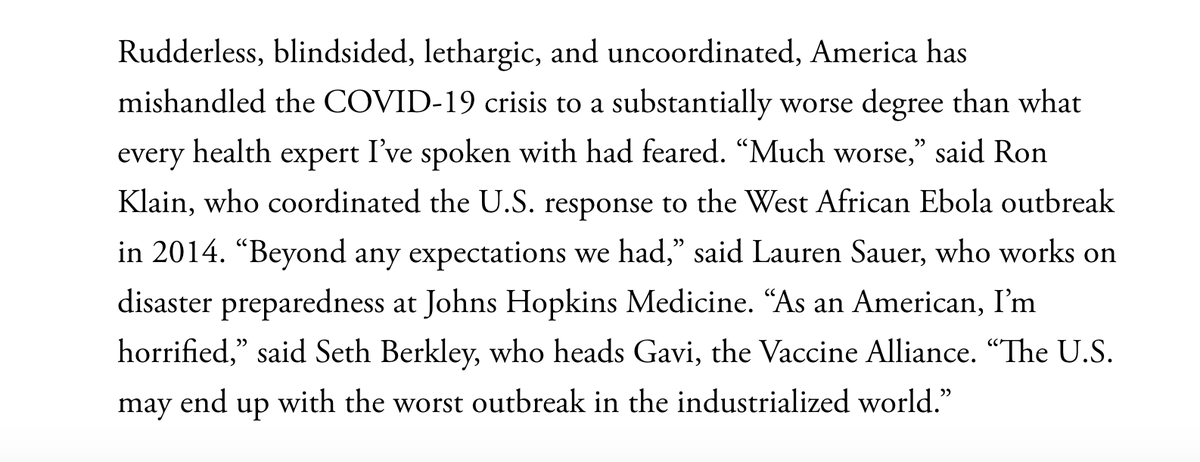
2/ In a prescient piece from March 2020, Yong predicted that the United States’ early mishandling of the crisis could lead to an outbreak unlike anything in modern memory: theatlantic.com/health/archive…
3/ The nation’s patchwork response would have consequences, Yong warned in May 2020: “Americans should expect neither a swift return to normalcy nor a unified national experience, with an initial spring wave, a summer lull, and a fall resurgence.” theatlantic.com/health/archive…
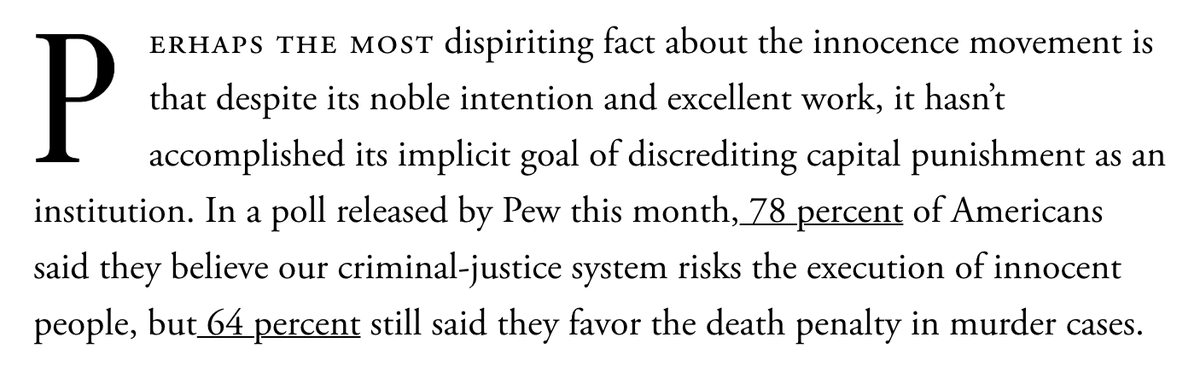
2/ It goes without saying that the state shouldn’t execute the innocent. But guilty people on death row don’t deserve to be executed either, Bruenig writes. It’s time to abolish the death penalty as a sentencing option.
3/ Focusing on exonerating the innocent indicates that some capital sentences are unfair, but ultimately the fight should be waged not against particular injustices, but against the unjust system itself, Bruenig argues.
1/8 Americans are trapped in two countries with four rival narratives, George Packer writes in our July/August issue. He calls them Free America, Smart America, Real America, and Just America. theatlantic.com/magazine/archi…
2/8 These four moral identities overlap, morph into, attract, and repel one another, Packer argues. They reflect schisms on both sides of the divide—Free and Real on one side, Smart and Just on the other. But who tends to fall into which camp? theatlantic.com/magazine/archi…
3/8 Free America draws on libertarian ideas, which it embeds in consumer capitalism. Historically, it is freedom from government and bureaucrats. Now it is “Get the fuck off my property. Take this mask and shove it.” theatlantic.com/magazine/archi…
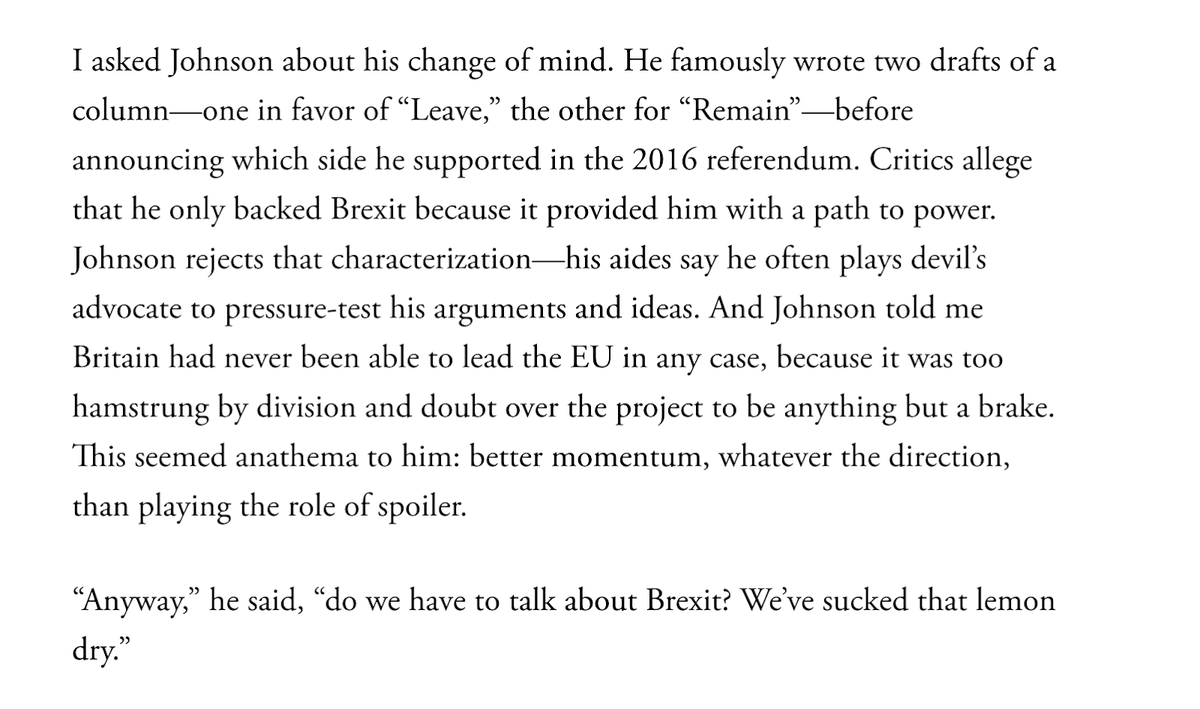
1/6 Who is Boris Johnson, really—and what does he stand for? Here’s what the prime minister had to say to @tommctague in a profile his then-director of communications advised him not to do: on.theatln.tc/mRLeF9X
2/6 McTague asked Johnson, a former journalist, to imagine that he was a writer again: How would he open this profile? What is the key to understanding Boris Johnson? After a few ums and ahs, Johnson replied: “Sheer physical fitness. And hard work.” on.theatln.tc/mRLeF9X
3/6 Rereading Johnson’s old columns, McTague noted that the prime minister’s work was far less hostile to Europe than one might imagine. So he asked Johnson what changed:
1/ In our June cover story @ClintSmithIII writes about the Confederate lies that live on. Smith's cover story is part of the second chapter of “Inheritance,” a project about American history, Black life, and the resilience of memory. theatlantic.com/magazine/archi…
2/ “As I traveled, I was moved by the people who have committed their lives to telling the story of slavery in all its fullness and humanity. And I was struck by the many people I met who believe a version of history that rests on well-documented falsehoods,” he writes.
3/ Buried in Blandford Cemetery, in Petersburg, Virginia, are the bodies of roughly 30,000 Confederate soldiers; it is one of the largest mass graves of Confederate servicemen in the country.
1/ Looking for a new read over the long weekend? Whether you’re in the mood to burst out the door or curl up on a couch this summer, The Atlantic’s writers and editors have book recommendations to match. theatlantic.com/summer-reading…
2/ Craving high drama? “‘I’m With the Band’ stirs a sensation the pandemic denied, of standing in a crowd, gazing up at a superstar, and wondering if you might just catch their eye,” @shirklesxp writes. on.theatln.tc/0zHDjI7
3/ Want to experience a sense of wonder about the universe? Wisława Szymborska’s poetry “can make all of human history seem like a daydream, or a cloud of dust seem like the cosmos," @lenikacruz writes. on.theatln.tc/0zHDjI7