People's Health Movement’s (PHM’s) Food and Nutrition thematic circle has called for a boycott of the UN Food Systems Summit 2021 because of corporate influence and the marginalisation of civil society voices. newsclick.in/UN-Food-System… (1)
Civil Society and Indigenous Peoples’ Mechanism (CSM) for relations with the UN Committee has also called for mobilisation to challenge the Summit and reclaim people’s sovereignty over food systems. (2)
"One of the important concerns raised was the involvement of the WEF & the appointment of the President of the Alliance for a Green Revolution in Africa (AGRA), as the Special Envoy for the summit, given AGRA is also an alliance that promotes the interests of agribusiness. " (3)
Soya is pushed as an 'excellent alternative' to animal source foods.
Putting it into one tweet......Soya is allergenic,estrogenic, goitre inducing, poorly bioavailable, genetically modified, indigestible.......&...added bonus...aggravates breast cancer. english.jagran.com/lifestyle/why-…
Highly centralized, commercialized, corporatized, privatised model of healthcare is unstable in a public health crisis such as a natural/man-made disaster, pandemic etc. This system is build only for expensive tertiary care treatment such as ICU/ventilators etc.
(1)
In the absence of primary & secondary health care systems, all patients rush to tertiary facilities and occupy the beds. As one patient said “I don’t have any symptoms, but I got admitted ‘in case’ I don’t find a bed later. BTW can you help find a bed for my wife as well !!” (2)
Evidence shows that almost 78% people who got beds did so with networking/contacts in the hospitals. So, the criteria for admission can often become ‘who you know’ rather than ‘what disease you have”
(3)
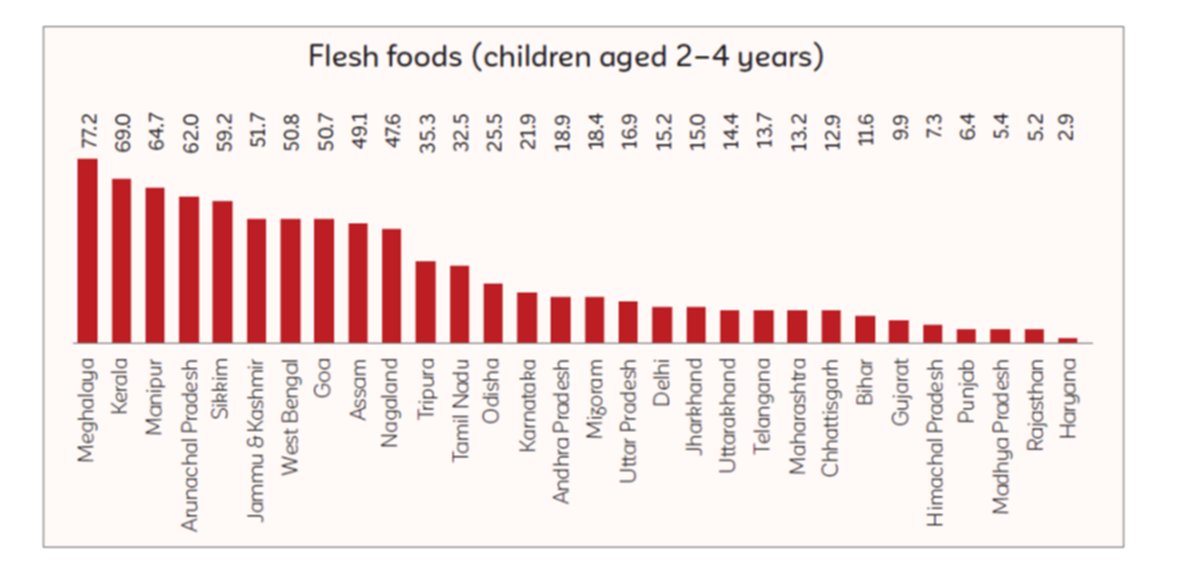
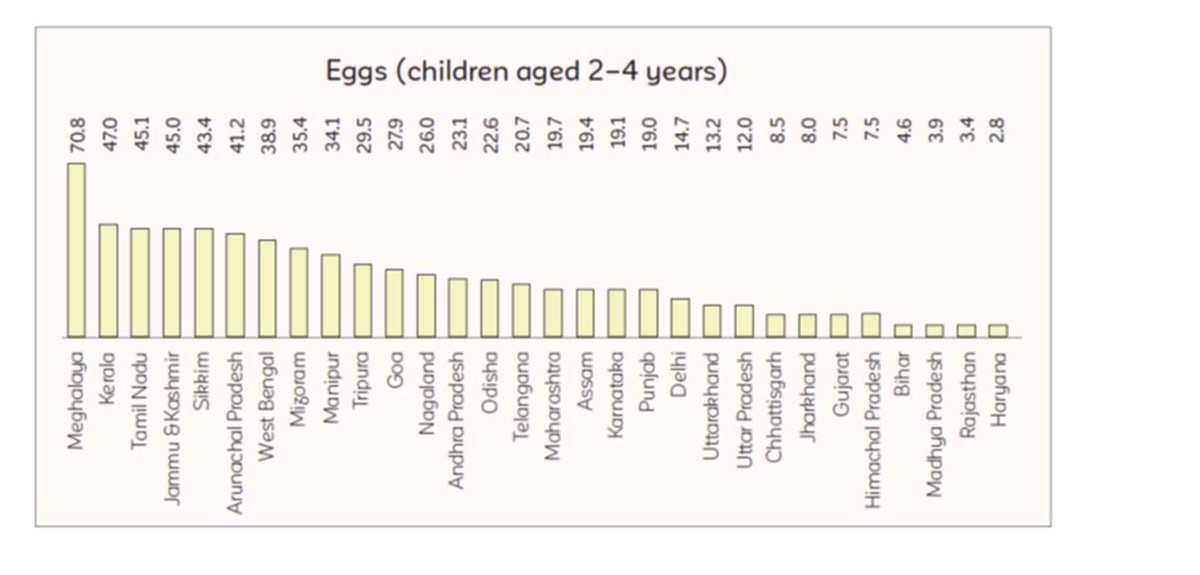
Bogus 'international studies' like this make patently false claims that are downright dangerous, unethical and fraudulent - that India has a vegetarian dietary guideline and also low greenhouse gas emission (as though the 1st is the reason for the 2nd) (1) firstpost.com/tech/science/i…
Firstly Indian dietary recommendations are not 'vegetarian'.
Inspite of the clear caste prejudice of those making guidelines, they have not been able to deny the importance of animal source foods in the diet.....and this is not for lack of trying (2)
"Animal foods like milk, meat, fish and eggs and plant foods such as pulses and legumes are rich sources of proteins." Dietary Guidelines India (3)
The book "Where India Goes: Abandoned Toilets, Stunted Development and the Costs of Caste" by Diane Coffey and Dean Spears, who work at the Research Institute for Compassionate Economics (RICE) reaches bizarre conclusions and tiptoes around real issues.
"Caste, if probed, will be found, along with gender, as the cause for most of India's problems– sexual violence,landlessness,poor labour laws,poverty,wealth inequality, illiteracy,maternal deaths,child deaths, poor health, open defecation, stunting etc".
"In an attempt to simplify disease transmission and by projecting stunting as a direct consequence of open defecation, the authors resort to means and methods that are problematic and likely, dangerous."
Very comprehensive write up by @ranjanikanth_ and @iffathfathima6z The government needs to get its priorities sorted. Rural Karnataka needs plenty of attention
“Policymaking in healthcare is centralised around big hospitals in cities. Because of this, villagers have to travel to big cities. They spend from their own pocket and if their cases are complicated, their treatment is often left out of free health care government schemes. ”
"We need a three-tier system, starting with a self-sufficient Primary Health Centre and trained doctors in rural areas. Public healthcare system has to be seamless right from the adolescent girl getting pregnant till the baby is five years old."