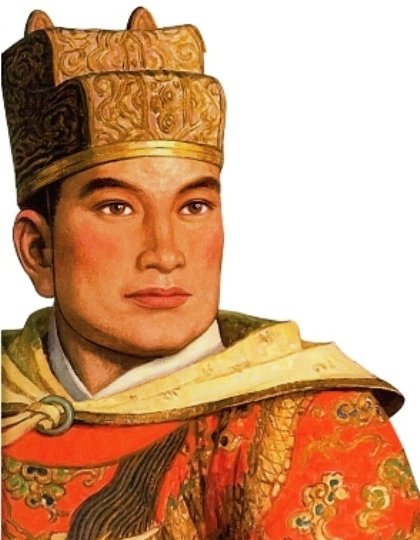
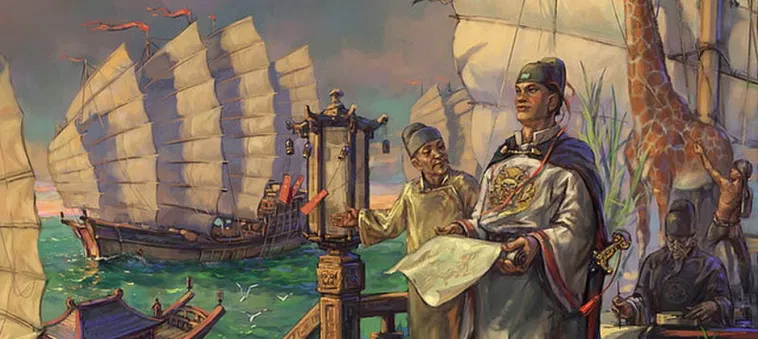
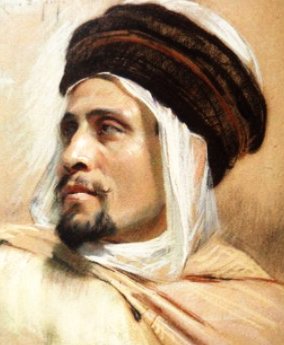
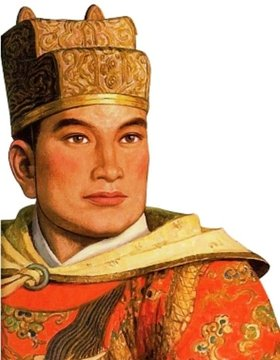
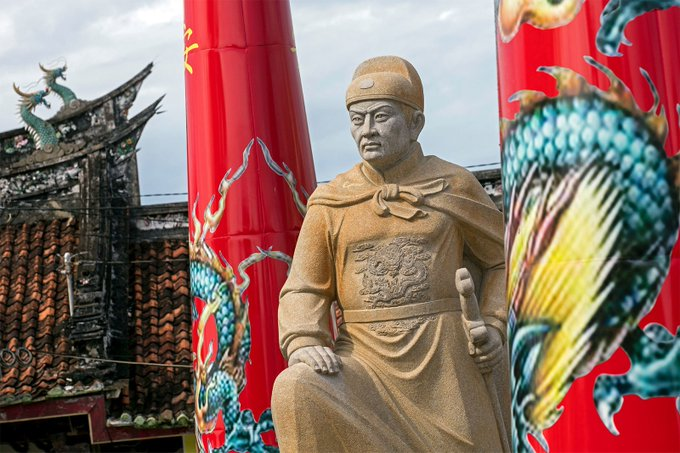
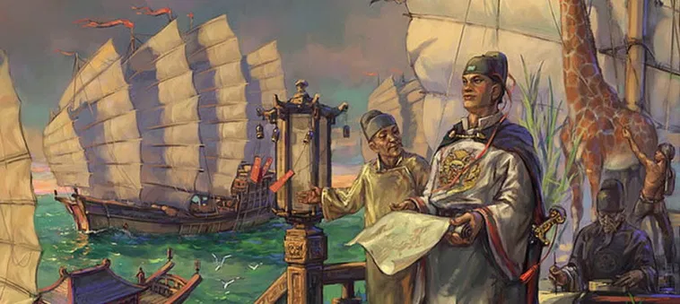
1) Zheng He (郑和) (d.1435), was a Chinese Muslim explorer, diplomat, and fleet admiral during China's early Ming dynasty. Zheng was a 30th generation descendant of the Prophet Muhammad (P.B.U.H). Zheng led China to become the superpower of the Indian Ocean, in the 15th CE...1/7
2) Zheng He was a great-great-great-grandson of Sayyid Ajjal Shams al-Din Omar, who served in the administration of the Mongol Empire and was the governor of Yunnan during the early Yuan dynasty. Sayyid Ajall was a 26th generation descendant of the Prophet Muhammad (P.B.U.H)..2/7
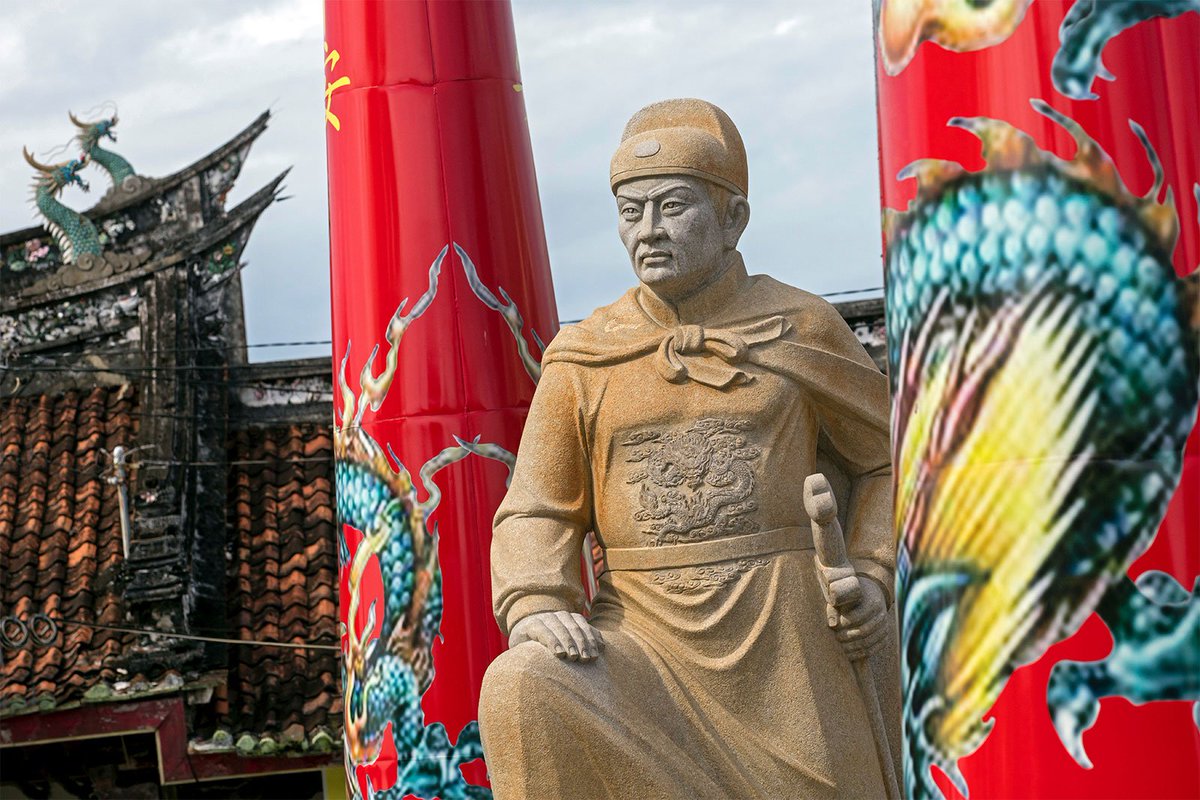
3) Zheng He had a strong desire and religious duty to make the pilgrimage to the holy city of Mecca. By successfully reaching Mecca, Zheng He was instrumental in forging ties between the Ming Dynasty and the Islamic countries of the Middle East...3/7 #Islam
4) The Foundation for Science Technology and Civilisation retraces the route of China’s 15th CE admiral, Zheng He, who ranks as perhaps the country’s foremost adventurer. A Muslim and a warrior, Zheng helped transform China into the region’s, and superpower of his time...4/7
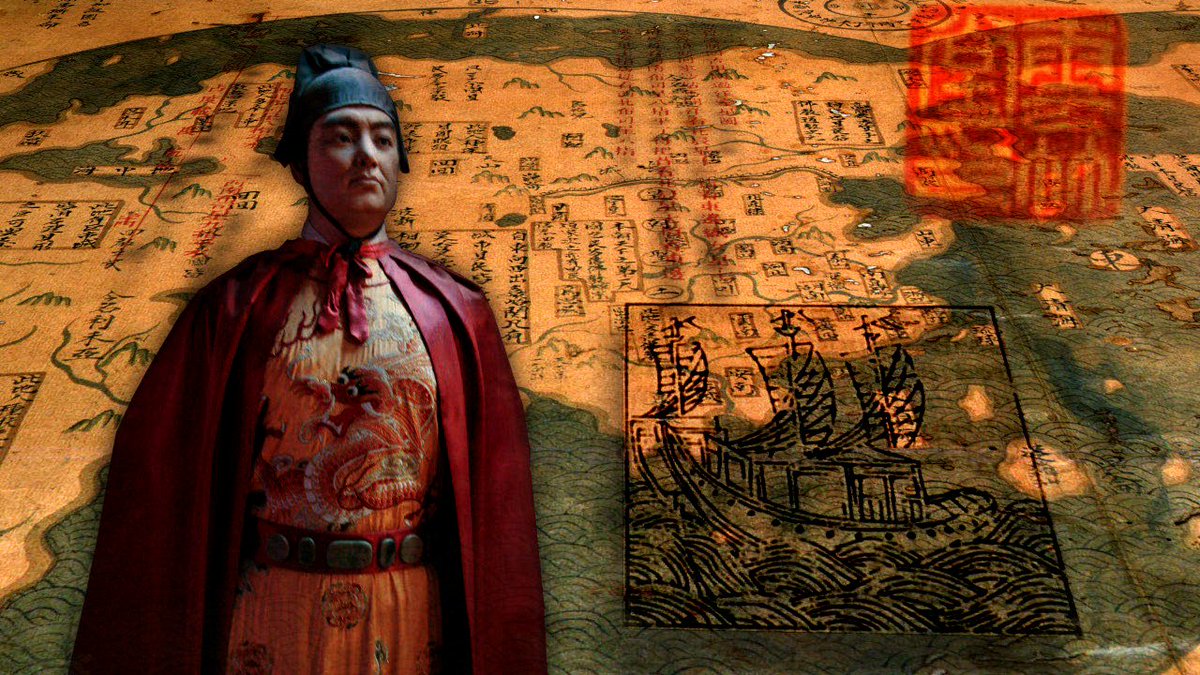
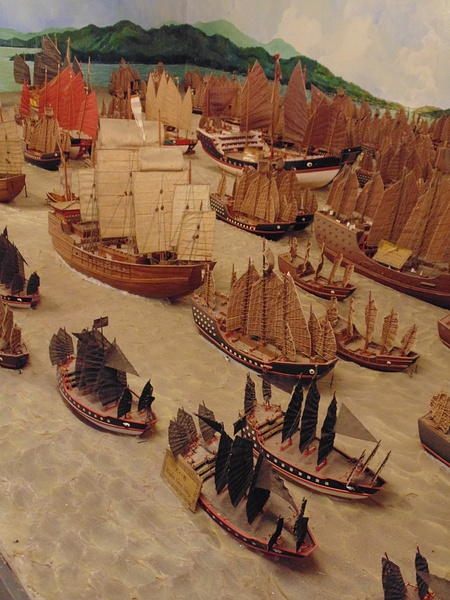
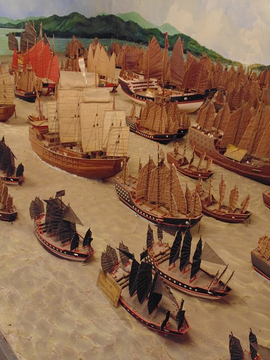
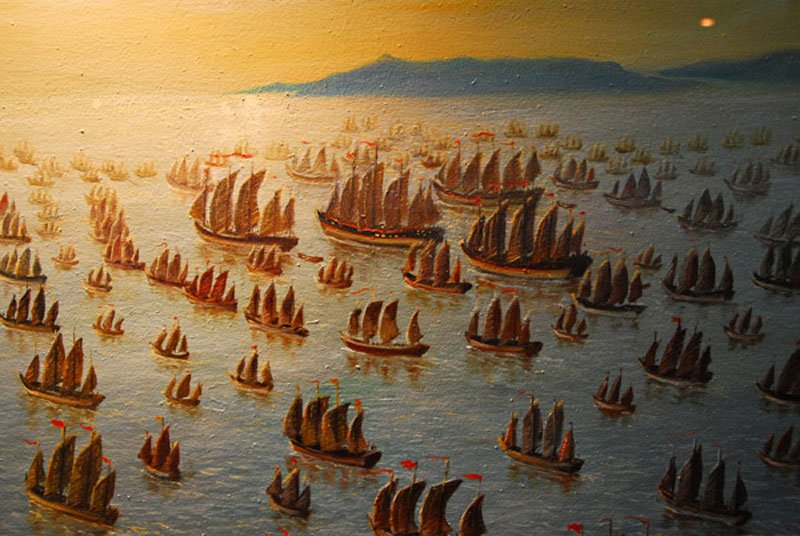
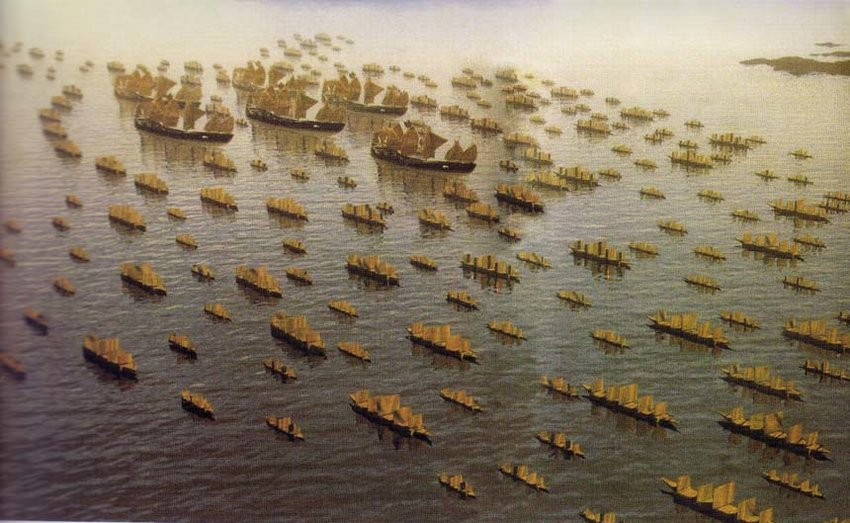
5) Zheng He’s first fleet included 27,870 men on 317 ships, including sailors, clerks, interpreters, soldiers, artisans, and medical men. On board were large quantities of cargo including silk goods, porcelain, gold and silverware, copper utensils, and cotton goods...5/7
6) In 1417, after two years in Nanjing and touring other cities, the foreign envoys were escorted home by Zheng He. On this trip, he sailed down the east coast of Africa, stopping at Mogadishu, Matindi, Mombassa, and Zanzibar, and may have reached Mozambique...6/7
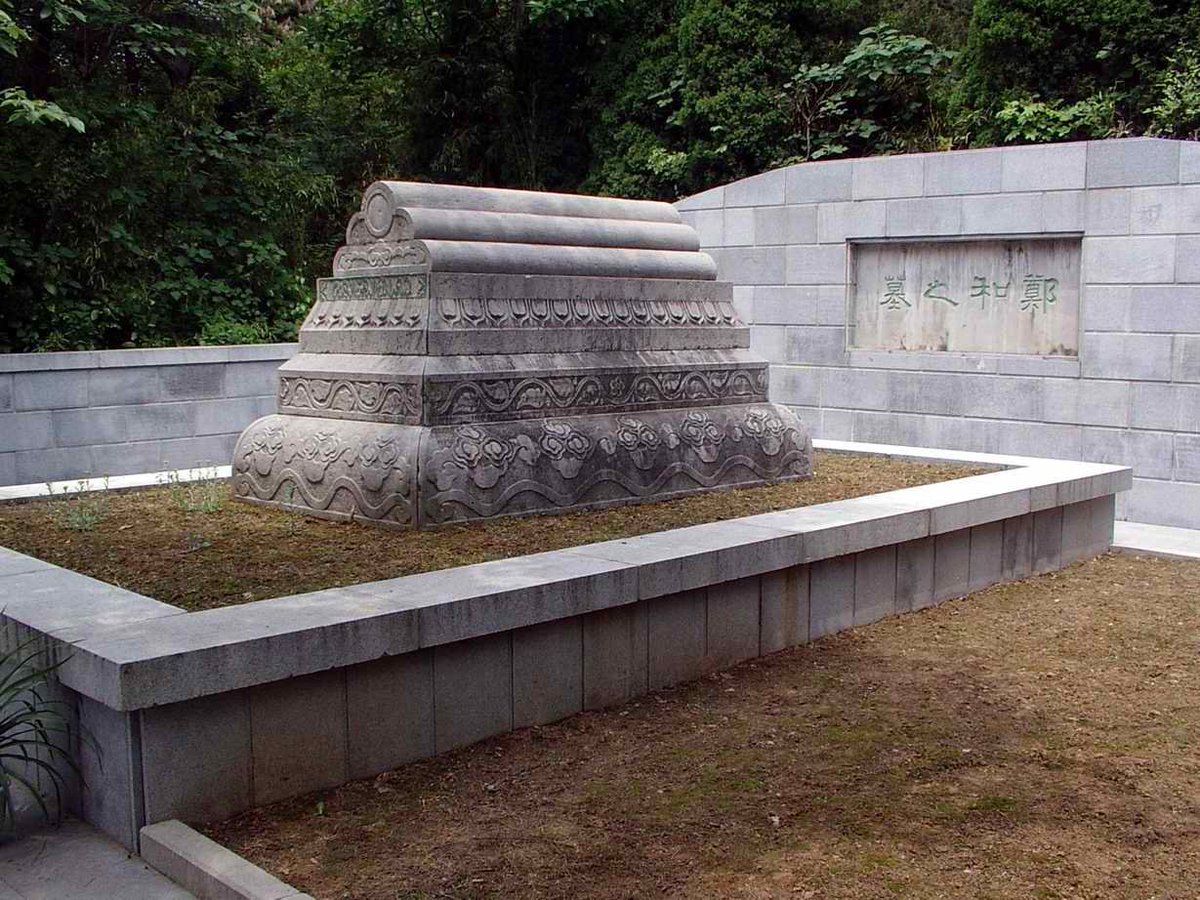
7) Zheng He is arguably China’s most famous navigator. Starting from the beginning of the 15th Century, he traveled to the West seven times. For 28 years, he traveled more than 50,000 km. Zheng He died in 1433 and was buried in Nanjing...7/7 #Islam
• • •
Missing some Tweet in this thread? You can try to
force a refresh

🚨 Meet Al-Zahrawi (Abulcasis) — the Father of Surgery 🩺🔪
📚 His 30-volume Kitab al-Tasrif became Europe’s standard medical text for 500 YEARS.
🛠️ Modern surgery quite literally stands on his shoulders. 🥼
The Muslim genius who shaped modern surgery.
THREAD: 🧵👇
Al-Zahrāwī (Abulcasis) (d.1013), was an Arab Muslim physician, surgeon, and chemist from Andalusia. He was the greatest surgeon of his time. He is also known as the 'father of surgery'. His principal work is 'Kitab al-Tasrif', an encyclopedia of medical practices.
Al-Zahrawi's principal work is the Kitab al-Tasrif, a thirty-volume encyclopedia of medical practices. The surgery chapter of this work was later translated into Latin, attaining popularity and becoming the standard textbook in Europe for the next five hundred years.
Al-Zahrawi's pioneering contributions to the field of surgical procedures and instruments had an enormous impact in the East and West well into the modern period. his surgical instruments are still used today to treat people.
Al-Zahrawi was a court physician to the Andalusian caliph Al-Hakam II. He was a contemporary of Andalusian chemists such as Ibn al-Wafid, al-Majriti, and Artephius. He devoted his entire life and genius to the advancement of medicine as a whole and surgery in particular.
Lubna of Cordoba was an Andalusian intellectual, mathematician, and poet during the 10th century. Originally a slave of Spanish origin, she rose to prominence in the Umayyad court and served as the palace secretary for Caliphs ʿAbd al-Rahmān III and al-Hakam II.
🧵THREAD :
2) Lubna was raised within the Madīnat al-Zahrā palace. She pursued a career within the palace, developing expertise in mathematics, grammar, and poetry. Her responsibilities included managing correspondence and administrative tasks, showcasing her exceptional skills.
3) Lubna played a pivotal role in the royal library, which housed over 500,000 books. She was instrumental in organizing and expanding the collection, contributing to Córdoba's status as a center of learning.
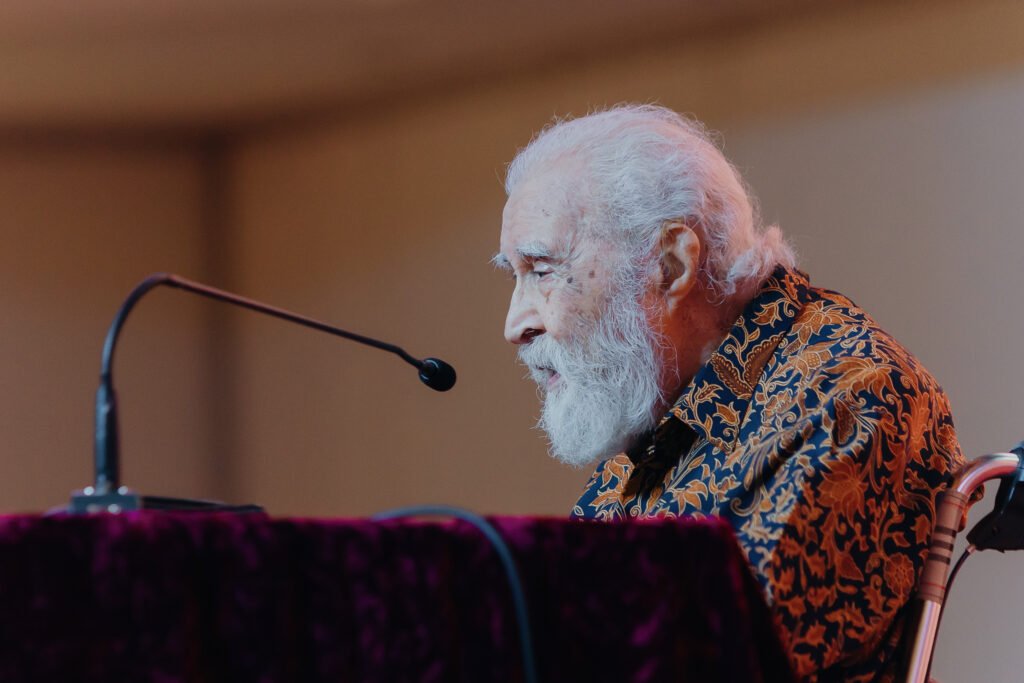
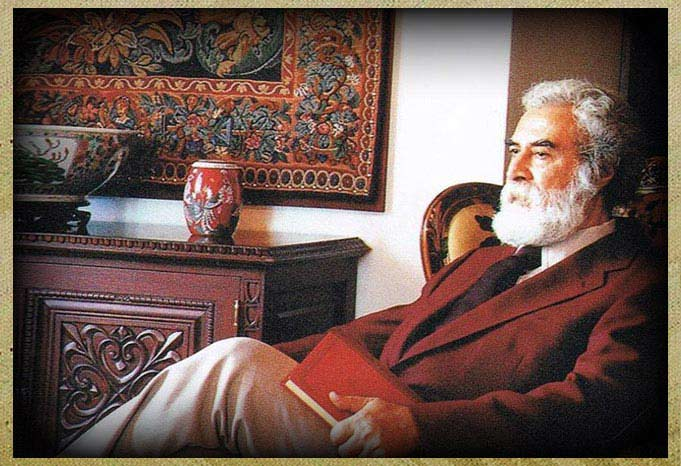
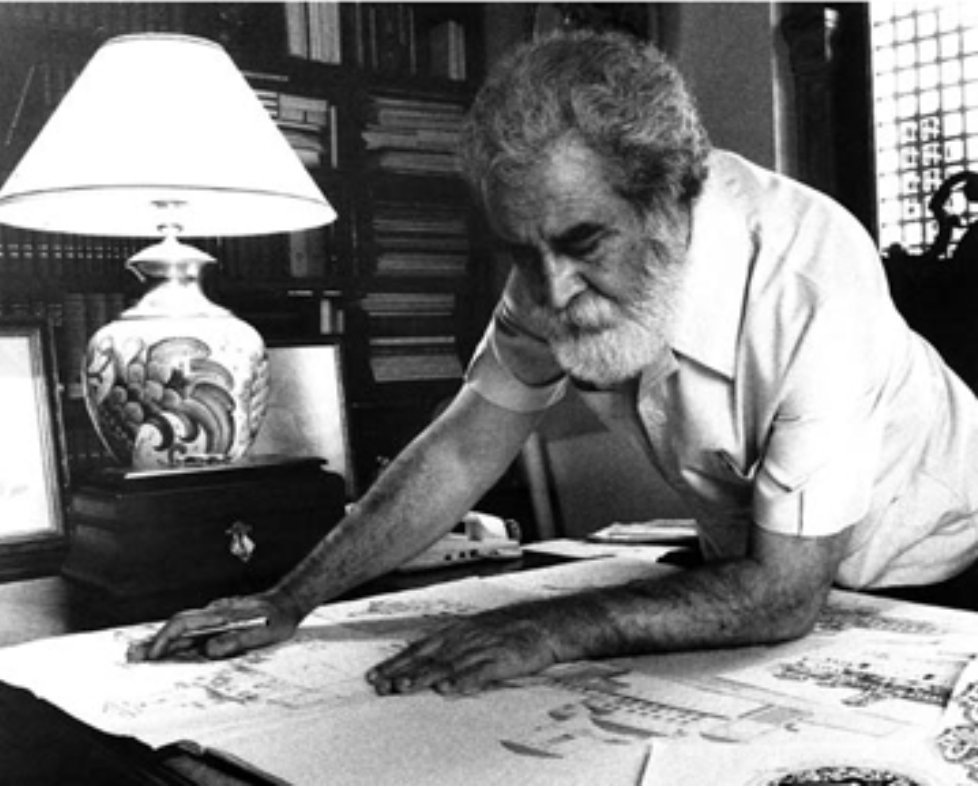
Sayyed Muhammad Naquib al-Attas: The Thinker Who Redefined Islamic Thought 🖋️
His deep knowledge spans Islamic theology, philosophy, metaphysics, history, and literature. He’s one of the most influential Muslim intellectuals of our time.
🧵 THREAD
2) Born in 1931 in Indonesia, al-Attas is a Malaysian thinker of Arab descent. Al-Attas introduced the idea of "Islamization of Knowledge," arguing that modern knowledge should be integrated with Islamic values to counter the secular worldview that dominates education.
3) Al-Attas saw the modern world trapped in ‘confusion of knowledge’ — where truth is fragmented, and meaning is lost. He argued that Islamic philosophy restores harmony by linking reason, revelation, and the soul’s journey toward God.
1) Zheng He (郑和) (d.1435), was a Chinese Muslim explorer, diplomat, and fleet admiral during China's early Ming dynasty. Zheng was a 30th generation descendant of the Prophet Muhammad ﷺ.
Zheng led China to become the superpower of the Indian Ocean, in the 15th CE. ++
🧵
2) Zheng He was a great-great-great-grandson of Sayyid Ajjal Shams al-Din Omar, who served in the administration of the Mongol Empire and was the governor of Yunnan during the early Yuan dynasty. Sayyid Ajall was a 26th generation descendant of the Prophet Muhammad (P.B.U.H)..2/7
3) Zheng He had a strong desire and religious duty to make the pilgrimage to the holy city of Mecca. By successfully reaching Mecca, Zheng He was instrumental in forging ties between the Ming Dynasty and the Islamic countries of the Middle East...3/7
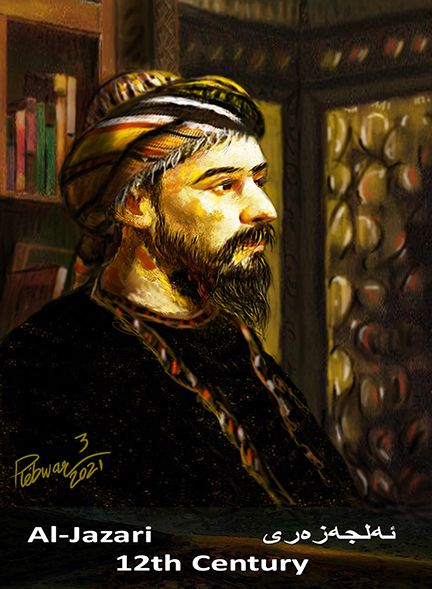
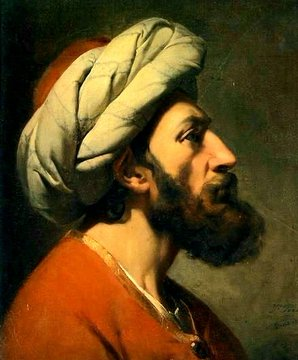
1) Al-Jazarī (d.1206), was an Kurdish Muslim polymath: a scholar, inventor, mechanical engineer, and mathematician. He has been described as the "father of robotics" and modern-day engineering. In 1206, he described 50 mechanical devices, and how to construct them...++
(🧵THREAD)
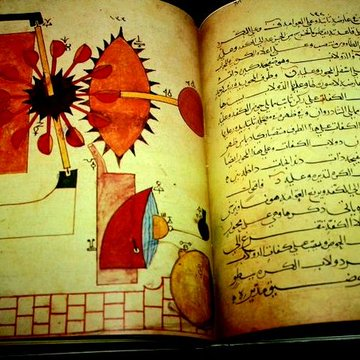
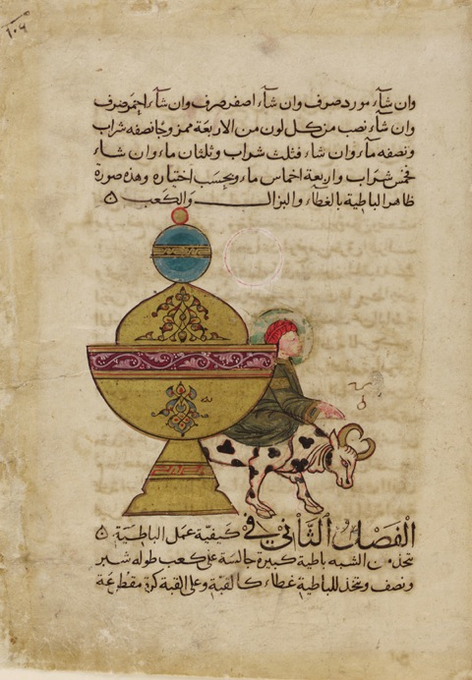
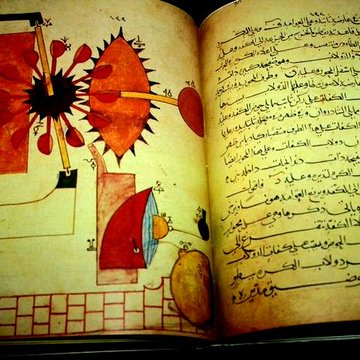
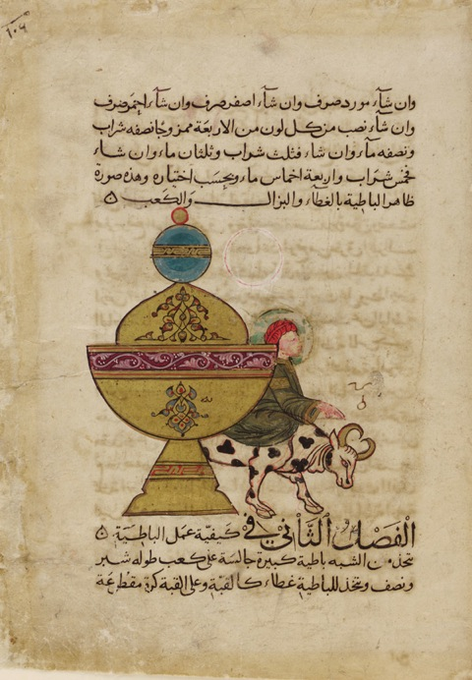
2) He is best known for writing The Book of Knowledge of Ingenious Mechanical Devices (Kitab fi ma'rifat al-hiyal al-handasiya), ('Book in knowledge of engineering tricks') in 1206, where he described 50 mechanical devices, along with instructions on how to construct them.
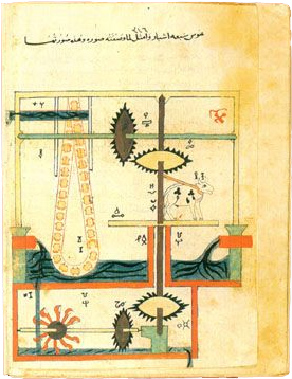
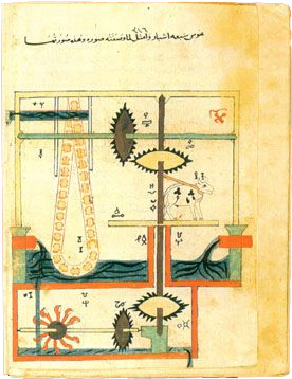
3) Al-Jazari invented five machines for raising water, as well as watermills and water wheels with cams on their axle used to operate automata. It was in these water-raising machines that he introduced his most important ideas and components.
1) Al-Jazarī (d.1206), was an Arab Muslim polymath: a scholar, inventor, mechanical engineer, and mathematician. He has been described as the "father of robotics" and modern-day engineering. In 1206, he described 50 mechanical devices, and how to construct them...++
(🧵THREAD)
2) He is best known for writing The Book of Knowledge of Ingenious Mechanical Devices (Kitab fi ma'rifat al-hiyal al-handasiya), ('Book in knowledge of engineering tricks') in 1206, where he described 50 mechanical devices, along with instructions on how to construct them.
3) Al-Jazari invented five machines for raising water, as well as watermills and water wheels with cams on their axle used to operate automata. It was in these water-raising machines that he introduced his most important ideas and components.