Madeira - Wikipedia
Madeira was claimed by Portuguese sailors in the service of Prince Henry the Navigator in 1419 and settled after 1420. The archipelago is considered to be the first territorial discovery of the exploratory period of the Age of en.wikipedia.org/wiki/Madeira
Madeira was claimed by Portuguese sailors in the service of Prince Henry the Navigator in 1419 and settled after 1420. The archipelago is considered to be the first territorial discovery of the exploratory period of the Age of en.wikipedia.org/wiki/Madeira
Discovery. The region is noted for its Madeira wine. Henry was the fourth child of the Portuguese King John I, who founded the House of Aviz.
Peter S. Duponceau, Steuben's Private Secretary and Aide-de-camp, described Azor in one of his accounts of Steuben's time in Boston
Peter S. Duponceau, Steuben's Private Secretary and Aide-de-camp, described Azor in one of his accounts of Steuben's time in Boston
After the War was over, Washington experimented in dog breeding.[2] He sought to create a hunting dog that was fast, smart, and had a sharp nose.[2] After General Marquis de Lafayette sent Washington a few of his favorite French hounds in 1785,[7] Washington began including the
French pups in his breeding experiments.[2] The American foxhound, a lighter, faster, smarter, and taller dog than its French or British cousin,[2] sprouted from these experiments, resulting in Washington being known as the "father of the American foxhound" 

The islands of Madeira have a long winemaking history, dating back to the Age of Exploration (approximately from the end of the 15th century) when Madeira was a standard port of call for ships heading to the New World or East Indies. To prevent the wine from spoiling, neutral
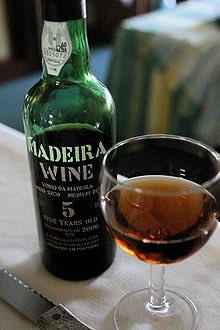
grape spirits were added. On the long sea voyages, the wines would be exposed to excessive heat and movement which transformed the flavour of the wine. This was discovered by the wine producers of Madeira when an unsold shipment of wine returned to the islands after a round trip.
The roots of Madeira's wine industry date back to the Age of Exploration, when Madeira was a regular port of call for ships travelling to the East Indies. By the 16th century, records indicate that a well-established wine industry on the island supplied these ships with wine for
the long voyages across the sea. The earliest examples of Madeira were unfortified and had the habit of spoiling at sea. However, following the example of Port, a small amount of distilled alcohol made from cane sugar was added to stabilize the wine by boosting the alcohol
content (the modern process of fortification using brandy did not become widespread until the 18th century). The Dutch East India Company became a regular customer, picking up large (112 gal/423 L) casks of wine known as "pipes" for their voyages to India.
Madeira was a very important wine in the history of the United States of America. No wine-quality grapes were grown among the thirteen colonies,[3] so imports were needed, with a great focus on Madeira.[2][4] One of the major events on the road to the American revolution in
which Madeira played a key role was the British seizure of John Hancock's sloop Liberty on 9 May 1768. Hancock's boat was seized after he had unloaded a cargo of 25 pipes (3,150 gallons) of Madeira, and a dispute arose over import duties. The seizure of Liberty caused riots to
erupt among the people of Boston.
The mid-19th century ushered an end to the industry's prosperity. First came the 1851 discovery of powdery mildew, which severely reduced production over the next three years. Just as the industry was recovering through the use of the copper-based Bordeaux mixture fungicide, the
phylloxera epidemic that had plagued France and other European wine regions reached the island.
In 1988, the Symington family of Portugal invested in the Madeira Wine Company which owned many of the Madeira brand names. On September 18, 1947, the Office of the Secretary of the Air Force was created and Symington became the first secretary. Symington had a stormy term as he
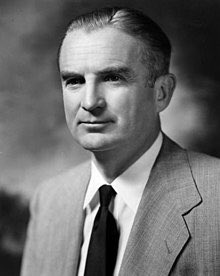
worked to win respect for the United States Air Force, which previously had been part of the Army. He had numerous public battles with Secretary of Defense James Forrestal. Major accomplishments during Symington's term as Secretary included the Berlin Airlift and championing the
United States Air Force Academy. Symington resigned in 1950 to protest lack of funding for the Air Force after the USSR detonated its first nuclear weapon. He remained in the administration as the Chairman of the National Security Resources Board (1950–1951) and the Chairman of
the Reconstruction Finance Corporation Administrator (1951–1952). He was featured on the cover of Time magazine's January 19, 1948 issue. At one point, he was a guest of CIA Chief of Station Ted Shackley while touring the Kingdom of Laos.
In the early 1960s, Shackley's work
In the early 1960s, Shackley's work
included being station chief in Miami, during the period of the Cuban Missile Crisis, as well as the Cuban Project (also known as Operation Mongoose), which he directed. He was also said to be the director of the "Phoenix Program" during the Vietnam War, as well as the CIA
station chief in Laos between 1966–1968, and Saigon station chief from 1968 through February 1972. In 1976, he was appointed Associate Deputy Director for Operations, second in charge of CIA covert operations.[
It was at this time that he was recruited by the CIA, and in 1953 he was assigned to work under William King Harvey at the CIA's Berlin Base.
During the period (1962–1965), Shackley was station chief in Miami, Florida. While heading the CIA office (known as "JMWAVE") shortly
During the period (1962–1965), Shackley was station chief in Miami, Florida. While heading the CIA office (known as "JMWAVE") shortly
after the 1961 Bay of Pigs Invasion, Shackley dealt with operations in Cuba (alongside Edward Lansdale). JMWAVE employed more than 200 CIA officers, who handled approximately 2,000 Cuban agents. These included the famous "Operation Mongoose" (aka "The Cuban Project"). On
February 5, 1986, Shackley was interviewed by the Tower Commission investigating the Iran–Contra affair.[17] Shackley reported that he met with General Manucher Hashemi, the former head of SAVAK's counterintelligence division, in Hamburg, West Germany in November 1984.
He gave the report to Ledeen who forwarded it to Oliver North, the staff officer on the National Security Council responsible for counter-terrorism. As the Safari Club was beginning operations, former CIA Director Richard Helms and agent Theodore "Ted" Shackley were under
scrutiny from Congress and feared that new covert operations could be quickly exposed. ] Peter Dale Scott has classified the Safari Club as part of the "second CIA" — an extension of the organization's reach maintained by an autonomous group of key agents. Thus even as Carter's
new CIA director Stansfield Turner attempted to limit the scope of the agency's operations, Shackley, his deputy Thomas Clines, and agent Edwin P. Wilson secretly maintained their connections with the Safari Club and the BCCI. The United States was not a formal member of the
group, but was involved to some degree, particularly through its Central Intelligence Agency. Henry Kissinger is credited with the American strategy of supporting the Safari Club implicitly — allowing it to fulfill American objectives by proxy without risking direct
responsibility.[14] This function became particularly important after the U.S. Congress passed the War Powers Resolution in 1973 and the Clark Amendment in 1976, reacting against covert military actions orchestrated within the government's Executive branch.[The BCCI served to
launder money, particularly for Saudi Arabia and the United States—whose CIA director in 1976, George H. W. Bush, had a personal account. "The Safari Club needed a network of banks to finance its intelligence operations. With the official blessing of George Bush as the head of
the CIA, Adham transformed a small Pakistani merchant bank, the Bank of Credit and Commerce International (BCCI), into a worldwide money-laundering machine, buying banks around the world in order to create the biggest clandestine money network in history."The club was operated
by Saudi arms dealer Adnan Khashoggi—also a friend of Adham's.
• • •
Missing some Tweet in this thread? You can try to
force a refresh