When people suggest that medical transition would be fine if only people followed the WPATH Standards of Care (which are not actually standards of care) they usually neglect to mention that no one actually follows them, not even WPATH members.
The author of the usual example to show how young they're pushing surgical transition is a WPATH member, in fact on its board of directors. Even as vague as the "standards" are, it's clear to see she does not follow them.
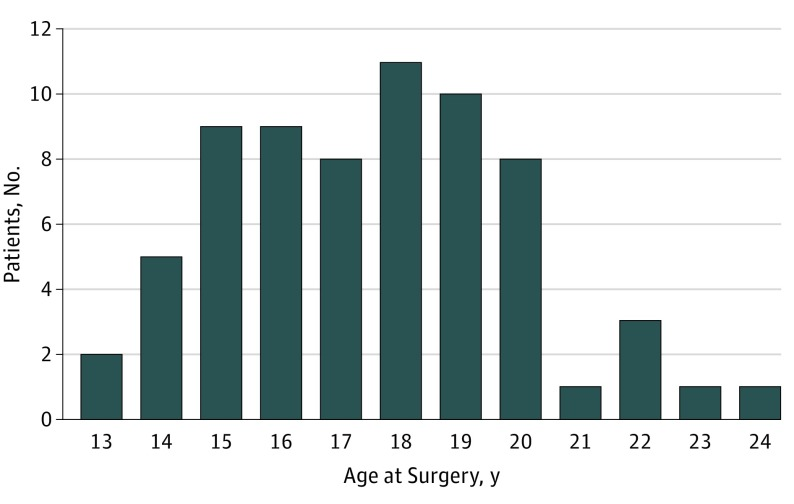
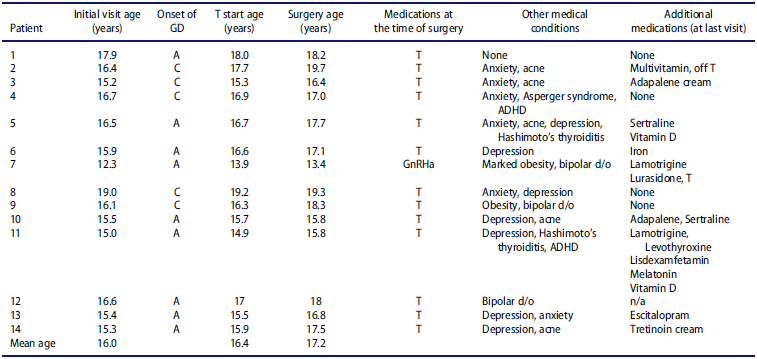
Sometimes I bring up this study when the "1 year of hormones" nonsense is brougt up, since it has minors going from first visit to surgery in a few months - and both authors are WPATH members. They don't care about the so called standards.
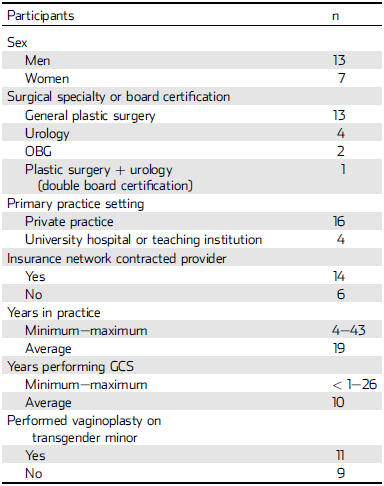
There's a paper called "Age is just a number" about WPATH-affiliated surgeons attitudes towards vaginoplasty in minors. 11 did, 9 did not. Yes, that is the real name of the paper. And they went as young as 15.
A majority did not follow their own standards.
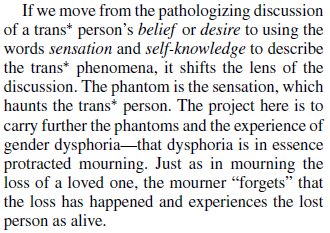
I recently read a semi-religious paper written by someone who may or may not actually be a large number of monkeys with an equally large number of typewriters. Published in the WPATH journal, by a WPATH member.
And these are the people we are supposed to look to?
The reality of the matter is that the WPATH standards are standards only in name, and they serve primarily to add a thin layer of credibility to what is actually not a scientific, evidence-based treatment of gender dysphoria at all.
Following them is gambling with your patient.
So it makes perfect sense for just about everyone to not follow them. They're very much like "trans" itself, in that everyone uses the same word but with a unique meaning to that individual.
But everyone has to pay lip service as well, because without them, there is nothing. So we end up with an organization where the members don't follow their own guidance, but everyone swears by them. It's bizarre to say the least.
• • •
Missing some Tweet in this thread? You can try to
force a refresh

AusPATH likes to put out statements that look good on the surface but quickly deflate when you dig into them. Recently they put out this: auspath.org/gender-affirmi…. Let's take a look at a specific part of it which I am very familiar with.
The authors make two claims: that adhering to carefully developed guidelines is associated with little regret and "de-transition", for which they offer three references; and that "de-transition" is often a consequence of external pressures, for which they offer one reference.
I will leave aside the fact that they use loaded language and try to sneak in "carefully developed" when that isn't the case, and just consider the extent to which their references support the claims they make.
"Gender identity - the deeply felt internal sense of oneself as male, female, or somewhere else on the gender spectrum - may or may not align with the sex one was assigned at birth."
Male and female is not a spectrum. Stop conflating sex and gender.
"When it does not align, the umbrella term “transgender” is often used to denote this incongruence."
The article will include a citation that uses an incompatible definition. The authors will not acknowledge or explain why they use this shell game trick.
This will be a thread thinking out loud about the 60 minutes segment. It was all over the place, and I need to go over it bit by bit to figure out what just happened.
The opening sentence actually contains an error. The Arkansas law does not prohibit the facilitation of medical transition of youth for "transgender youth", but any youth. It will later cover a number of cases where people who considered themselves "transgender youth" weren't so.
The second sentence opens "as part of a new culture war", an extremely simplistic view which fails to take into account not only international developments and the incredibly short history of this field. This is not serious reporting.
GnRHas does not operate on your paperwork, your registered sex is not relevant in the slightest. By using the term "assigned sex at birth", the author manages to introduce a falsehood in their text which did not need to be there at all.
Maybe I should do a write-up of this whole article. Okay, so "stop transgender kids from experiencing the effects of puberty that may not align with their gender identities" is an odd choice of words, they stop any kid from experiencing the effects of puberty, full stop.
"and implants can run up to approximately $45,000 per implant out of pocket, while shots cost can cost thousands of dollars per dose"
It's rare for these articles to bring up the incredible amounts of money involved, I think that is something the author should be commended for.
@FlohrFritz@ortrudethevegan I'm sick of the term "gender" in general. I'm tired of having to work out which distinct school of thought and/or sect the person using it subscribes to before I can even extract any meaning from what they've written.
@FlohrFritz@ortrudethevegan An apparent rite of passage in writing trans-related papers is to include some rough definition of what trans is in the introduction (example in image). I compiled a number of these, all on a single trans-related surgery, and it's a mess to read.
@FlohrFritz@ortrudethevegan If you simply glance over the various phrasings in the papers, you won't notice a problem. But if you actually look at what they say, they don't agree at all.
The ICGP recently took down their trans guidelines and just the other day put a revised version back up. Let's see what changes have been made...
The first significant change is reworking the evidence introduction. That makes sense since it had nothing to do with what was being presented in the document, however the new version makes no sense either as there is only a single place where it is brought up.
The main thing which has been reworked all over is references to other organizations. The overt surrender of medical principles to completely unqualified advocacy groups has been scaled back.