
Climate change is now “affecting every inhabited region across the globe”, according to the IPCC.
Here's what that means for Earth 👇 econ.st/3jGzHxw
Here's what that means for Earth 👇 econ.st/3jGzHxw
The IPCC's report arrives at a time of shattered temperature records and terrifying fires and floods.
It argues that temperatures may rise more than 1.5°C above pre-industrial levels by 2050, if not sooner econ.st/3jGzHxw
It argues that temperatures may rise more than 1.5°C above pre-industrial levels by 2050, if not sooner econ.st/3jGzHxw
Without action, the world could see a 3°C temperature rise. The consequences of this are dire econ.st/3ivZKrV
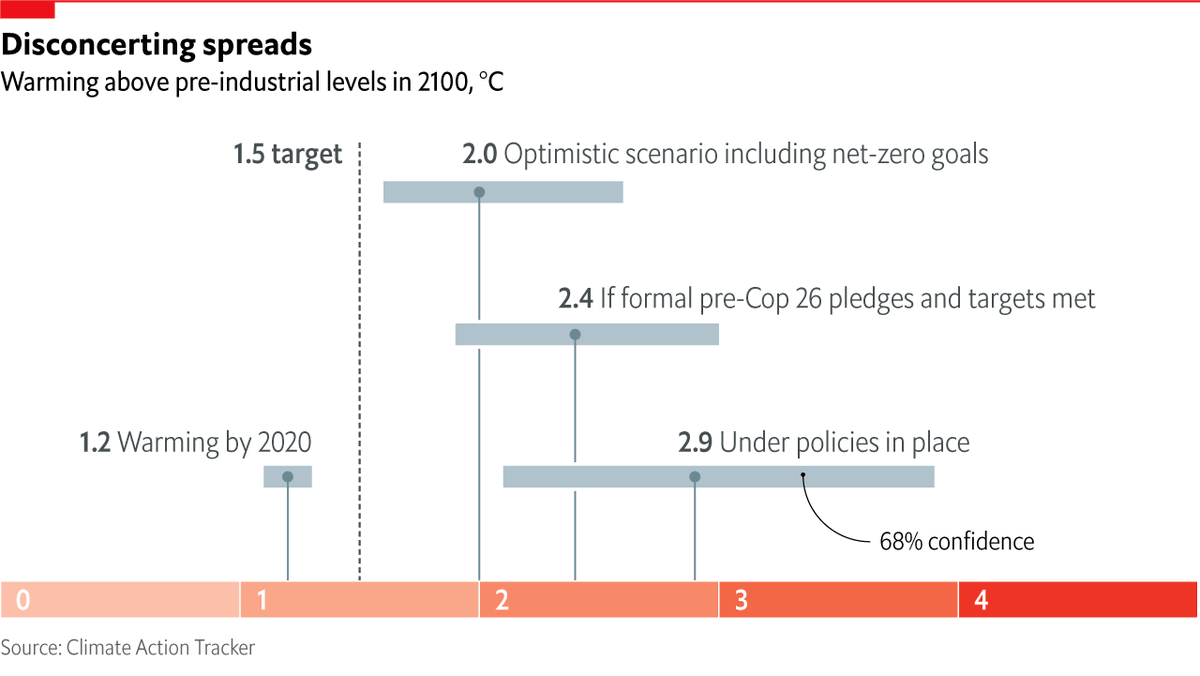
If existing climate targets are met and promises kept, there is a 68% chance of a peak warming temperature between 1.9°C and 3.0°C.
But these averages and projections come with wide error bars econ.st/3ivZKrV
But these averages and projections come with wide error bars econ.st/3ivZKrV
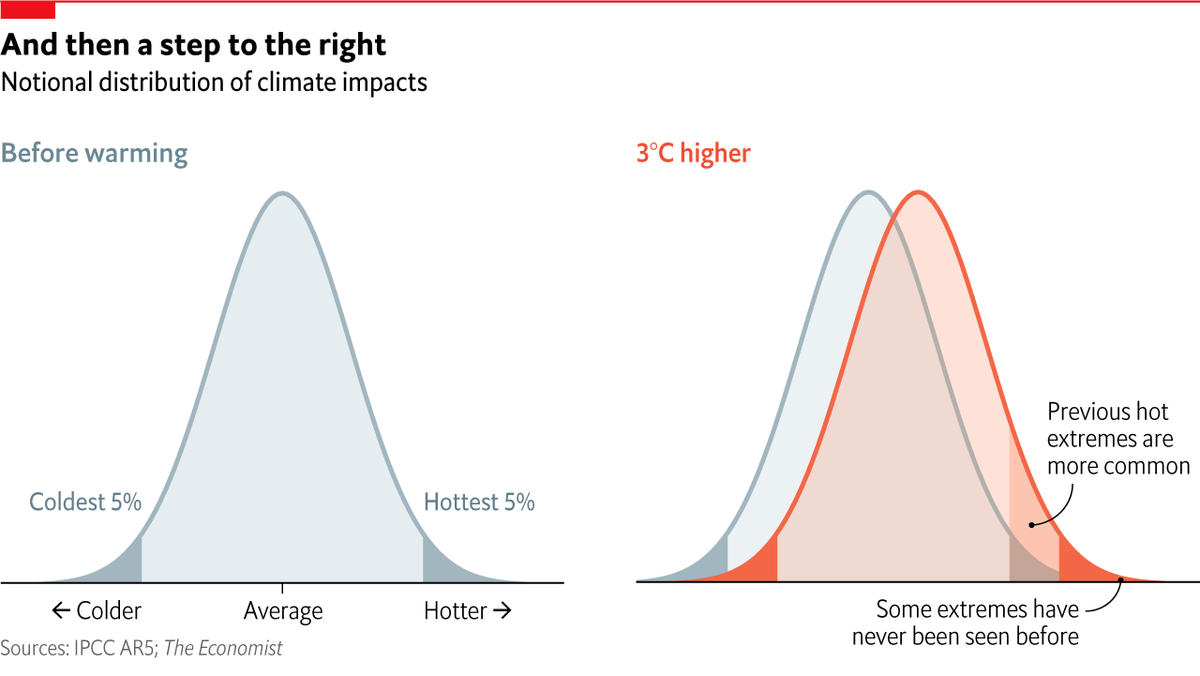
Those modelling climate impacts have long argued that they do not increase smoothly.
Some regions will warm less. Others will get much hotter econ.st/3ivZKrV
Some regions will warm less. Others will get much hotter econ.st/3ivZKrV
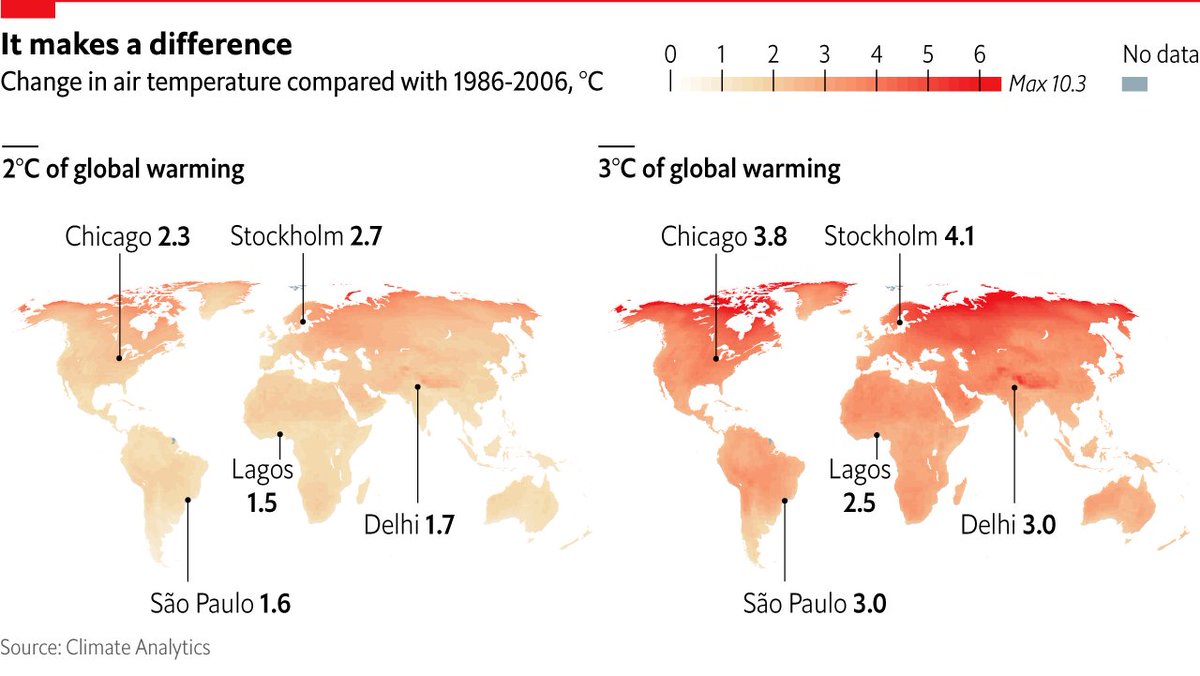
According to one study, in a 3°C world mean temperatures could rise by as much as:
🇷🇺 4-5°C in Russia
🇨🇳 3.5-4.5°C in China
🇮🇳 3-5°C in India econ.st/3ivZKrV
🇷🇺 4-5°C in Russia
🇨🇳 3.5-4.5°C in China
🇮🇳 3-5°C in India econ.st/3ivZKrV
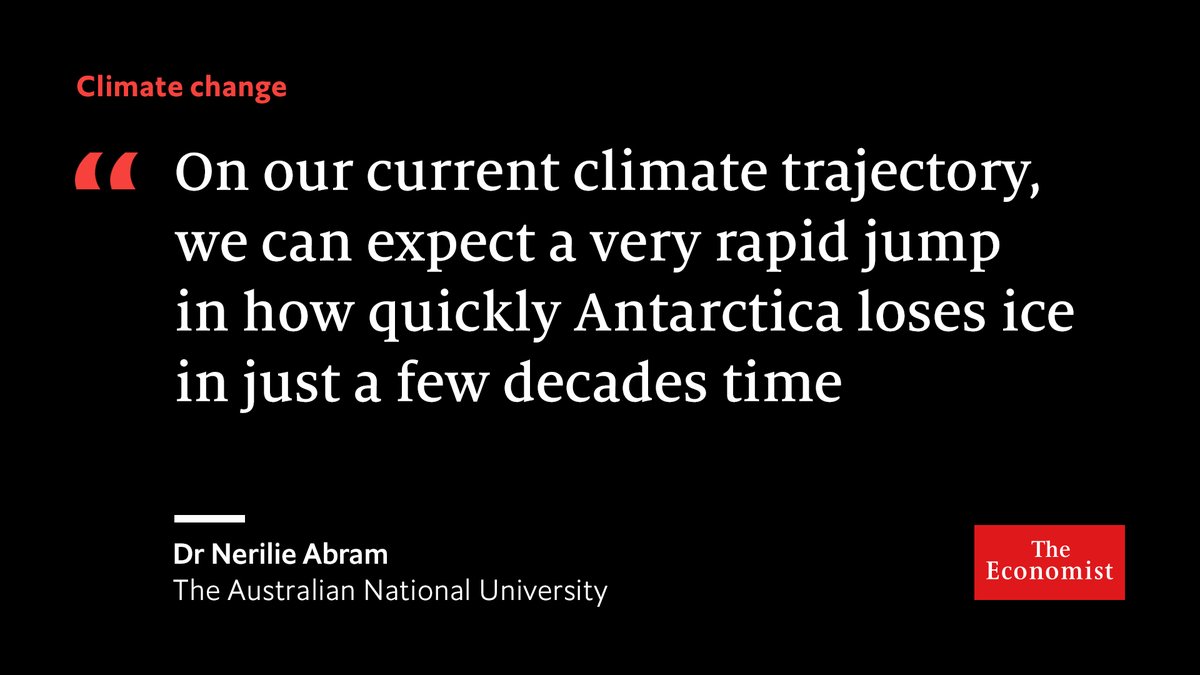
At 3°C of warming, the West Antarctic Ice Sheet, which is already crumbling, may well start breaking down irreversibly.
Neither coral reefs nor the Amazon rainforest are likely to survive econ.st/3ivZKrV
Neither coral reefs nor the Amazon rainforest are likely to survive econ.st/3ivZKrV
More frequent and more extreme heatwaves will become common in places with little or no experience of heatwaves. Which new regions will be affected?
In fact, it is all of the above.
Those who cannot afford to adapt will suffer disproportionately, as will those whose jobs are primarily done outdoors.
In warmer regions such as the humid tropics, temperatures will reach lethal levels econ.st/3ivZKrV
Those who cannot afford to adapt will suffer disproportionately, as will those whose jobs are primarily done outdoors.
In warmer regions such as the humid tropics, temperatures will reach lethal levels econ.st/3ivZKrV
In less humid places, heat depletes water supplies.
At 3°C, more than a quarter of the world’s population would be exposed to extreme drought conditions for at least one month a year econ.st/3jC2weG
At 3°C, more than a quarter of the world’s population would be exposed to extreme drought conditions for at least one month a year econ.st/3jC2weG
Hot as it is, this year will probably be one of the 21st century's coolest. The extremes of floods and fires are not going away—and urgent action is needed econ.st/3CqchFv
The IPCC's models of climate change—which are, more than ever before, backed up with observations—should offer a call to arms for Glasgow’s #COP26 econ.st/3jGzHxw
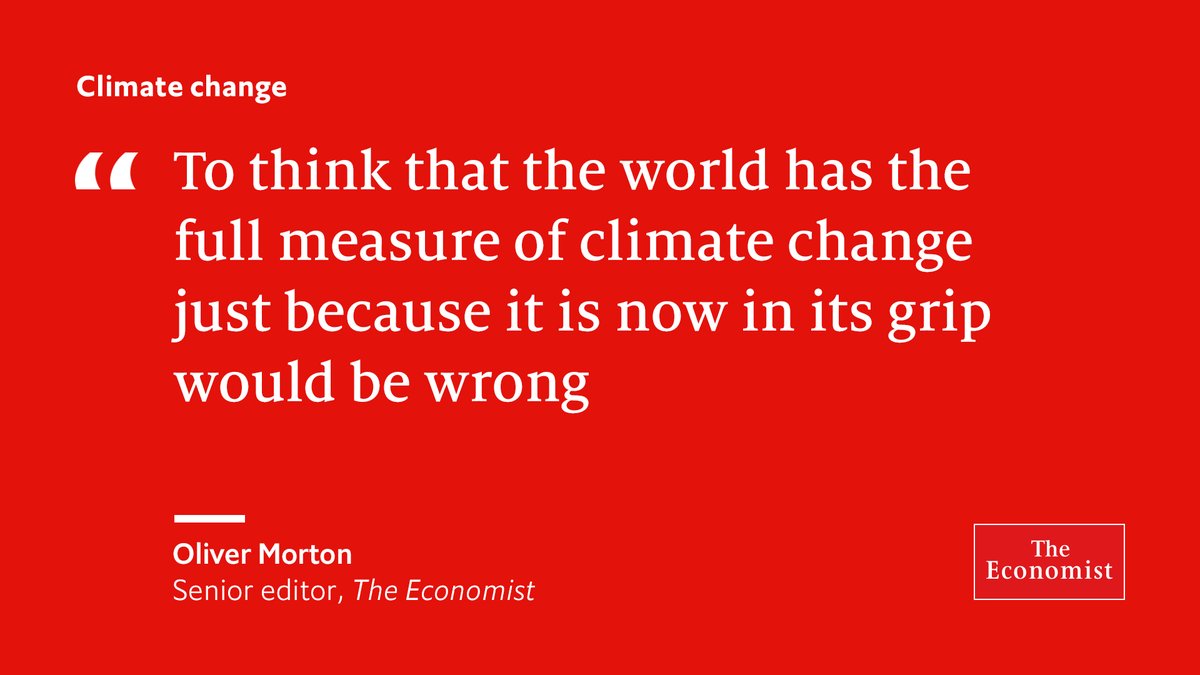
But cutting greenhouse-gas emissions is not enough. The world urgently needs to invest in adapting to the changing climate, too. Read how this can be done econ.st/3CqchFv
Climate change touches everything The Economist reports on. Sign up for The Climate Issue, our free newsletter, which delivers the best of our climate-change analysis to your inbox every fortnight econ.st/3s8cM1X
• • •
Missing some Tweet in this thread? You can try to
force a refresh






