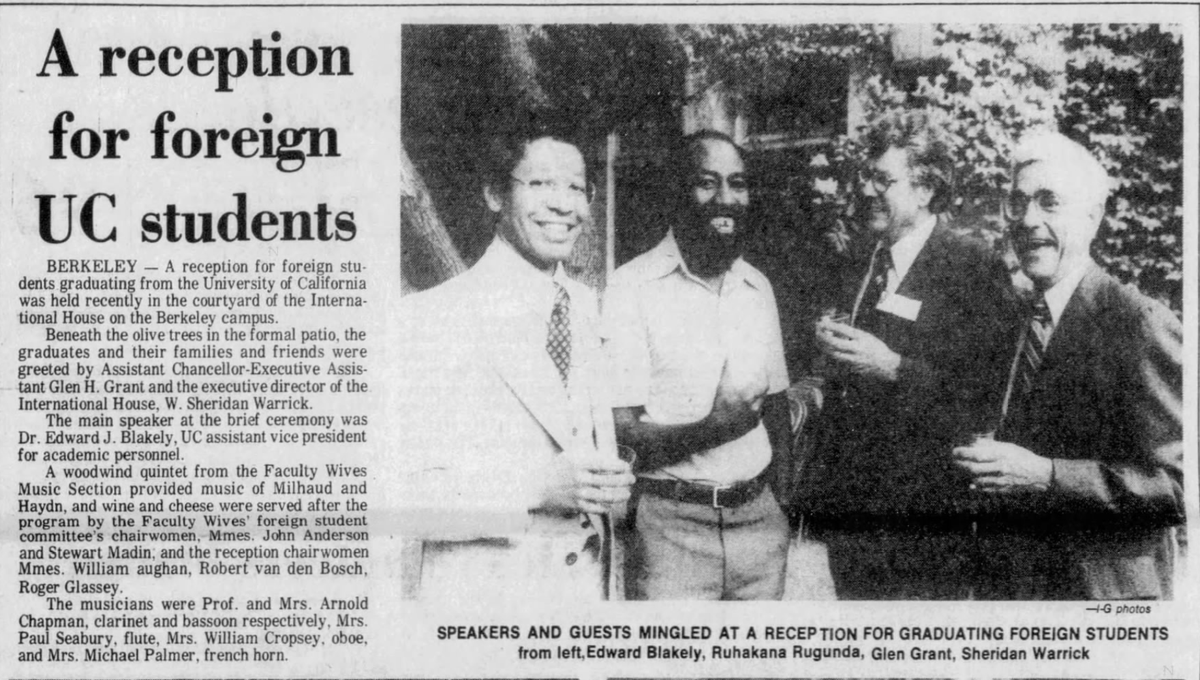
The Tanzania govt's campaign against the opposition brings to mind an earlier episode: the Treason Trial of 1970-71.
Prosecutors claimed that Oscar Kambona--shown here in London--masterminded a plot to assassinate Nyerere & others. A key co-defendant: Bibi Titi Mohammed. Thread.
Prosecutors claimed that Oscar Kambona--shown here in London--masterminded a plot to assassinate Nyerere & others. A key co-defendant: Bibi Titi Mohammed. Thread.
2/
Purportedly Kambona sent Bibi Titi funds to pay an assassin, who would work with men in the military to bring down Nyerere's govt.
The trial opened in Dar in May 1970. The Kenya Daily Nation had a reporter in the courtroom for the whole trial, which lasted more than a year.
Purportedly Kambona sent Bibi Titi funds to pay an assassin, who would work with men in the military to bring down Nyerere's govt.
The trial opened in Dar in May 1970. The Kenya Daily Nation had a reporter in the courtroom for the whole trial, which lasted more than a year.


3/
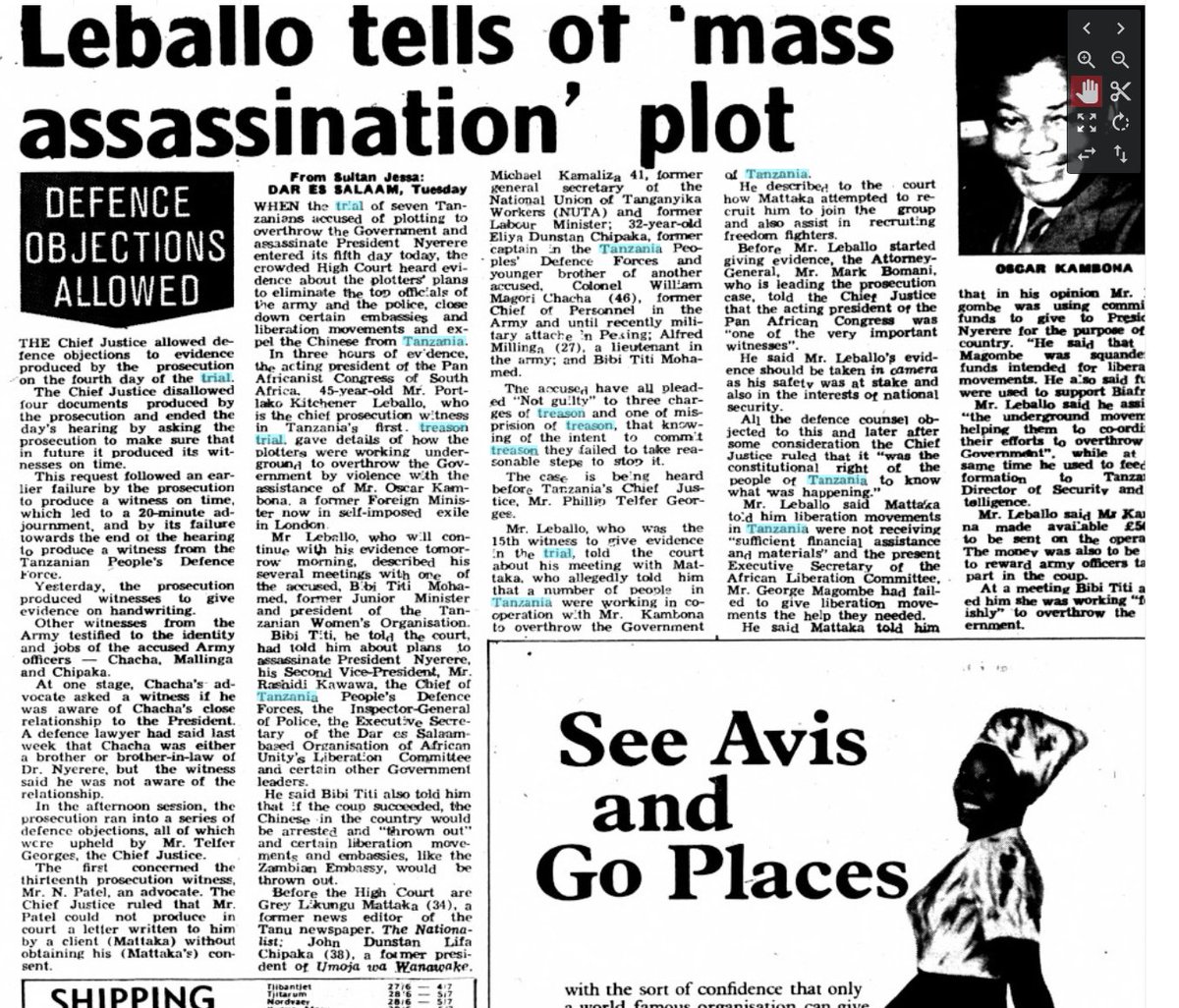
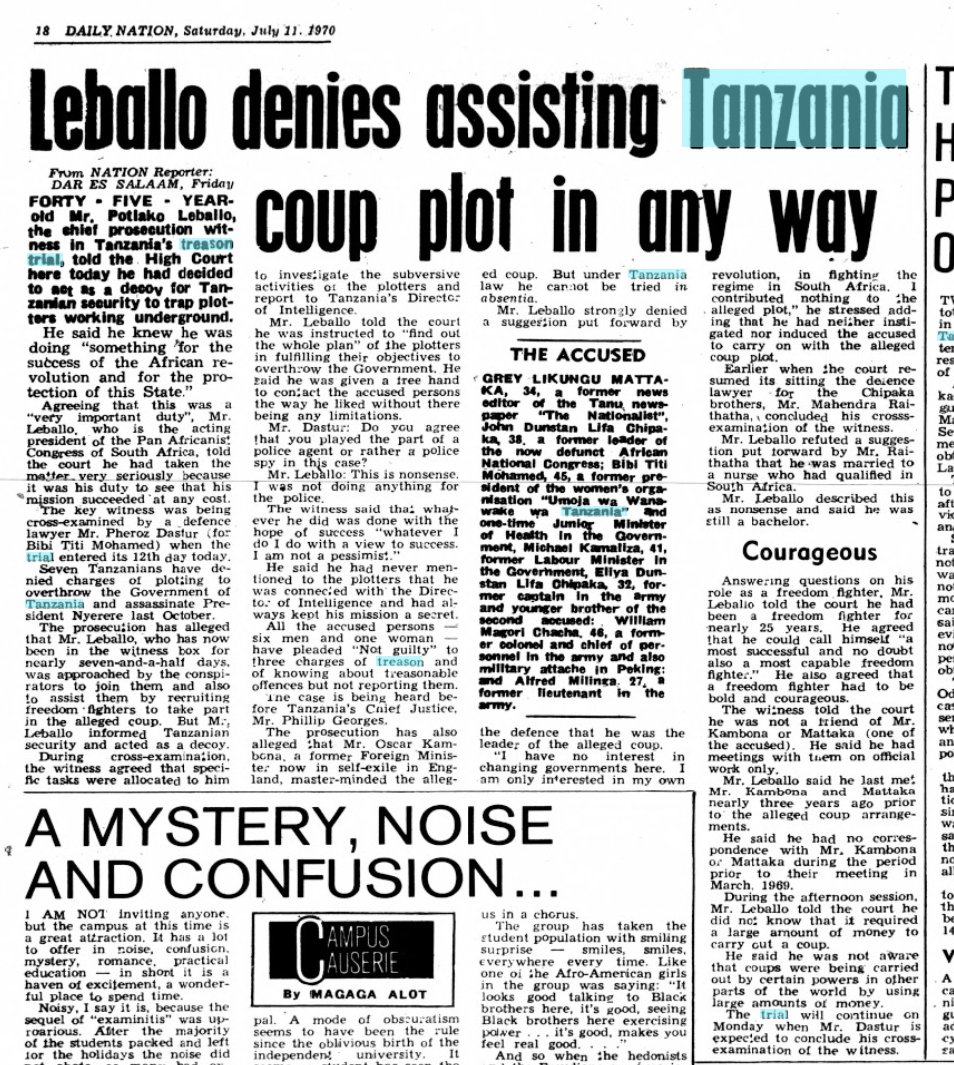
A key witness for the prosecution was Potlako Leballo, sometime leader of the Pan-African Congress, a South Africa-based anti-apartheid organization headquartered in Dar.
Leballo acted as a spy for TZ intelligence, as these reports show.
A key witness for the prosecution was Potlako Leballo, sometime leader of the Pan-African Congress, a South Africa-based anti-apartheid organization headquartered in Dar.
Leballo acted as a spy for TZ intelligence, as these reports show.
4/
The trial itself was very much a public occasion. Kambona (who was tried in absentia) had been Minister of External Affairs in Nyerere's cabinet; Bibi Titi Mohammed, his co-conspirator, had been head of Umoja ya Wanawake wa Tanzania
Here's a clip from the trial's opening day.
The trial itself was very much a public occasion. Kambona (who was tried in absentia) had been Minister of External Affairs in Nyerere's cabinet; Bibi Titi Mohammed, his co-conspirator, had been head of Umoja ya Wanawake wa Tanzania
Here's a clip from the trial's opening day.
5/
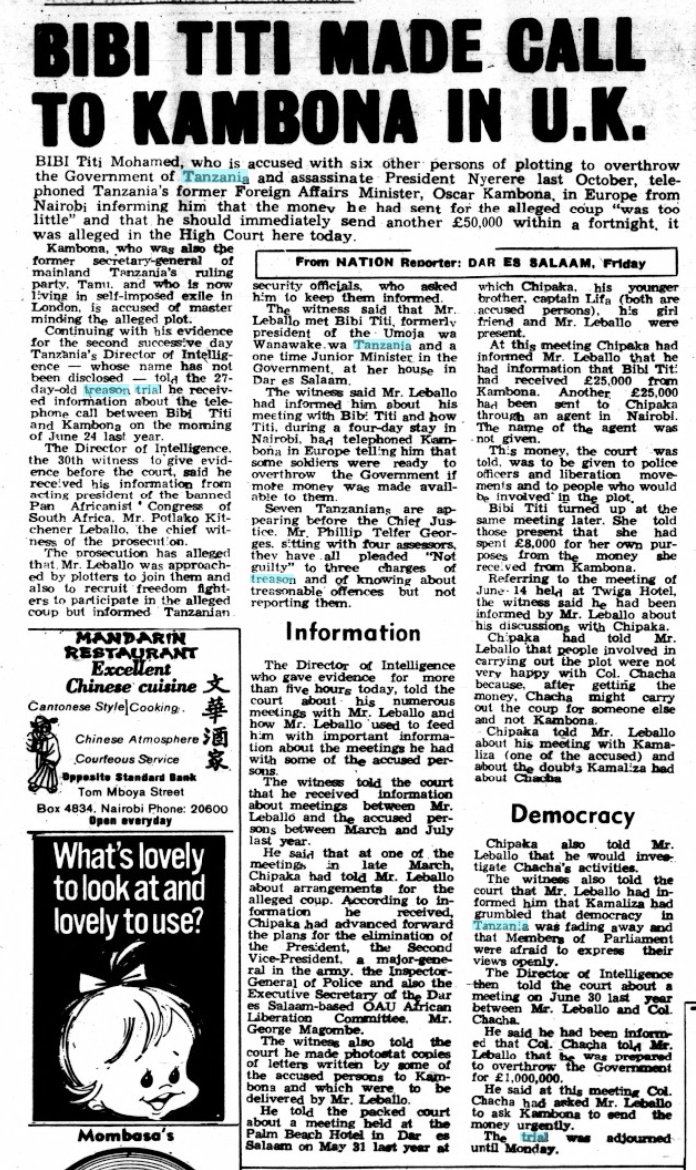
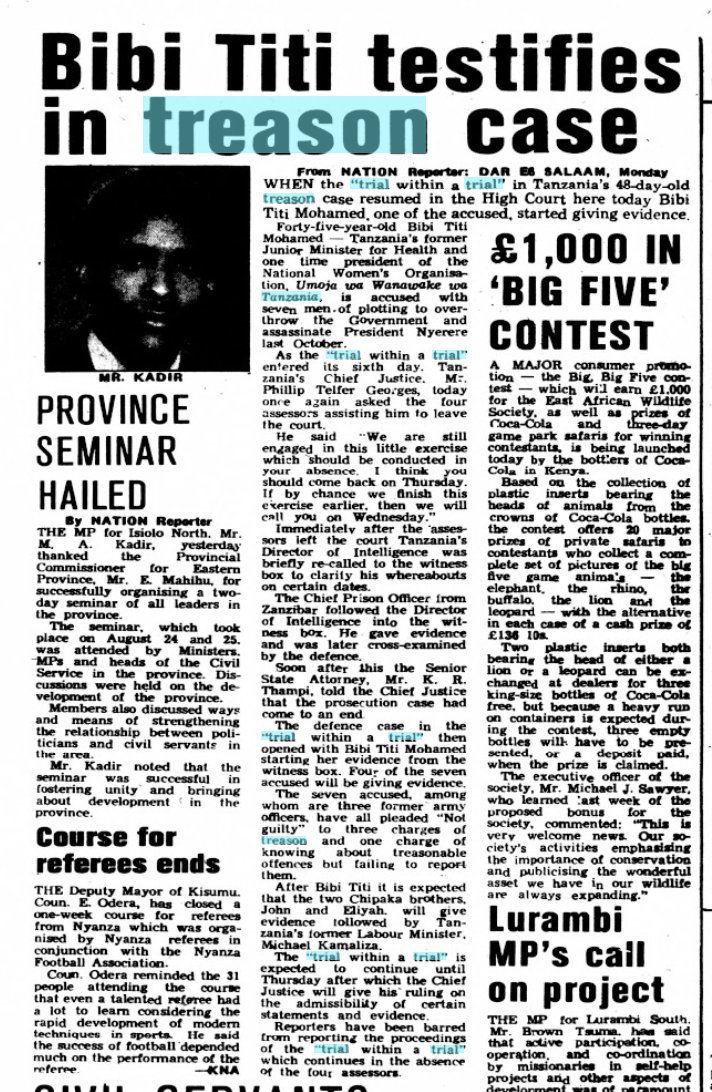
Key to the plot was--apparently--Bibi Titi. She was the heroine of Tanzanian nationalism, a key figure in the early history of TANU, and a mentor to Nyerere. Her role in the plot was the subject of several days' discussion in the trial--as reported below.
Key to the plot was--apparently--Bibi Titi. She was the heroine of Tanzanian nationalism, a key figure in the early history of TANU, and a mentor to Nyerere. Her role in the plot was the subject of several days' discussion in the trial--as reported below.
6/
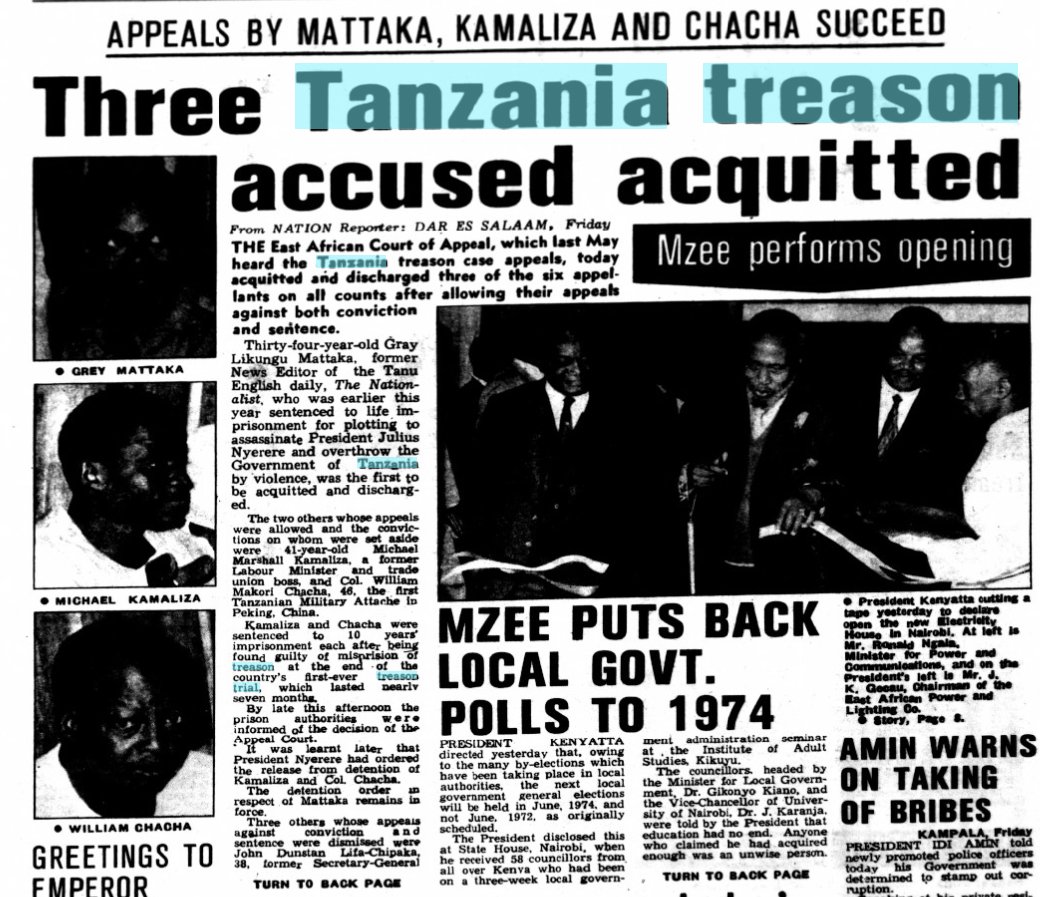
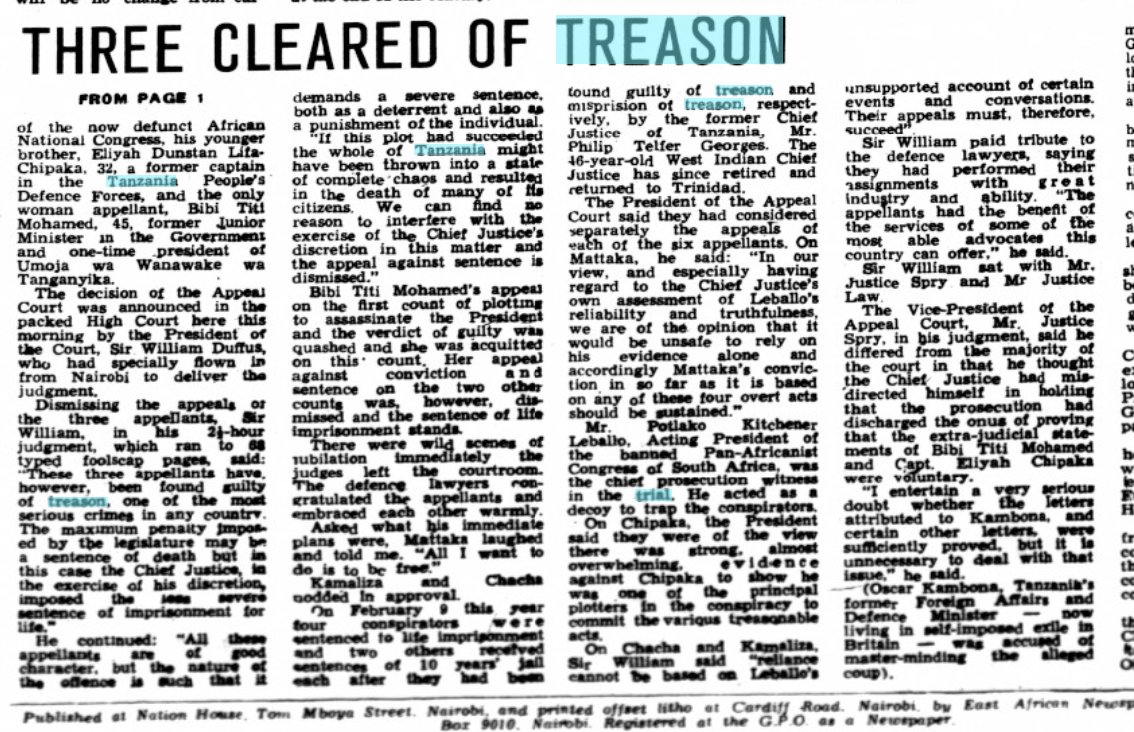
The court's ruling--upheld on appeal--was to convict Bibi Titi & others, and to acquit three of the defendants. Here's the Nation report.
The court's ruling--upheld on appeal--was to convict Bibi Titi & others, and to acquit three of the defendants. Here's the Nation report.
7/
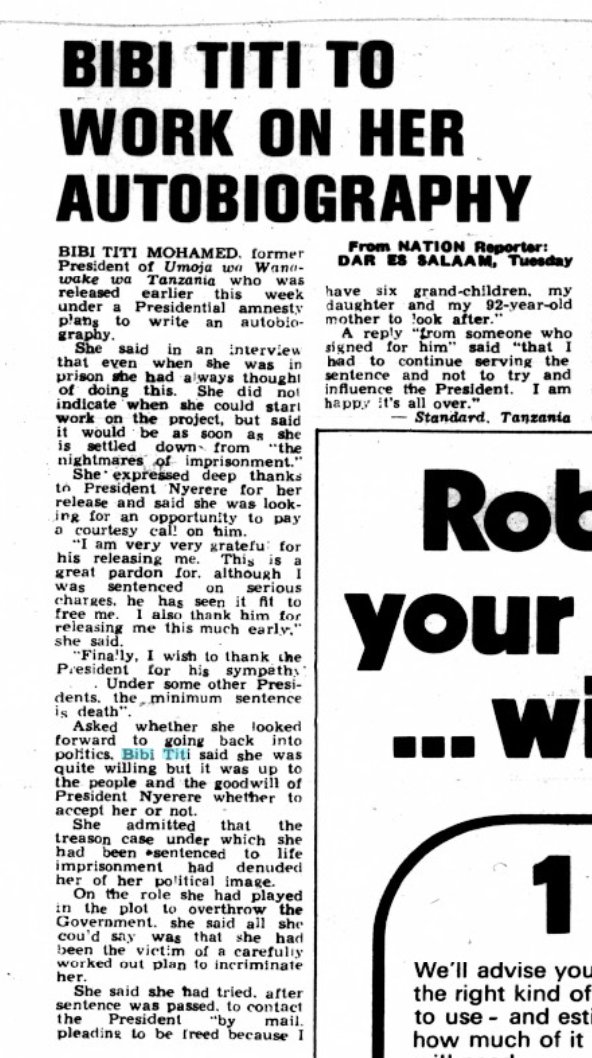
Bibi Titi was held in prison for several years--then pardoned and released.
She had planned to write her autobiography, as reported here. In the 1980s though she began to work with the young historian Susan Geiger, who did foundational life history work with her.
Bibi Titi was held in prison for several years--then pardoned and released.
She had planned to write her autobiography, as reported here. In the 1980s though she began to work with the young historian Susan Geiger, who did foundational life history work with her.
8/
Bibi Titi Mohammed's biography was published under the title _TANU Women_ (1997). I was Susan Geiger's student in those days. I remember her as a fiercely thoughtful scholar.
Bibi Titi Mohammed passed away in 2000, living in exile in S. Africa.
amazon.com/TANU-Women-Tan…
Bibi Titi Mohammed's biography was published under the title _TANU Women_ (1997). I was Susan Geiger's student in those days. I remember her as a fiercely thoughtful scholar.
Bibi Titi Mohammed passed away in 2000, living in exile in S. Africa.
amazon.com/TANU-Women-Tan…
9/
Corrections to the thread above, helpfully prompted by @Udadisi & others.
1. Bibi Titi maintained until she died that she had no part in a plot to oust Nyerere. She told Geiger & others that she was part of a movement for constitutional change in TZ--but there was no plot.
Corrections to the thread above, helpfully prompted by @Udadisi & others.
1. Bibi Titi maintained until she died that she had no part in a plot to oust Nyerere. She told Geiger & others that she was part of a movement for constitutional change in TZ--but there was no plot.

@Udadisi 10/
Further corrections:
2. Bibi Titi was freed in February 1972, after about a year in prison.
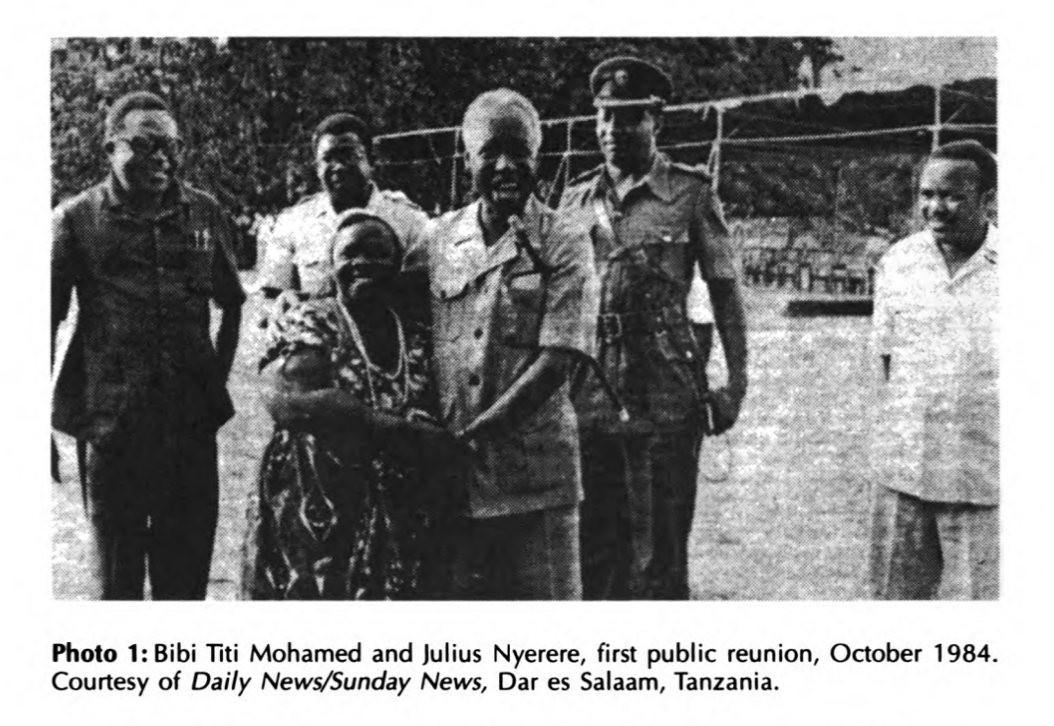
3. She died in South Africa--but not in exile. She lived a low-profile life in TZ after her release. In the mid-1980s she was 'rehabilitated' & appeared alongside Nyerere in public.
Further corrections:
2. Bibi Titi was freed in February 1972, after about a year in prison.
3. She died in South Africa--but not in exile. She lived a low-profile life in TZ after her release. In the mid-1980s she was 'rehabilitated' & appeared alongside Nyerere in public.
@Udadisi 11/
There's surprisingly little scholarly work on the Treason Trial. @jamesrbrennantz is working on a really important biography of Kambona; and @g_m_roberts has a forthcoming book about the intelligence business in Dar.
I'd be glad to know of others!
There's surprisingly little scholarly work on the Treason Trial. @jamesrbrennantz is working on a really important biography of Kambona; and @g_m_roberts has a forthcoming book about the intelligence business in Dar.
I'd be glad to know of others!
• • •
Missing some Tweet in this thread? You can try to
force a refresh