@AncientDays1 post on the Wanderer got me in the mood to talk about a book I've really enjoyed about the Anglo-Saxon invasion of England, Jim Storr's King Arthur's Wars. 
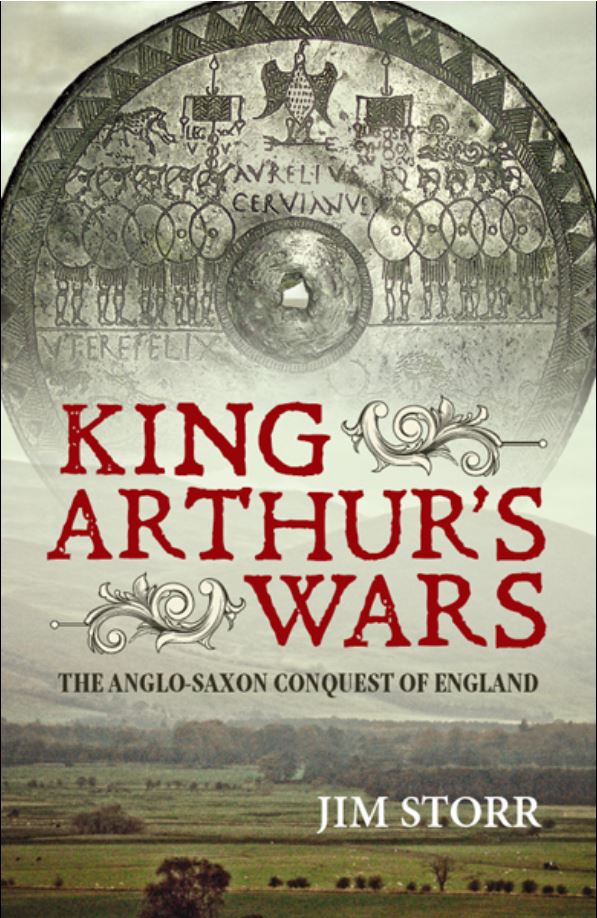
Jim Storr presents an analysis of the British countryside from the eyes of a former infantry officer, finding earthen fortifications long forgotten from the early Anglo-Saxon invasions. Combining expertise in topography as well as linguistics he makes some interesting conclusions
A large part of the book concerns the West Saxons and their origins. Starting with the fact that Cerdic's name is of British Origin, and posits that while the South Saxons are a pretty clear example of migrant rebellion, the West Saxon origin seems to lie in civil war/ rebellion.
I will briefly interject a little bit of my own explanation of Cerdic himself. Cerdic seems to be the semi-historical (in my opinion historical) progenitor of the house of Wessex. The English monarchy today can still trace it's lineage back to him.
Cerdic is not a Saxon name. Cerdic seems to derive from the Brythonic Ceretic. His son Cynric's name seems to be similar to the Irish Cunorix, and many later rulers of Wessex have Brythonic names as well, Caedwalla, Ceawlin, Cedda.
This doesn't mean that Cerdic and his descendants we not Saxons, but that they may have been partially British in ancestry or British by birth and later adopted Saxon culture or even acted as a "Stranger King" and slowly assimilated into the larger West Saxon culture around them.
Back to the book. Through the book he makes a case for a shift of the theater of war from the south coast to the upper Thames, following earthen fortifications along the way. All the while making the case that Cerdic was a Cymric leader tasked with keeping the Saxons at bay.
From there he explains his reasoning that Cerdic rebelled against his Cymric authority (The historical Arthur perhaps? later thread on that) and proceeded to "dig in" with a northern facing earthwork between the upper Meon and Itchen Rivers against the inevitable reprisals.
This Earthwork, originally 12 feet high with a ditch on the north facing side is now only 6 feet high in a few sparse places. This is one of the many earthworks Storr touches on in the book.
Some complaints I have seen are that this book doesn't actually discuss much of King Arthur at all, besides the general time period, but that's the point.
Arthur is a hard person to pin down historically with there being some 10-15 serious contenders for the "true Arthur" or Arthur of the Battle of Baden as I like to refer to him.
Even so it touches on fortifications that Arthur (in any form he may have existed) Would have used as well as fought against, especially against the early West Saxons. Storr does reach an interesting conclusion that has been posited before.
That Cerdic, is in fact the betrayer Mordred (Medraut) of legend. There are interesting parallels and I think that Storr makes a good case for it, though it relies heavily on Mordred being an epithet meaning Moderated or "Wise Council" which is possible through Latin Moderatus
Overall it is an enjoyable although as I can understand from some folks taxing read as it's more about geography than military matter.
• • •
Missing some Tweet in this thread? You can try to
force a refresh