Brief thread on the Fed's attitude towards inflation.
The July minutes reiterated that the general FOMC view is that currently elevated inflation is likely transitory. No complaints from me here—I agree, and the data (for now, at least) support it. 1/X
However, "most" FOMC participants also believe that substantial further progress has been made towards the inflation goal.
I struggle with this. If higher inflation is transitory, then the progress made so far will be ephemeral and eventually prove to be no progress at all. 2/X
The market appears to be struggling with this as well. In fact, the market is now expecting a lower terminal Fed funds rate (well below the FOMC's median long-run dot of 2.5%) and more rate hikes in the near term. I.e., the market lost faith in the new FAIT framework. 3/X
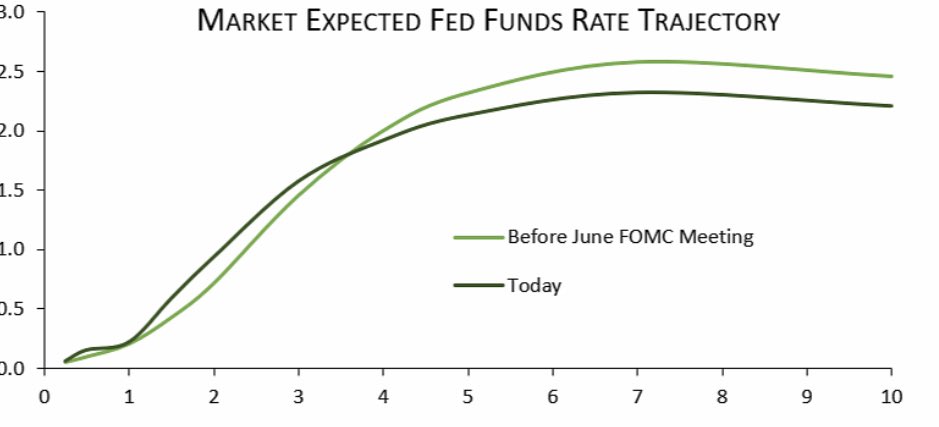
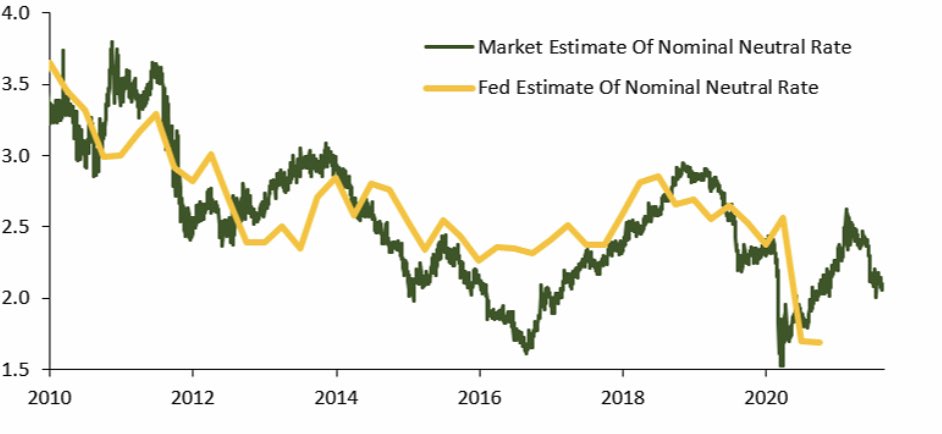
The drop in the expected terminal can be viewed as the mkt expectation for the nominal neutral rate. The drop since the June FOMC is huge. The mkt thinks the Fed was on the right track but is now overreacting to transitory inflation, nullifying the benefits of FAIT. I agree. 4/X
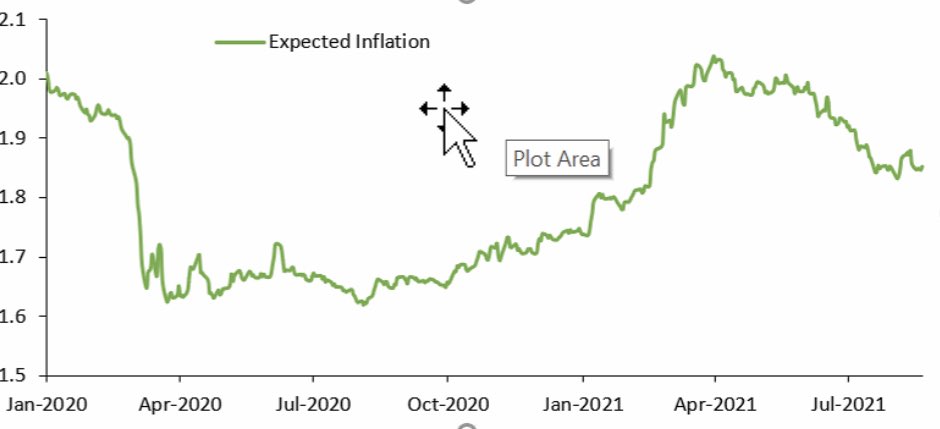
Interestingly, the Fed's own models (DKW) suggest that inflation expectations have declined and are below 2% and below pre-Covid levels. Not the picture the Fed would hope to see. Some more FOMC conviction in FAIT would probably do a lot of good to the longer term US outlook. 5/5
• • •
Missing some Tweet in this thread? You can try to
force a refresh

This strong report *increases* the odds of recession. Aside from the payroll number, two things are distressing for the #Fed:
1) Average hourly earnings are annualizing 5.2% for the past 3 months and pointing up-way too high. 1/4
2) The labor force participation rate dropped again.
Participation is nowhere near pre-Covid levels and has been pointing down for a few months. This makes the labor market even tighter, support further wage growth above sustainable levels, and boosts inflation. 2/4
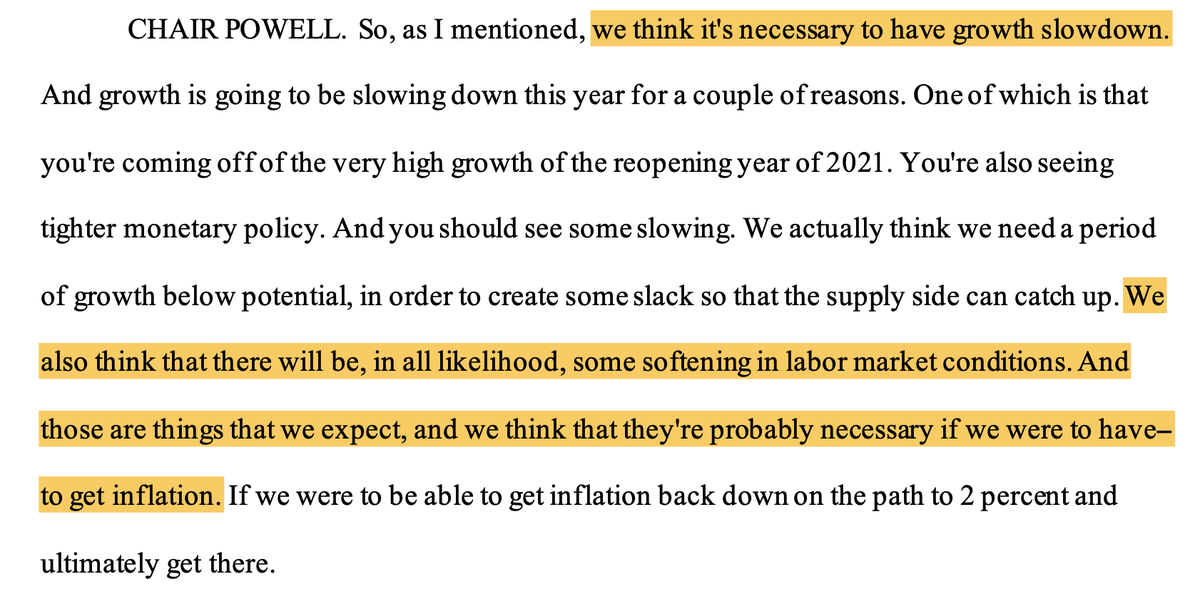
At this point, the #Fed has no choice but to continue to be aggressive. Powell said it: The #FOMC wants to engineer a slowdown in growth and the job market. And it will, by raising rates well above neutral and as much as it takes to bring inflation down. 3/4
Powell said that a soft landing is challenging in this situation-I agree.
He also said that soft landings are not unusual-I am not so sure.
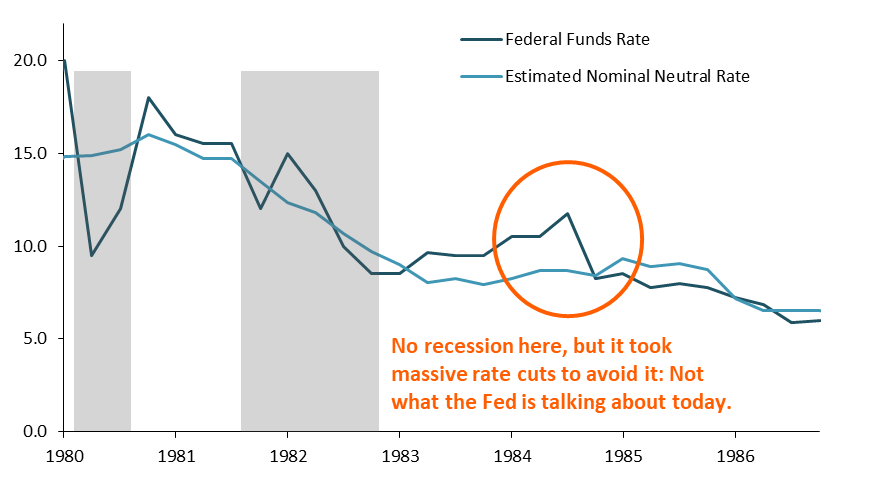
The chart shows the nominal neutral rate vs the fed funds rate since 1961. 1/6
Powell mentioned 3 tightening episodes that did not result in recessions: 1965, 1984, and 1994.
I wouldn't count 1965. It was the continuation of hikes started long before; policy stayed well below neutral as neutral was also increasing; it became just marginally less easy. 2/6
1984 is dubious: The Fed avoided a recession only because it cut aggressively (400 bps in 1984H2 and 1985 and more in 1986). The economy was emerging from back-to-back recessions, and a third in four years would have been too much even for Paul Volcker. 3/6
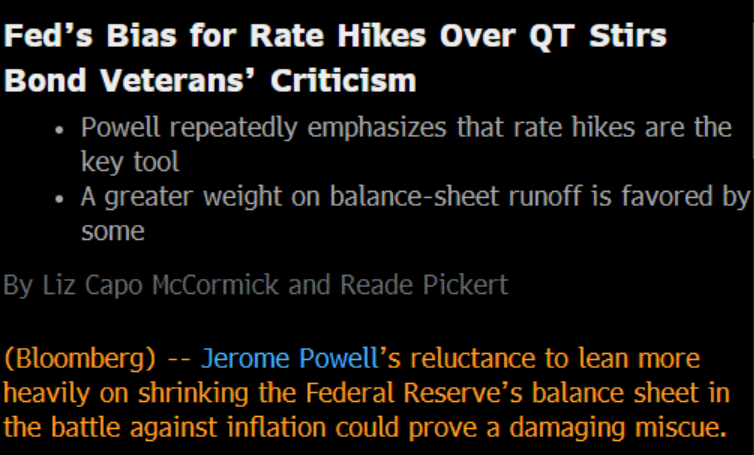
Brief thread, based on a good BBG story by @mccormickliz: Should the Fed tighten policy more via the balance sheet (QT) than via rate hikes?
Some people seem to think this would be a good idea because it would "steepen the yield curve." It is not. Here is why. 1/6
Both QT and rate hikes are ways to tighten policy. The purpose of policy tightening is to raise borrowing costs. QT does that, and fed funds rate hikes do that too as they propagate across the yield curve. 2/6
If rates get too high relative to their "neutral" level, they will hurt the economy no matter whether they get there via standard FFR hikes or via QT. 3/6
The CPI today was exactly in line with consensus. But it's becoming harder and harder to blame the price increases just on special factors.
Even the core-core (CPI ex food, energy, shelter, and used vehicles) is up 5.2% year on year. This is a headache for the #Fed. 1/6
Of course, inflation is way above target and needs to come down. But oil prices are raising fast. Among other consequences, gas prices are at the highest in many years.
@NancyRLazar1 and our Econ Team estimate that a 30% increase in gas prices reduces consumption by 0.6%. 2/6
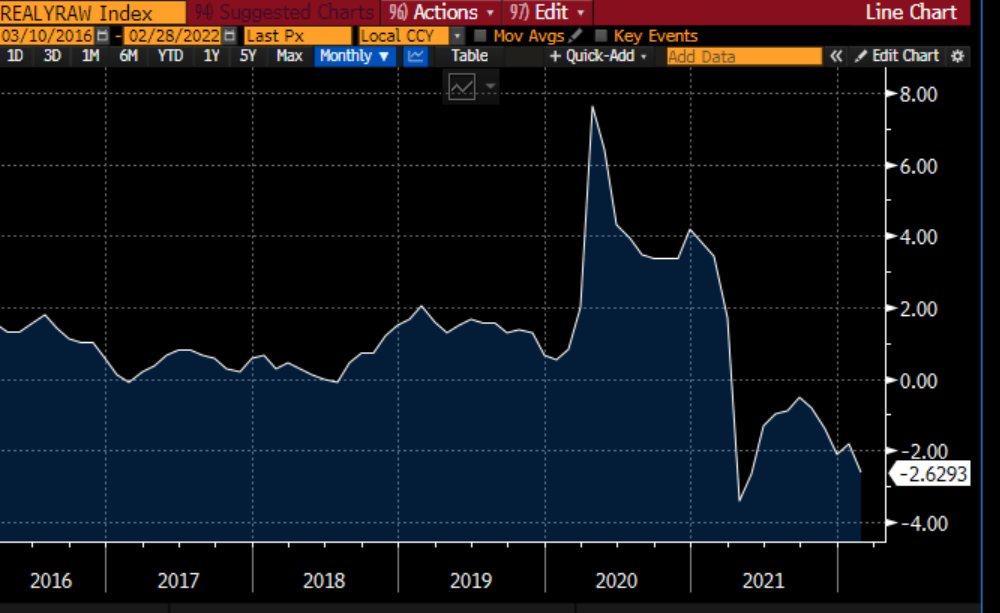
Even without the recent increase in gas prices, real incomes have declined for over a year now. The further increase in inflation will make them decline even more. 3/6
Brief thread on Fed and inflation.
Interesting how many formerly dovish Fed officials think that the Fed should get aggressive on inflation now. Of course inflation is high, but what if it comes back down on its own? What would be the consequences? 1/6
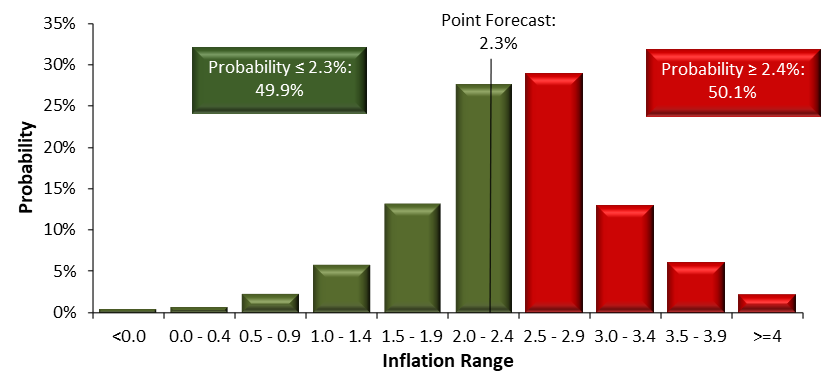
To begin with, it's consensus that inflation will decline next year. The chart below is from our @csm_research client survey--core inflation down to 2.6% in 2022. Professional forecasters are at 2.3%. The Fed is at 2%. 2/6
Of course there is a lot of uncertainty about what inflation will do. But every pundit's focus is on bad outcomes; no one seems to think about the benign case.
For example, professional forecasters see a full 50% chance that inflation will be even lower than 2.3% next year. 3/6
Short thread on a presumed "hawkish pivot" by Powell now that he has been renominated. I'm asked about it a lot, so here it goes.
The story posits that Powell will turn hawkish now that the uncertainty about his future has cleared up. I don't buy it. 1/5
First, that line of thinking implies that Powell misrepresented his and the FOMC's views in the past several months in order to get the nomination. I find that hard to believe, to put it mildly. 2/5
Second, Powell's stance so far has been perfectly in line with the FOMC's Flexible Average Inflation Targeting (FAIT) new framework. The framework won't change, and therefore the stance won't change. 3/5