A short thread on the evolution of British battleship armour.

Detail is in the images!

(1/10)
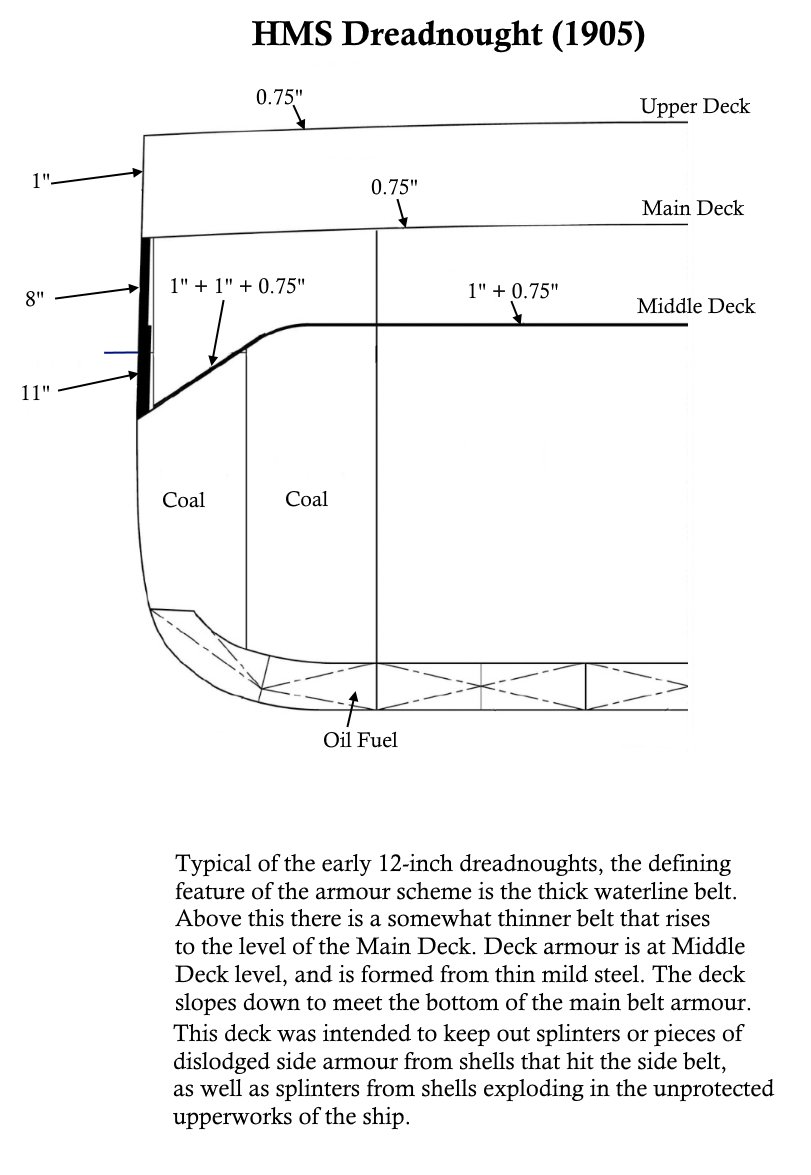
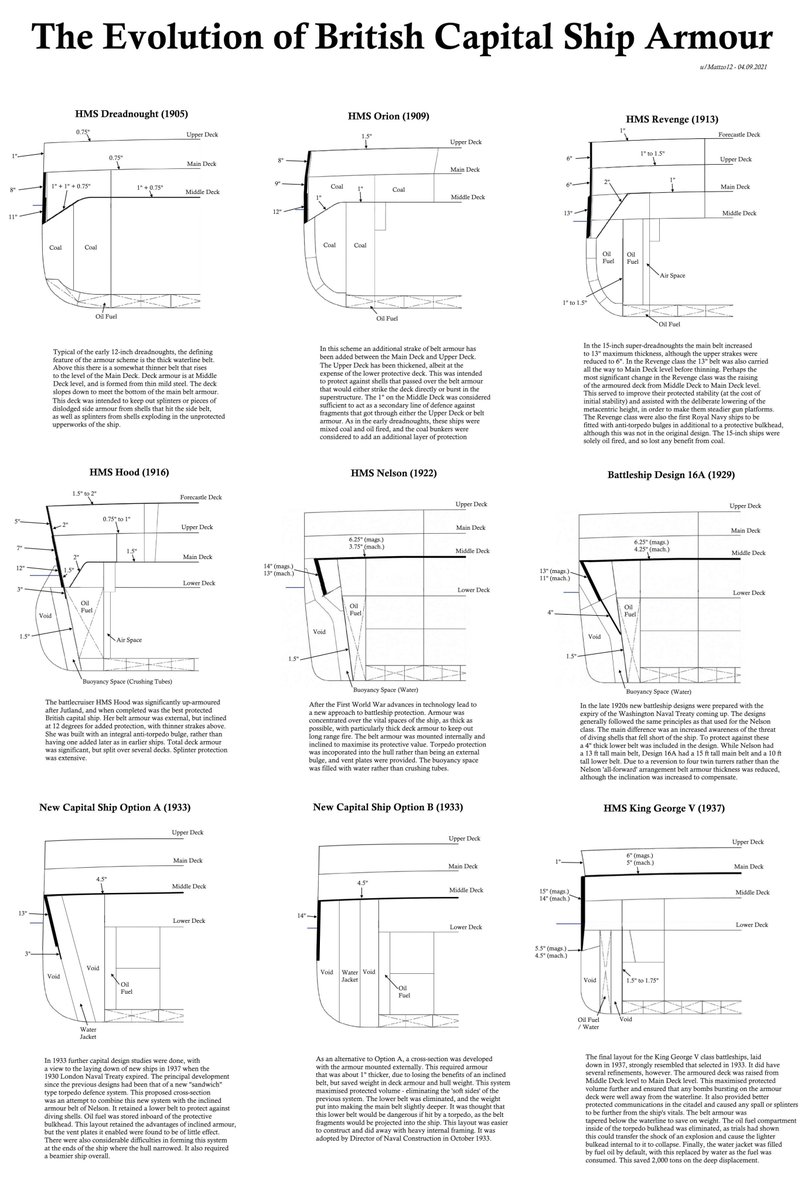
HMS Dreadnought, laid down 1905. This layout was typical of the early British 12-inch armed battleships, although of course there are some detail differences.

(2/10)
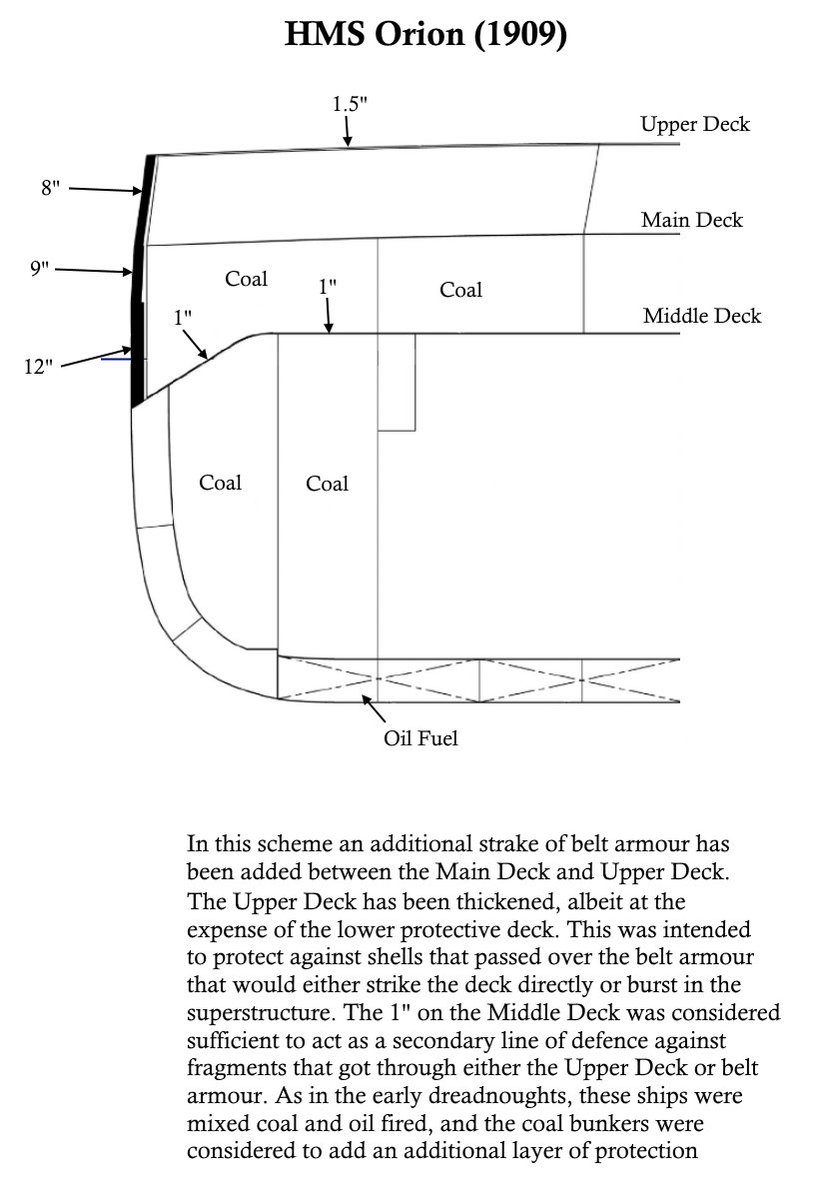
HMS Orion, laid down 1909. This layout is typical of the 13.5-inch armed 'super-dreadnoughts', although there are some improvements in later classes.

(3/10)
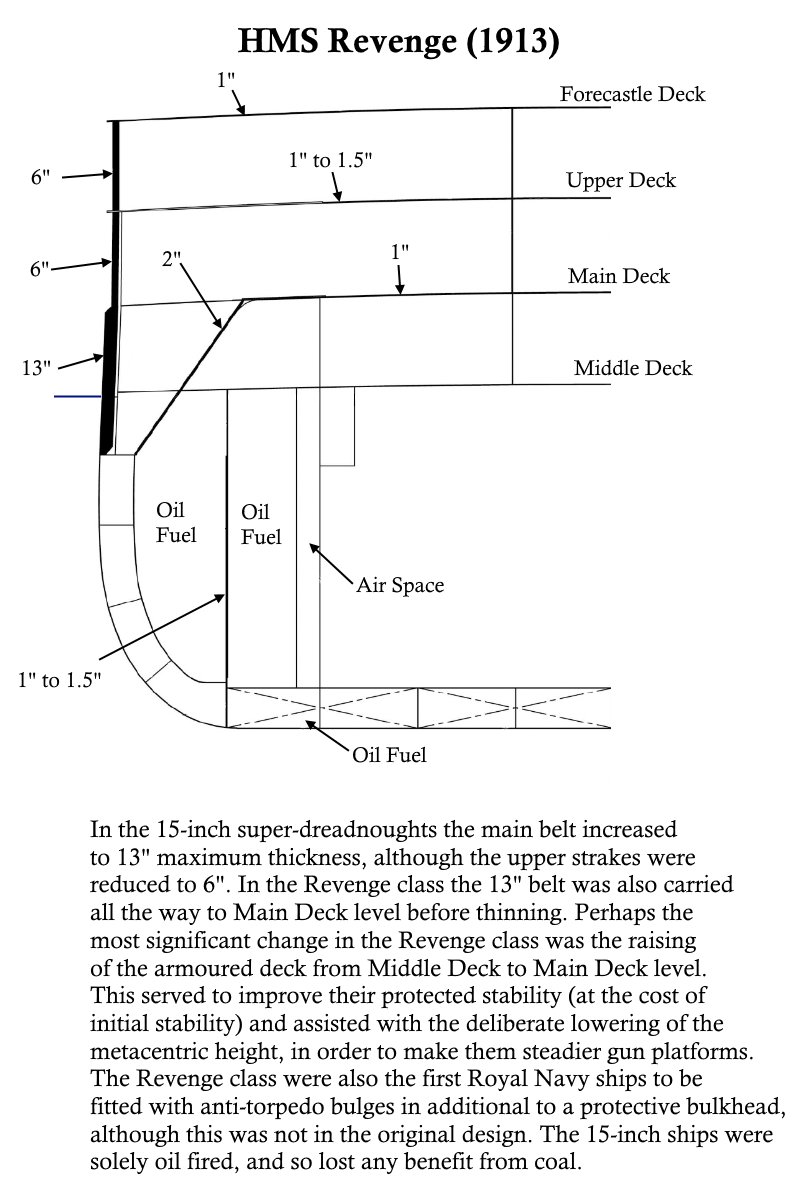
HMS Revenge, laid down 1913. Chose the R class over the Queen Elizabeths as they are more noteworthy in terms of armour scheme development.

(The Queen Elizabeths are a bit of a cross between this and the 13.5-inch design!)

(4/10)
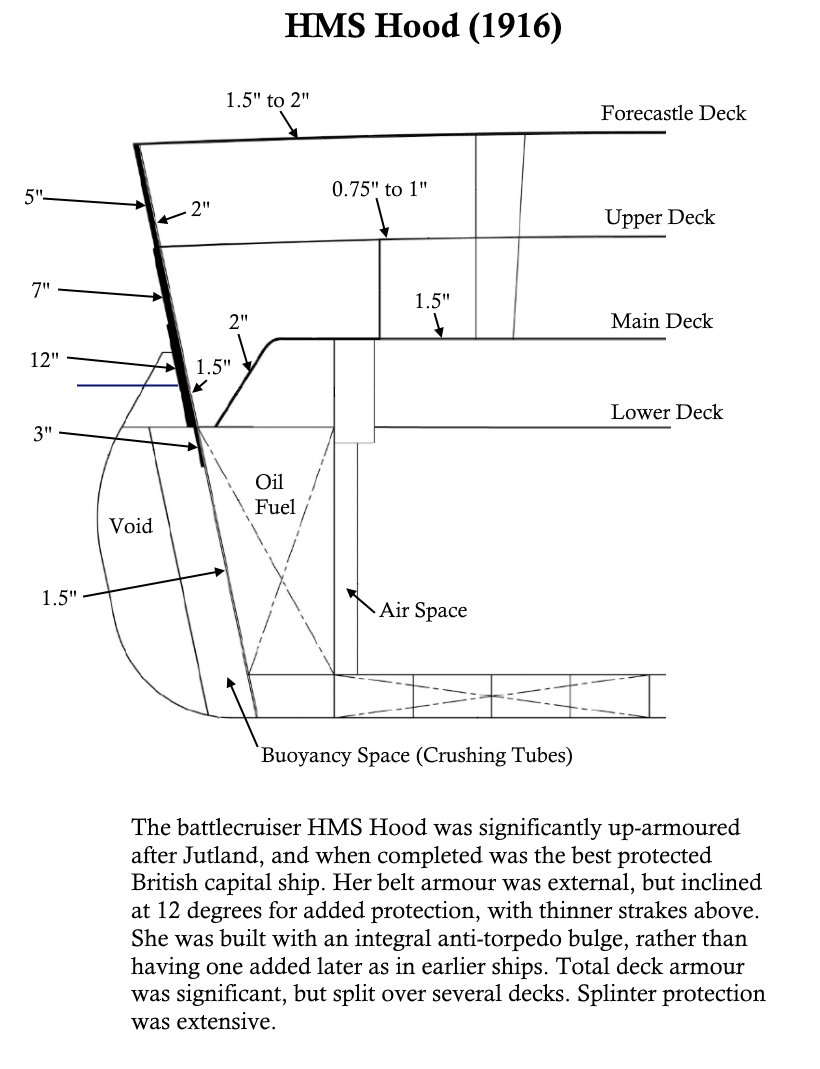
HMS Hood. Despite her unfortunate end, she was the best protected British capital ship yet built when she completed. Perhaps the ultimate example of an incremental armour scheme in Royal Navy service.

(5/10)
HMS Nelson, laid down in 1922. Somewhat of a revolution in armour scheme, with the full scale adoption of an 'All or Nothing' scheme after the advances of the First World War.

(6/10)
Battleship 1929. Never built, as the 1930 London Naval Treaty extended the battleship building holiday. But an importance piece of the puzzle.

(7/10)
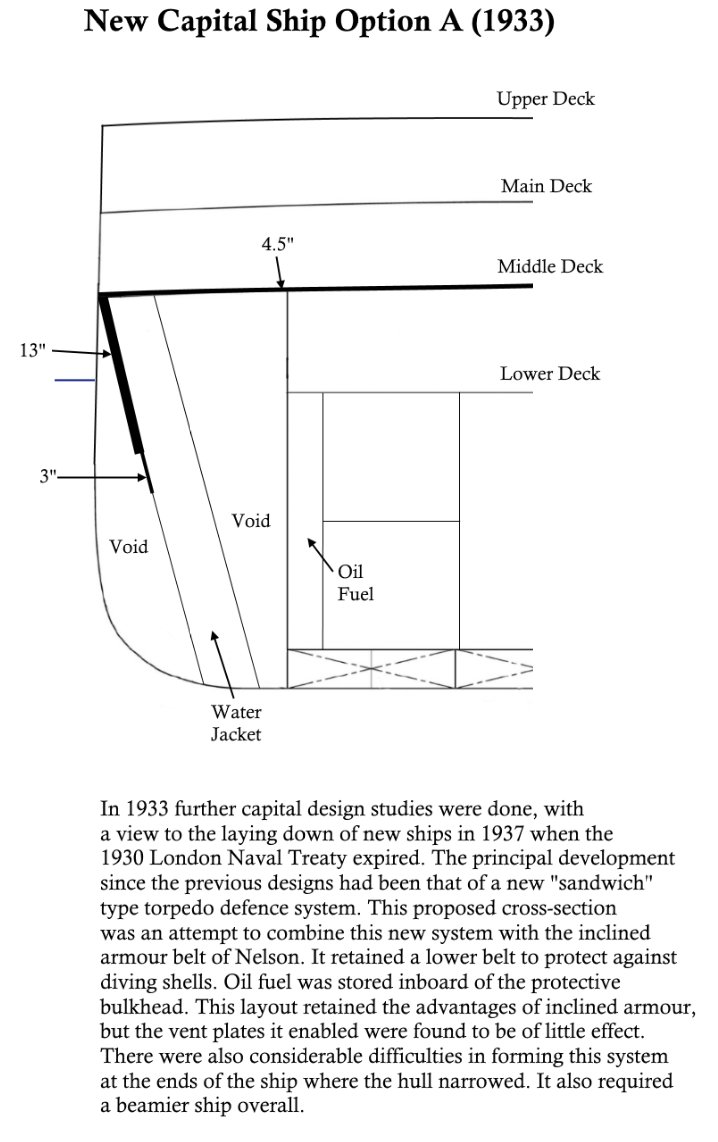
Option A of a new design presented in 1933. A design study rather than a final design, this attempts to combine a new torpedo defence system with the inclined belt.

(8/10)
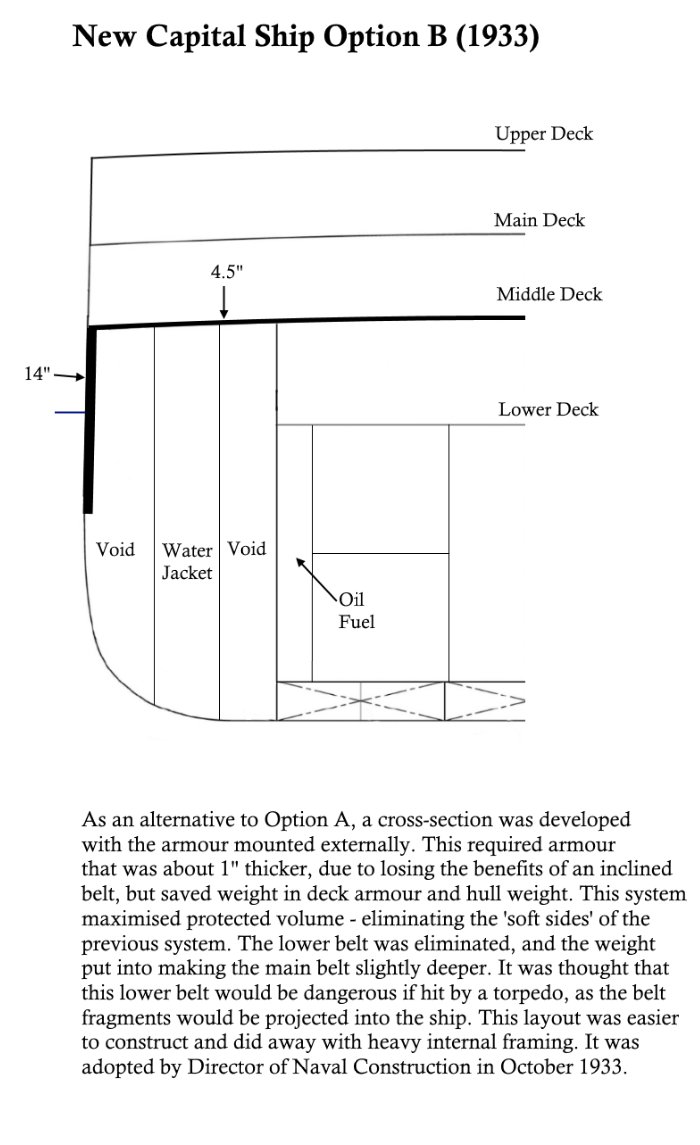
Option B of the 1933 design study. This works the armour externally. This was the option chosen.

(9/10)
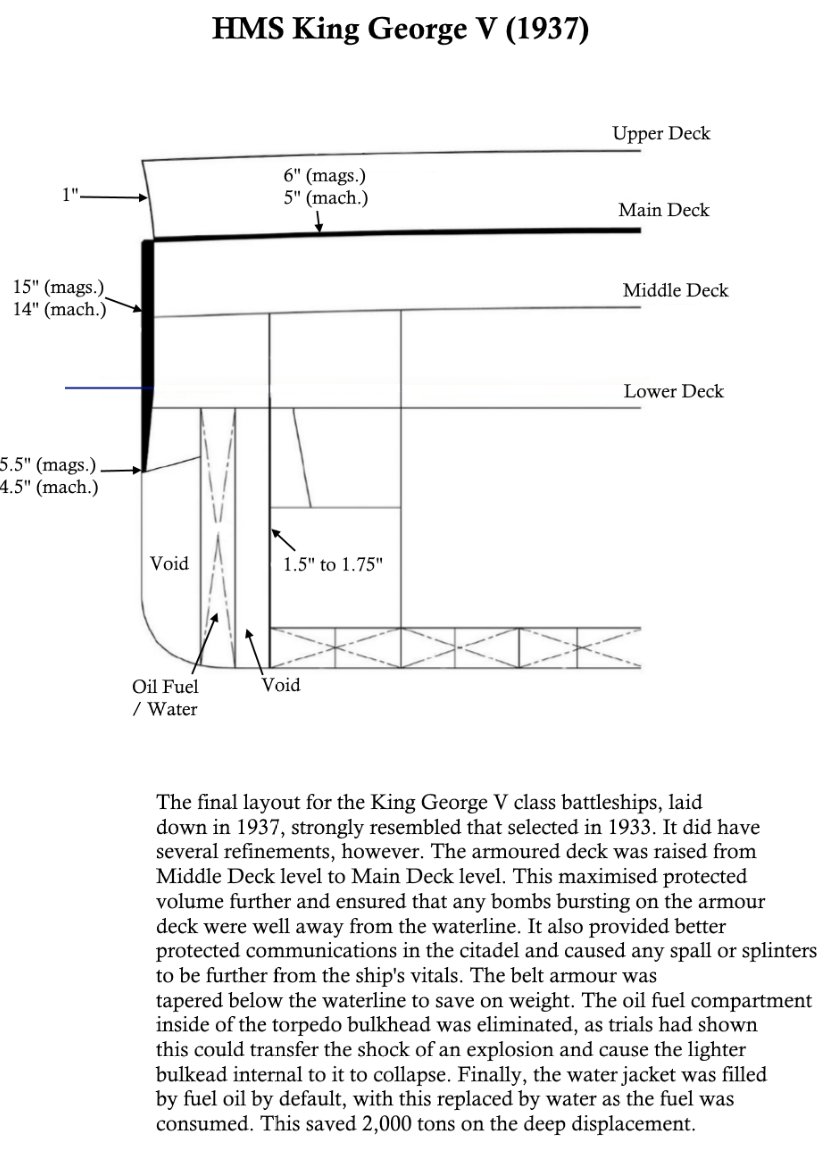
HMS King George V, laid down 1937. This is Option B above, but further developed and refined. This would be the template for the Royal Navy's last generation of battleship.

(10/10)
All 9 cross-sections in the same image.
• • •

Missing some Tweet in this thread? You can try to force a refresh

 

Keep Current with Matt Warwick

Matt Warwick Profile picture

Stay in touch and get notified when new unrolls are available from this author!

Read all threads

This Thread may be Removed Anytime!

PDF

Twitter may remove this content at anytime! Save it as PDF for later use!

Try unrolling a thread yourself!

how to unroll video
  1. Follow @ThreadReaderApp to mention us!

  2. From a Twitter thread mention us with a keyword "unroll"
@threadreaderapp unroll

Practice here first or read more on our help page!

More from @mpwarwick

8 Sep
KGVs - Survivability Beyond Armour.

Clearly, battleships are known for their extensive heavy armour. But there's a lot more that goes into ensuring that they can remain combat capable if damaged.

I thought it would be interesting to highlight a few aspects.

(1/23)
Firstly, unit machinery and sub-division. The main propulsion machinery was divided across 8 compartments. 4 boiler rooms, each with 2 boilers, and 4 engine rooms.

These formed pairs, which were a self contained unit that drove 1 shaft.

(2/23)
Cross-connections were possible, so in case of breakdown or action damage you could form new 'units' with the functioning machinery. e.g. "A" boiler room could be connected to "B" engine room as a unit.

Or just for convenience in times of peace.

(3/23)
Read 23 tweets
25 Jun
Conning a battleship without a Conning Tower - a small thread.

Or, where should you drive a battleship from if you're being shot at? And what happens if that position does get shot?

1/14
Traditionally, capital ships had both something called a Compass Platform and an armoured Conning Tower. Helpfully modelled below by HMS Hood.

2/14
Without going into too much detail - bridges and command and control arrangements were constantly being tinkered with - the compass platform was the ship's normal control position - where orders were pass from - and was often open to the air.

3/14
Read 15 tweets
15 May
The King George V class - Fire Control Arrangements

(Not how the maths works - that's far too complicated!)

(1/17)
For the 14-inch guns the centrepiece of the Fire Control System was the Admiralty Fire Control Table (AFCT). The KGVs carried the Mark IX.

(Pictured is Belfast's, a Mk VI, which is smaller).

Each turret also contained an Admiralty Fire Control Box for local control.

(2/17)
The AFCT was buried deep within the ship, under armour, in the Transmitting Station.

The main armament was controlled via the AFCT from one of three locations:

- The forward Director Control Tower
- The aft Director Control Tower
- 'B' Turret

(3/17)
Read 18 tweets

Did Thread Reader help you today?

Support us! We are indie developers!


This site is made by just two indie developers on a laptop doing marketing, support and development! Read more about the story.

Become a Premium Member ($3/month or $30/year) and get exclusive features!

Become Premium

Too expensive? Make a small donation by buying us coffee ($5) or help with server cost ($10)

Donate via Paypal Become our Patreon

Thank you for your support!

Follow Us on Twitter!

:(