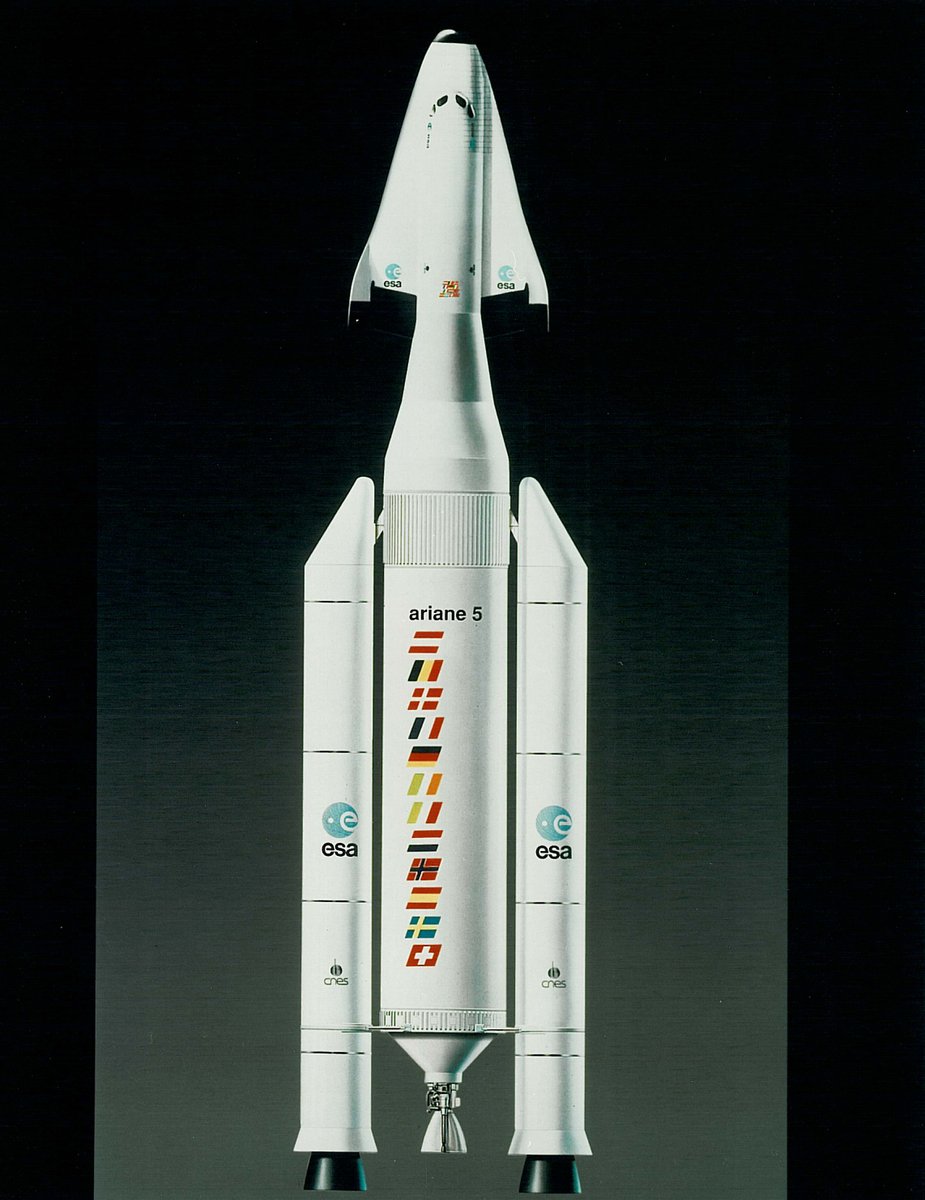
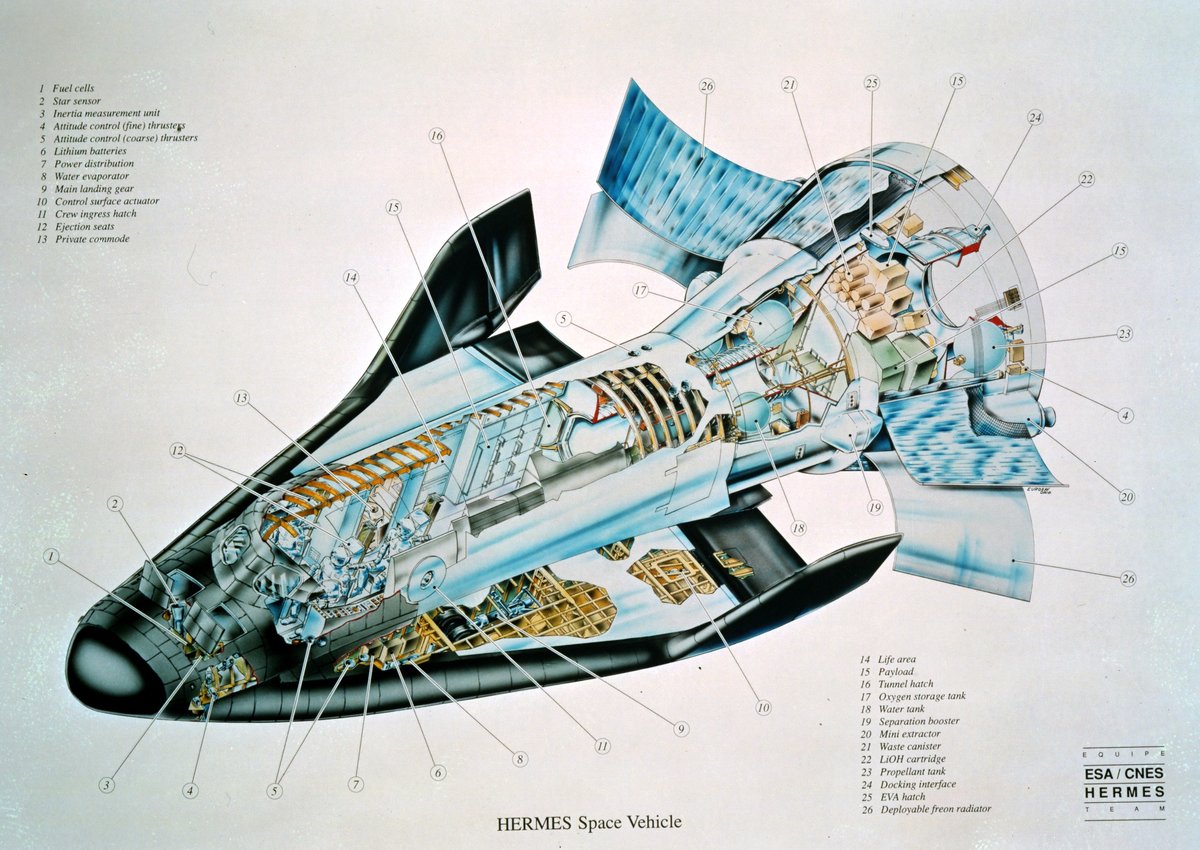
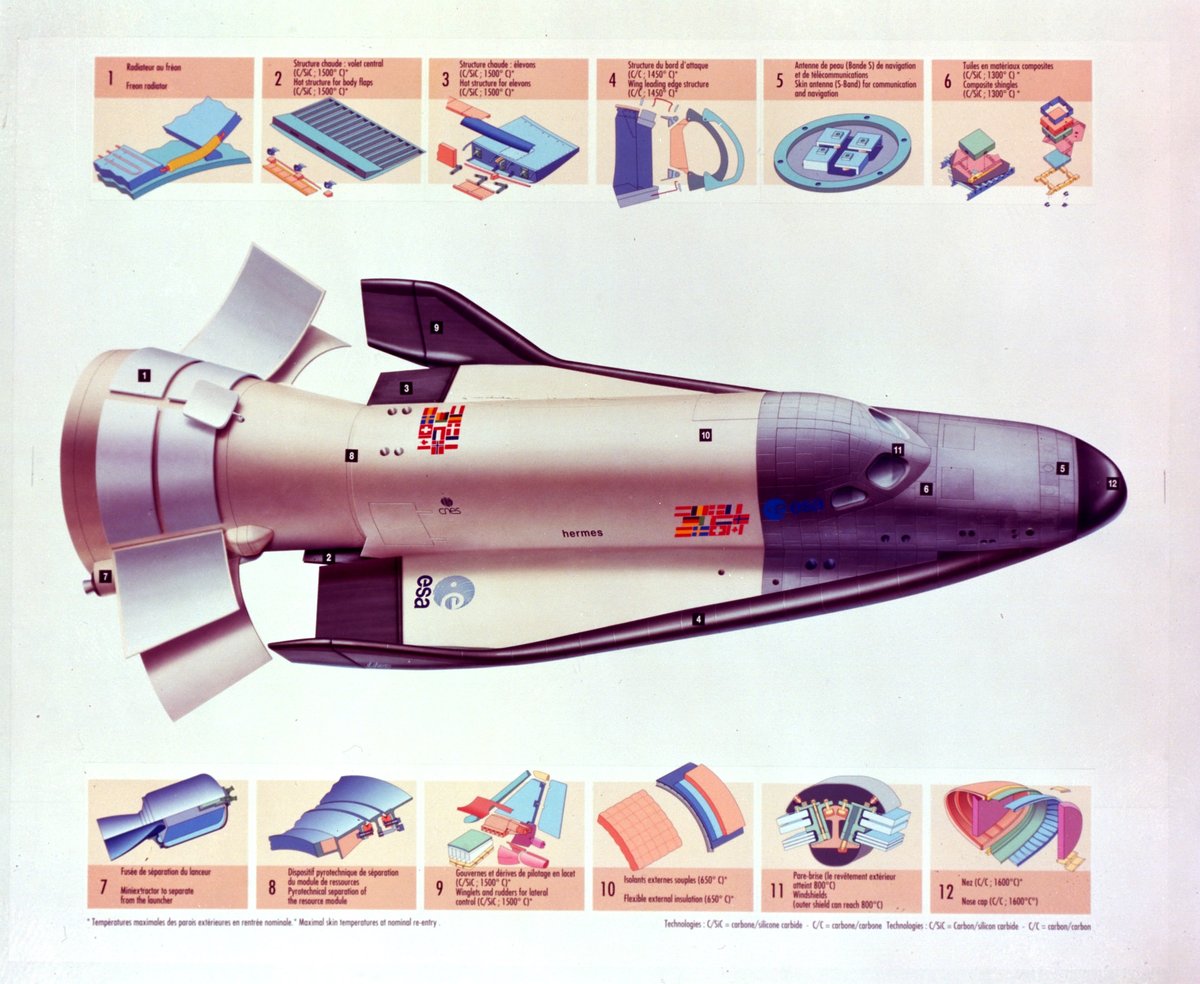
What the @Arianespace Ariane 5 would have looked like in its @esa Hermes configuration. I would have loved to have seen this thing fly. Credit: ESA
For context, Hermes was an ambitious crewed spaceflight program created by @CNES in 1985 and later adopted by ESA. The program was canceled in 1992 because of its projected cost and some geopolitical developments with Russia that enabled ESA to utilize Soyuz.
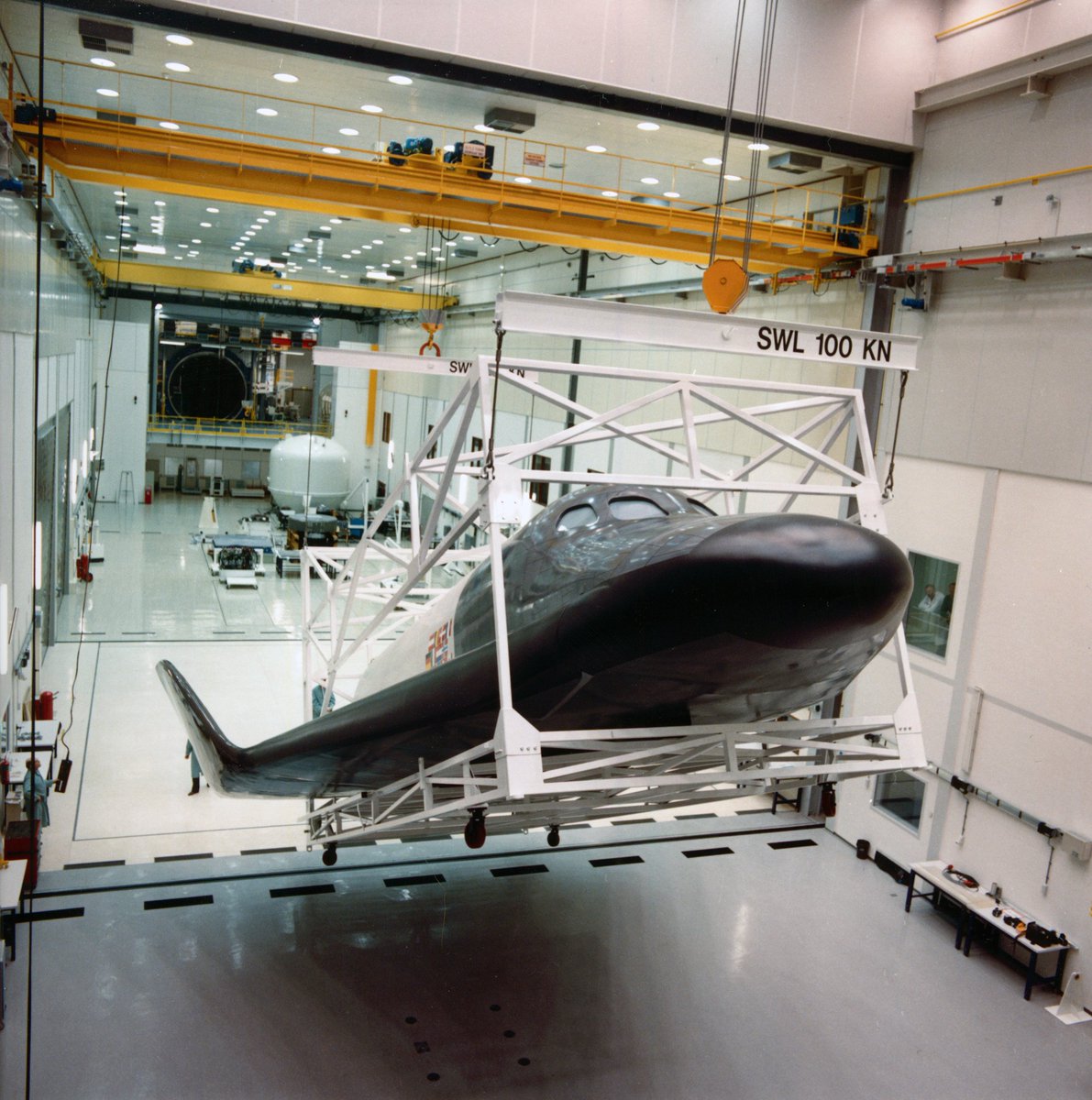
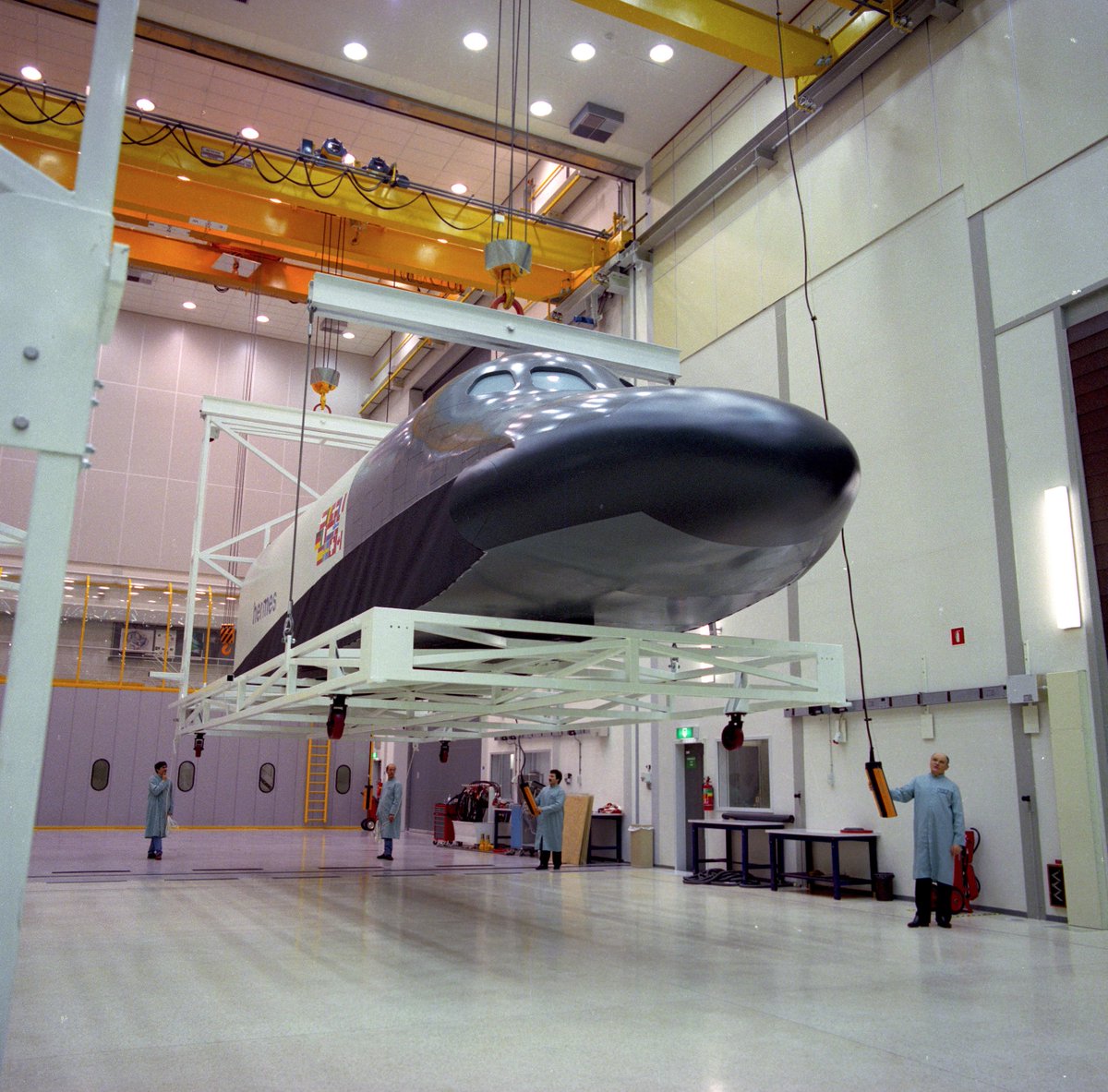
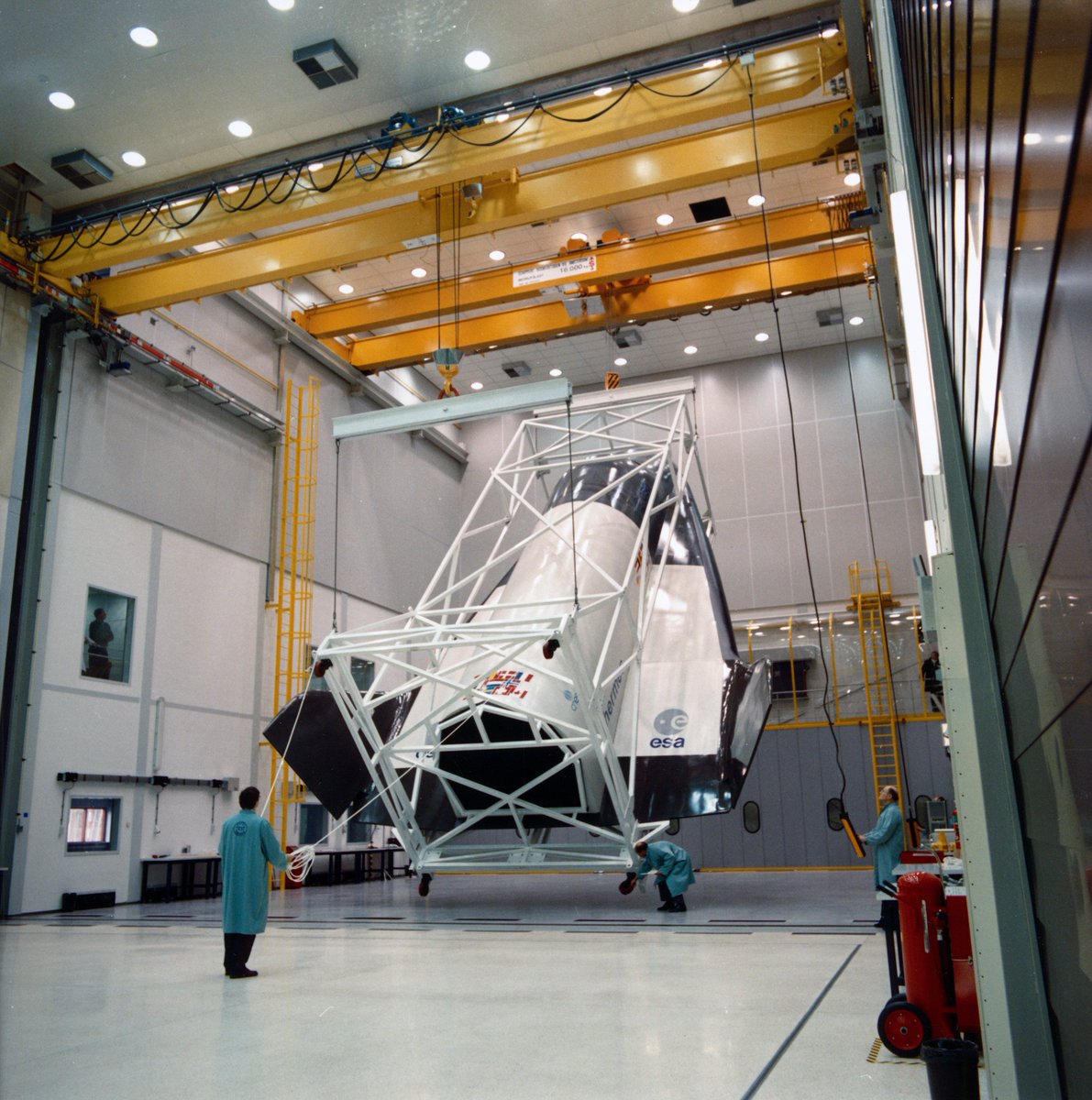
Although no Hermes spacecraft were ever built, a mockup was created for the Paris Air Show. According to @ESA_History, it was then used to demonstrate the European Space Research and Technology Centre's (ESTEC) capacity to accommodate large-scale spacecraft.
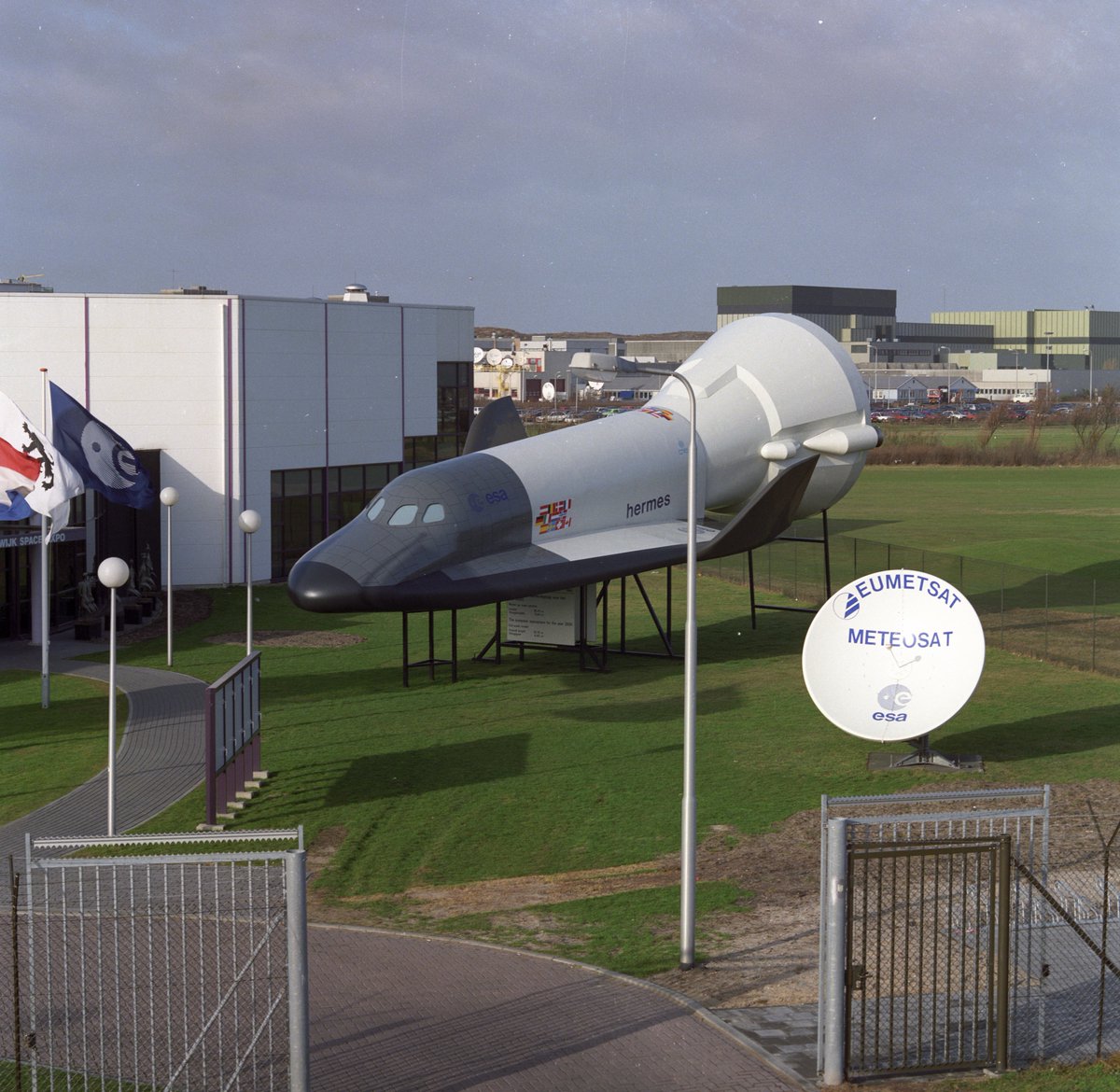
The mockup then became a feature of ESTEC's Space Expo visitor centre that opened in 1990. I'm not sure if it is still there. Any info on where the Hermes mockup is now @ESA_History?
• • •
Missing some Tweet in this thread? You can try to
force a refresh

.@esa initiated its first astronaut selection process on 28 March 1977. The effort was the result of an agreement made with @NASA 4 years earlier that would see European astronauts join space shuttle missions in exchange for ESA supplying the Spacelab reusable science lab.
The astronauts would assume what was then a brand new role board a spacecraft, payload specialist. They would have some generic astronaut training but mostly they would be familiarising themselves with the experiments that would be flown aboard their mission.
ESA's selection criteria required applicants to be no older than 47 years, 150-190cm in height, in good health, emotionally stable, and of high scientific/engineering ability. They stressed that they were looking for normally-fit scientists rather than super-fit astronauts.
No, that's not Starship. It's Themis! I don't think I've seen that rendering before - it's great! For those of you not in the know, Themis is a technology demonstration programme initiated by @esa to develop a reusable rocket first stage.
The initiative is part of the agency's Future Launchers Preparatory Programme (FLPP) which, according to ESA, is focused on "system studies and research activities to foster new technologies capable of delivering performance and reliability coupled with reduced operational costs"
The rocket stage demonstrator will be powered by the agency's Prometheus engines, another of @esa's FLPP initiatives. It will be launched from the Guiana Space Centre's former Diamant launch facility, which is being refurbished for this purpose.