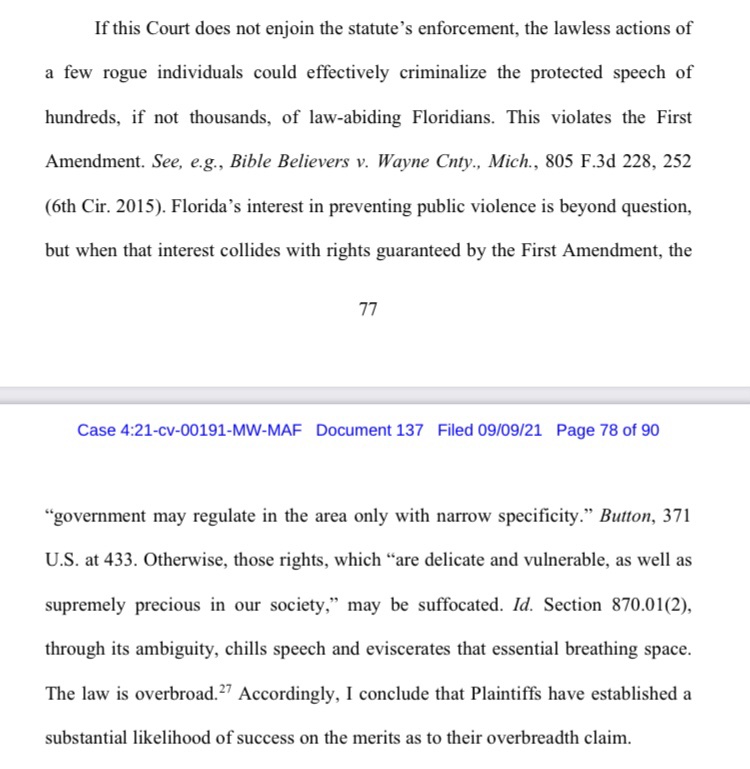
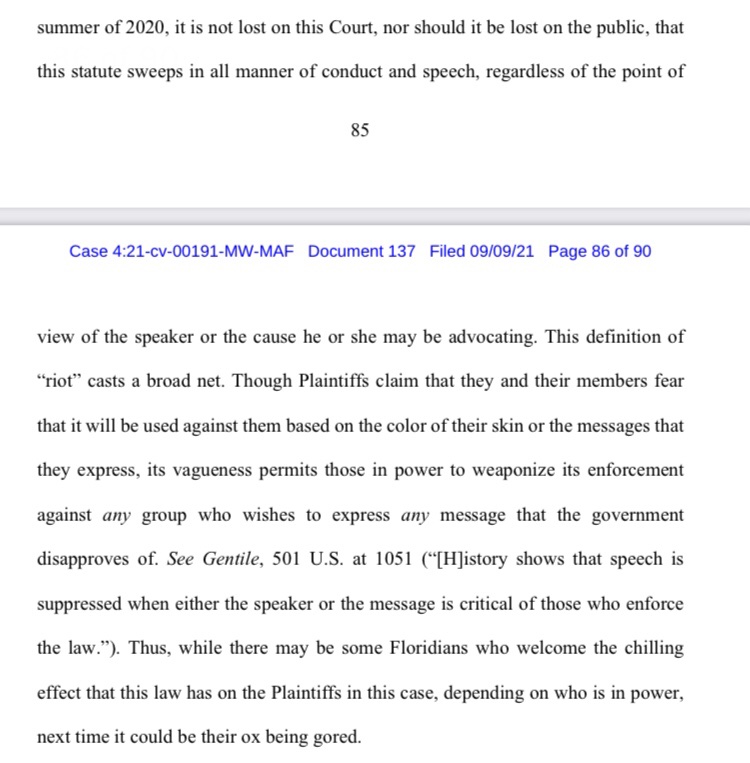
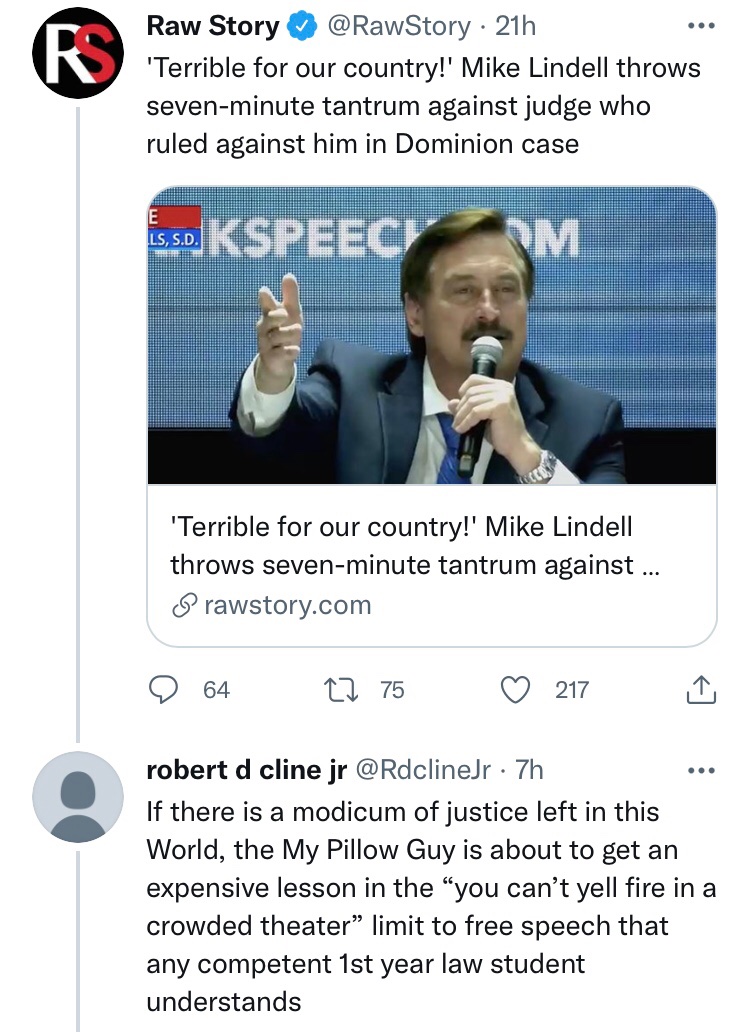
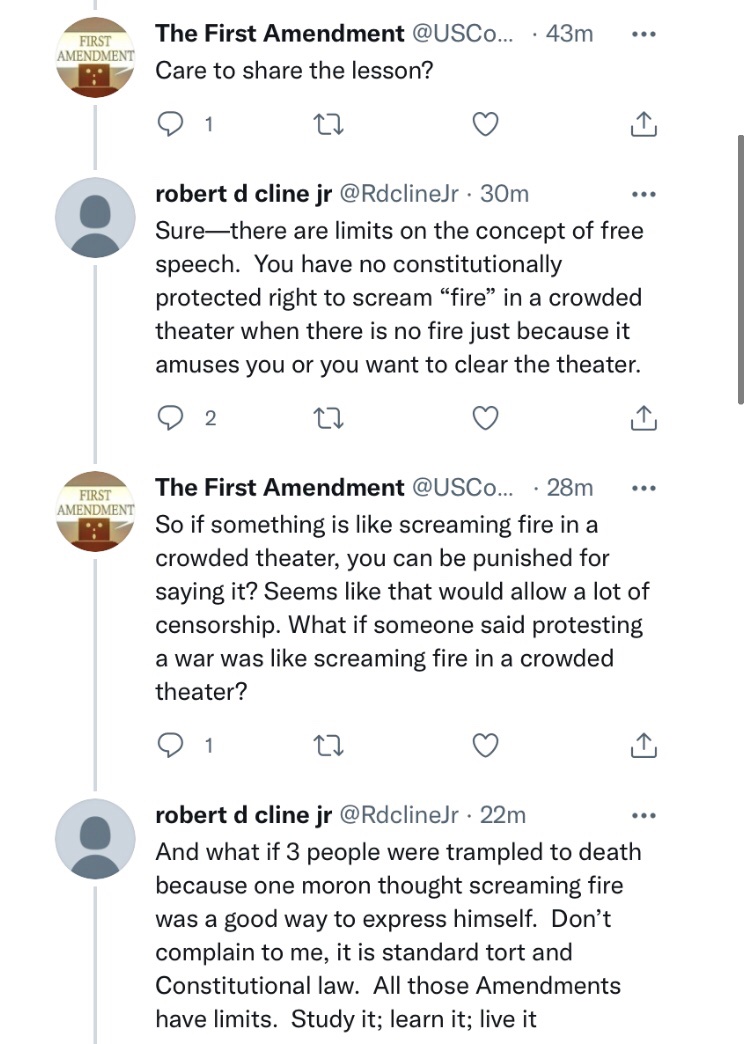
I protect a lot of knowingly false disinformation. So let’s break down @VickerySec’s knowingly false (and protected) disinformation about me, shall we?
A few points:
A few points:
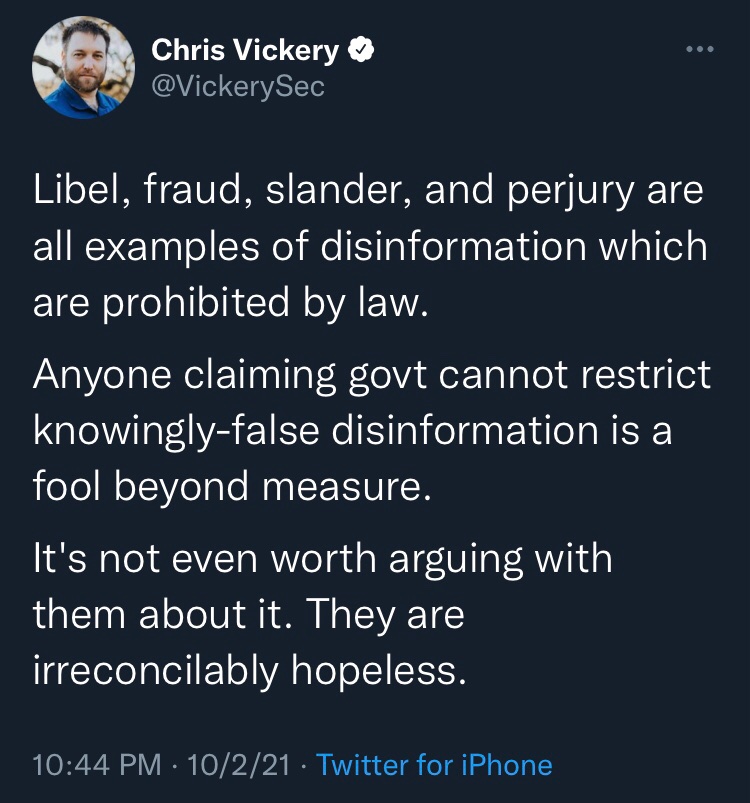
1. It is true that defamation, fraud, and perjury are all exceptions, for which one element is (more or less) that the speech is knowingly false.
2. But those exceptions all have *additional* elements that must be met for the speech to be unprotected.
2. But those exceptions all have *additional* elements that must be met for the speech to be unprotected.
3. You therefore can’t extrapolate from these exception that all knowingly false speech is unprotected. For example, if Congress banned oranges, it would be incorrect to say that all fruit is illegal.
4. But wait, you say, couldn’t SCOTUS, who has made these other exceptions, also say that false speech in general is unprotected? While that may be theoretically true, SCOTUS has rejected that very argument.
5. Speech does not lose First Amendment protections based on falsity alone.
supremecourt.gov/opinions/11pdf…
supremecourt.gov/opinions/11pdf…
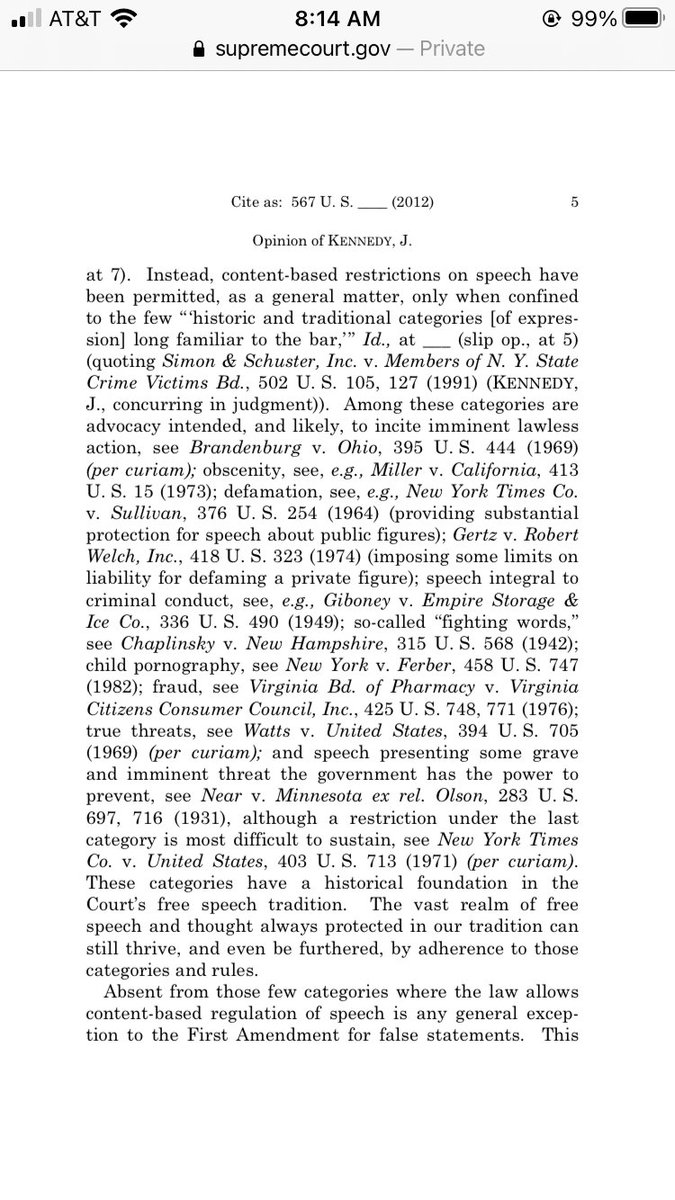
6. To bring it back together, “disinformation” about the vaccine or COVID almost never meets the elements of defamation, fraud, or perjury. This means it does not fall within an exception and is protected speech.
Now go and enjoy your Sunday
• • •
Missing some Tweet in this thread? You can try to
force a refresh