Quanto rendono i fondi pensione in Italia? Un informativo articolo de @ilpost usa dati @covip per confrontare i rendimenti dei fondi pensione, la loro distribuzione e i loro costi 1/
ilpost.it/?blog_post=qua…
L'articolo dipinge un quadro sconfortante. Il rendimento, anche dei fondi negoziali (quelli istituiti in base ad accordi sindacali), è ben lontano dai benchmark. La varianza è enorme 2/
I costi di tali fondi, anche quelli negoziali, sono alti. 3/
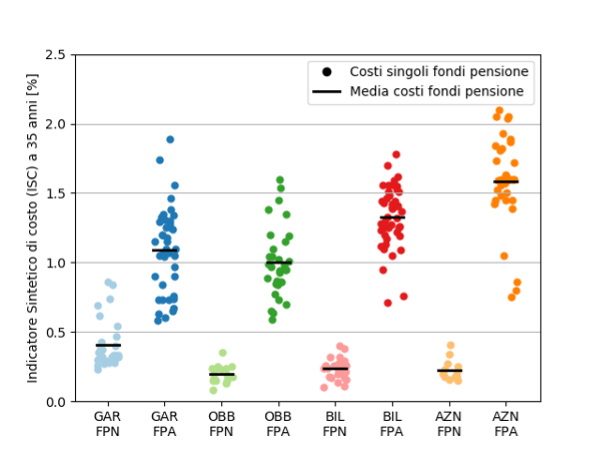
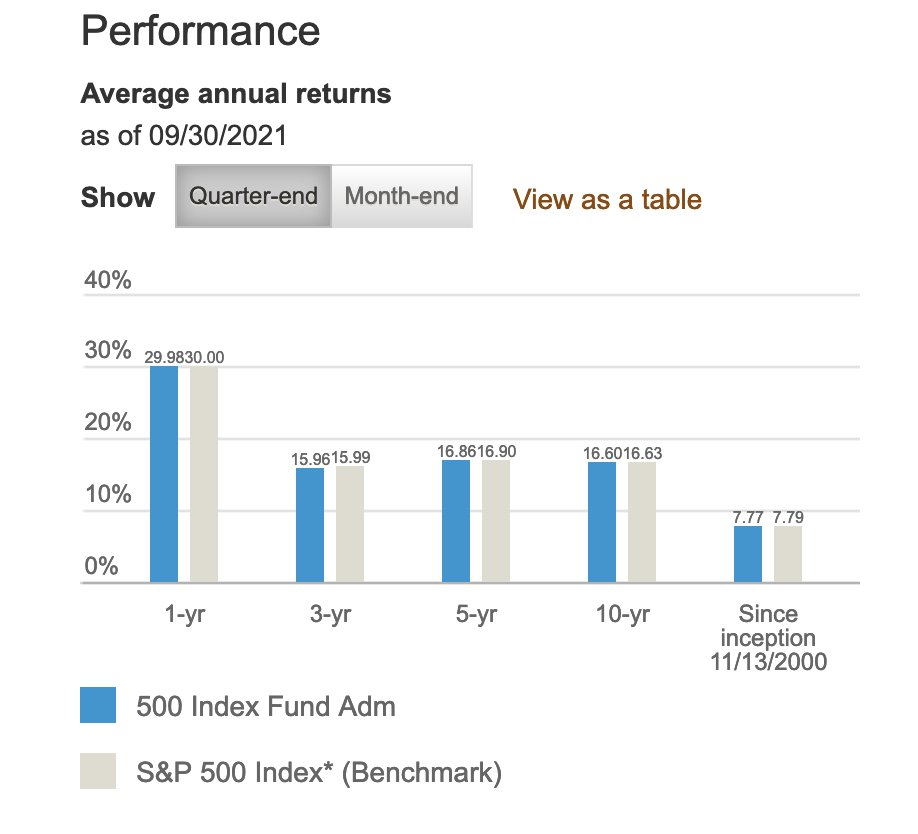
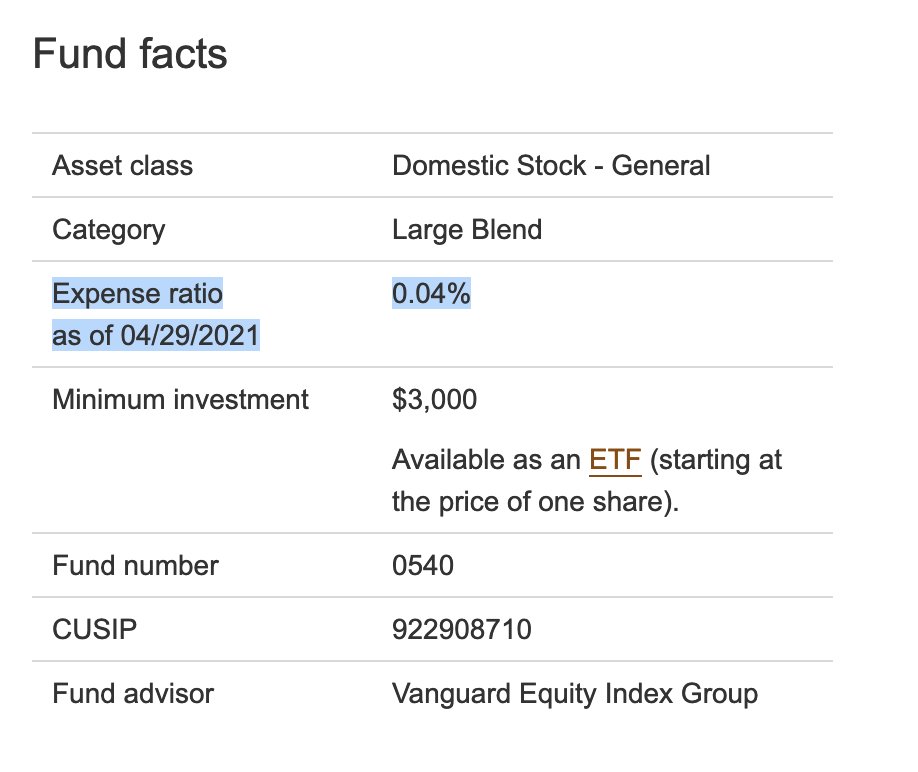
La media si attesta su ~0.25% per i fondi negoziali, un numero altissimo se confrontato con i costi di un index fund operante in condizioni di mercato, per esempio il Vanguard 500 index fund (0.04%) investor.vanguard.com/mutual-funds/p…. Il suo rendimento è indistinguibile dal benchmark 4/
Mi dicono che i costi di gestione da noi sono necessariamente più alti. Cosí tanto? Anche se fosse, perchè i lavoratori italiani sono obbligati ad affidare i loro risparmi a fondi gestiti, scelti in fumose riunioni sindacali, praticamente senza possibilità di scelta? 5/
La ricerca rivela che troppa scelta i questo campo può confondere i meno esperti. Ma perché non parmettere ai lavoratori accesso a pochi fondi indice a basso costo scelti dal @COVIP_Eventi? Questo faciliterebbe una maggiore concorrenzialità del settore 6/6

• • •

Missing some Tweet in this thread? You can try to force a refresh

 

Keep Current with andreamoro

andreamoro Profile picture

Stay in touch and get notified when new unrolls are available from this author!

Read all threads

This Thread may be Removed Anytime!

PDF

Twitter may remove this content at anytime! Save it as PDF for later use!

Try unrolling a thread yourself!

how to unroll video
  1. Follow @ThreadReaderApp to mention us!

  2. From a Twitter thread mention us with a keyword "unroll"
@threadreaderapp unroll

Practice here first or read more on our help page!

More from @andreamoro

14 Jul
Scuola primaria: esiti sostanzialmente stabili rispetto al 2019, ma notevole differenza tra scuole e tra classi nel Mezzogiorno e il resto del paese
Terza media: aumentano del 5% gli studenti che NON raggiungono livelli di accettabilità in Italiano Image
Read 13 tweets
24 Jun 20
A paper with @albertobisin: Learning Epidemiology by Doing: The Empirical Implications of a Spatial SIR Model with Behavioral Responses.
papers.ssrn.com/sol3/papers.cf… 1/
How does geography affect the diffusion of COVID-19? How can we compare the U.S. to Ireland? New York to Miami? How do we make sense of figures like this? 2/
In this paper, we simulate a Spatial SIR model with behavioral responses showing how geography places restrictions over the empirical predictions of the epidemic models 3/
Read 16 tweets
14 Jun 20
THE ECONOMICS OF INSTITUTIONAL DISCRIMINATION: A PRIMER
Much has been written recently about the failure of economics to study institutional discrimination. But, I believe there are important contributions to improve upon. Here is a survey (with a bias for my own work -sorry) 1/
In the last JEP, sociologists Small and Pager (pubs.aeaweb.org/doi/pdfplus/10…)
claim that economists do not study implicit biases and institutional discrimination. @WSpriggs in an open letter adds that economists should study race as a social construct bit.ly/37x0k1x 2/
Economists have tools to study these issues and have done so. The critics focus on the old (but textbook-popular) notion of statistical discrimination modeling (exogenous) stereotypes (=group averages), which they dislike because it places the burden of change on the victims 3/
Read 21 tweets
31 Mar 20
Un articolo sul @fattoquotidiano (con molti altri, come @Avvenire_Nei) titola minaccioso "Coronavirus, negli Usa i disabili non hanno diritto alle cure contro il Covid". Trattasi di bufala. L'articolo distorce non poco i fatti, che vado a descrivere indicando le fonti. 1/9
Di vero nell'articolo c'è che alcune associazioni di categoria hanno intrapreso iniziative (meritevoli!) per prevenire la possibilità che la disabilità venga usata come criterio, ma queste iniziative non affermano che questo sia un criterio in uso 2/ dredf.org/covid-19-advoc…
Questo e gli altri articoli sull'argomento riprendono (senza citarlo) un articolo di qualche giorno fa apparso sul New York Times, anch'esso impreciso (ma non così fuorviante). Ma era un editoriale, non un articolo 3/ nyti.ms/3bgjlpN
Read 10 tweets
29 Oct 19
I am not a taxation expert but I would like to suggest an interpretation of the @gabriel_zucman - @wwwojtekk
diatribe (a good summary of links here by @Undercoverhist: ). Hope this helps the few readers patient enough to follow /1
TL;DR: The question "Who pays how much taxes?" is
ill-posed. Better question: "who pays how much taxes RELATIVE TO WHAT SCENARIO?" There is an even better question but I'll write it later /2
Zucman/Kopczuk are ultimately debating over which counterfactual makes more sense. But counterfactuals are a bitch... I thought a lot about counterfactuals in my research. They require clarifying what is changing and what is fixed. That is almost never obvious without a model /3
Read 20 tweets
12 Mar 19
I loved it when I read it a while ago and it was a pleasure to read it again. However, it leaves a bitter aftertaste, and not just because I am one of the culprits. It makes me wonder is what's the alternative. (1/n)
Much of the criticism I read in the essay is not towards quantification per se, but towards bad quantification. School testing induces teaching to the test? That means we need better outcome measures! Police is doing CompStat? Who decided those were good outcomes? (2/n)
Politicians, the ultimate short-term maximizers. Politicians feast on emphasizing non-quantifiable outcomes. Zero discounting leads not just to illogical outcomes, but is morally naive as it implies trading off real suffering today with uncertain benefits in the future (3/n)
Read 4 tweets

Did Thread Reader help you today?

Support us! We are indie developers!


This site is made by just two indie developers on a laptop doing marketing, support and development! Read more about the story.

Become a Premium Member ($3/month or $30/year) and get exclusive features!

Become Premium

Too expensive? Make a small donation by buying us coffee ($5) or help with server cost ($10)

Donate via Paypal Become our Patreon

Thank you for your support!

Follow Us on Twitter!

:(