

#DSA IMCO talks on targeted behavioural advertising (aka tracking-based advertising aka surveillance advertising) are unfortunately not going into the right direction. Let’s be clear. 1) Consent is already a requirement under GDPR. However, no valid consent can be given to 1/8
surveillance advertising as consent requires elements of transparency and control, made impossible by the opaque tracking industry and the multitude of parties receiving our data (≠informed consent). Thanks to @johnnyryan for also stressing this in last week’s IMCO hearing.2/8 
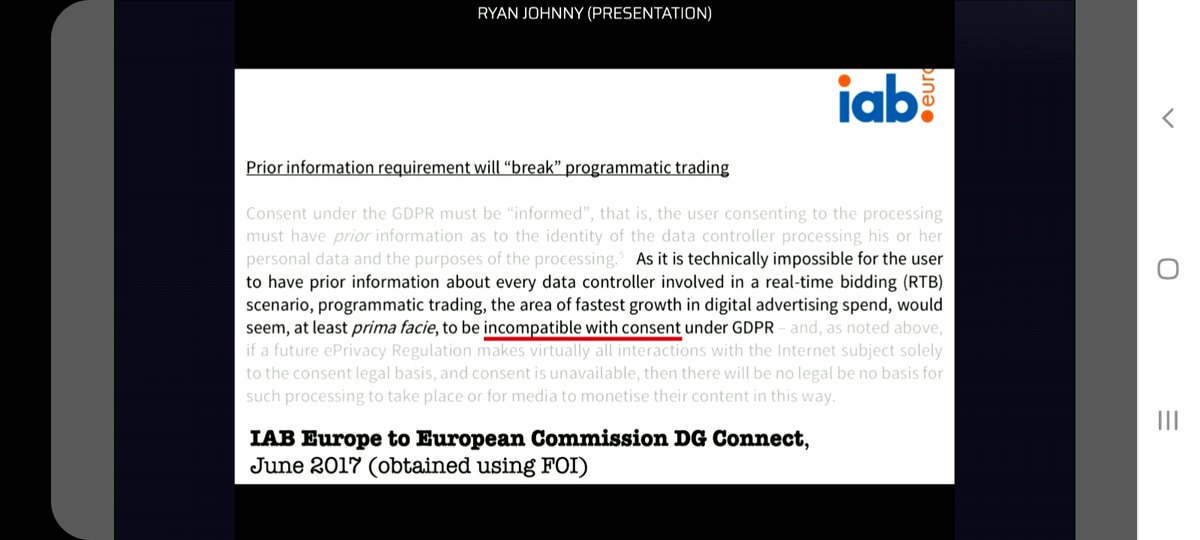
2) Banning surveillance advertising ≠ banning online advertising. 3) Advertising can still be relevant without surveillance, e.g. when targeted based on the content of a visited page. People actually prefer contextual advertising and believe it is more credible.@BuggeErik 3/8
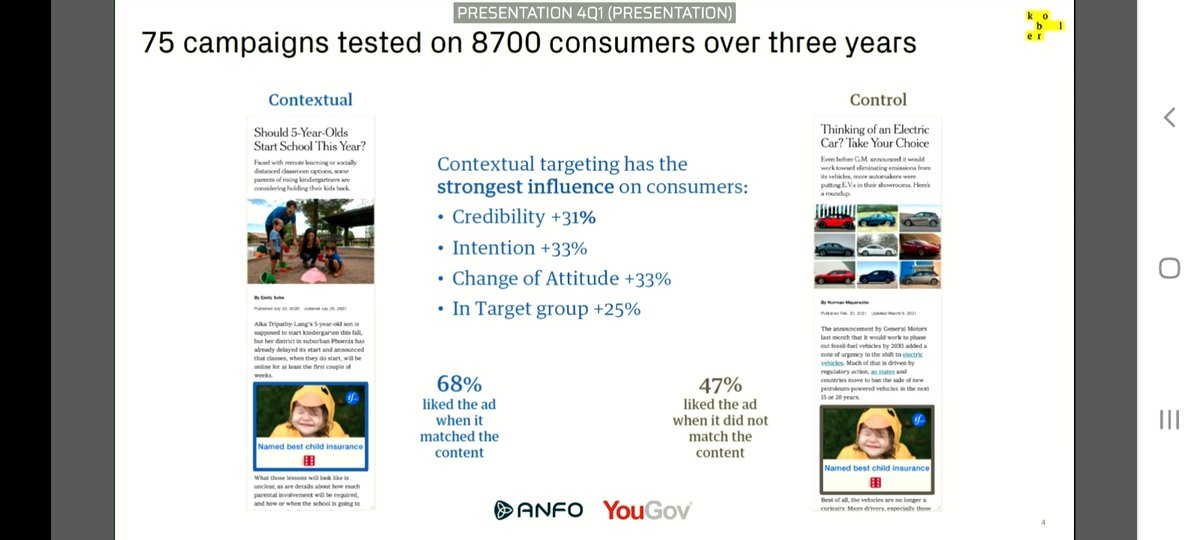
4) GDPR enforcement is not enough as discrimination and ad fraud will continue to exist. 5) Also a ban on using sensitive data is not enough as it can easily be circumvented by using proxies (e.g. instead of targeting based on religion, targeting based on “interest in Islam”).4/8
6) A ban on tracking ads for children is equally insufficient, does not protect other vulnerable users or solve broader societal issues related to the surveillance-based business model + age verification will only lead to more collection of personal data. 5/8
7) There are sufficient examples demonstrating companies don’t need to rely on surveillance to advertise and reach customers.
https://twitter.com/panoptykon/status/1461323187438952449?t=9Jy8eyabhyMzTHdRJIqsuw&s=03Some have even stopped paid advertising on @Meta platforms.
https://twitter.com/patagonia/status/1453802399684980741?t=-jLwEn5bm9v5673OjxQoKg&s=03. 6/8
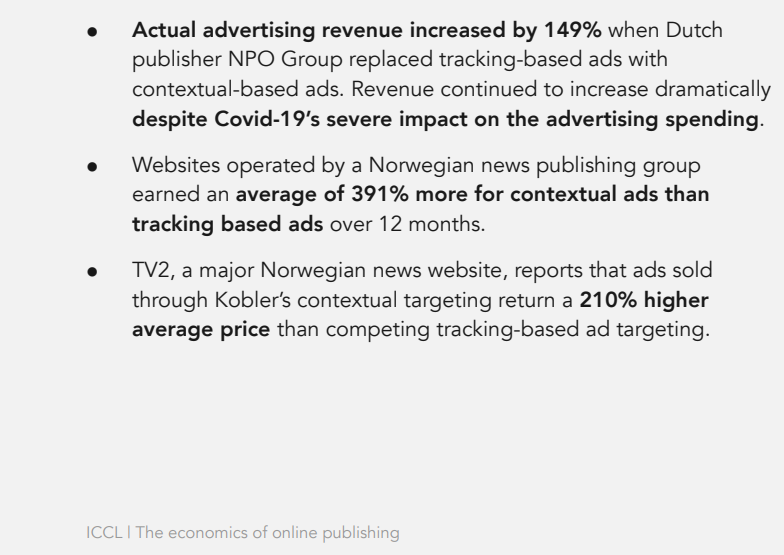
8) Those that benefit the most of surveillance advertising are not SMEs but companies like @Google and @Meta that make 80% ($147b in 2020) and 98% ($84b in 2020) of their revenues from advertising, which is why you see their lobbying ads on Politico and on Twitter every day. 7/8
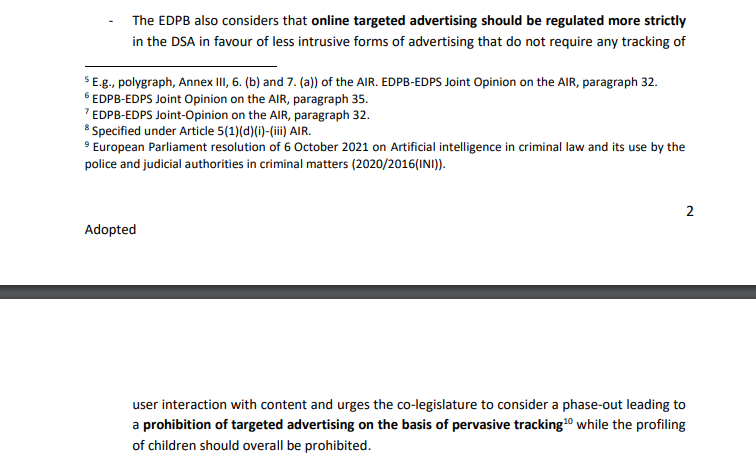
Are you really ignoring all of this and repeated calls by the @EU_EDPB to prohibit targeted ads based on pervasive tracking? @EP_SingleMarket @ArbaKokalari @charanzova @Andreas_Schwab @GeoffroyDidier @svenja_hahn @tomvdkendelaere @PabloAriasE @HennaVirkkunen @Ansip_EU 8/8
• • •
Missing some Tweet in this thread? You can try to
force a refresh



