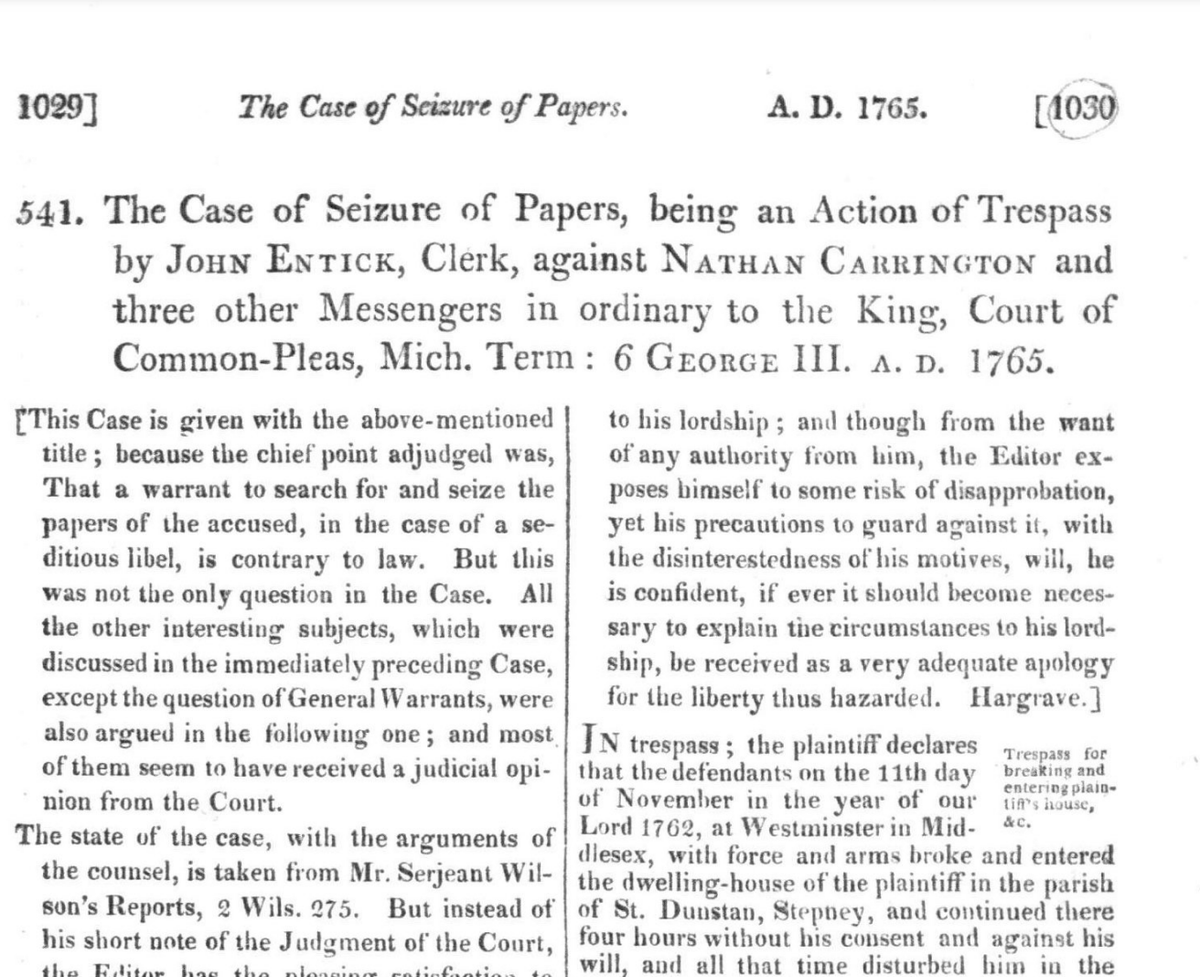
Entick v. Carrington (1765), was a major inspiration for the 4A. There are two versions of the opinion, from Howell's State Trials and from the Eng. Rep. It's hard to find them online, so I have post them:
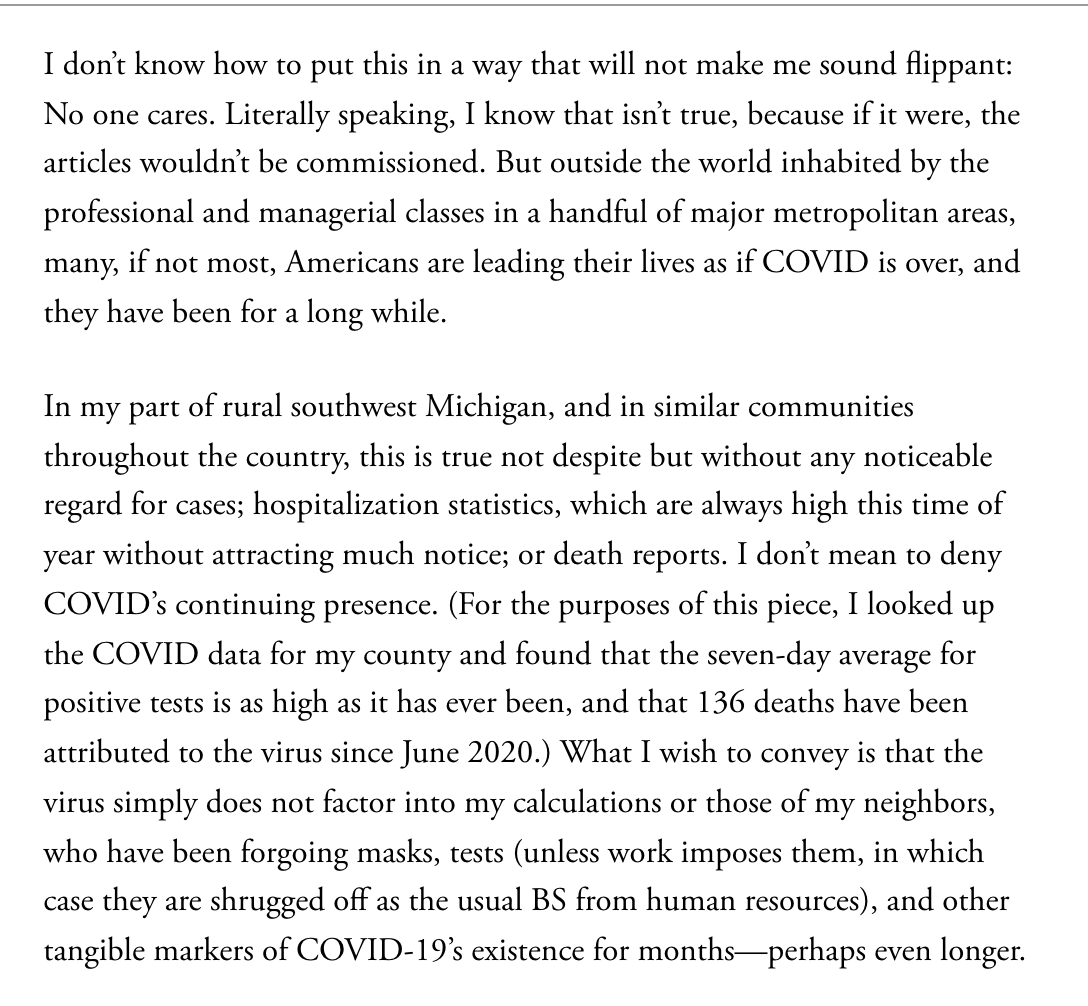
"Outside the world inhabited by the professional and managerial classes in a handful of major metropolitan areas, many, if not most, Americans are leading their lives as if COVID is over, and they have been for a long while." theatlantic.com/ideas/archive/…
How the author reconciles his view that masks, etc. are just bogus posturing with the fact of 800,000 American deaths so far (and counting) is not explained, but the essay is a good reminder of where a lot of people are coming from.
And obviously, the argument has to be not just that you personally think masks etc don’t work, but that the people who wear them don’t believe they work either. It’s all just symbolism *to them,* the argument goes, and they’re actually not trying to save lives.
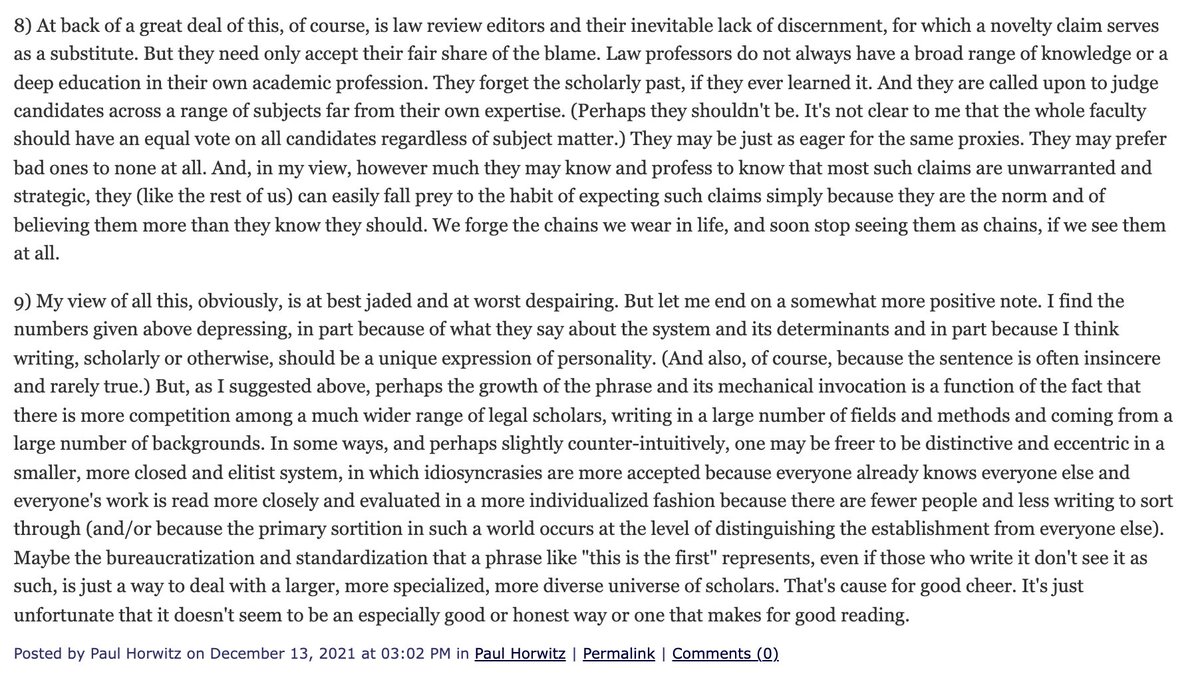
Over at Prawfs, Paul Horwitz conducts the very first ever empirical study of the rise of novelty claims in law review articles -- finding a roughly 10x increase over 20 years. (Too bad the post is already placed, though.) prawfsblawg.blogs.com/prawfsblawg/20…
Paul comments:
My advice: If you feel it's accurate, feel free to make a direct novelty claim ("this is the first article to...") in the draft you submit to journals. But change it to avoid that formulation by the final. With novelty claims, as in other writing, best to show, don't tell.
Put another way, direct novelty claims have become so common and so formulaic that they come off as a bit amateurish. You'll sound more sophisticated if you don't make that direct claim.
Super-interesting opinion from Mag. J. Harvey in the DDC: Can a judge deny a warrant application because the judge thinks the warrant will be executed in an unreasonable way? And if so, how can the judge know that ex ante?
In the case, the government has seized 26 cell phones (or has data extractions from their phones) from people in illegal gun cases. The govt wants to search them all for evidence of a common gun trafficking source.
Judge Harvey concludes that there was probable cause that evidence will be found on each phone, and the evidence to be searched is described with particularity as to each phone. (See Slip op. p3)
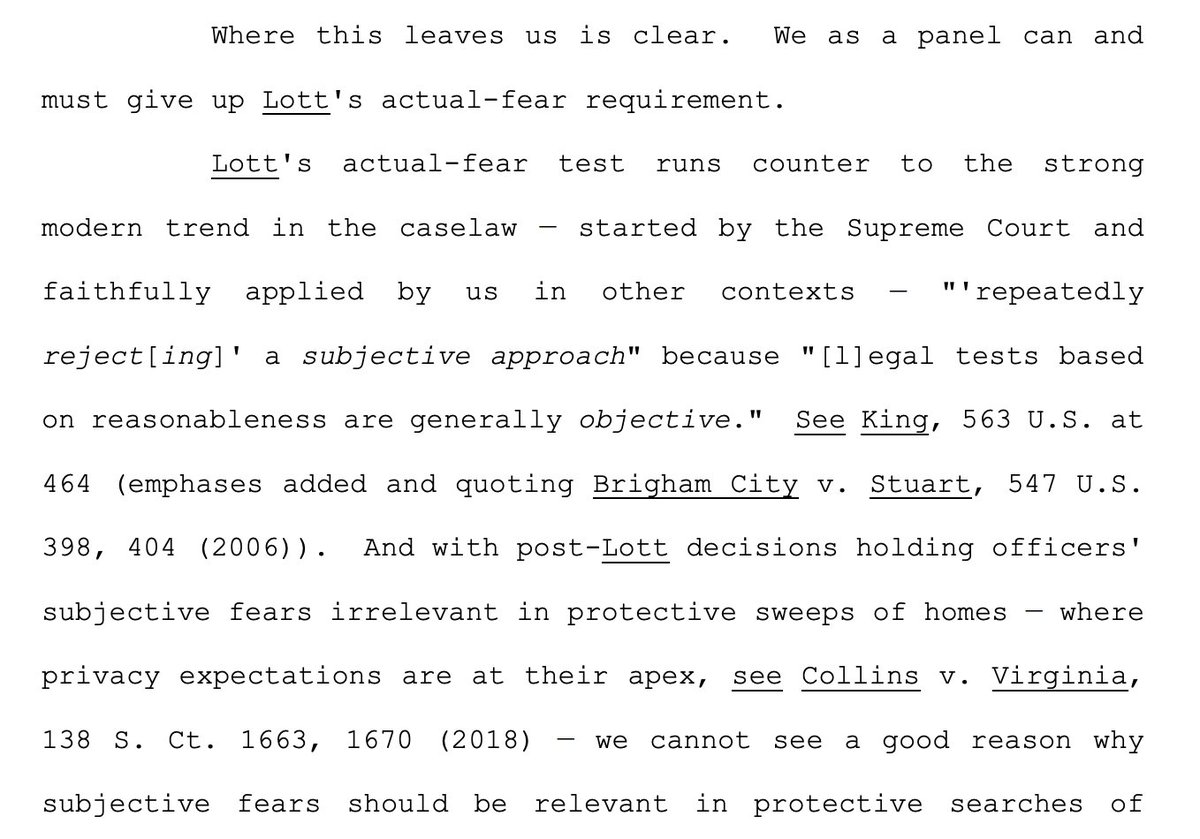
1st Circuit panel overturns 1989 circuit precedent that had held a protective sweep requires evidence that the officers were actually motivated by public safety. Intervening SCT caselaw makes clear 4A is objective, not subjective.
Although 3-judge panels normally can't overturn 3-judge panel precedents, CA1 caselaw allows it when intervening relevant but not controlling authority suggests the old panel would have come out differently.
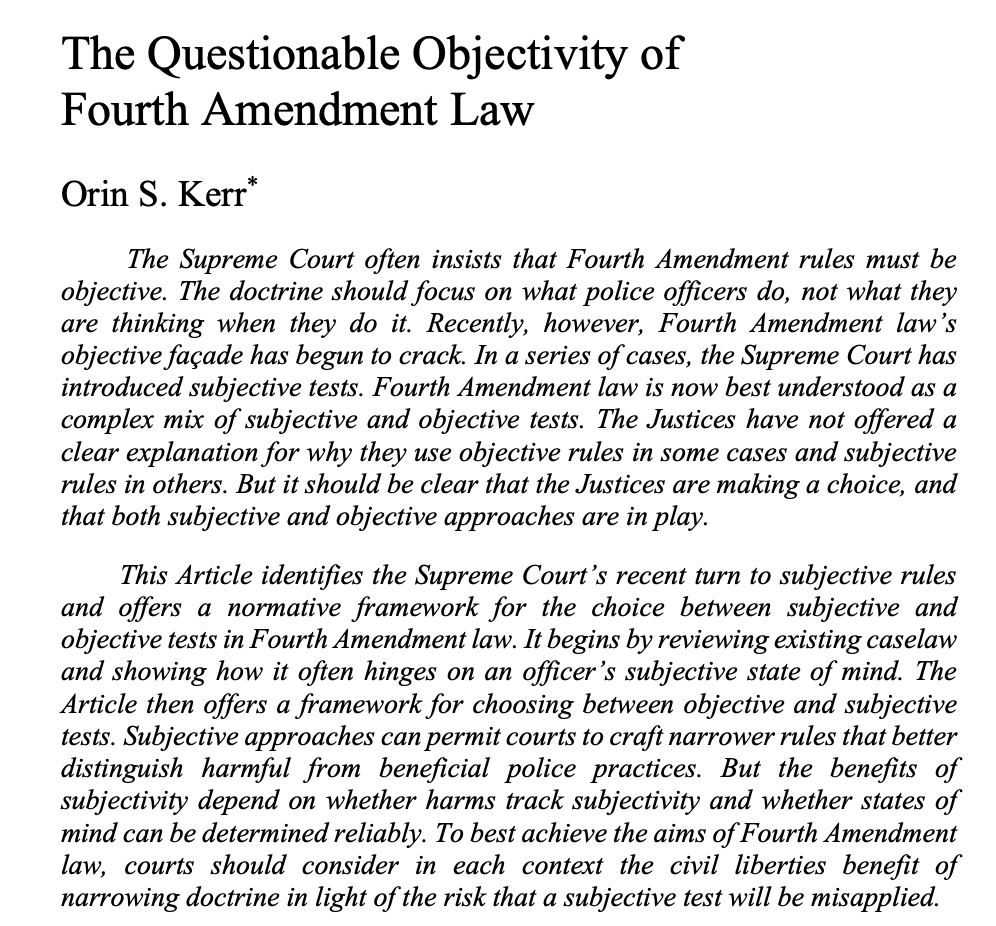
On the merits, I disagree with the panel's view that modern 4A rules are generally objective w/r/t police conduct. As I explained in this recent article, there are a lot of subjective rules, many of them very recent. texaslawreview.org/wp-content/upl…
Judge Musmanno really doesn't like the Supreme Court's "voluntary encounter" caselaw. (An alternative would be to say it's a compelled encounter but is allowed with no cause. But from a civil liberties perspective, isn't that worse?) pacourts.us/assets/opinion…
As I see it, the problem goes like this. The Justices think the 4th Amendment should let the police walk up to people and ask them questions without cause. You can get there two ways: (a) Either it's not a seizure, or (b) it's a seizure that is allowed without cause.
Which is better, (a) or (b)? The Justices went with (a), which lets them maintain the basic rule that seizures have to be justified. They then needed a test to allow (a) without gutting 4th Amendment protection for clearly compelled stops, like the officer who orders the stop.