Huge thread for a huge problem.
This right here. This hit me hard.
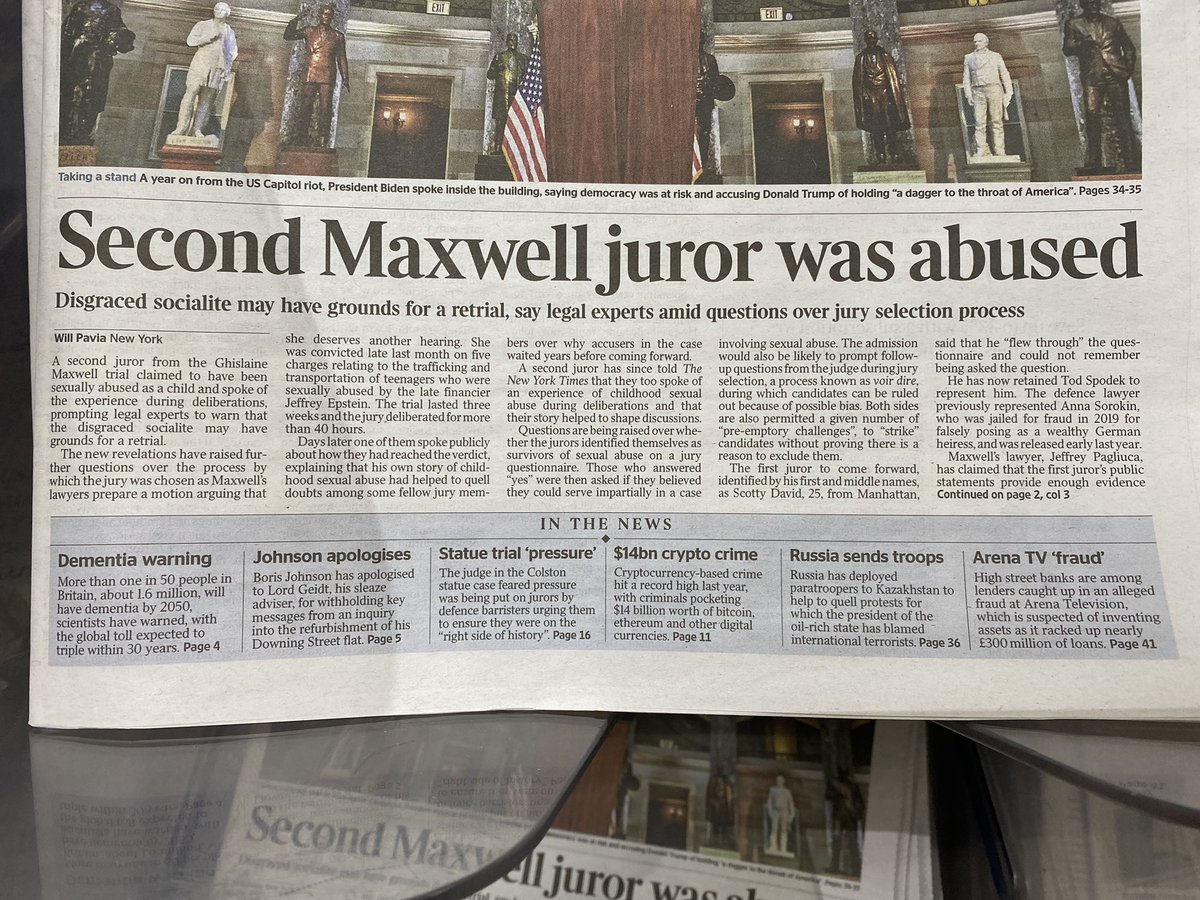
We have to talk about the fact that people who have been abused are being recast as unsuitable jurors.
The main, and most obvious reason to challenge this, is that sexual violence and abuse is very common.
This right here. This hit me hard.
We have to talk about the fact that people who have been abused are being recast as unsuitable jurors.
The main, and most obvious reason to challenge this, is that sexual violence and abuse is very common.
Here are some key stats:
⁃1 in 4 girls and 1 in 20 boys will be sexually abused before the age of 12 (NSPCC)
⁃1 in 3 women will be raped or experience an attempted rape in their lifetime (RAINN)
⁃1 in 5 British adults report that they were abused in childhood (CSEW)
⁃1 in 4 girls and 1 in 20 boys will be sexually abused before the age of 12 (NSPCC)
⁃1 in 3 women will be raped or experience an attempted rape in their lifetime (RAINN)
⁃1 in 5 British adults report that they were abused in childhood (CSEW)
So therefore, large proportions of society, and therefore jurors, would become ineligible and framed as unsuitable to undertake jury duty.
Now, to the more psychological arguments around this:
Now, to the more psychological arguments around this:
1.People who have been abused are in some way psychologically impaired as jurors
This is how you can tell that society doesn’t actually believe, respect or care about survivors of abuse. The moment their status is revealed, their entire capacity is called into question.
This is how you can tell that society doesn’t actually believe, respect or care about survivors of abuse. The moment their status is revealed, their entire capacity is called into question.
They are seen as psychologically unfit for so many reasons, all of which are myth. By admitting that prior experience could change the impartiality of a juror, we must therefore accept that the finding of guilt is a subjective process, which most people deny.
2.People who have been abused will be biased in abuse trials
This is myth and assumption. What we know from psychological research is that people who have been abused themselves don’t hold any better or worse views or attitudes than anyone else.
This is myth and assumption. What we know from psychological research is that people who have been abused themselves don’t hold any better or worse views or attitudes than anyone else.
They victim blame at the same rate as those who have not been abused, for example. They are not shown to have any more empathy for other victims/survivors as anyone else. They are just as likely to believe rape myths and crime stereotypes.
Therefore, there is no particular reason to claim they would be biased.
Because of the complexity of abuse and trauma processing, you could get a juror who was abused as a child but blames themselves, and so blames others.
Because of the complexity of abuse and trauma processing, you could get a juror who was abused as a child but blames themselves, and so blames others.
You could also get a juror who was abused and reported their abuser, and now they hold judgmental views against those who don’t report their abuser too.
It’s not as black and white as it appears.
It’s not as black and white as it appears.
3.People who have not been abused are impartial and better decision makers
This one annoys me most, I think. The implication here is that if you have been abused, you are not impartial and your decision making ability is affected.
This one annoys me most, I think. The implication here is that if you have been abused, you are not impartial and your decision making ability is affected.
But this assumes that those who have not been abused must be impartial and have better decision making ability, which I don’t believe to be true. Impartiality is virtually impossible anyway, due to the way we all take in and construct information from the world around us.
For example, a juror could look at a defendant and think they ‘look like a criminal’, whereas another juror might look at a defendant and think ‘they look like my brother’ and then not be able to find them guilty. The victim might remind them of someone.
The defendant might have an accent they are prejudiced against. The case might trigger them. It’s just not as simple as ‘been abused = bad, not been abused = good’.
We even know that jurors make different decisions based on fickle things that have nothing to do with the trial, such as bodily appearance, attractiveness and body weight of the victim and defendant.
4.Jury decisions are based on fact and evidence alone
As you can probably guess by now, it’s fairly obvious that juror decision making is not therefore based on facts and evidence alone, no matter how much we want it to be.
As you can probably guess by now, it’s fairly obvious that juror decision making is not therefore based on facts and evidence alone, no matter how much we want it to be.
In my time working trials, I would see the way people responded to girls and women who had been abused or raped purely by how they looked or how they acted. Neither of those factors had anything to do with the crime, but even down to what they were wearing would be scrutinised.
It’s a fallacy to believe you can eliminate bias from a juror sample, but we tell ourselves that we can do it.
5.Who would be left to be a juror if we ruled everyone out who had ever been subjected to abuse, violence and crime?
My final point is simple: if we are actually going to go down this route of eliminating people from jury service based on whether they have been..
My final point is simple: if we are actually going to go down this route of eliminating people from jury service based on whether they have been..
subjected to abuse, violence or interpersonal traumas by other people, you may as well say goodbye to women on juries because of the prevalence of VAWG.
And you may as well write off 1/3 to 1/5 of the adult population because that’s how common child abuse is. And then who is left?
The ‘impartial’ people?
The ‘impartial’ people?
Total impartiality doesn’t exist - nor does ‘objectivity’ or ‘leaving your stuff at the door’ - it’s all waffle we tell ourselves and others.
You cannot cut off part of yourself to make a decision, the brain does not work like that. Ever.
You cannot cut off part of yourself to make a decision, the brain does not work like that. Ever.
• • •
Missing some Tweet in this thread? You can try to
force a refresh