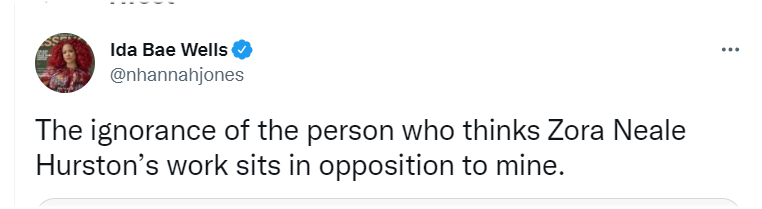
1. She's been tweeting obsessively about the NRO issue for the better part of a week.
2. Note that she does not engage so much as a word of my argument. Instead she just reverts to her standard tactic: ad hominem insults and personal abuse.
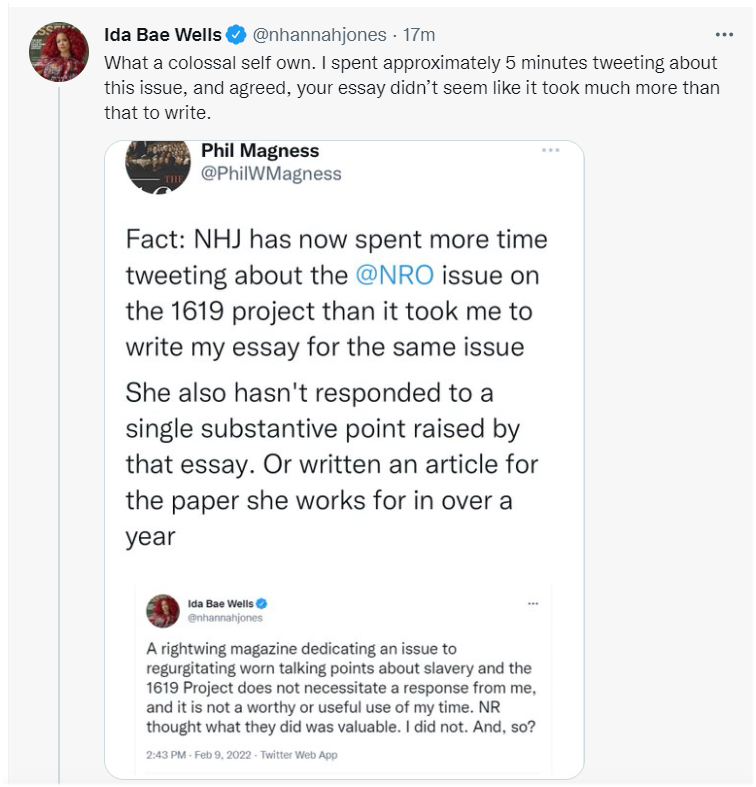
The icing on the cake: a few days ago, @baseballcrank predicted that this is exactly how she would respond.
@baseballcrank Longer essay where I document @nhannahjones's pattern of abusive personal behavior, as well as its imprint upon her journalism in the 1619 Project.
Case in point is an outfit called the @SMC_London. Whenever there's a news story suggesting that lockdowns don't work, they assemble a cherrypicked list of lockdowner scientists like Ferguson & send them to fake "fact checkers" to use as quotes.
@SMC_London The aforementioned Science Media Centre is heavily funded by the @wellcometrust, which is directed by Jeremy Farrar - aka Britain's Fauci, and the guy who called for a government propaganda campaign to discredit anti-lockdown scientists.
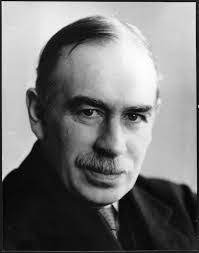
John Maynard Keynes is well known for his advisory role in the British government on economic matters, including during WWII.
Far less known is that Keynes - like many British intellectuals - had a decade-long political flirtation with fascism prior to the war.
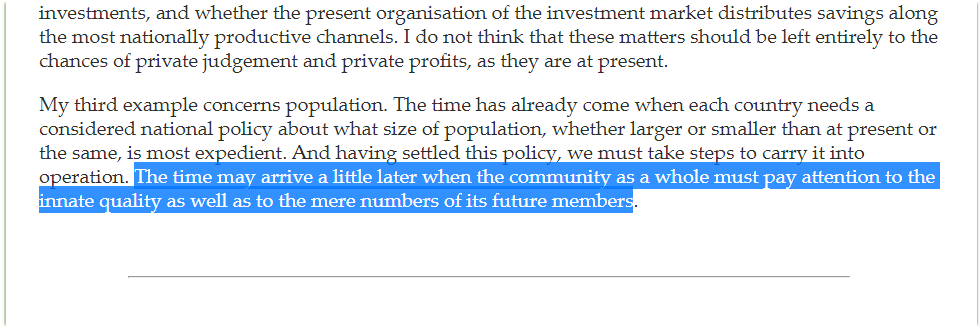
Our story starts in 1926 when Keynes wrote one of his most famous essays, 'The End of Laissez Faire.' Close readers of this essay are also familiar with a notorious passage where Keynes endorses eugenics as a basis for population management.
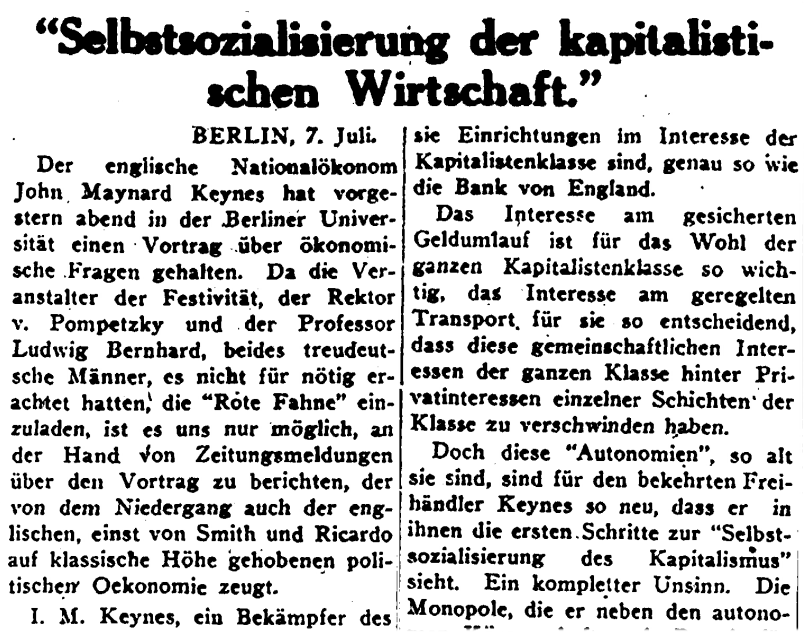
Much less known though - the origin of 'The End of Laissez Faire' was actually a lecture that Keynes delivered in 1926 at the University of Berlin.
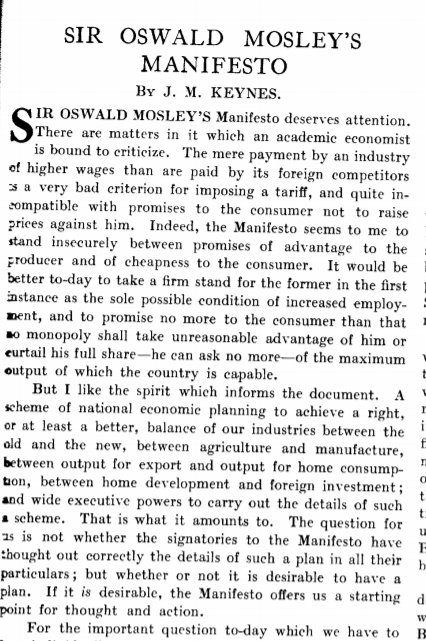
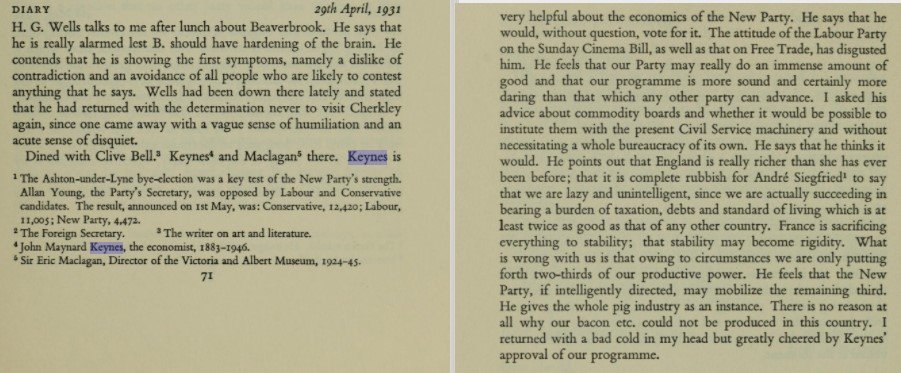
Keynes's early draw to fascism was more than superficial. Here is Harold Nicolson's diary recording how Keynes was at the meeting where they crafted the economic planks of Mosley's New Party in 1931.
The New Party was the precursor organization to the British Union of Fascists.
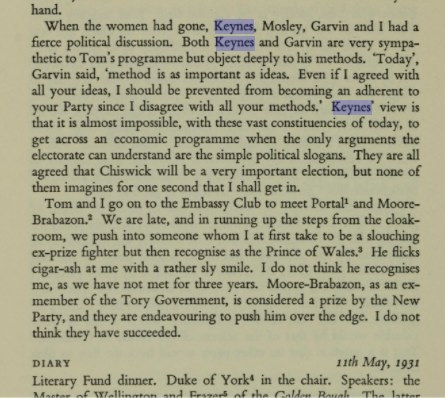
Another Nicolson diary entry recording a meeting between Keynes and Mosley. For context, "Tom" was a nickname for Mosley among his friends.
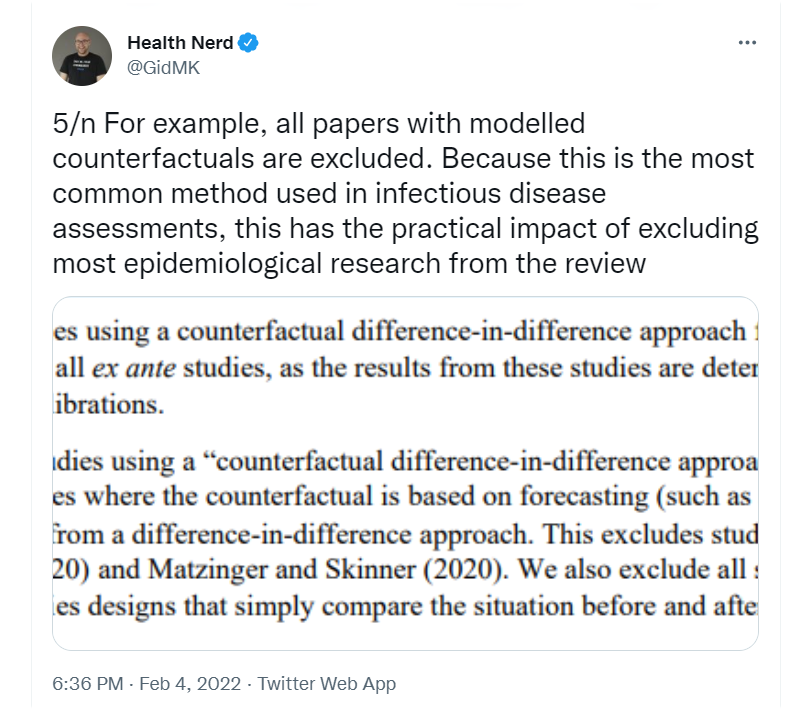
I've observed before that this "Health Nerd" guy is stunningly incompetent when it comes to statistical inference. He continues to confirm that here.
The problem with these modeling calibration studies is that they are sensitive to the hard-coded assumptions of their own model.
They are not true "counterfactual" studies because the claimed counterfactual is usually just the projection of their own simulation model in the absence of lockdowns. IOW, they use their own model to "prove" itself.
It is true that these approaches are common in epidemiology journals. But that's a fault of the epidemiology subfield - it is still living in the statistical dark ages when it comes to doing causal inference.
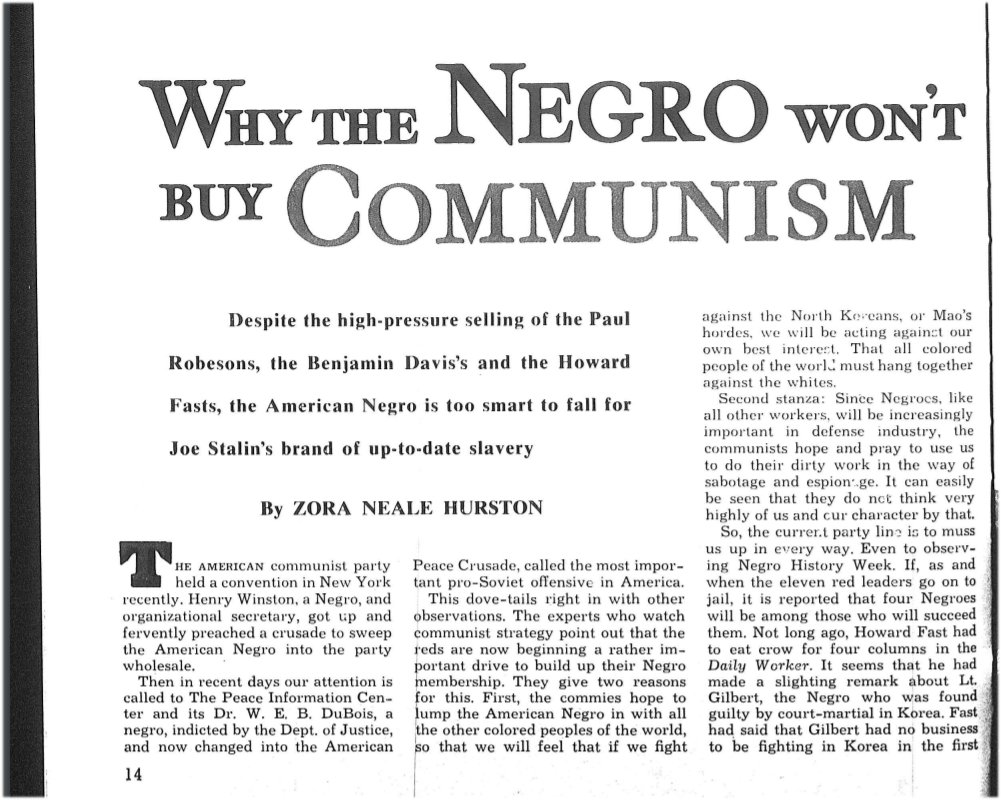
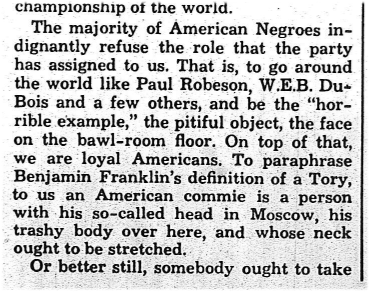
So...who wants to tell Nikole Hannah Jones about Hurston's economic philosophy?
Hint: it was, in fact, in direct opposition to what NHJ embraces.
In particular, see Hurston's assessment of W.E.B. Du Bois, who she basically called him a Kremlin stooge. The distance between her and NHJ on economic matters could not be further apart.
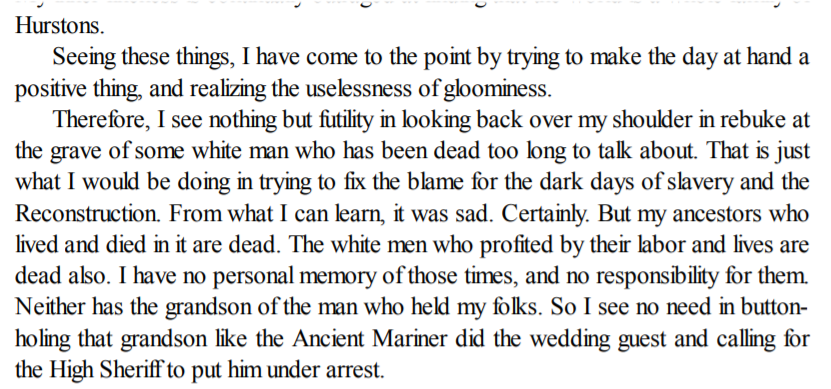
Another telling passage from Hurston's autobiography, 'Dust Tracks on a Road,' which is the direct antithesis of Hannah-Jones' backward-looking arguments about slavery in the 1619 Project:
The interesting feature of the argument made here is that it rests heavily on Douglass's assessment of Abraham Lincoln from 1876.
While the original 1619 Project took a fairly harsh look at Lincoln, Douglass was completely absent from its discussion.
In this essay, Field attempts to supply Nikole Hannah-Jones with material from Douglass to bolster an interpretation of Lincoln that NHJ likely sympathizes with, but also completely omitted from her original essay - either out of sloppiness or ignorance of the literature.