In 2002, a young hedge fund analyst was sifting through the rubble of the dotcom bust.
Scott Shleifer had joined upstart Tiger Global, formed by Chase Coleman after his mentor Julian Robertson had shut down legendary Tiger Management at the peak of the bubble.
Shleifer dug through a spreadsheet with tech stocks until he stumbled upon a group of Chinese internet companies. Sina, Sohu, and NetEase were not yet profitable but they were growing rapidly and their stock prices had imploded.
Shleifer saw growth and high incremental margins - much of future growth would fall to the bottom line.
He set up calls with management. When he heard that he was the first Western investor to call in some time he got really interested.
He realized that within a few years these companies could be trading for as little as one or two times their profits.
He visited Coleman’s office with the words: “Sina, Sohu, and NetEase. Let’s dance.”
By the summer of 2003, Tiger Global’s Chinese positions “were up between 5x and 10x.”
Next, Coleman and Shleifer divided global internet companies into segments such as “portals, online travel, and e-commerce.”
“The trick was to go country by country, identifying the emerging winners in each category.”
They were looking for a proven business model in an untapped new market such. “The eBay of Korea.” "The Expedia of China.”
“The this of the that,” they called it.
It was the seed of the firm's success as a global crossover investor shaking up venture capital.
I wrote about this story and others in my review of @scmallaby's new book.
Stanley Druckenmiller's speech at the Lost Tree Club is an evergreen read:
"I had an incredible passion, and still do, for the business. The thought that every event in the world affects some security price somewhere ... to try and figure out what the next puzzle was..."
"I get to gamble for a living and channel it through the markets instead of illegal activity. That was just sort of nirvana for me that I could constantly be making these bets, watch the market moving, and get my grades in the newspaper every day."
"If you’re early on in your career and they give you a choice between a great mentor or higher pay, take the
mentor every time. It’s not even close."
Scott Bessent on the biggest mistake he made when setting up his fund.
"When I was raising money, I actually gave the market what it wanted instead of what I wanted to do or was good at.
We had big diversified positions. We had a lot of analysts, people wanted to see bodies."
Robert Wilson: “To go up 100 percent, you’ve got to be willing to go down 20, and you can’t go down 20 with other people’s money.”
"I learned that it’s very difficult to run a business and a fund. After my first big drawdown, I had a lot of investors pull and it was a nightmare"
"I told the remaining investors, “This is what I’m going to do with my money. If you want to come along, fine; if you don’t, that’s fine, too.” I went back to my global macro style with mostly my own money."
Some nuggets from the excellent new documentary on @Carl_C_Icahn on HBO
"You get a great feeling when you find a company, when you find something you can do. You get excited by it. Something goes 'click,' and you know it's good. When I hear the click, I know I won."
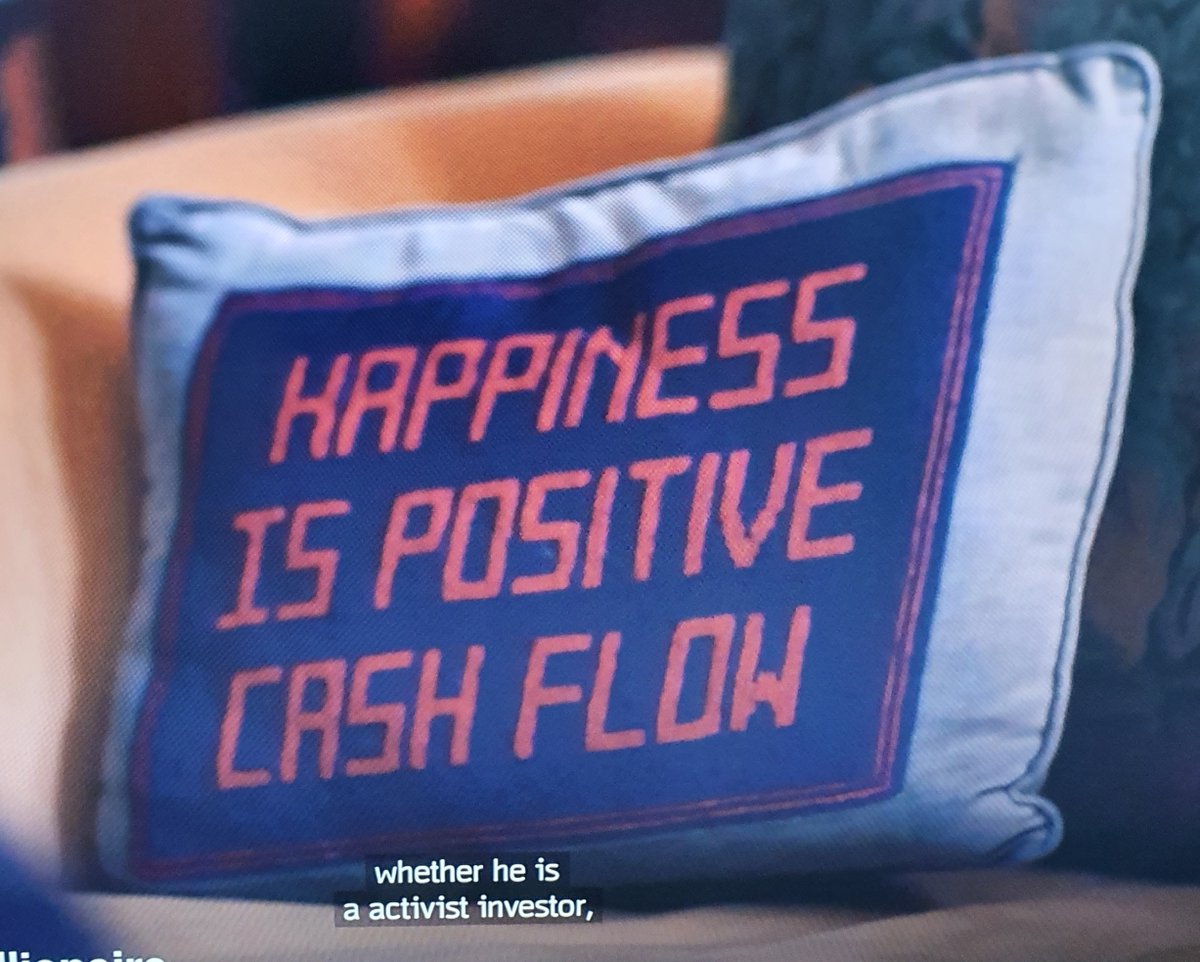
I need this pillow: "Happiness is positive cash flow"😭
It's not about money (okay, it is not *only* about money):
"The money is just sort of a goal. It's like, the explorers, why do they keep doing it? They believed in going for the gold, like Cortes and these guys. But the finding and doing is much more exciting than having it ...
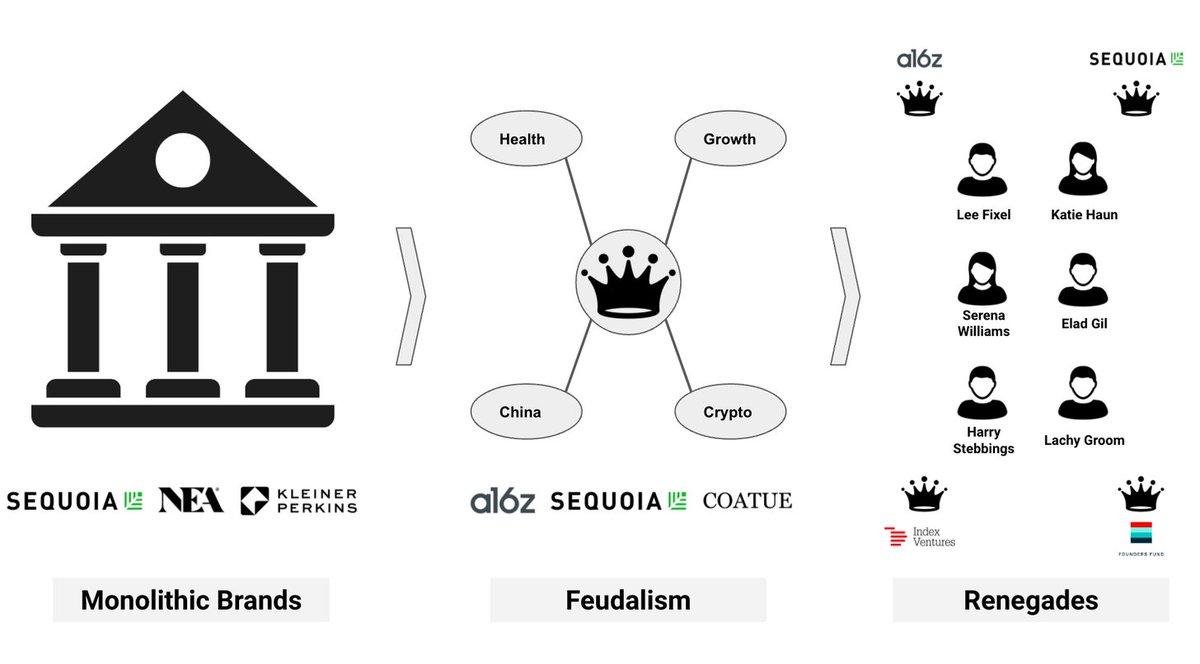
"The reallocation of trust from brands to individuals is impacting the way founders view who to invite into their companies. Influence within venture has progressively decentralized away from the core brand into renegades."
"For the longest time people thought often of VC funds as “The Firm.” Amorphous blobs that judged you harshly and spit out cash."
"There is a long-tail of super talented people who may not be the best investor for everyone, but for a specific group they'll be the perfect investor."
Stan Druckenmiller on what he looks for in a money manager:
"Number one, passion. If you’re not passionate, it is so invigorating to certain individuals, they’re going to
work 24/7, and you’re competing against them. Every time you buy something, one of them is selling it.
If you‘re with one of the lazy people or one of the people that are just doing it for the money, you’re going to get run over by those people."
No. 2:
"When I look at their record, I immediately go to the bear markets and see how they did. I want to make sure I’ve got a money manager who knows how to make money and manage money in turbulent times, not just in bull markets."
Larry Robbins of Glenview on consistency of effort in hockey and investing:
"Consistency of effort often makes the difference between who wins and who loses.
You never know when that lucky break will be, so you
always need to be working hard and paying attention."
"On January 1, when the sheet reads zero point zero,
we have to remember that it’s not about what you did
before, but about that persistence and continuity of
work effort."
"Glenview Capital, is named after Glenview, IL, where I started playing hockey when I was 5 years old.
"You need to have a certain talent level to be on the team and in the game, but what differentiates people in hockey who win games and who don’t is the consistency of effort."