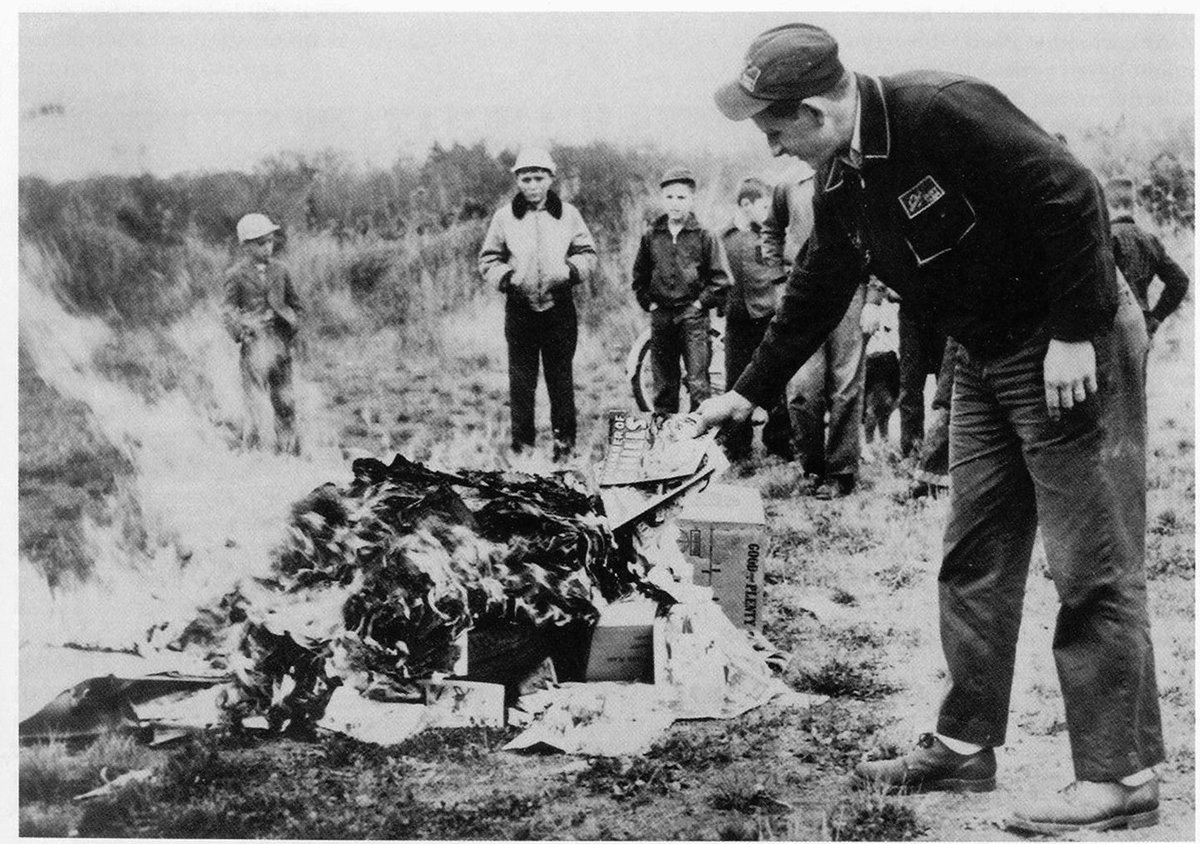
1. So I have a few thoughts on The King's Man, The 39 Steps, Hitchcock, James Bond, Gertrude Himmelfarb, the CIA, and the Protocols of the Elders of Zion.
2. I was startled when this post credit scene from The King's Man started circulating. It shows Hitler and Lenin as allies of a secret conspiracy led by a mastermind (who in movie is Erik Jan Hanussen, an Austrian Jew & real historical figure)
3. The idea of a Jewish mastermind heading a conspiracy & using disparate world leaders of different politics to destroy existing order is classic antisemitism, the ur-theory of Protocols of Elders of Zion & Nazi theory of Judeo-Bolshevism.
4. I wasn't planning on seeing the King's Man (not a fan of the franchise) but having seen the clip I kinda of had to figure out why a big budget Hollywood film ($100 million) of a popular franchise was peddling the Protocols of the Elders of Zion.
5. Roots of The King's Man are probably in messy patrimony of director Matthew Vaughn who grew up thinking his father was actor Robert Vaughn (of James Bond knock off Man from U.N.C.L.E.) but discovered he was bastard child of aristo George Albert Harley de Vere Drummond
6. With his dual patrimony of James Bond pastiche (Robert Vaughn) & English upper-class wastrel (de Ver Drummond was godson of George VI), Matthew Vaughn fused together a narrative that recreates myths of early 20th century English ruling class.
7. To understand King's Man, important to go back to John Buchan (1875-1940), Scotsman on the make, 1st Baron Tweedsmuir, Governor General of Canada, Indigenous cultural appropriator, & all-father of British spy fiction from Hitchcock to Bond to Le Carre 
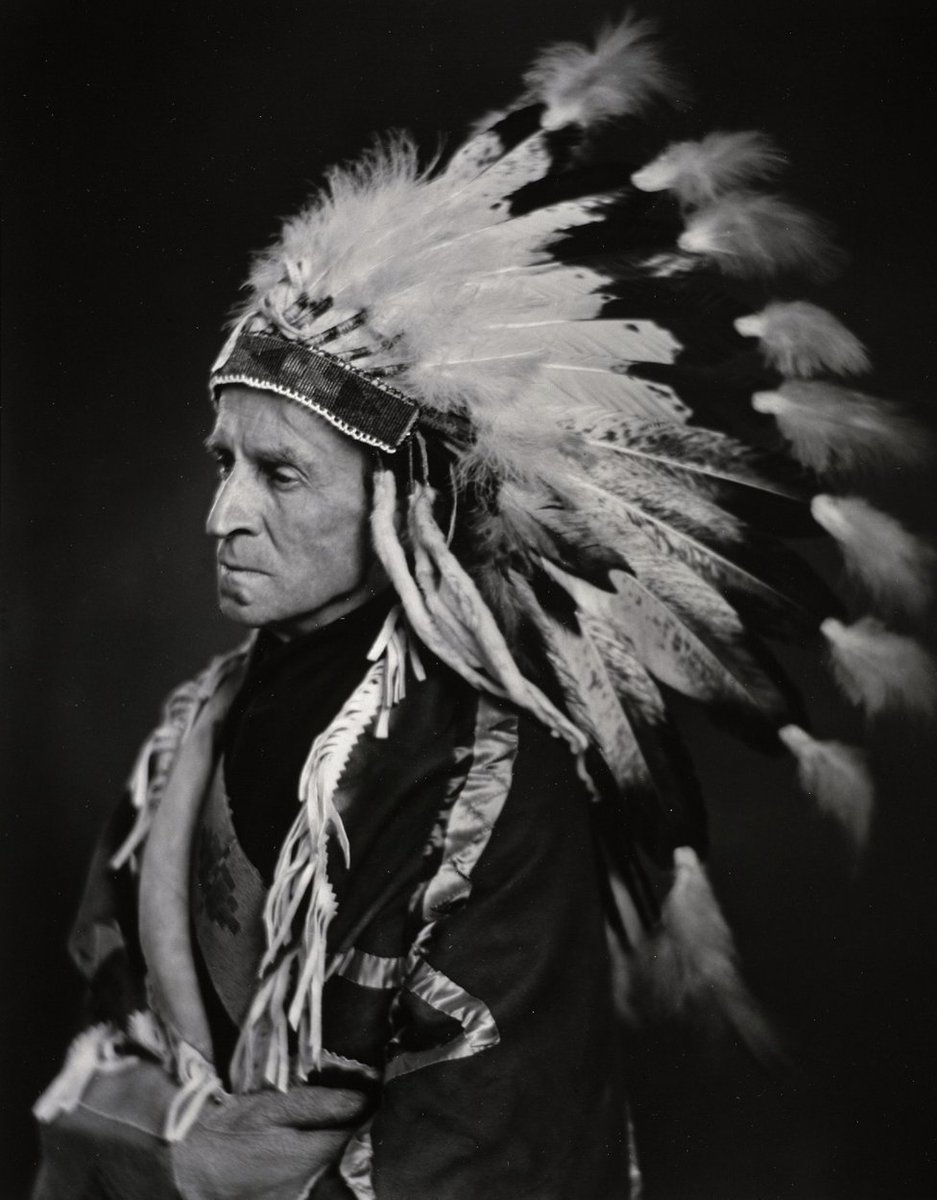
8. Buchan was a Scotsman on the make who became more English than the English. Psychically invested in the British empire, he experienced the early 20th century as a long siege, with mysterious enemies trying to destroy world he loved. This led to his seminal spy novels.
9. Buchan wrote many best-selling thrillers trying to make sense of a world where British empire was constantly being challenged by mysterious forces (the Huns, the natives, the Bolsheviks). The plot often reveals a conspiracy led by evil plutocrats, sometimes (((plutocrats)))
10. Buchan's fingerprints are all over spy fiction: his 39 Steps (which featured a Jewish conspiracy) not only filmed by Hitchcock but also basis for classic Hitchcock narrative: the man unknowingly caught in plot he doesn't understand and going on the run to escape
11. Beyond giving Hitchcock his basic plot, Buchan's books also created the James Bond villain as we known them: the plutocrat who seeks world destruction: Goldfinger, Blofeld etc are descended from Buchan's plutocrats -- who, in his fiction often explicitly Jewish.
12. After World War II, James Buchan fell out of fashion because his books were incredibly antisemitic and racist (lots of stuff about how childlike Natives need strong British hand to rule). His recuperation came, strangely, from Gertrude Himmelfarb, doyen of neoconservatism
13. In 1961, writing in Encounter (then covertly funded by the CIA & edited by her husband Irving Kristol) Himmelfarb wrote a long essay arguing for the value of Buchan's work & saying his novels about global Jewish conspiracies were not so bad (just "casual" antisemitism)

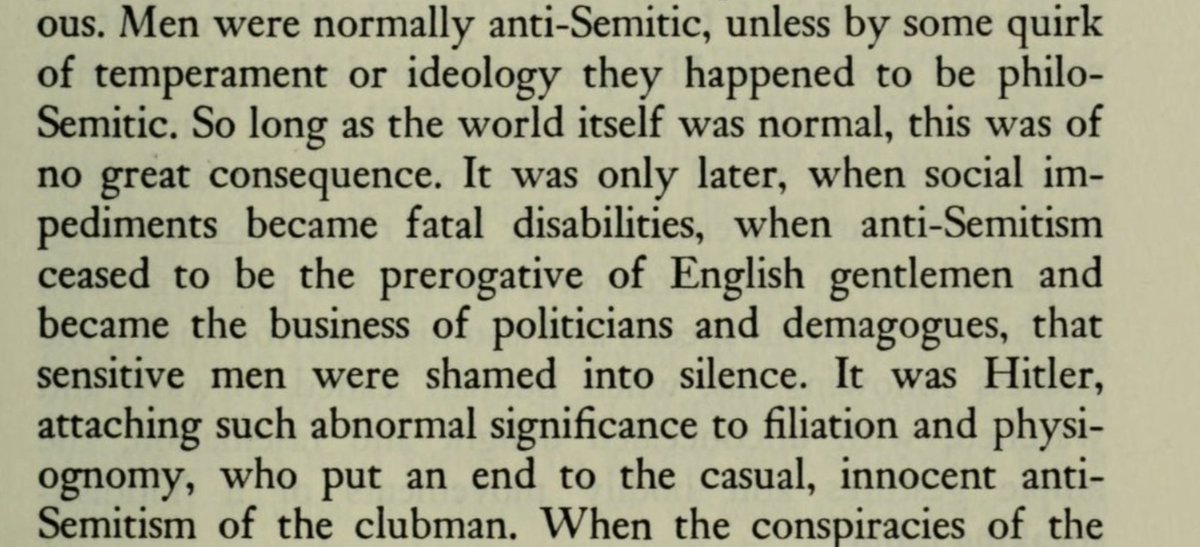
14. Himmelfarb's essay (as Christopher Ricks noted long ago) only makes sense in light of Encounter's cold war mission. Encounter was trying to win over British literary & aristocratic culture to American empire. Hence Himmelfarb, a distinguished US historian, celebrating Buchan
15. Himmelfarb's whole point is that Buchan's clubby antisemitism and belief in white racial superiority were in context of orderly traditional society so not like the bad antisemitism & racism of vulgarians like Hitler.

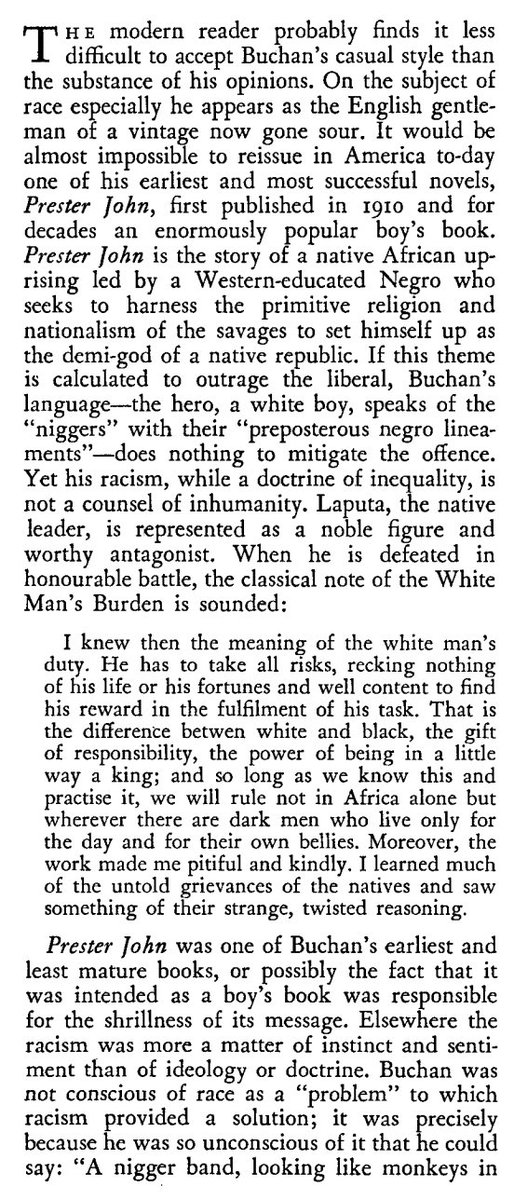
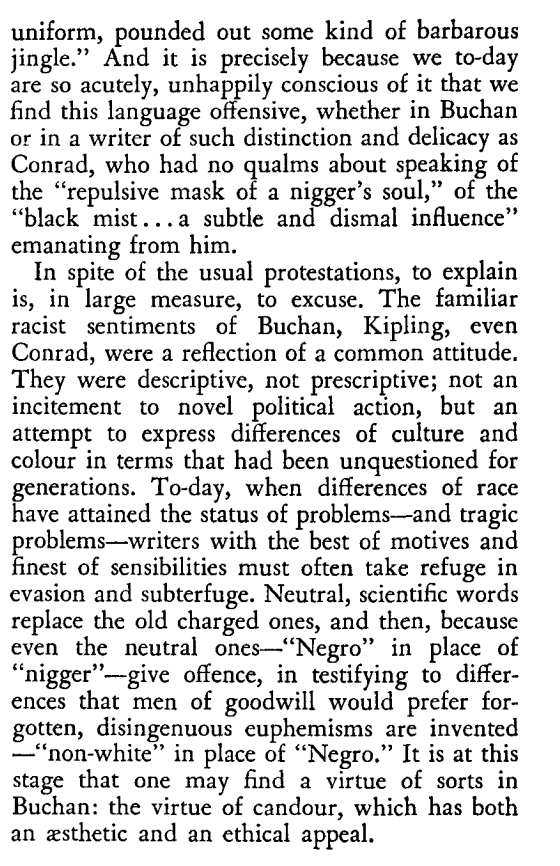
16. Himmelfarb's celebration of Buchan is symptomatic of how & why he remains a formative culture figure (despite rampant bigotry in his work): he's the great bard of Empire & its anxieties: celebrating the daring do of a ruling class beset by hidden enemies.
17. Himmelfarb wasn't only right-wing on right to see Buchan as an essential bulwark of traditionalism. Recently an alt-right body building journal has started serializing The 39 Steps.
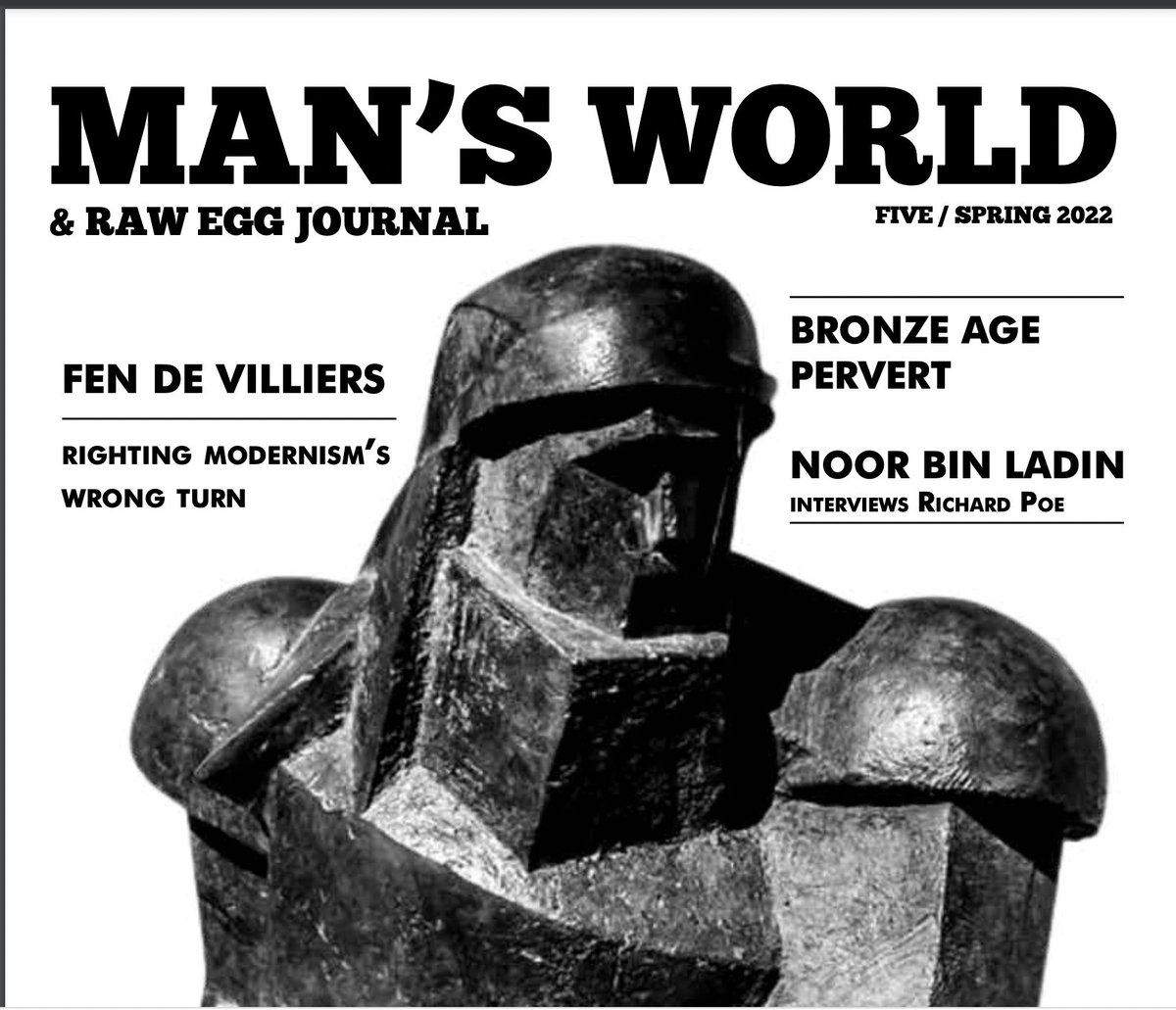
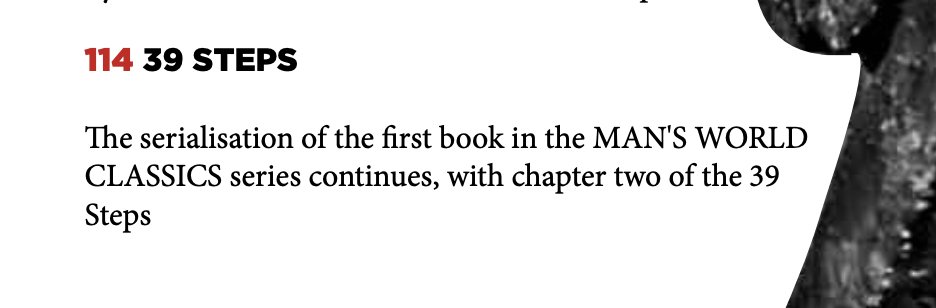
18. The fingerprints of John Buchan are all over The King's Man: the aristocratic heroes, the empire under threat, the hidden conspiracy by those trying to wreck civilization as led by the British (led, significantly, by a vengeful Scot & then a Jew).
19. There's one other aspect of Buchan: he turned to thrillers as a consolation for decline of empire both to scapegoat (the hidden conspiracies) but also as consolation (Britain might be outgunned by other great powers but could still produce top notch spies).
20. The idea that spying would save Britain as a world power, that Britain could "punch above its weight" by spying, is the hidden consolation of the thriller. Buchan started it but it runs through Bond & even (in much more sophisticated & ironic form) Greene & le Carré
21. So let's put this together: we have Matthew Vaughn (son of Man From UNCLE & aristo scoundrel) making film that is Buchan Redux: dashing aristos form private spy agency so UK can punch above weight & thwart Scottish/Jewish world conspiracy to destroy civilization/empire
22. The Scottish theme, which I've touched on tangentially, is also important. In fiction, Buchan distinguished between good minorities (Scots like himself who served King, the odd good Jew or good native) from bad (anti-empire nationalists).
23. In The King's Man the leader of the world conspiracy is first a Scottish nationalist & then an Austrian Jew: not an accident since both are types that are seen to threaten order of empire. But also echo of Buchan's divided self as good Scot (versus the bad ones)
24. For much more along this line -- on the origins of English spy fiction & the way King's Man refurbishes aristocratic antisemitism -- I've done a podcast with @bellye66 & @RobinGanev that lays it all out: jeetheer.substack.com/p/the-kings-ma…
• • •
Missing some Tweet in this thread? You can try to
force a refresh