Suomen epidemia 18.3.2022: BA.2-epidemia kasvaa voimalla: positiivisten osuus, sairaanhoidossa olevien määrä ja vakavasti sairaiden määrä lyövät uusia ennätyksiä päivittäin (myös tänään).
1/x
#koronafi
1/x
#koronafi

Positiivisten osuus on noussut koko alkuvuoden ajan. Tilanne selvisi tämän viikon alussa, jolloin THL päivitti tiedot ajan tasalle. Nousu on kiihtynyt viimeisen kahden viikon aikana.
2/x
2/x

Koronan vuoksi sairaanhoidossa olevien määrä on noussut kaikkien aikojen ennätykseen. Kaikki luvut ovat (vuodeosasto, erikoissairaanhoito ja tehohoito) ovat nousussa.
3/x
3/x
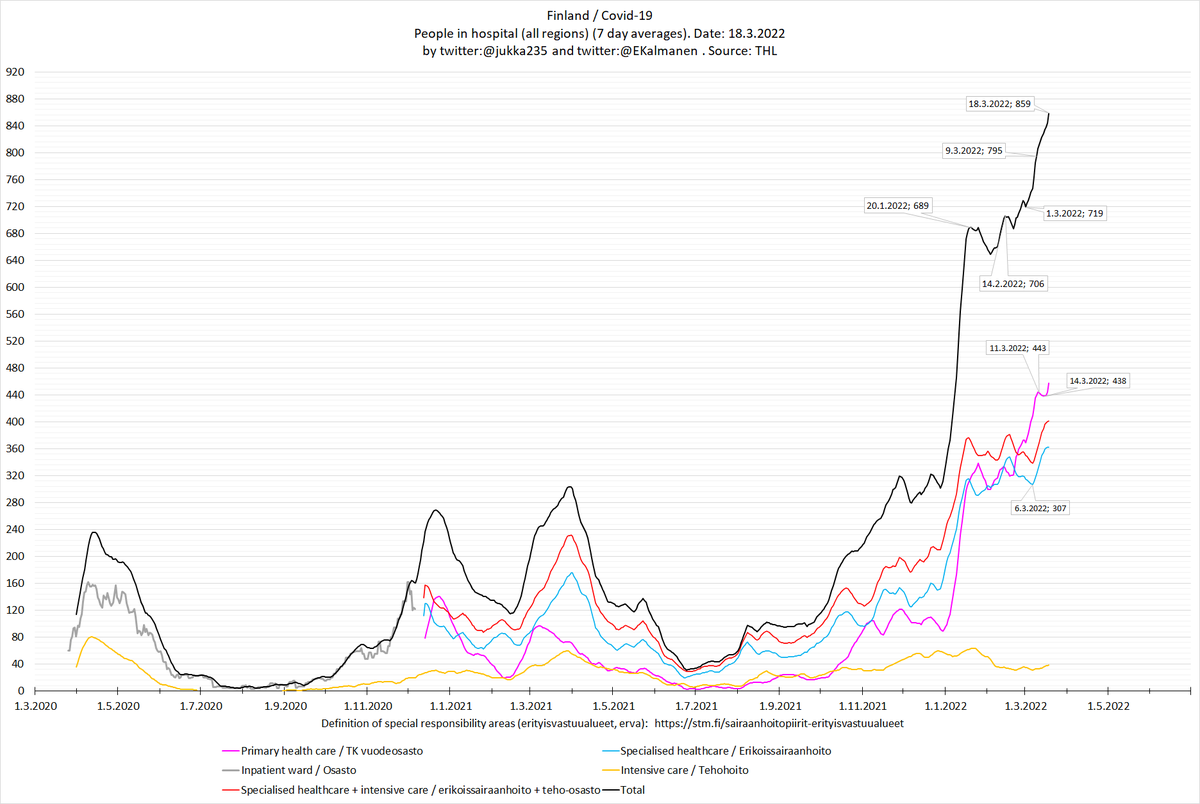
Myös vakavasti sairaiden määrä on noussut uuteen ennätykseen. 6.3. alkanut nousu on ollut nopea.
4/x
4/x

Tilanteessa, missä tartuntojen määrä (=positiivisten osuus) ja sairaanhoidossa olevien määrä ovat kaikkien aikojen maksimissa, @THLorg on jälleen vähentänyt jaettavan tiedon määrää. Tämän myötä kaikki SHP-kohtaiset ikäryhmätiedot menetetään.
5/x
5/x
https://twitter.com/jukka235/status/1502191489719455744
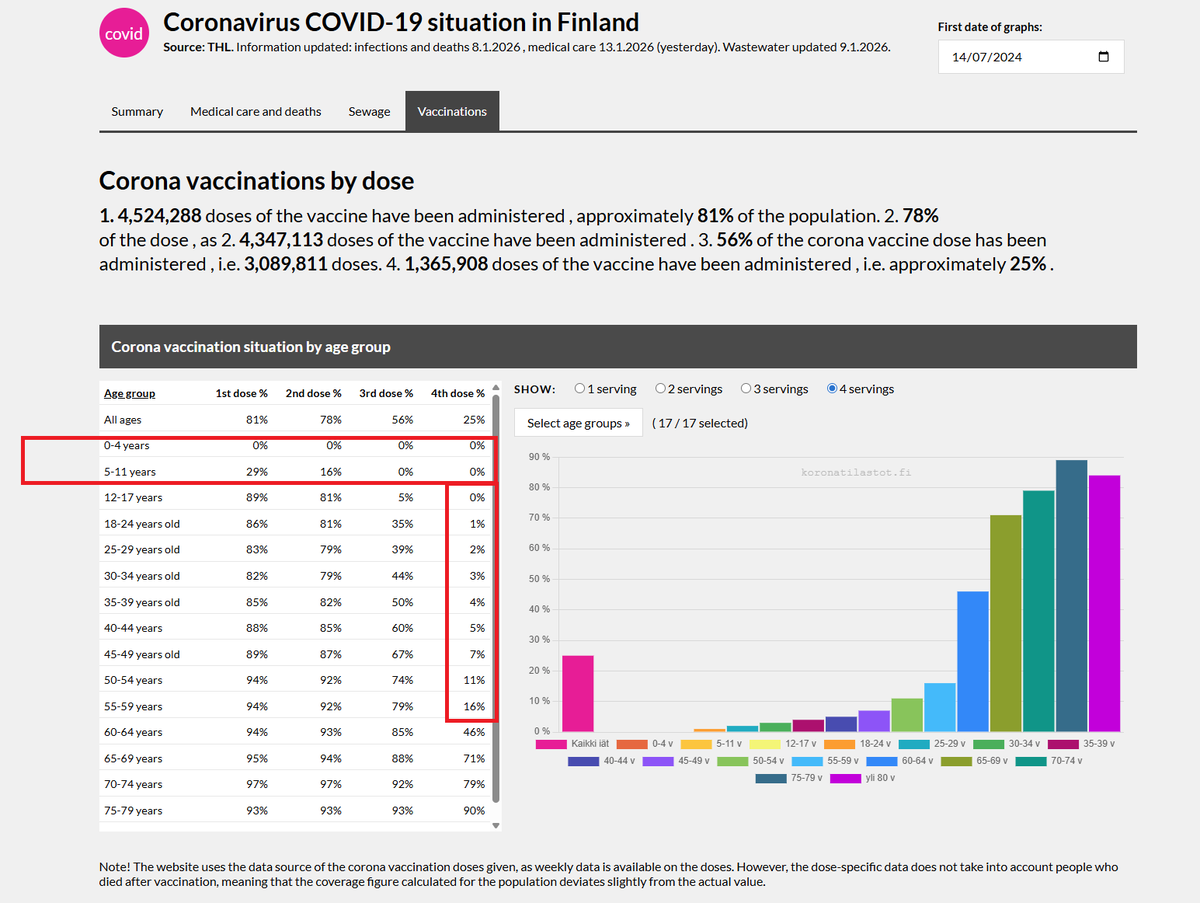
Rokotukset eivät vielä pari viikkoa sitten kiinnostaneet enää ketään. THL:n viesti siitä että epidemia on ohi oli siis mennyt hyvin perille. Nyt on tapahtunut pientä vilkastumista, mutta 49% suomalaista on edelleen rokottamatta 3x.
6/x
6/x

Erityisryhmien rokottamista 4. kertaan harkitaan tilanteessa, missä yli 80-vuotiaiden efektiivinen rokotuskattavuus lähestyy jälleen kerran nollaa. Veikkaan että tämä näkyy kuolemien määrissä seuraavien 1-2 kuukauden aikana.
7/x
7/x

Sanoisin että erityisryhmään kuuluvat kaikki ne ikäryhmät, joiden käyrät ovat laskussa. Tämä on ihan samanlaista maanpuolustusta kuin aseellinenkin maanpuolustus.
8/x
8/x
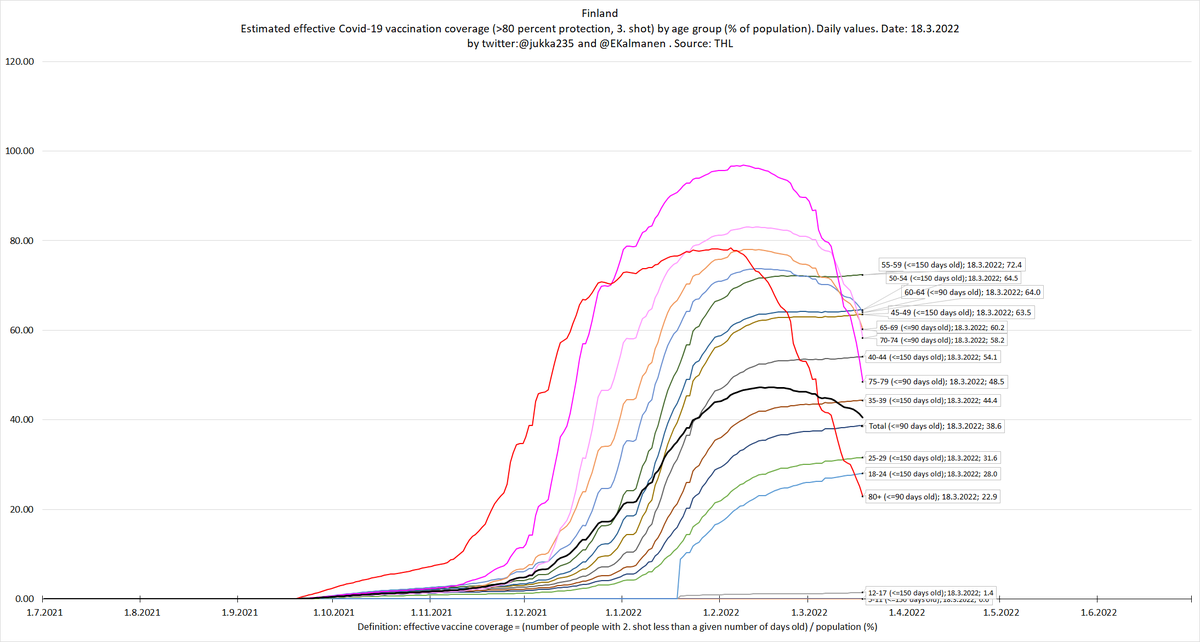
Veikkaan että näitä riskiryhmiä tullaan melko pian laajentamaan koskemaan kokonaisia ikäluokkia.
9/x
9/x
https://twitter.com/zin_zah/status/1504825473477533700
Myös THL:ssa (kuten Ruotsissa) saattaa olla tulossa henkilövaihdoksia. En kuitenkaan usko että linja muuttuu.
10/x
thx @minttimaa
10/x
thx @minttimaa
https://twitter.com/MTVUutiset/status/1504840324711071768

Yli 50-vuotiaat on melko kattavasti rokotettu 3. kertaan. Alle 50-vuotiaita rokotettiin rivakasti tammikuun loppuun saakka, mutta sen jälkeen niitä, joilla on tullut 150 päivää täyteen 2. rokotuksesta, on rokotettu yhä vähemmän.
11/x
11/x

Vaikka testauksen määrä on vähentynyt edelleen, niin ilmaantuvuus on lähtenyt selkeään nousuun noin kaksi viikkoa sitten (6.3.) kaikkialla muualla paitsi HUS:n alueella, missä ilmaantuvuus lähti nousuun 10.3.
12/x
12/x

Monessa sairaanhoitopiirissä positiivisten osuus on ollut nousussa jo pidemmän aikaa. Moni viiva on myös suora, eli positiivisten osuus on noussut eksponentiaalisesti. HUS on likipitäen ainoa piiri, jossa nousu on saatu pidettyä hallinnassa.
13/x
13/x

Suurimmissa sairaanhoitopiireissä positiivisten osuus lähti selvään nousuun niinikään 6.3. (kuvan datassa on 2 päivän viive). Nousu on ollut erittäin nopea: esimerkiksi Päijät-Hämeessä positiivisten osuus kasvaa 7.5% päivässä = 9x kuukaudessa (10.3.-15.3.).
14/x
14/x

Pirkanmaalla positiivisten osuus on noussut 51 prosenttiin. Nykyisellä vauhdilla (5.0% päivässä 10.3.-15.3.) positiivisten osuus nousee 100 prosenttiin 29. maaliskuuta.
15/x
15/x

Tilastokeskus on julkaissut päivityksen kuolemien määrään. Tammikuun 2022 kuolemien määrä on nyt 11.4 prosenttia korkeampi kuin vuotta aiemmin, ja 21.3 prosenttia korkeampi kuin tammikuussa 2020.
16/x
16/x

Tilastokeskuksen tiedoista arvioitu ylikuolemien määrä on 31.1. mennessä noussut 6356 henkeen. Määrä on 2.5 kertaa niin suuri kuin THL:n julkaisemista luvuista arvioitu kuolemien määrä (kuolinpäivän mukaan).
17/x
17/x

Ylikuolemien tahti on noussut runsaaseen 3600 henkeen vuodessa. Vauhti on noussut koko ajan.
18/x
18/x

• • •
Missing some Tweet in this thread? You can try to
force a refresh