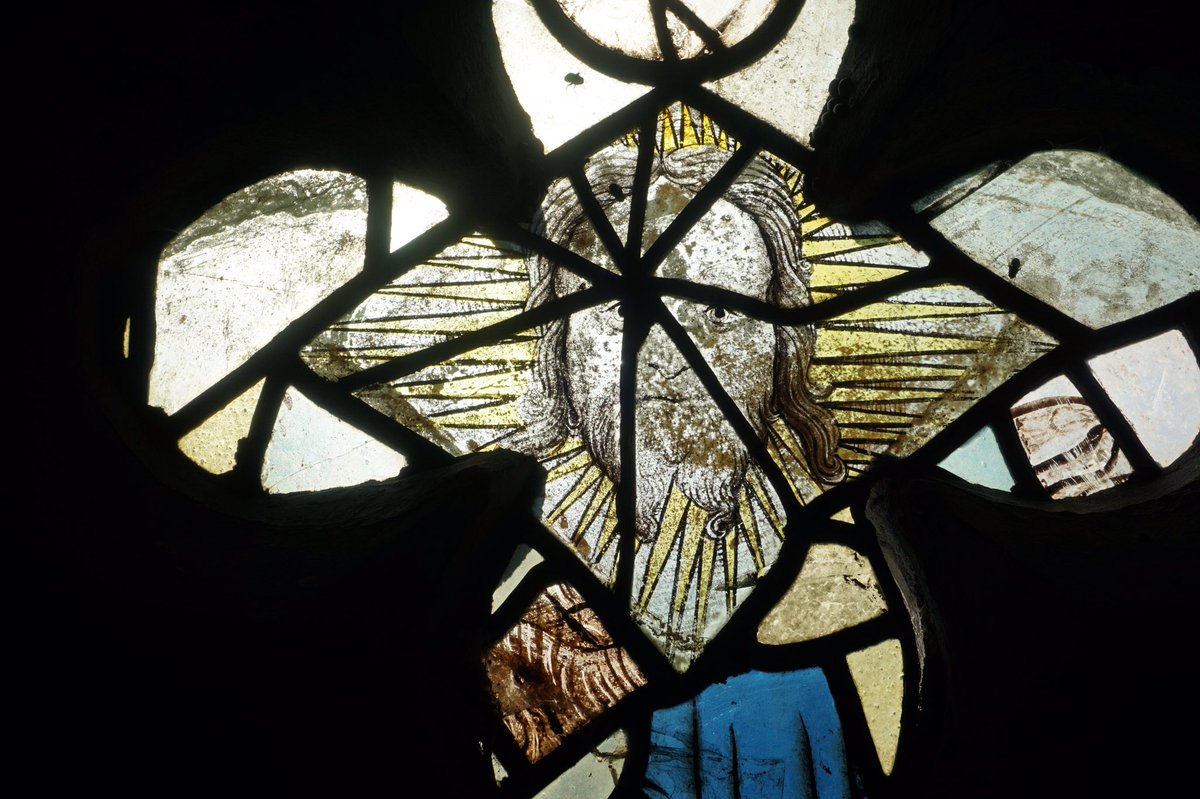
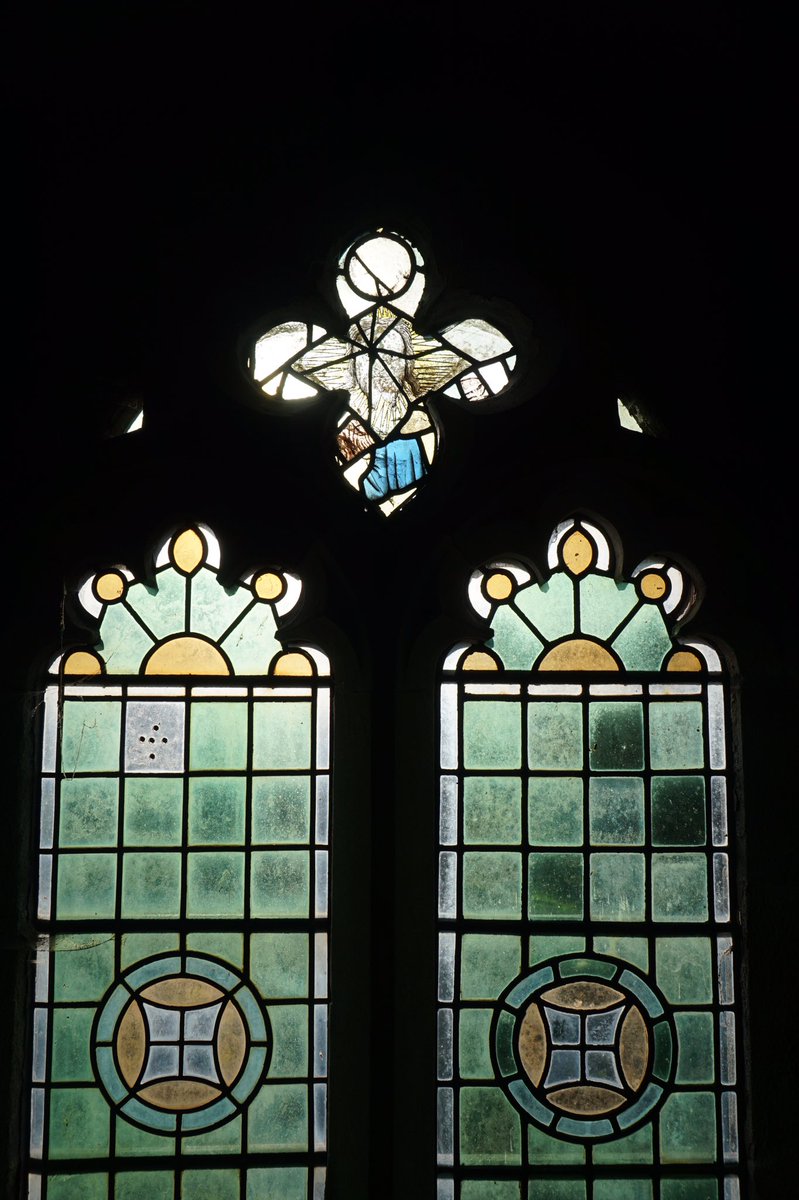
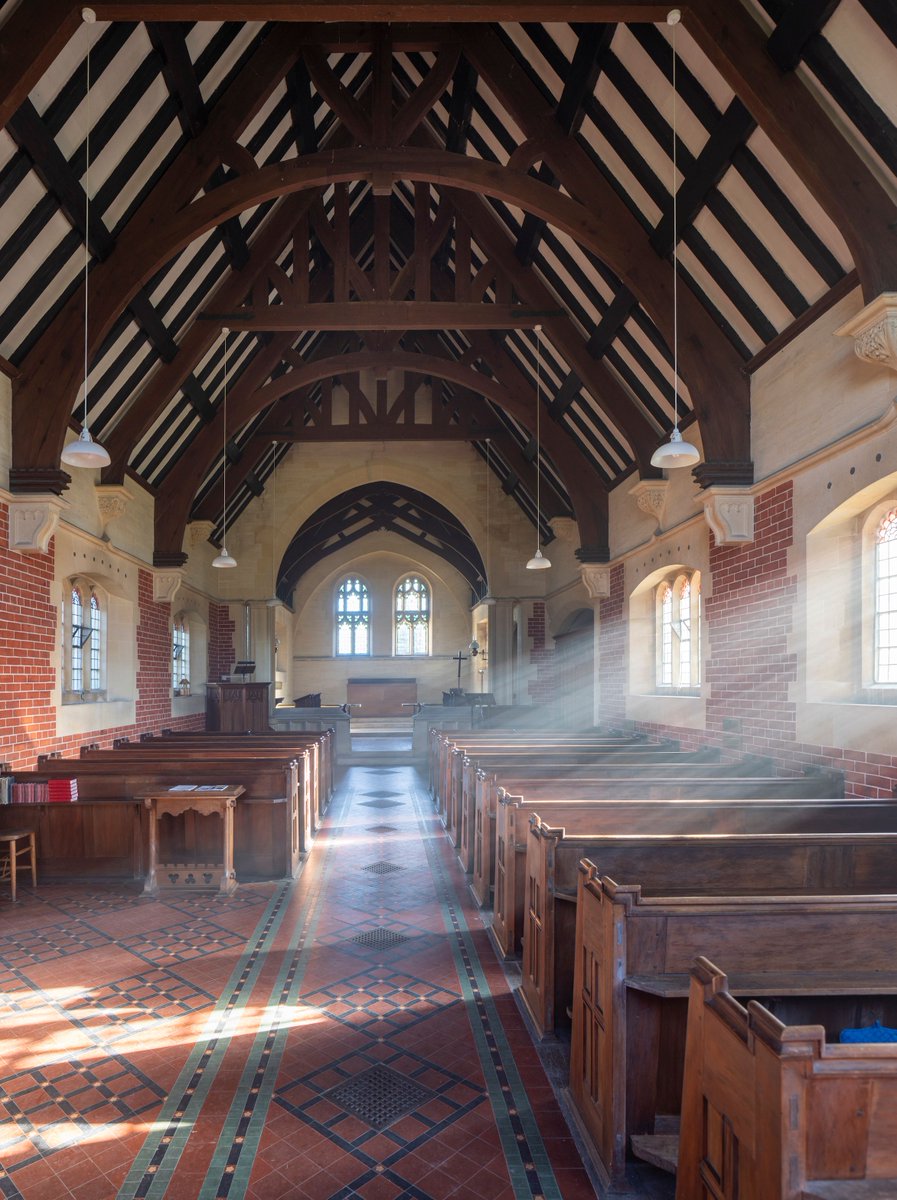
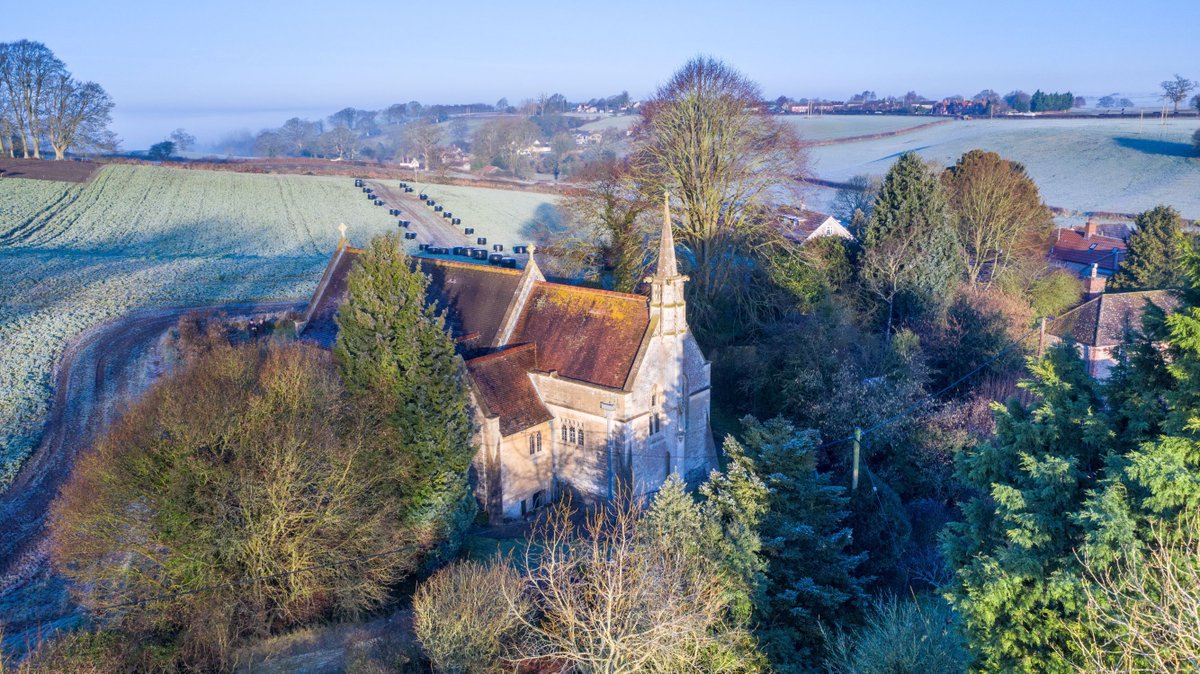
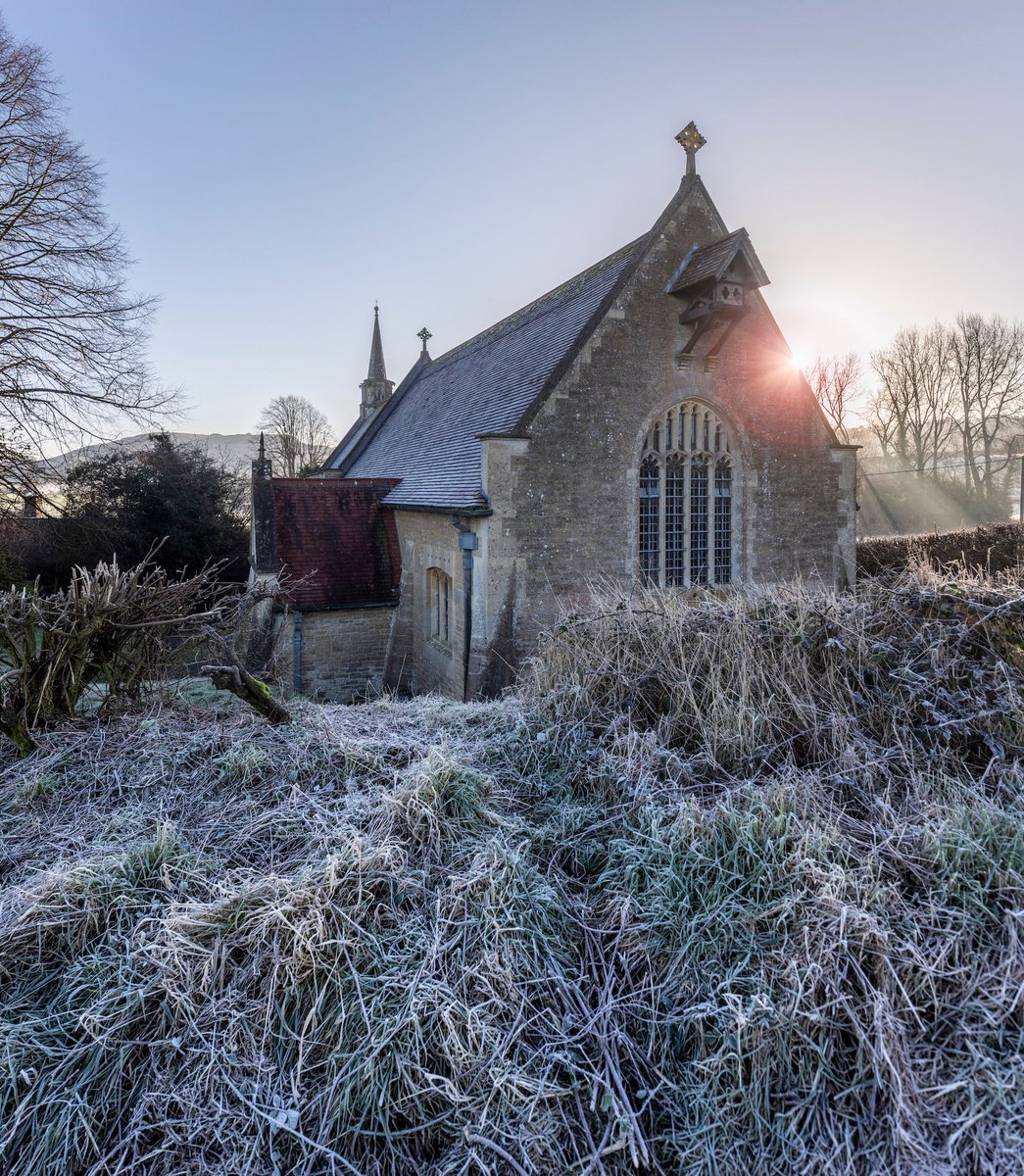
For some time we’ve wondered what was depicted in the top quatrefoil of the west window at St Mary’s, Llanfair Kilgeddin. It wasn’t until we erected a scaffold to mend some storm damage that we saw this medieval, apparitional, fractured face of Christ looking out at us.
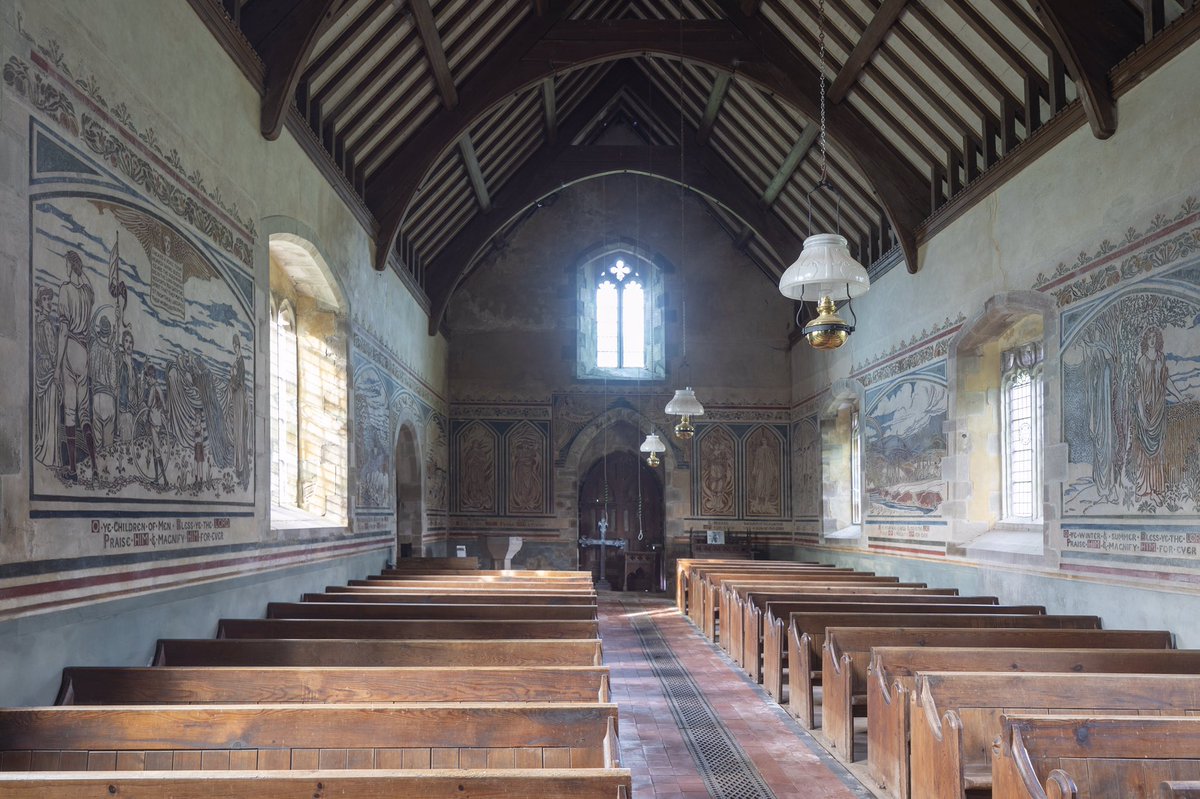
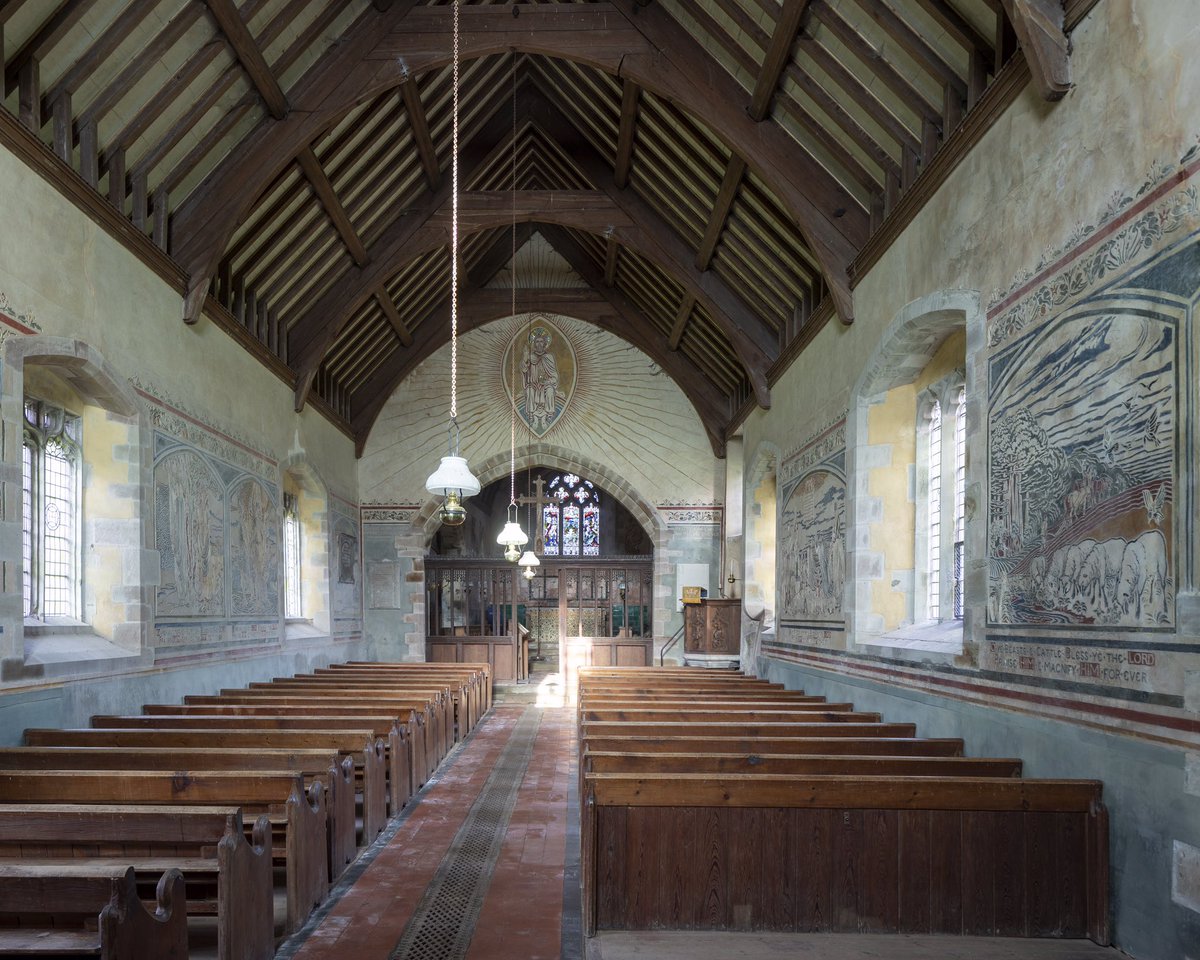
When most people think of this Monmouthshire church, they think of the Arts & Crafts sgraffito murals, in which scenes from the hymn of creation flow over the walls.
2/
So thorough were the two 19th-century restorations, first by John Dando Sedding and then by Heywood Sumner, that it’s hard to find traces of the medieval church.
3/
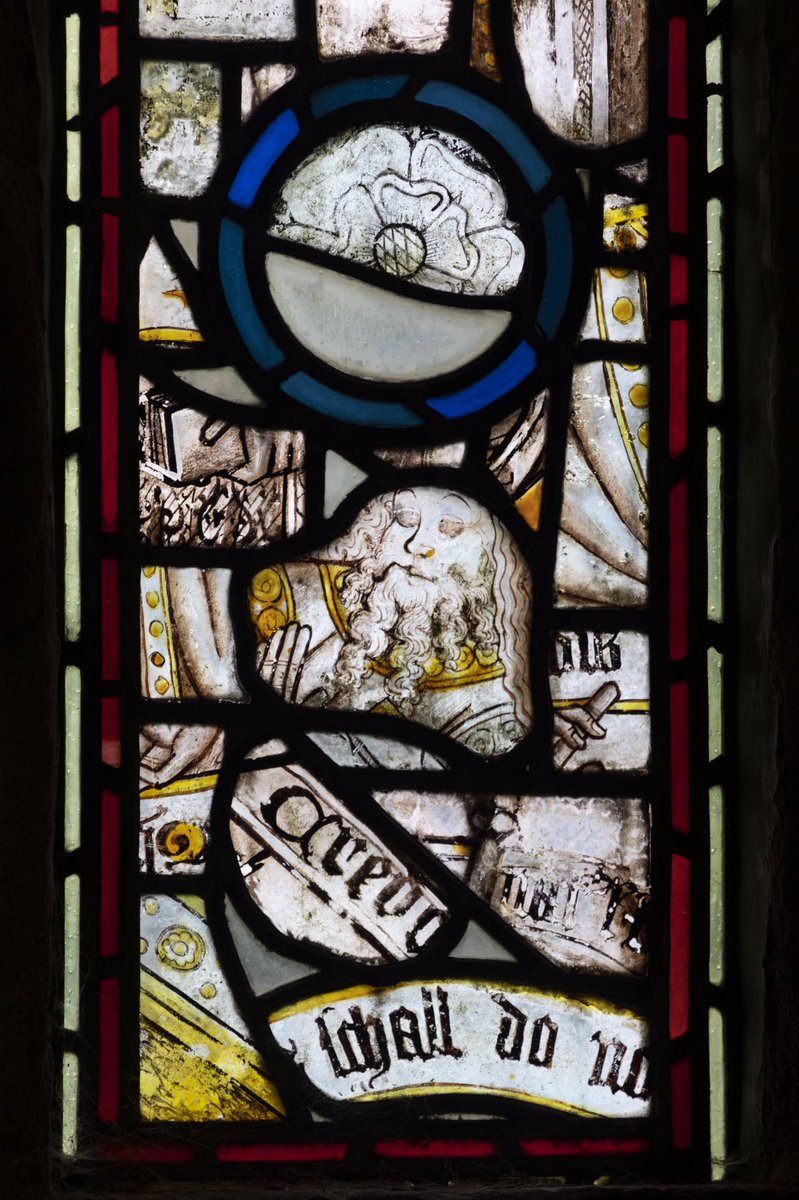
Some early fabric survives in its chancel roof and some window tracery, the font may be from an early church or maybe, like the 15th-century chancel screen, it came from elsewhere. There’s a jolly jumble of medieval stained glass – tucked into the north chancel window.
4/
I assume it was Sedding who set this face high up in the west window overlooking the congregation during his work in the 1870s.
In the 1890s Heywood Sumner created a colossal Christ in Majesty in sgraffito and mosaic over the chancel arch – facing congregants from the front.
5/5
• • •
Missing some Tweet in this thread? You can try to
force a refresh

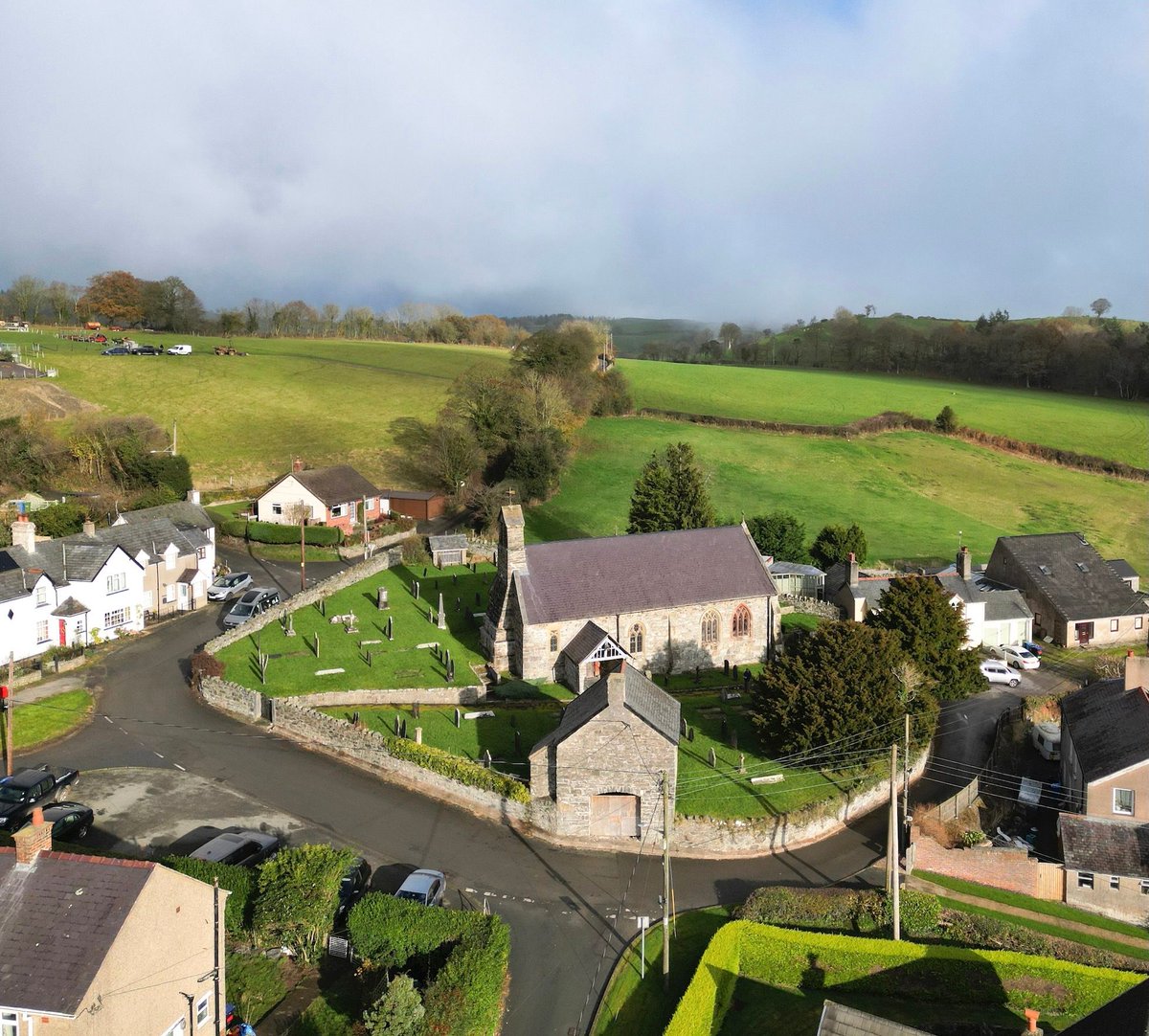
Nestled in the centre of a small village in the Welsh countryside, St Mary's, Derwen is renowned for its wondrous collection of medieval woodwork.
1/9
The church is entered through a charming late medieval wooden door, with iron studs and fleur-de-lys decorated hinges, set in a surround of gorgeous South Cheshire sandstone.
2/9
Naturally, the medieval wooden treasures of this Denbighshire church continue inside. Foremost is the the fine late 15th-century rood screen and loft that dominate this interior.
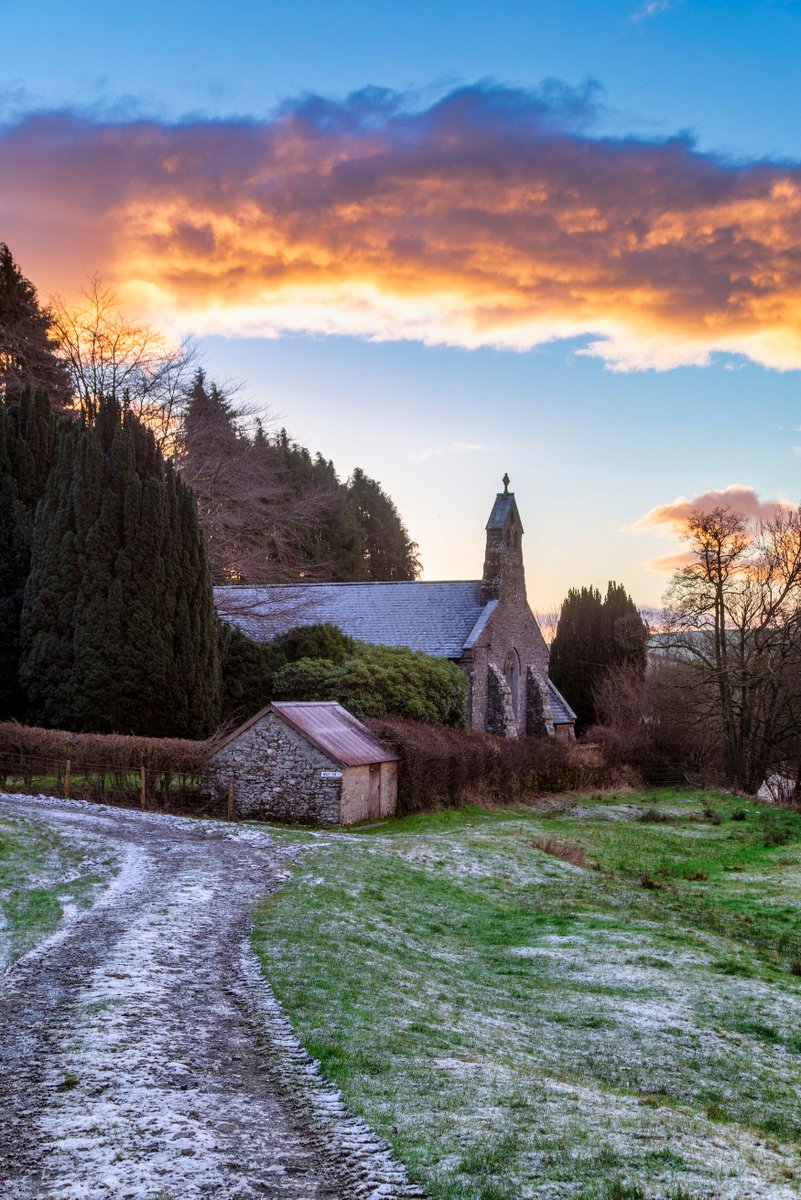
A heavily Victorianised small church, St Anno's, Llananno in Powys is, from the outside, a humble and largely forgettable building.
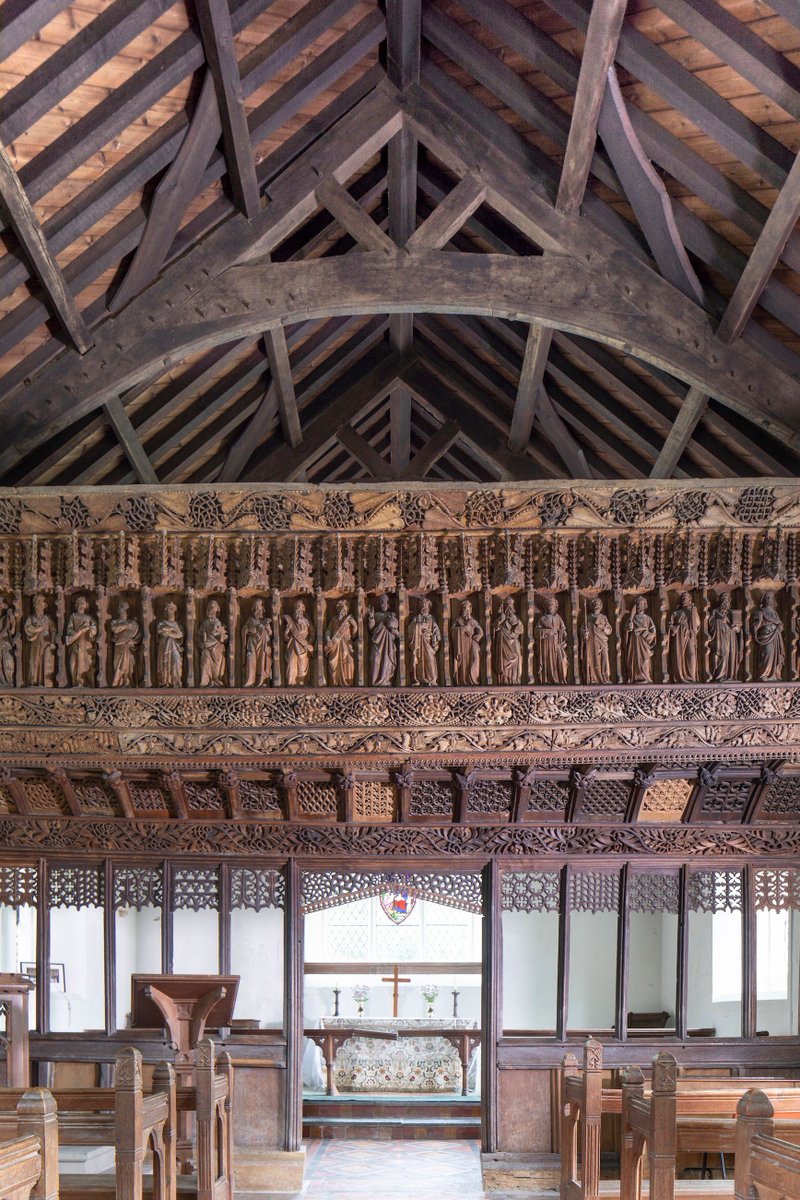
However, inside visitors can feast their eyes upon one of the finest pieces of medieval carpentry in Wales.
1/9
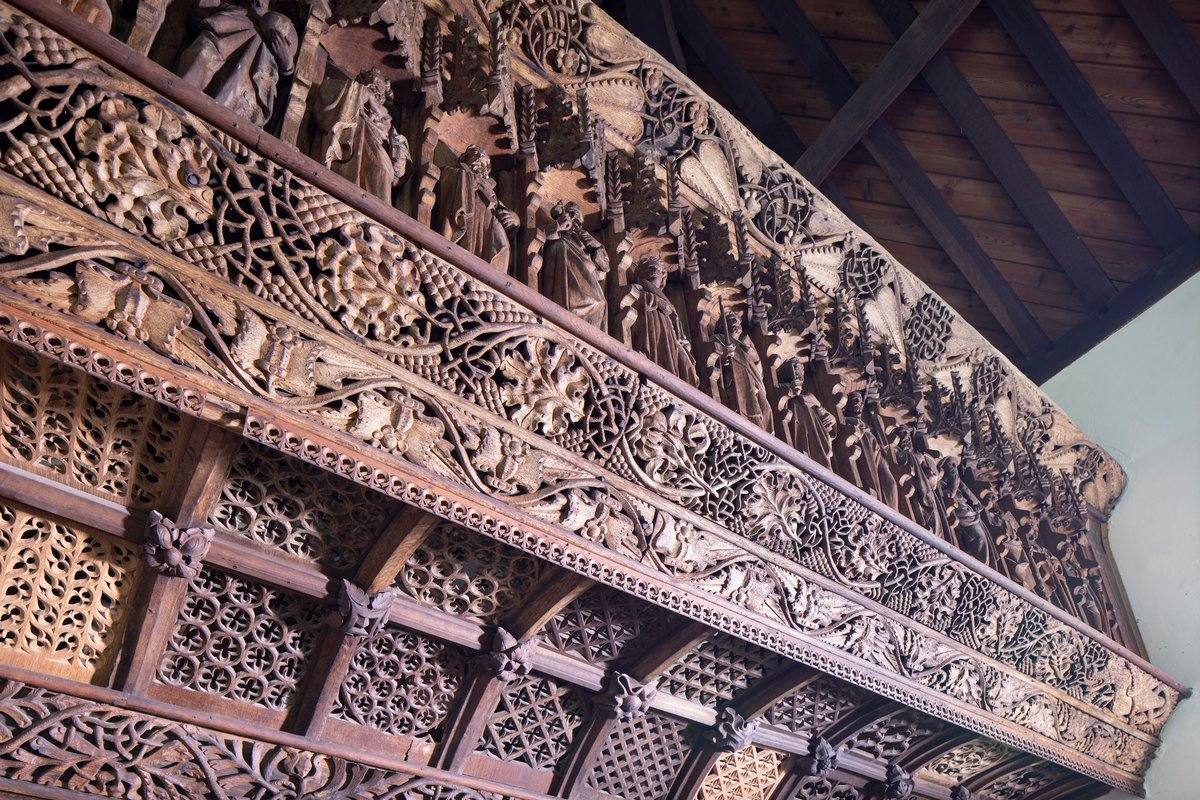
The rood screen and loft inside St Anno's, Llananno is a medieval gem that no visitor will forget in a hurry. Spanning the entire width of the building, this magnificent piece of medieval craftsmanship dates from the 15th century.
2/9
The term for these pieces of church furnishings (rood screen and rood loft) relates to the fact that, in the medieval period, above these magnificent wooden structures there would have been a rood - a carving of the crucified Christ on the Cross.
St Mary's, Temple, Corsley is a stunning example of Arts and Crafts Gothic architecture.
This charming church was built in the early 20th century, when the Arts and Crafts architectural style had reached its acme.
1/6
The chapel was constructed in memory of the husband and son of Mary Barton of Corsley House. When Mary died in 1899, she left £10,000 to establish a trust to build and then care for the chapel.
2/6
The chapel was designed by W. H. Stanley of Trowbridge – his only known building – and built by Buyers Brothers of Westbury.
A marriage of faith, farming, landscape and language, placenames remind us of the personal, poetic origins of a location. This is true for Llangua.
1/10
‘Llan’ is an enclosure usually associated with a church. The element which follows, most commonly a personal name, is mutated. Llangua is the church of St Cywa (English: Kew, Ciwa).
2/10
Although there is no obvious physical evidence for a church being here before the 12th century, the survival of that placename is our first clue in understanding the development of the religious foundation on this site.
The sanctuary of St Philip’s, Caerdeon is a bejewelled Byzantine-esque treat.
In this thread, we will explore the history and details of this beautiful ensemble.
1/7
Casting a kaleidoscope of jewel-toned light across the sanctuary, the east window was produced by the Kempe studio, one of Victorian Britain’s preeminent stained glass firms.
2/7
Intriguingly, this stunning window takes the form of a continental church altarpiece: a crucifixion scene situated within a classical frame, adorned with sumptuous baroque details such as fluted golden Corinthians, foliate swags, and flaming urns.