

This afternoon, we’re sharing a tweet thread from David Asai, Senior Director for Science Education at HHMI 🧵 1/8
I’m pleased to share an editorial published in @ScienceMagazine by Bruce Alberts @UCSF, Janet Coffey @MooreFound and me. We think the time has come to redo intro #biology education at colleges & universities. Here’s why. – David Asai 2/8 bit.ly/3uxoRQe
In the US, nearly 1M college students/year enroll in intro bio courses. For many students, this is the last time they’ll take a science class for the rest of their lives. So, we’ve got one shot to introduce these students to the process of science – that’s a big opportunity. 3/8
Many intro bio courses focus on memorizing facts. Instead, we should be teaching students how to think, how to discover, how to reason. We should equip them to use evidence to make informed decisions. We should show them how science works. How do we make this happen? 4/8 
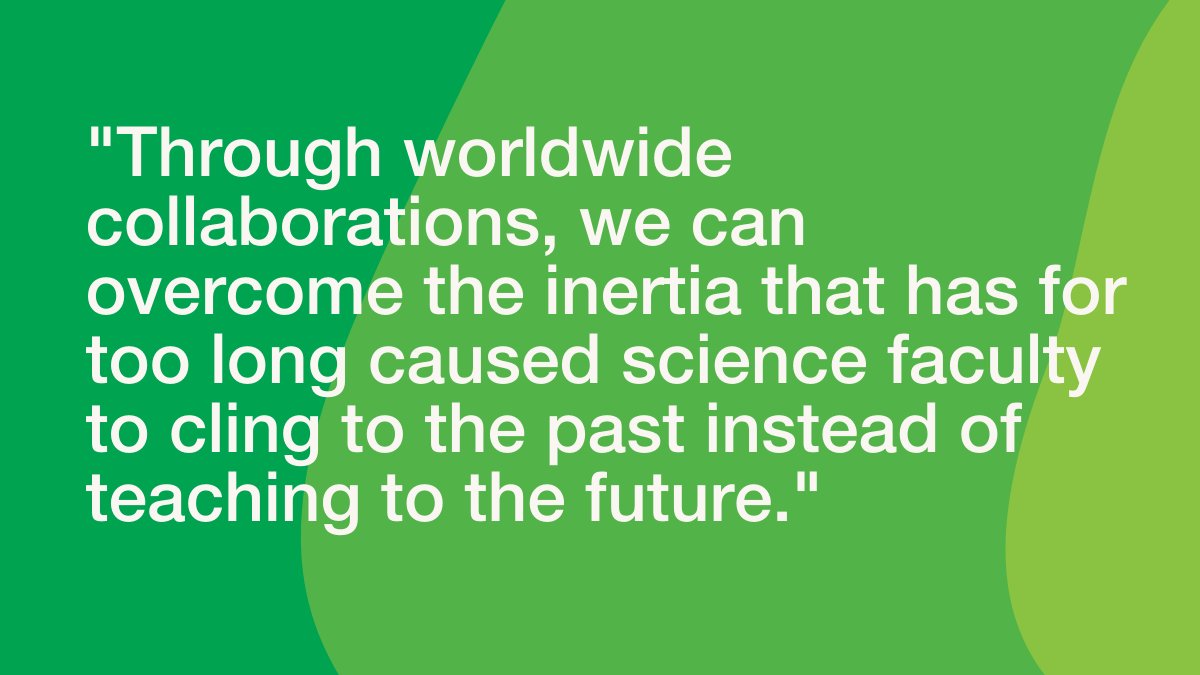
Some ideas:
1) More course-based research experiences, which immerse students in doing authentic science. Ex: @TinyEarthNet @GEP_CURE and #SEAPHAGES
2) Expand faculty training programs like @NISciTeaching and @pulseducation
3) Give instructors time to rethink their syllabi 5/8
1) More course-based research experiences, which immerse students in doing authentic science. Ex: @TinyEarthNet @GEP_CURE and #SEAPHAGES
2) Expand faculty training programs like @NISciTeaching and @pulseducation
3) Give instructors time to rethink their syllabi 5/8
That last point is key. People all over this country care about science education and want to do better, and the solutions we’re suggesting don’t require a lot of money. But professors are stretched thin. We need to give them time to modify their intro courses. 6/8
New content could include incorporating active learning and student-driven discovery. But change doesn’t have to happen all at once. Even replacing small units in a syllabus can help. I believe that these ideas would make for a more inclusive and successful classroom. 7/8
Finally, I’d like to thank Marjee Chmiel, Melissa Csikari (@mcsikari), Danielle Heller (@hellz_d), Javier Robalino, & Vic Sivanathan (@vicsivanathan), whose collective ideas about the design of an intro bio syllabus are included in the editorial. 8/8
• • •
Missing some Tweet in this thread? You can try to
force a refresh





