⏳ These local entrepreneurs are putting waste to work restoring New Orleans' coastline, one glass bottle at a time.👇
Franziska Trautmann and Max Steitz, the cofounders of Glass Half Full, were still in college when they realized that due to New Orleans' lack of recycling facilities, every glass bottle they discarded was going straight to a landfill. 

They started collecting bottles from their friends and classmates and grinding them down into sand one bottle at a time. Soon word got around about Fran and Max's recycling operation, and they found themselves overwhelmed with donated glass bottles.
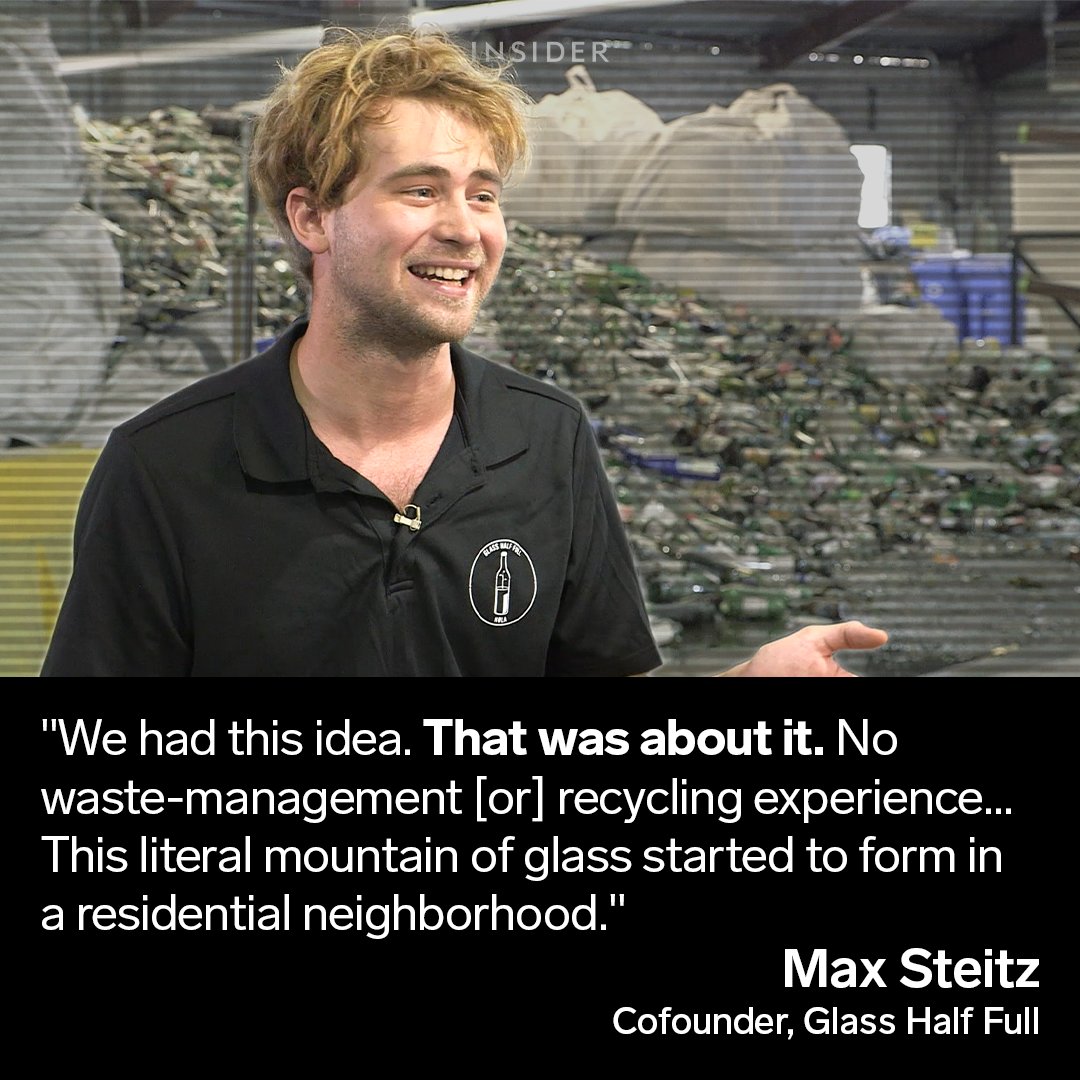
Thanks to community support, Fran and Max were able to move their operation to a warehouse and scale up their machinery. People can drop off their bottles at Glass Half Full's New Orleans drop-off hub or pay to have them picked up.
Once the glass is sorted by color, the team can begin crushing it down into sand.
They sift the crushed glass into five different grades, from larger glass chips used for home decor down to tiny grains of sand perfect for sandbags.
Between the glass gravel and the powdery sand is a coarser, grainy sand — the kind that makes up New Orleans' shrinking coastline.

New Orleans was built above sea level in the 1700s. But due to rising global ocean levels, about 50% of the city is currently below sea level. Residents need all the flood protection they can get.
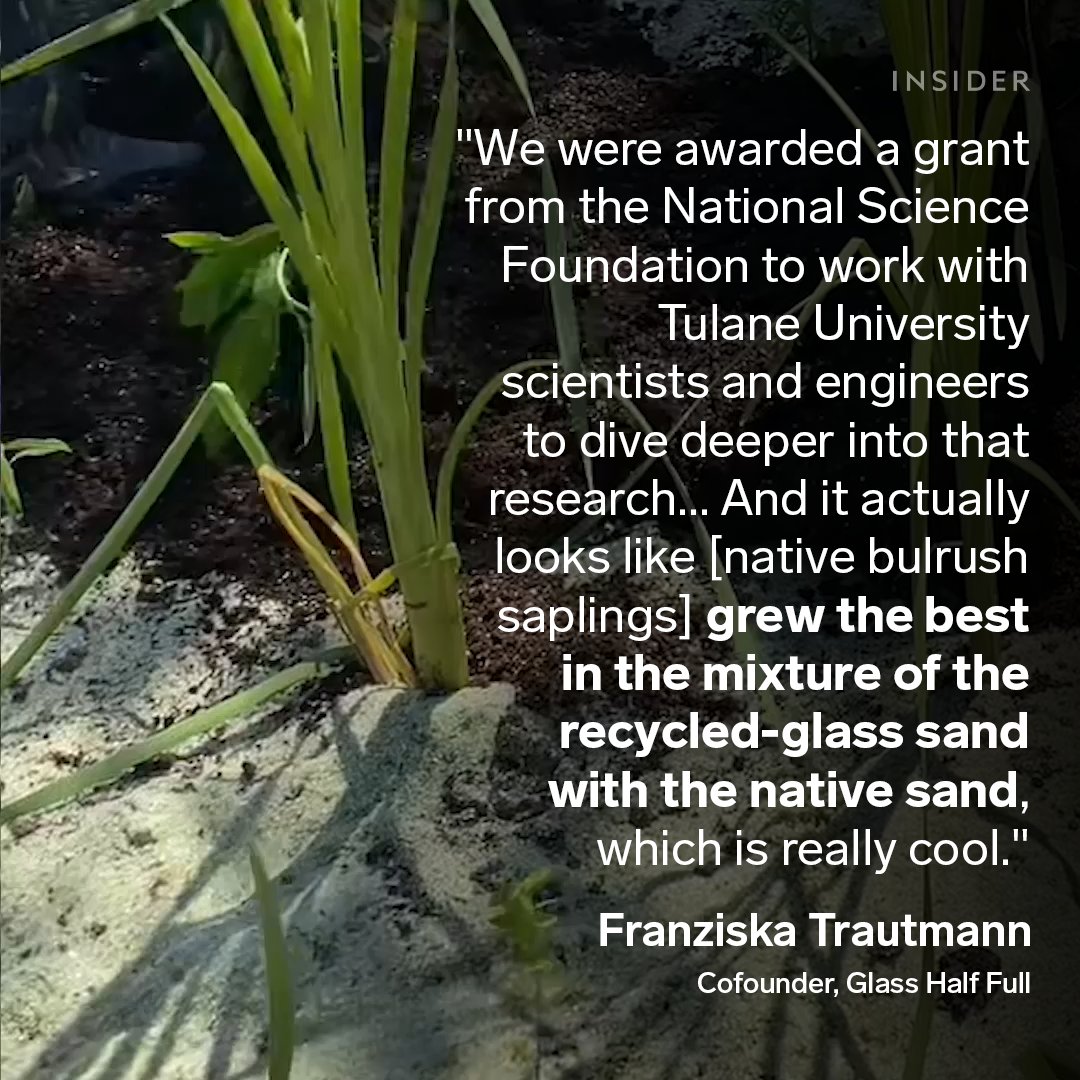
One eco-friendly way of doing this is to rebuild the coastline using biodegradable burlap bags full of Fran and Max's recycled-glass sand. Volunteers stack the bags to connect pieces of land, and then plant bulrush saplings, which will take root in the sand.
The new land that is created helps reduce storms' power before they reach inland areas.
Fran and Max spent a year working with scientists to make sure their product was safe for ecosystems. They found that sand made from glass doesn't leach anything into the water and that plant life can grow in it.
Glass Half Full ultimately wants to help combat the global sand shortage, which is the result of constant industrial-scale dredging that helps manufacturers make everything from concrete to cell phones.
For more videos about how people are dealing with World Wide Waste, visit @BusinessInsider's YouTube page. youtube.com/playlist?list=…
• • •
Missing some Tweet in this thread? You can try to
force a refresh