The Kharkiv area: Russia shelled Kharkiv, killing a 13 year old boy, wounding his 15 year old sister, and killing a couple in their 60s who were waiting for public transport.
Russia tried to advance through Pytomnyk, which is a bit of a sprawling town, but they were repelled (1)
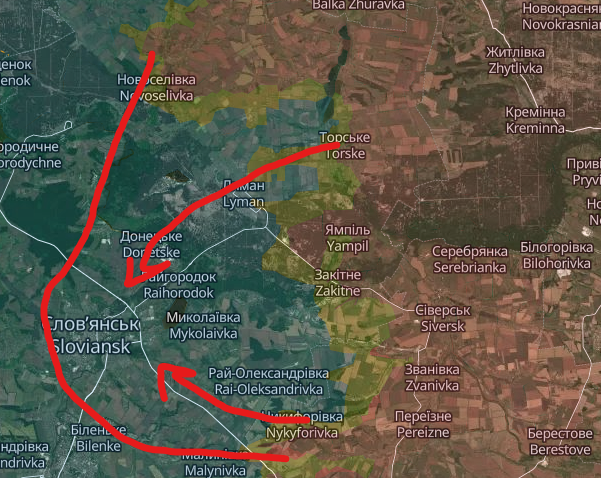
The Slovyansk area: Russia made their normal daily attacks into Krasnopillya (2), Dolyna (3), and Bohorodychne (4), and all were repelled.
The Siversk area: Mapping this area is difficult. There are a lot of attacks going on from both Russian and Ukrainian forces (I have decided not to map many of the Ukrainian attacks out of an abundance of caution). For this reason, I have made much of the region a gray area.
Similarly, I am not sure where exactly some of the Russian attacks are coming from. For example, the attack on Hryhorivka, are the Russians moving along the river, or more inland? Does Ukraine control the river area? I am not sure.
I have read that Russia controls the area along the river, which is how I have mapped it. I have seen a lot of evidence that Ukraine controls the southern part of Bilohorivka, which I have left as a gray area on the map.
There have been attacks towards Serebryanka, which obviously have to pass through the gray area somewhere, and also attacks towards Verkhnokamyanske. On top of all of this, Ukraine claims there are two towns in Luhansk oblast that Russia has failed to capture.
We know Bilohorivka is one, but which is the other? There are two options: Zolotarivka and Verkhnokamyanka. I have seen evidence of Ukrainian forces in Zolotarivka, so I have decided to map this town as contested. It could be the other, or maybe neither are contested.
Russians have not yet captured Bilohorivka, and they are heavily shelling the area with Grad MLRS and s300 anti-aircraft missiles (A). Russians tried to attack Hryhorivka, but they were repelled (5). There is ongoing fighting in Verkhnokamyanske (6).
There are rumors that Russia captured Ivano-Darivka (7), but I have seen no evidence to support it. I believe fighting is ongoing. Similarly, there are rumors that Russia has pushed through Spirne (8), but I have also seen contrary evidence that their attacks are being stifled.
Ukrainian forces have abandoned Berestove after roughly 59 days of fighting (9). After a while every single structure is destroyed and you run out of things to defend, at which point Ukraine decides to pull back to another town where the process starts anew.
However, Russia still has not been able to capture the Berestove (10) due to liberal application of Ukrainian artillery.
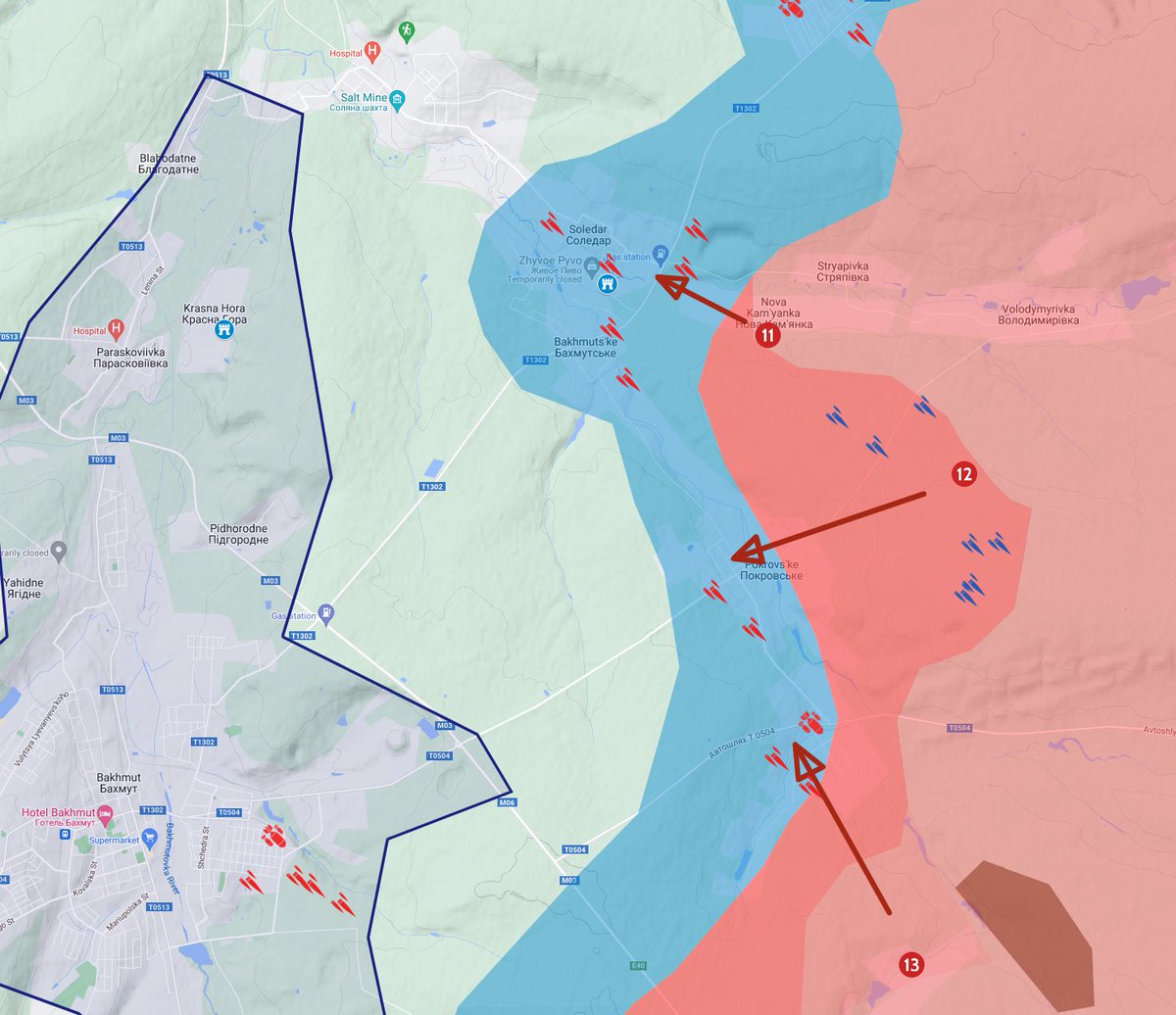
The Bakhmut area: There is ongoing fighting in the outskirts of Soledar (11).
There is heavy ongoing fighting around Pokrovske (12,13), and some of the lesser Russian sources are claiming the town is captured, although the better sources have not made any such claim.
Similarly, Russia is pushing very hard to attack Vesela Dolyna (14) and Vershyna (15). And the lesser Russian sources claim they have been captured. I have not seen evidence that Russia has even reached the towns yet and I believe they are still fighting in the outskirts.
Russia very much wants to capture these three towns so they can begin attacking Bakhmut. Russia’s goal is to push Ukraine back to their Slovyansk/Kramatorsk/Kostyantynivka defensive line as fast as possible. Every day that passes, Ukraine gets stronger and Russia gets weaker.
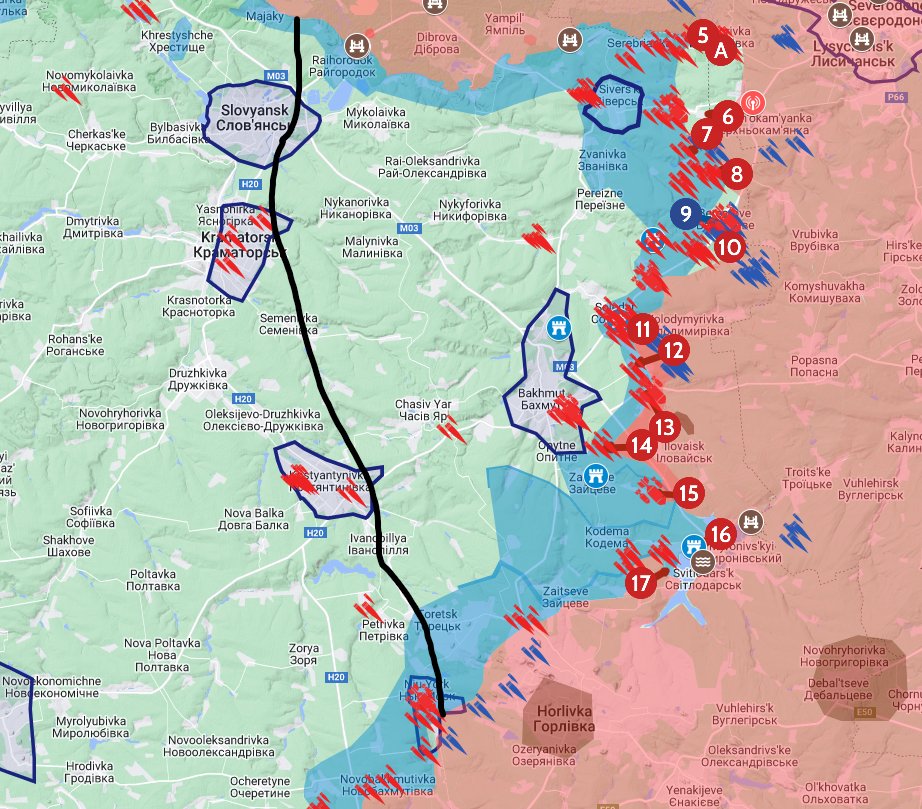
There is ongoing fighting around the Vuhlehirske power plant (16) and Novoluhanske (17) and while these positions are holding off for the moment, you could see them collapse in the near future due to what is going on north of them.
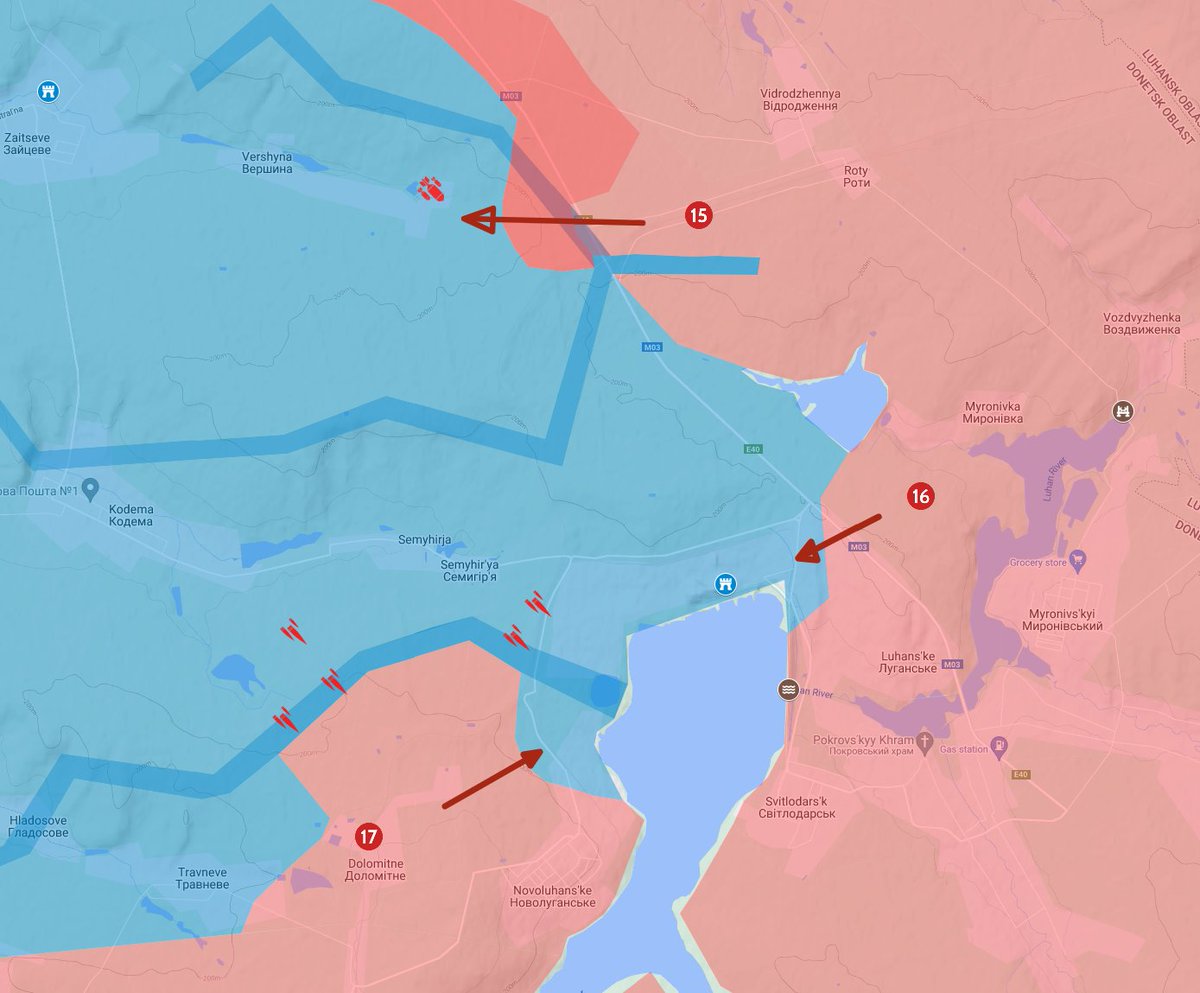
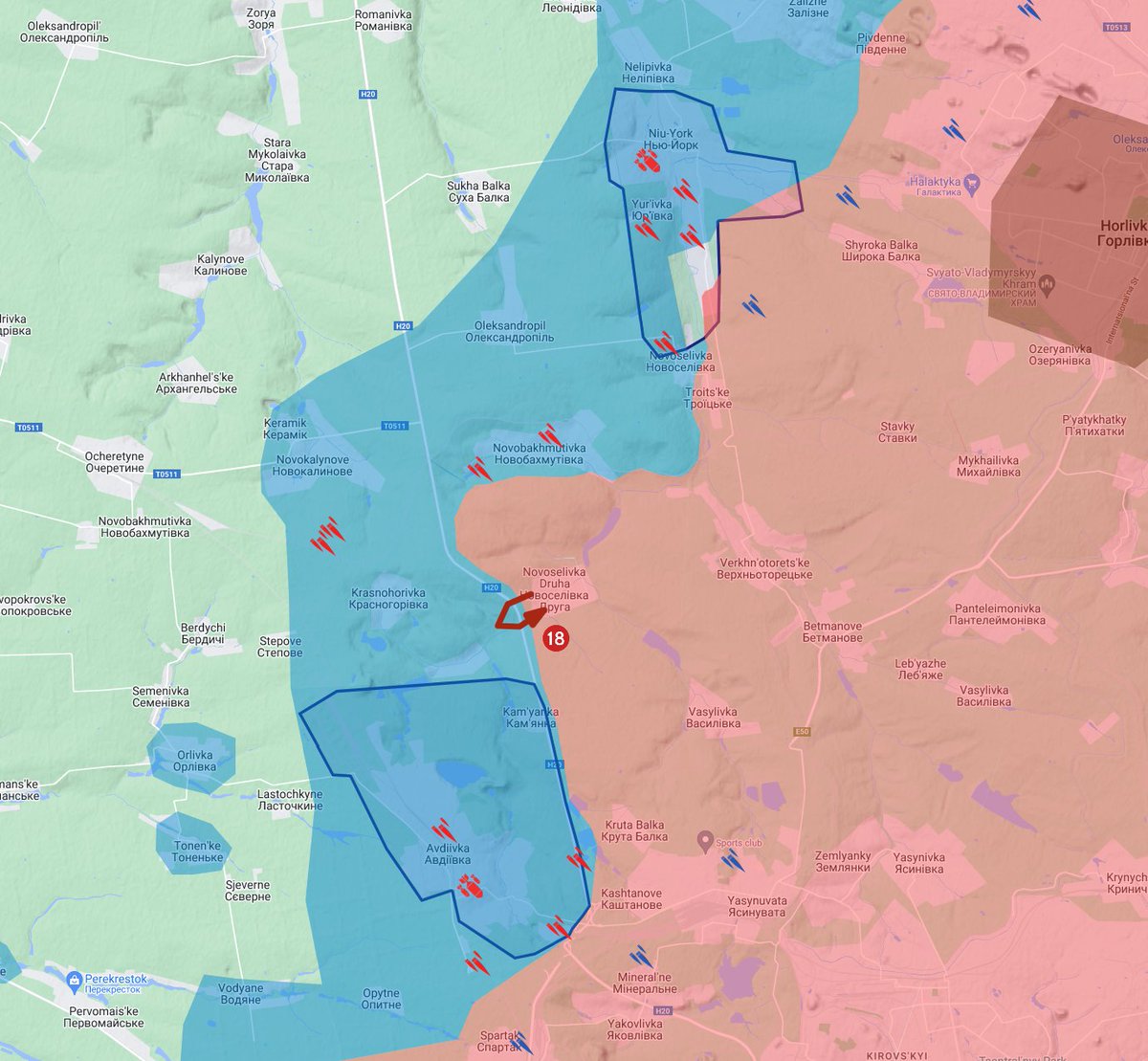
The New York/Avdiivka area: Russia isn’t having much luck attacking Kamyanka, so they decided to try a recon mission 2-3km north near Novoselivka Druha, but the recon failed and they were repulsed (18).
South of Donetsk: Russia tried to attack towards Novomykhailivka again today, and they were repelled (19).
Yesterday I read that Ukraine had attacked out of Vuhledar towards Mykilske (20), but that the attack was destroyed.
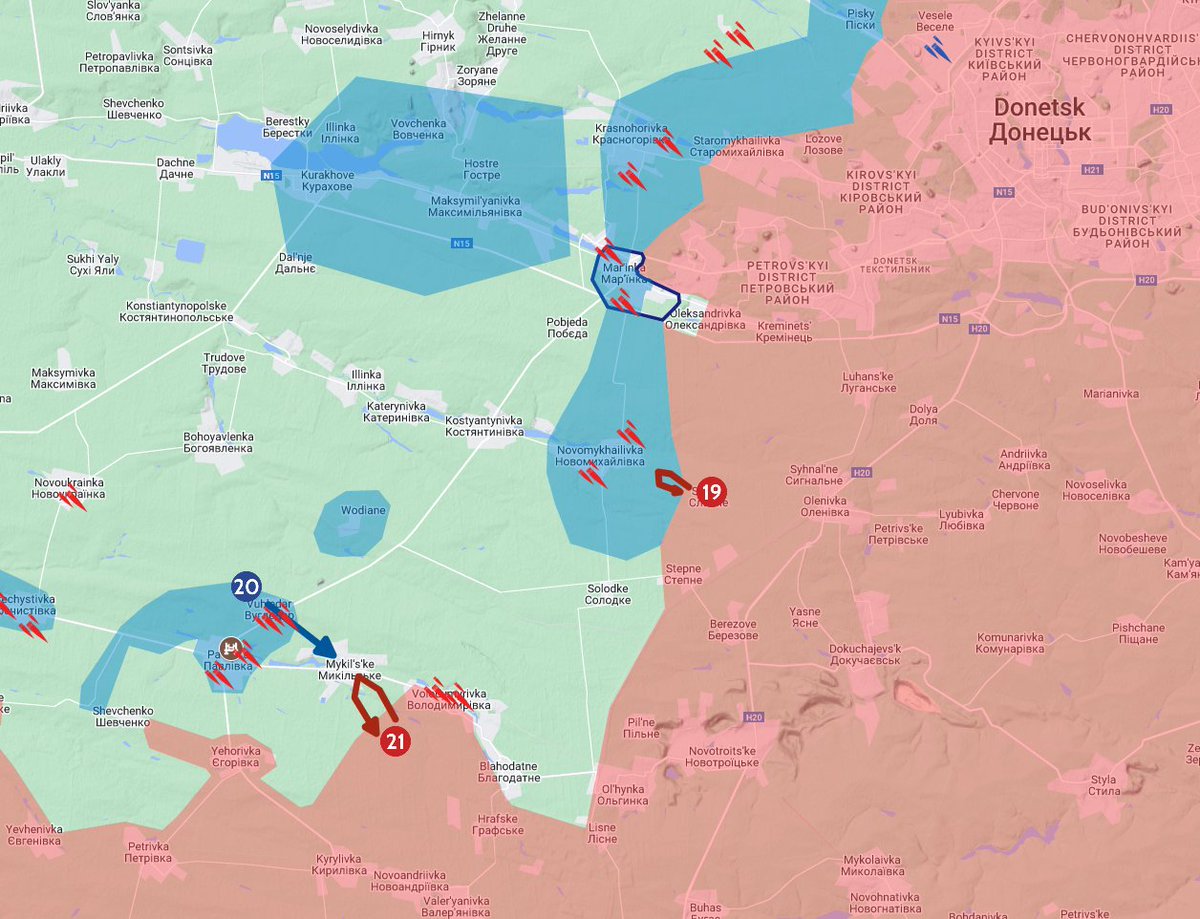
I could not find confirmation, and I found it unlikely such an attack would be destroyed so I didn’t mention it. Today there is a report that Russia tried to attack Mykilske but were repelled (21). Perhaps Ukraine captured Mykilske. I will leave it marked as contested for now.
The Kherson area: Russia seems convinced that Ukraine will attempt an attack from Murakhivka (the giant blue arrow). Ukraine is heavily shelling the Russian positions in this general area, and Russia is returning the favor, including air strikes on Murakhivka itself.
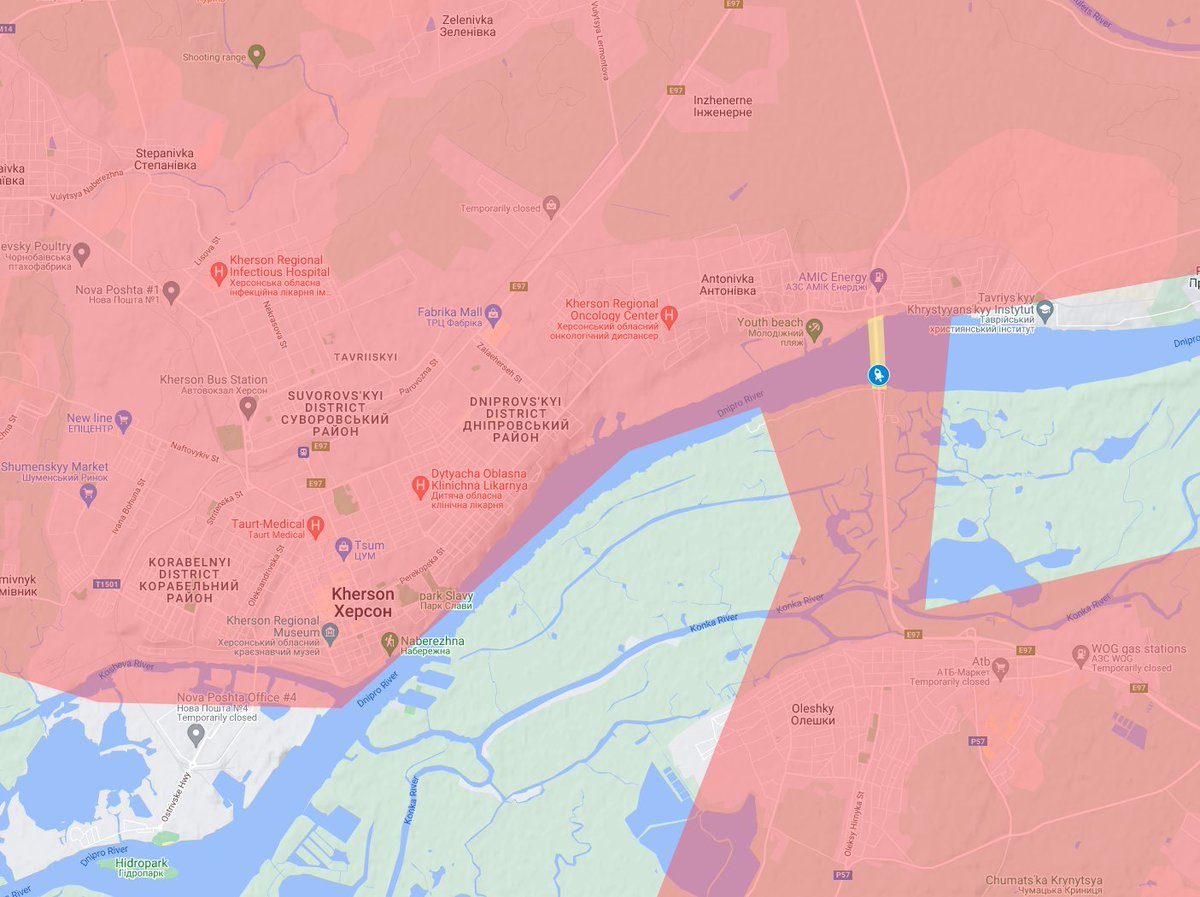
Ukraine shelled the Antonovskiy Bridge again today. There is debate over the weapon being used, whether it is HIMARS or the gps guided Excalibur artillery shells. Either way, the bridge is badly damaged and it is either impassable or close to being so.
Seeing Russia use BM-35 to attack the front line is funny. These drones were supposed to take out Ukrainian logistics, the way ukrainian drones are destroying Russian logistics, but elon musk snapped his fingers and poof. Without America, Russian "technology" is garbage.
They use these things like molniya now. A mockery of their original purpose.
Whats funny is that Ukraine has taken their own Darts and Blyskavka and turned them into long range logistics hunters while Russia has them tied to the front line to blow up random houses.
Russian telegram channels are going through their old videos editing out war crimes. Things they were once proud to show are being secretly removed. They apparently don’t realize their videos and messages are archived.
Example: here is a video uploaded April 10th, at 1:20 in the video you see of the deadliest terrorist attacks on Ukraine this year (filmed from far away, don't worry about gore or anything)
(i sincerely didn't think it would take telegram 1 metric eternity to download this video)
and here is the edited reupload, removing the terrorist attack
For the past two years, we have discussed how Ukraine is building drones that can hit targets 100 to 150 kilometers away. These drones are being produced in enough numbers to disrupt Russian logistics. During this time, some people doubted this was possible, calling it too optimistic or asking, "Why can't Russians do the same thing?"
To me, the answers were clear. Ukraine has better technology across various forms of communication, either on its own or with allies' help. Starlink is one example, but it is not the only or even the most important one.
Ukraine also has more experience and stronger command-and-control systems for drones. While these systems are not perfect, they are better than what Russia has, especially at the scale needed for this kind of operation.
Ukraine developed many different technologies and weapons in parallel, and for a good deal of time, none of these projects had much, if any, impact on the war itself. So, for a long time, it seemed nothing was happening, and this, along with Russia's media narrative (and the profound willingness of people to fall for Russian propaganda), led many to believe Russia was inevitably winning, which was never true, and is certainly untrue now.
Now, these technologies and weapons have reached the front line at about the same time, within a few weeks or months of each other. Some are better or more specialized than others, and some will be countered or may fail. Still, the fact that they all appeared together makes it very hard for Russia to adapt and stop them.
Ukraine will be able to send very cheap drones with a range of over 100 kilometers into Russia's rear areas. These drones can be guided by many different methods to hit every important target at first, and probably, in time, every target.
Russia has already had to close some roads and routes because of the threat. This is just the start. The danger will only grow as Ukraine increases production over time. These drones are cheap and easy to make, and Ukraine will produce them in large numbers. Russia does not have any technology that can handle this threat right now.
SHORAD can create small protected areas, but if it is used often, it will eventually be destroyed.
Electronic warfare probably will not solve the problem, but it might help a little.
Nets along highways will help, but only slightly. And nets can pose risks and hazards of their own. When they collapse, they can close roads, forcing vehicles through chokepoints that can be mined and attacked.
Interceptor drones can work, but they need a lot of resources that would otherwise go to offensive operations.
The Russian military is dealing with a problem no army has faced before, and there is no clear solution. Their best option is to spread supplies across many vehicles and use every possible road and path to move them forward. However, this is very inefficient and only helps as much as Ukraine's drone production allows.
The "russia will figure it out" crowd should sit down and give me your list of excuses for how Russia still doesn't have heavy bombers after more than 4 years of trying to replicate them.
Russia doesn't have an answer to bombers or their own bomber. They have nothing. And you think they can solve strike drones? Something an order of magnitude harder to develop and harder to stop? On what basis do you think this? It is just cope.
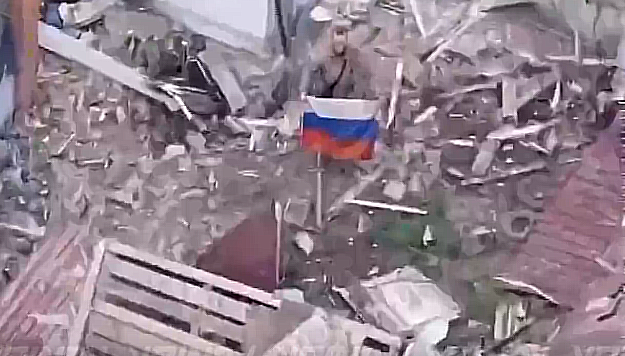
Russians waving flags in Verkhnia Tersa, a lesser known highly pro-Ukrainian town in Zaporizhzhia. I remember reading the news story about the first civilian KIA in this town, and how shocking it was to them, in 2023 I think. Seeing the place like this now is sad.
Here is translated text from Al Ta about the situation in Ukraine. He is a Russian propagandist, a soviet anti-Putinist who views reviving the full Soviet Union (including Poland) as the primary number one goal of this war. He's also pretty honest about the situation. Its long. (racial slurs and whatnot are removed btw)
Preservation of one’s own forces and resources (including manpower).
On paper, everything looks neat and classical: we strike the enemy at its foundations and core, while we ourselves conserve strength and wait for the right moment for a decisive blow. But in reality, everything is both simpler and more complicated at the same time.
If you think through the basic principles of a classical war of attrition, then at the initial stage, when the enemy’s potential is being destroyed, when strikes are delivered against its economy, communications, and supply routes for raw materials and weapons, the side that holds the initiative should remain on the defensive, abandoning unimportant territories and максимально protecting its soldiers. This attrition is carried out through the remote destruction of the enemy’s potential.
Strictly speaking, the correct strategy in such a war should include:
1. Readiness for total and continuous mobilization.
We remember that this kind of war is one of mobilizing all the strength of the people. Total mobilization is necessary to achieve a manpower advantage, which should allow final military actions to be carried out quickly once the enemy’s ability to resist is completely broken. In addition, prolonged combat, even in a well-organized defense, still leads to losses, which are unavoidable. Therefore, there is a constant need to replenish the front with personnel.
2. Readiness for total destruction and the deaths of the enemy’s civilian population (and your own, if the enemy is not weaker than you).
It is extremely difficult, more likely impossible, to “delicately” destroy a country’s economic foundation. Therefore, a country that begins such a war must be prepared to act decisively and harshly. This is the price of survival.
3. Defense as the foundation of the first phase of such a war.
Preserving soldiers’ lives is the key to a future victorious offensive. It is physically impossible to conserve personnel while conducting offensive operations. Many are familiar with the standard ratios required for an attacking force to outnumber a defending one. Even taking into account more advanced and destructive weapons, the need for such a ratio remains, it will never be 1:1. In essence, the main function of troops (infantry supported by tanks, artillery, and aviation) in such a war is to occupy territories where the enemy can no longer resist. Frontal or stubborn assaults are not characteristic of a war of attrition.
4. Seizing territory in the initial and main stages of such a war is not the primary objective.
Territory should be taken either after the course of the war has been turned and the enemy’s ability to resist has been broken, or through the imposition of postwar conditions.
5. Emphasis on firepower.
The enemy should be subjected to an overwhelming barrage of destructive force using every possible means. Everything available should be directed at the target. Naturally, this places emphasis on highly destructive weapons: artillery and aviation. The nature of the current war has also added UAVs (unmanned systems). We already see strike systems in the air and at sea, and soon ground systems will be added.
The goal is to inflict unacceptable losses on the enemy before you yourself suffer unacceptable losses. If you like, it resembles a boxing match: both sides exchange blows, but in the end the stronger one wins. At the same time, for every artillery shot fired at you, ten should be fired in return; for every drone launched, ten drones should respond. Only this way.
Yet, for example, by the results of March 2026, “so-called Ukraine” surpassed us in the number of drones launched at our territory.
Each of you can compare these principles with what is actually happening at the front. After all, “we haven’t even started yet,” if some leaders are to be believed.
I want to start by saying I don’t have access to official documents or meetings, so I’m piecing together their motivations based on what I observe and logical reasoning. Keep that in mind as you read on.
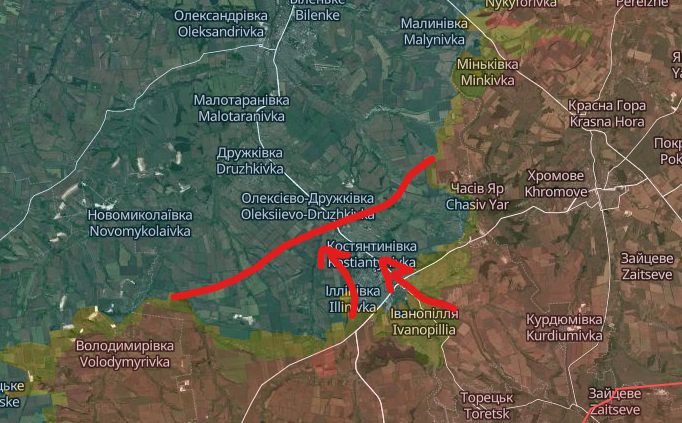
This year, Russia's goals are threefold. First, to capture the eastern bank of the Dnipro River. Second, to capture Kostyantynivka. Third, to capture Slovyansk.
Each of these goals has necessary steps. To capture the bank in Zaporizhzhia, you must first capture Orikhiv. To capture Slovyansk, you must first capture Lyman. You could argue that to capture Kostyantynivka, you must first capture Chasiv Yar.
These goals are very ambitious and, honestly, impossible to fully achieve. So let’s think of them as aspirations and focus instead on how close Russia might get to reaching them.
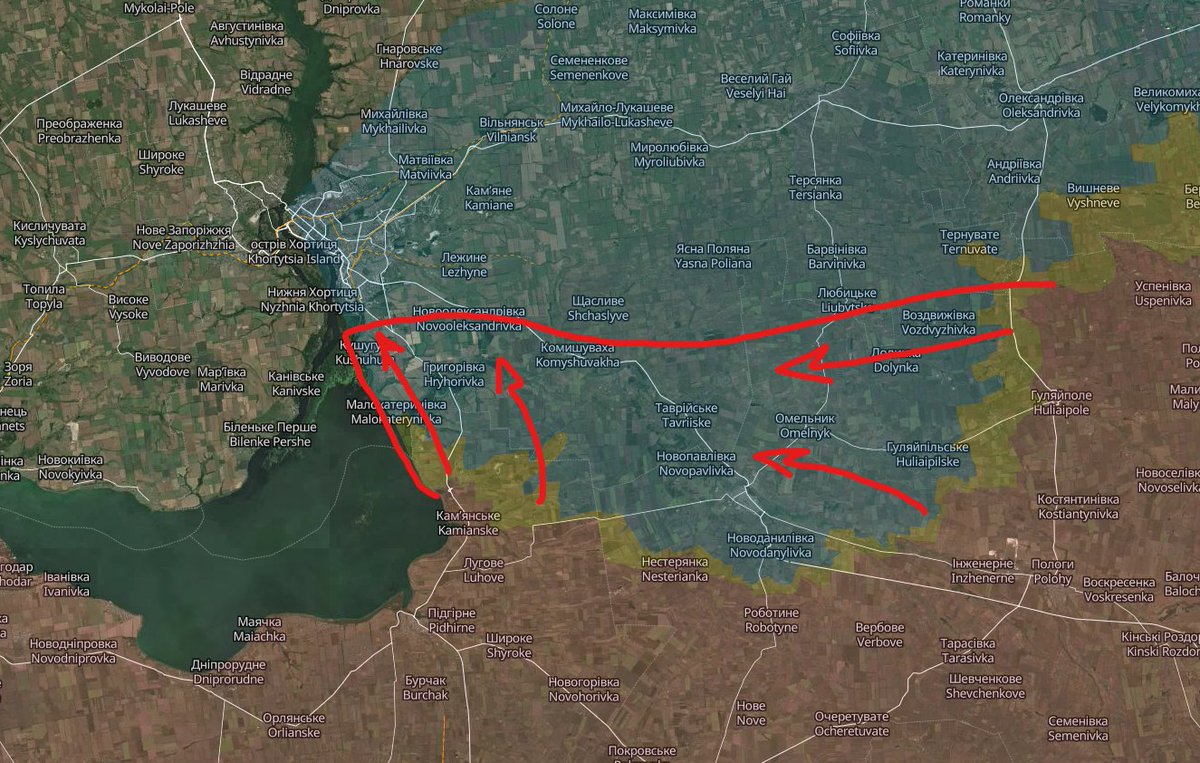
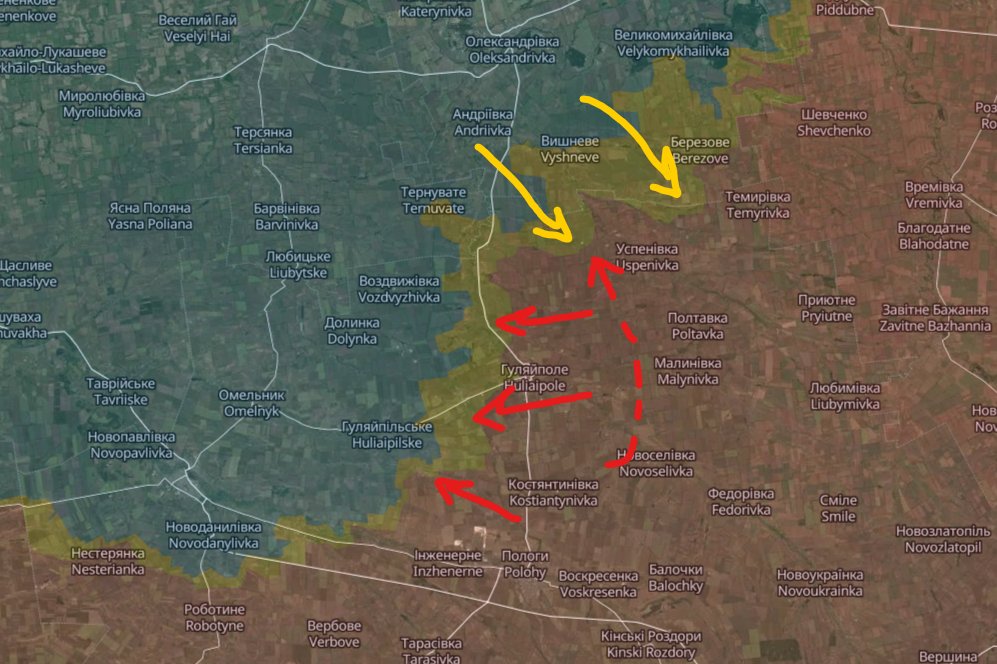
Ukraine launched several counterattacks in the Verbove and Ternove areas of Zaporizhzhia. They were quite successful, pushing Russia out of several settlements and possibly capturing some. This also threatened Russia’s main supply route to the west. Because of this, Russia has to do two things: divert resources from their main attack to stabilize the area and try to recapture this ground to keep pushing west toward Orikhiv. Meanwhile, Ukraine gains time to strengthen defenses, plan their strategy, and prepare for more counterattacks, something Russia worries about given their timeline.
This has already delayed Russia’s offensive by months, and it will take many more weeks for them to regain their previous position.
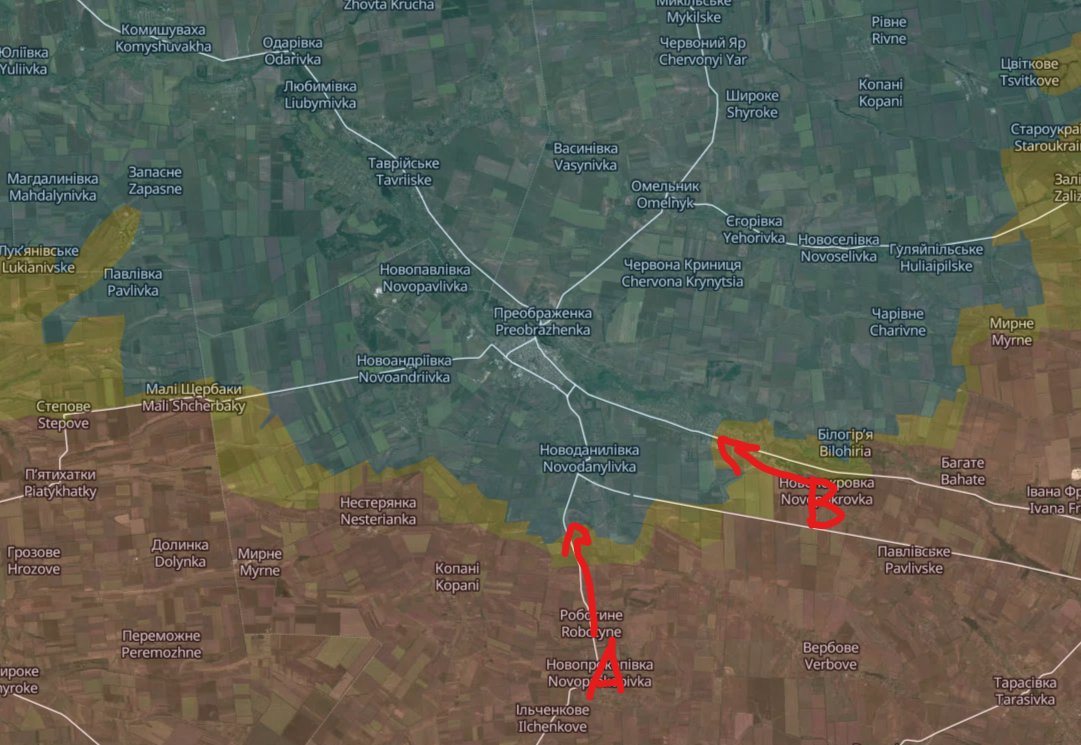
Recently, Russia tried an armored assault on Orikhiv, which failed badly (A). They also tried to advance through Mala Tokmachka (B) before, but that failed too. A direct attack on Orikhiv is unlikely to succeed without heavy losses, so Russia wants to avoid it unless they have no choice. Still, based on past experience, they might end up having to take the town this way.