Long time readers know that my prescription for climate change is to reduce speed to the pace supported by natural processes via food energy, and to launch a worldwide project to regenerate ecosystems everywhere using human and animal powered tools and implements.
My reasoning:
My reasoning:
1. First, the entire global geophysical catastrophe is caused by excessive energy throughput. Deforestation is done with energy. If we didn't have the levels of concentrated energy that we do we couldn't do deforestation at our current rate or anywhere close.
I'm not going to
I'm not going to
2. Go too deep into that topic, because it's a long thread by itself and not what's on my mind tonight. I take it as a starting point. A definition of the problem in addressable terms. Actionable terms.
There are specific actions which are derived from the definition.
There are specific actions which are derived from the definition.
3. If excessive energy throughput is the cause of all or a significant part of our problems, then we need to reduce energy use.
The term "throughput" is accurate because energy can be neither created nor destroyed. The energy which powers our technology doesn't end in it.
The term "throughput" is accurate because energy can be neither created nor destroyed. The energy which powers our technology doesn't end in it.
4. For instance, say we take a trackhoe, or excavator. There's a zillion of them on a big highway project, for instance.
We run diesel through them by the truckful. We burn the diesel, much of the chemical energy in the diesel turns into heat, and some of that heat causes motion
We run diesel through them by the truckful. We burn the diesel, much of the chemical energy in the diesel turns into heat, and some of that heat causes motion
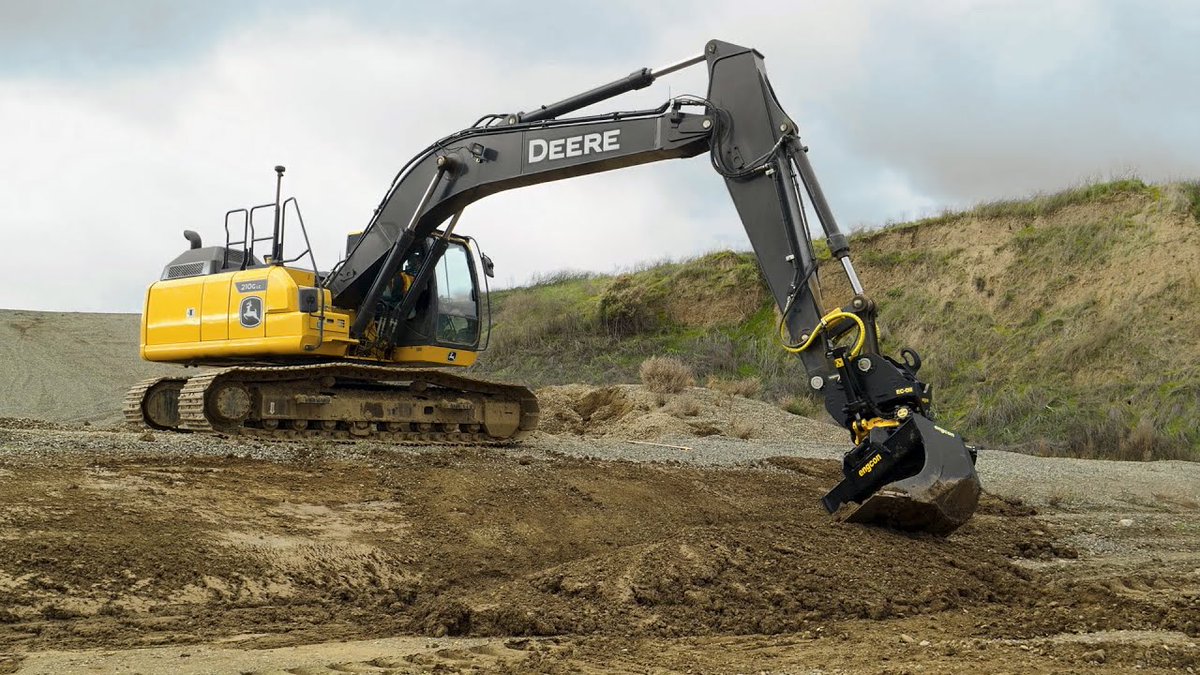
5. The energy in the diesel fuel was just a snapshot of that energy's journey through our economy.
Energy is as real as matter. Just like you can follow iron ore from the mine through the smelter, to the steel mill, to the wind turbine leg, getting smaller and more processed as
Energy is as real as matter. Just like you can follow iron ore from the mine through the smelter, to the steel mill, to the wind turbine leg, getting smaller and more processed as
6. it goes - it takes many truckloads of iron ore to make enough steel for one turbine leg - and then you can follow the leg from the steel mill down highways and across prairies and stood on a giant block of concrete, then later on through the steel scrap steelmaking process -
7. the matter in our processes can be tracked with the naked eye, so we believe in it, but matter and energy are facets of the same thing - increase the energy in a mass, you increase its mass. E=MC². If E goes up - we add energy - and C is constant, which is an article of faith,
8. then when your speed across the Earth increases, your E increases by 60mph of kinetic energy, you get larger.
Not much larger - we're already hurtling through the universe at some amazing velocity, so there's a lot of kinetic energy in us already, but - a little more speed,
Not much larger - we're already hurtling through the universe at some amazing velocity, so there's a lot of kinetic energy in us already, but - a little more speed,
9. A slight increase in mass.
Energy is as real as marbles. But it is an acquired skill to see it.
As some religion or other said, "By their fruits ye shall know them."
Anywhere anything happens, ever, energy causes it. Any motion, any change. Change shape? Energy.
Energy is as real as marbles. But it is an acquired skill to see it.
As some religion or other said, "By their fruits ye shall know them."
Anywhere anything happens, ever, energy causes it. Any motion, any change. Change shape? Energy.
10. Some self-proclaimed Progressive by its bio told me that fossil fuels aren't burned to make plastic, and - I don't argue with them. I just block them. Americans are energy blind. Matter and magic. Shit happens.
Shit does not happen. Energy forms shit of other matter.
Shit does not happen. Energy forms shit of other matter.
11. But - as usual - I digress.
Why is speed pivotal?
Let's go back to England, and the first industrial production of goods. Fabrics.
In about two weeks, all the people within walking distance of the factory had clothes. All they wanted.
Why is speed pivotal?
Let's go back to England, and the first industrial production of goods. Fabrics.
In about two weeks, all the people within walking distance of the factory had clothes. All they wanted.
12. In about two weeks, all the wool and all the linen within walking distance of the factory was gone.
Prior to industrialization, almost all things were produced within about a day's walk from everyone, in small volumes.
Prior to industrialization, almost all things were produced within about a day's walk from everyone, in small volumes.
13. The factory can only exist if it can draw raw materials from a distance and sell output to a distance.
The laws which explain moving mass, accelerating mass, weight and time and distance - those are known. They are absolute. They are rooted in E=MC² and cannot be escaped.
The laws which explain moving mass, accelerating mass, weight and time and distance - those are known. They are absolute. They are rooted in E=MC² and cannot be escaped.
14. So in order for raw materials to come in to factories, and product to go out, energy had to be expended.
The whole point of the machine in the factory was to do work faster than a human could.
It did that by importing energy, fire energy mostly, and harnessing it to machines.
The whole point of the machine in the factory was to do work faster than a human could.
It did that by importing energy, fire energy mostly, and harnessing it to machines.
15. Once the machine ran faster, the input and output stream had to run faster too.
Had to.
The machine wouldn't be cost effective if you could only run it three days a month. So - faster transportation to bring in fuel - coal - and raw materials, fibers. Since the per acre
Had to.
The machine wouldn't be cost effective if you could only run it three days a month. So - faster transportation to bring in fuel - coal - and raw materials, fibers. Since the per acre
16. Production didn't vary that much, the upshot was one buyer for wool for a region, market monopolization.
In England what they did first was to dig the canals.
Once you understand that speed is tons per mile per hour, it becomes obvious. A horse on the road might pull a ton,
In England what they did first was to dig the canals.
Once you understand that speed is tons per mile per hour, it becomes obvious. A horse on the road might pull a ton,
17. Maybe a ton and a half, up and down hills, rolling on wooden wheels on dirt roads.
That same one horse could probably pull ten tons, fifteen tons floating in a canal on a narrowboat.
He's not walking any faster, but speed has increased, with almost no increase in energy input
That same one horse could probably pull ten tons, fifteen tons floating in a canal on a narrowboat.
He's not walking any faster, but speed has increased, with almost no increase in energy input
18. I don't think any transportation system more energy efficient could be created than an animal drawn narrowboat canal system. Almost no friction at all rises and falls evenly distributed over long reaches of distance.
They lasted until the railroad was invented.
They lasted until the railroad was invented.
19. If you look at the justifications for the Bipartisan Infrastructure Framework concrete and steel construction plan, you'll see mentions of "transportation efficiency," but efficiency is understood to be measured in person-hours, not kilowatt-hours.
Just as England traded
Just as England traded
20. horsedrawn canal boats for coal fired steam trains for efficiency.
Energy has always been so cheap its cost is entirely disregarded. Still is.
Unless, you know, you want a survivable ecosystem. But aside from that.
Energy has always been so cheap its cost is entirely disregarded. Still is.
Unless, you know, you want a survivable ecosystem. But aside from that.
21. The link between industrial production and consumption is transportation. High speed transportation.
Since England began digging her canals, transportation speed has defined industrial throughput. Speed is the throttle.
If we want #degrowth the way is to choke throughput.
Since England began digging her canals, transportation speed has defined industrial throughput. Speed is the throttle.
If we want #degrowth the way is to choke throughput.
22. Virtually all the surface concrete in the developed world is for automobiles, either to go fast on or to sit still on.
100% of that concrete is thermal hotspots.
It only exists for speed.
You could run a nationwide horsedrawn economy on gravel and rain would soak through.
100% of that concrete is thermal hotspots.
It only exists for speed.
You could run a nationwide horsedrawn economy on gravel and rain would soak through.
23. Paving stones.
I've laid out specific ways to gradually slow surface traffic, and more generic ways to recursively slow air traffic. Sea freight is a harder one.
Not enlarging seaports would be a good start, so of course we are.
Outlawing both-way flows of commodities good.
I've laid out specific ways to gradually slow surface traffic, and more generic ways to recursively slow air traffic. Sea freight is a harder one.
Not enlarging seaports would be a good start, so of course we are.
Outlawing both-way flows of commodities good.
24. Abstract terms like #degrowth aren't going to help. Yes, we need to degrow. That requires specific actions.
We must remove energy from our economy. Transportation speed is an obvious choke point if we chose to do something.
We must remove energy from our economy. Transportation speed is an obvious choke point if we chose to do something.
25. I have not heard other mechanisms that could be applied starting today with no upfront energy expenditure to implement it. But - all the plans to increase energy throughput today, which is all the plans on the table, are not serious. They have not been evaluated re energy.
26. It's *way* more than just CO2, you know.
• • •
Missing some Tweet in this thread? You can try to
force a refresh