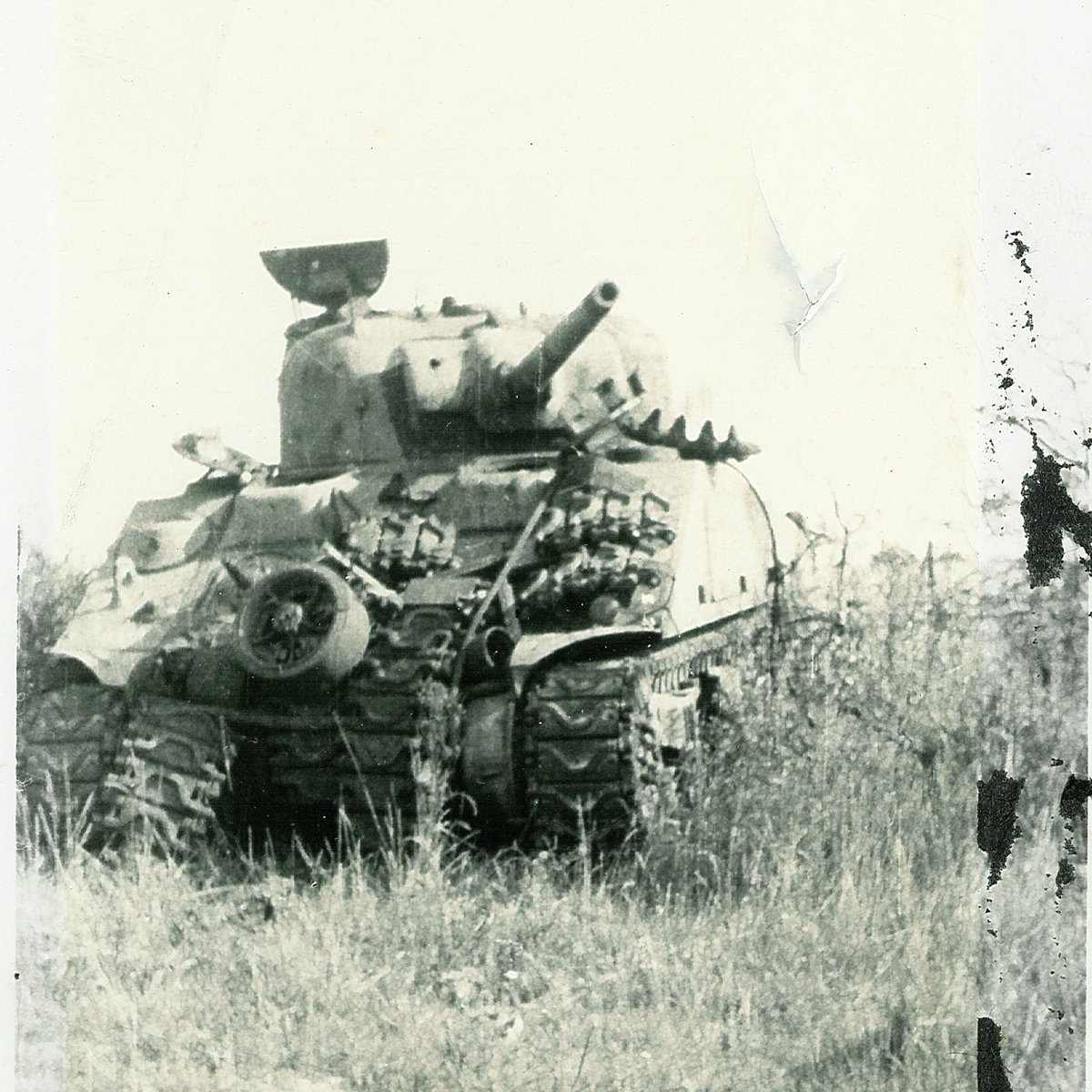
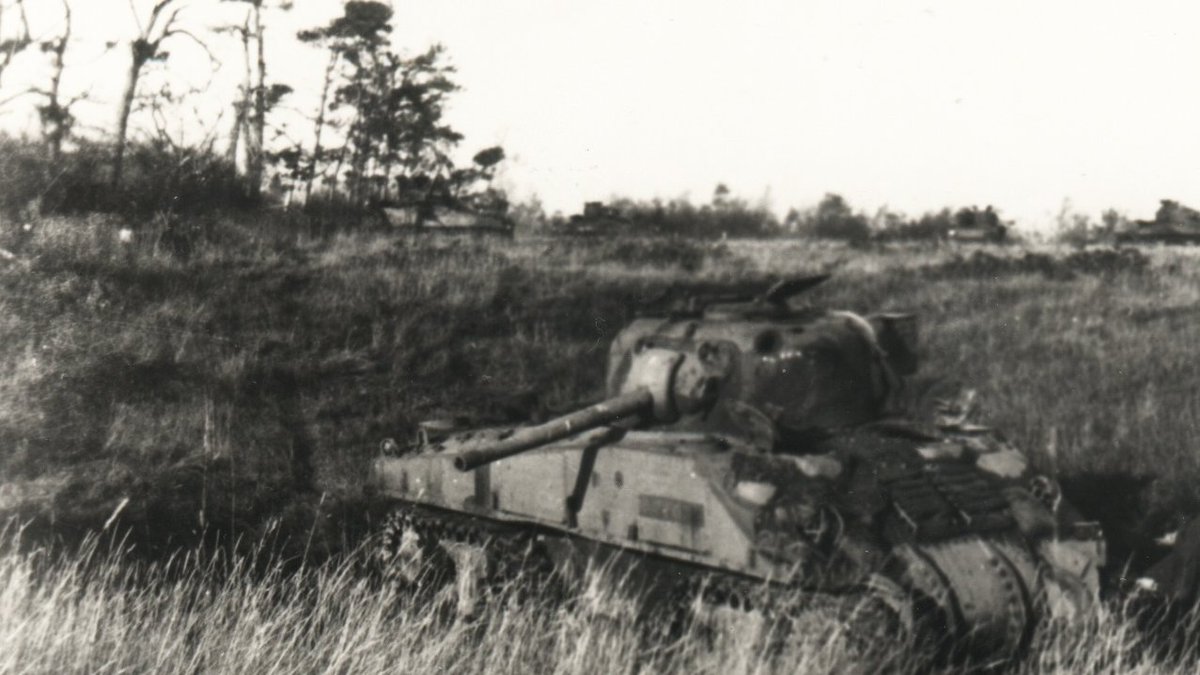
Canadian Alamo in Normandy. #OTD in 1944 Worthington Force, a battlegroup of the British Columbia and Algonquin Regiments, was destroyed after a hard day's fighting.
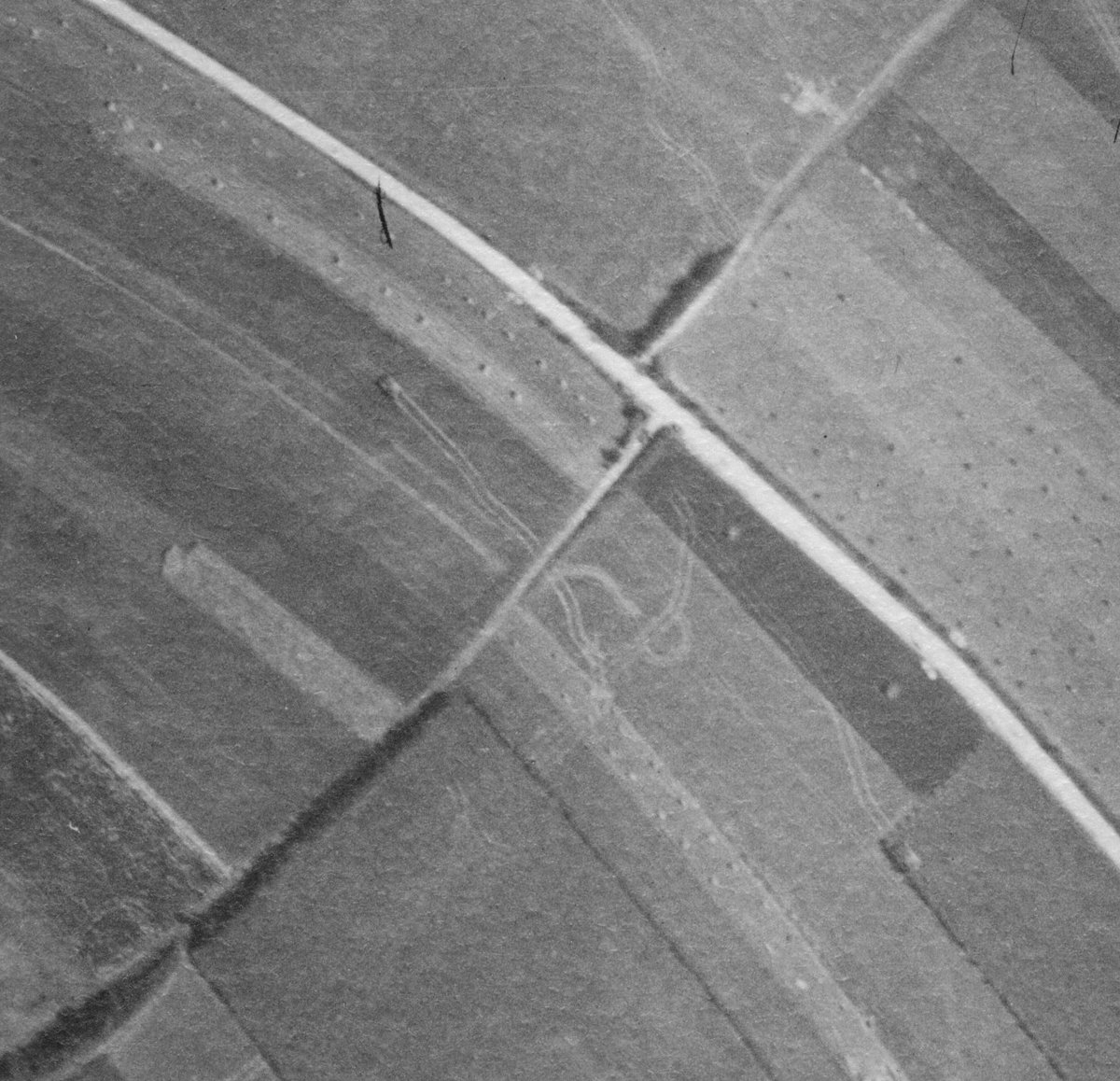
This air photo, the most remarkable I've seen in my years of research, shows the fight in progress.
A short🧵1/11
This RAF photo was taken at the height of the battle on 9 Aug. It shows the desparate drama of the fighting that day. The final location of WF is visible as the rectangular field on the left side of the photo. This is near Point 140 east of Estrees-la-Campagne. 2/11
Tank tracks scar the field; BCR Shermans are arrayed around the perimeter; Worthington’s tank and command post are by the tree at the centre of the position (zoom below). Algonquin halftracks are visible but not the men dug in amongst the screening trees and scrub. 3/11
The small white squares and the longer white line in the position are air recognition panels displayed to prevent attacks by friendly aircraft. 4/11
If you zoom out to the north, you can see burning Shermans at the top that were sent back the way they had come to deal with German tanks and anti-tank fire directed at their position. The 1st Polish Armoured Division is also somewhere near the top of the photo. 5/11
At the bottom of the photo is 30 Acre Wood and the still burning Sherman tanks of Major Carson, Captain Hope, Lieutenant Stock, and Sergeant Wallbank. They were ambushed when they were sent to deal with German fire eminating from that small wood. 6/11
Even more remarkably, the photo captures the ambushers. On the right edge of the photo are two German tanks, likely Panthers. We know that no Allied tanks were in that area as their tracks originate in the south/south-east and do not connect with WF location. 7/11
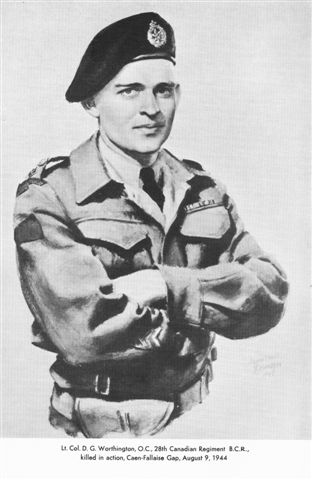
Worthington Force achieved the holy grail of Allied operations in Normandy: they broke through the German main line of defence and captured key terrain that invited counterattacks. It should have changed the nature of the Normandy Campaign but nobody knew their location. 8/11
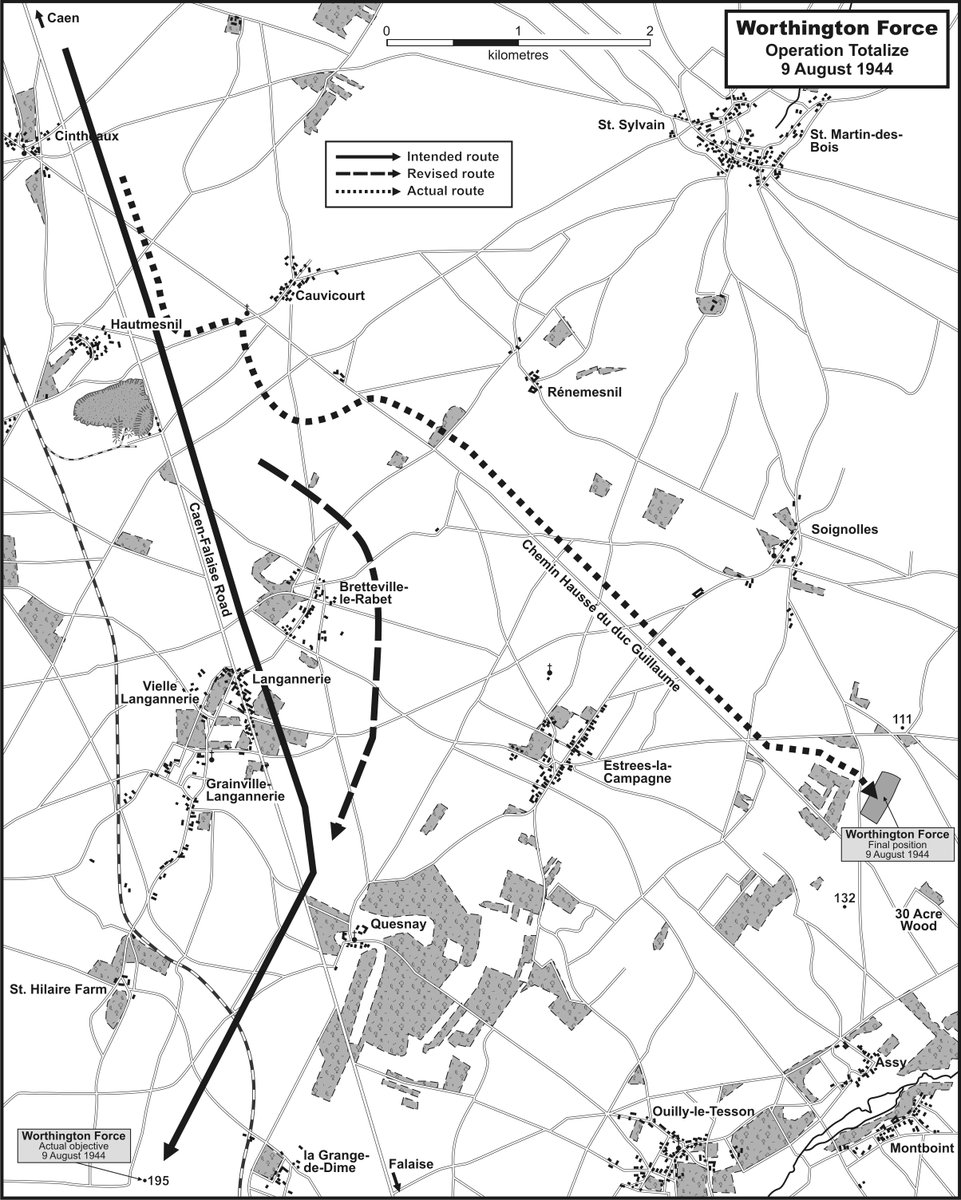
With no artillery support and no reinforcements or supplies available, the Canadians were slowly attritted during the day's fighting. When Worthington was killed late in the afternoon, it was clear the only hope for the survivors was to make a break when the sun set. 9/11
The losses were terrible. The BCRs lost 47 tanks (44 Shermans, 2 Stuarts, 1 Crusader) and suffered 112 casualties (40 killed, 38 wounded and 34 prisoners of war). The Algonquins over two day (9-10 Aug) suffered 128 casualties (45 men KIA/DOW, 38 wounded and 45 POWs). 10/11
Lots of talk today about the Battle of Amiens and the start of Canada's 100 Days. It's rightly marked as the "black day of the German army," but it was also important as the greatest air battle of the First World War. #RAF#airpower#OTD
➡️🧵
The RAF employed all the tasks of modern air power: air superiority, reconnaisance, interdiction, and close support missions among others. It was the first thoroughly modern and comprehensive application of air power on the battlefield and set the standard for future air ops.
The RAF played a major role for this battle and more than 40 squadrons and 800 aircraft took part in the offensive. The French to the south contributed another 1,025 aircraft. The principal objective for the RAF was to support the ground battle.
7 August 1944 was a BAD day for the German army in Normandy. Operation Totalize shattered their defensive line south of Caen and their biggest offensive in Normandy, Op Lüttich, was decisively defeated at Mortain.
A thread...
1/17
The German army made a brief stand south of Caen while a succession of Anglo-Canadian operations - Goodwood/Atlantic and Spring as well and British operations west of the Orne River severely attritted their combat strength.
2/17
German defences on Verrières Ridge were strong so Lieutenant-General Guy Simonds, commanding 2 Canadian Corps developed a new plan. Massed artillery wasn't enough to defeat the German defence-in-depth so new tactics were needed.
3/17
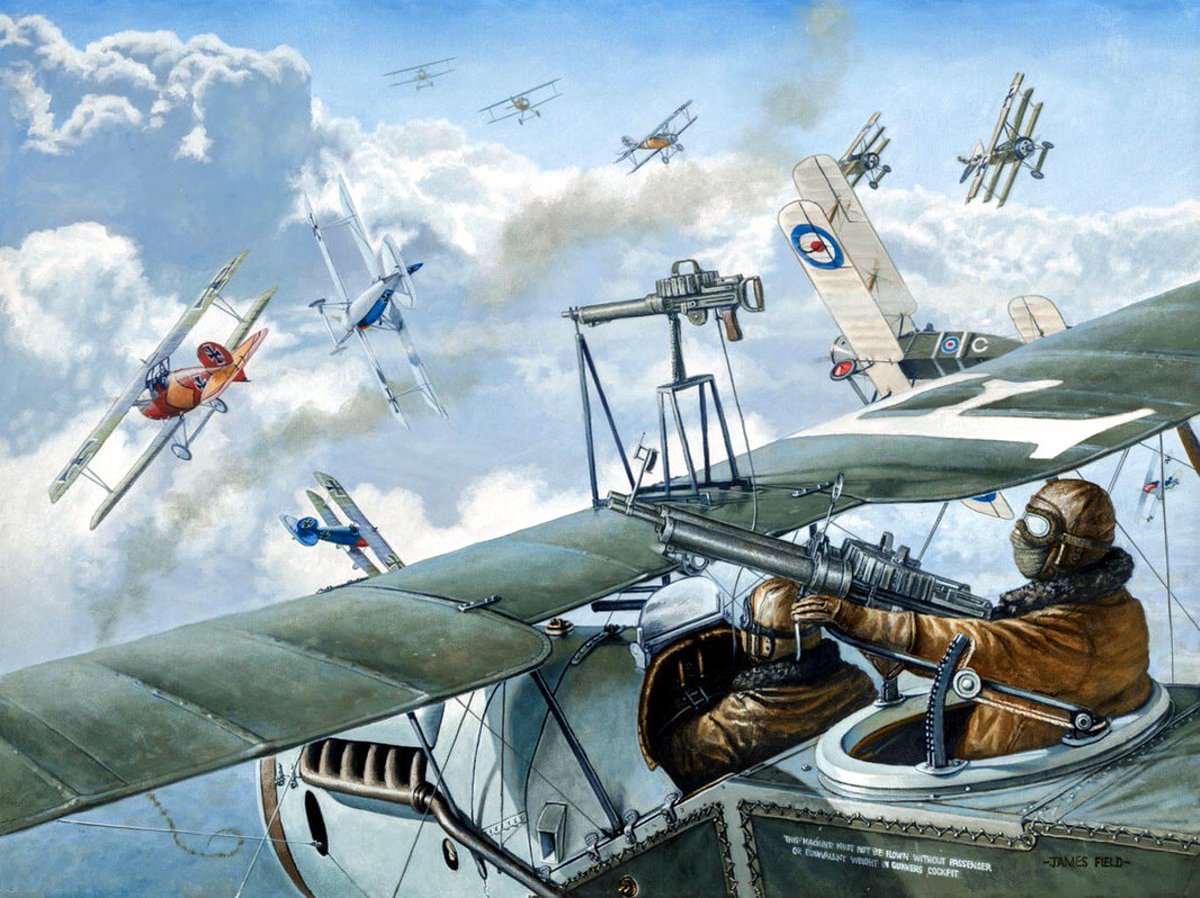
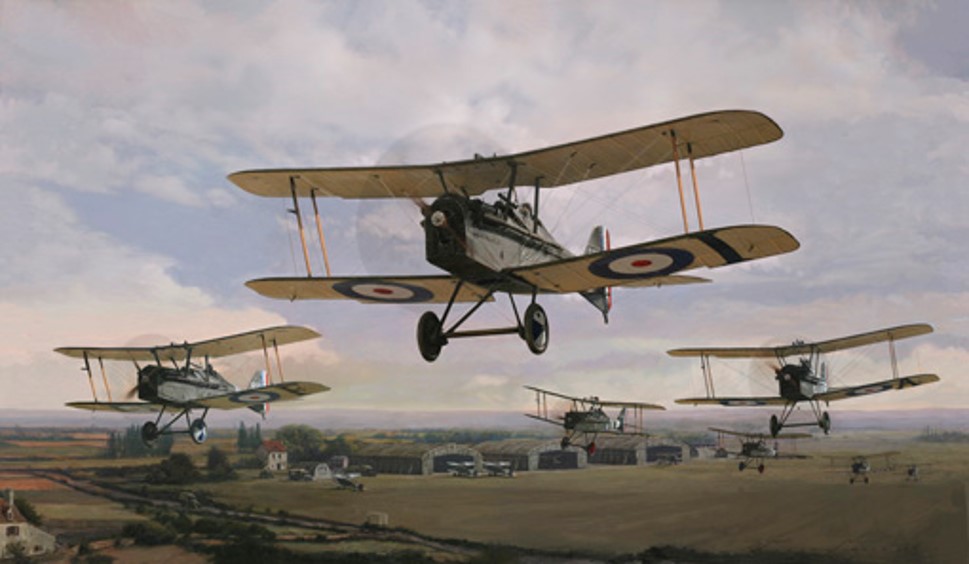
#OTD in 1918, the famous "Two against Twenty" fight. In one of the most remarkable aerial mêlées of the Great War, two Bristol Fighters took on 20 German scouts and survived unscathed while bringing down eight enemy aircraft.
Here's the story:
1/22
[James Field painting]
On the evening of 7 May 1918, two Brisfits from No 22 Squadron set out on an observation patrol north of Arras. One aircraft was flown by 2Lts Alfred Atkey (from Toronto) and observer Charles Gass. The other craft was crewed by 2Lts John Gurdon and John Thornton. 2/22
IWM photo
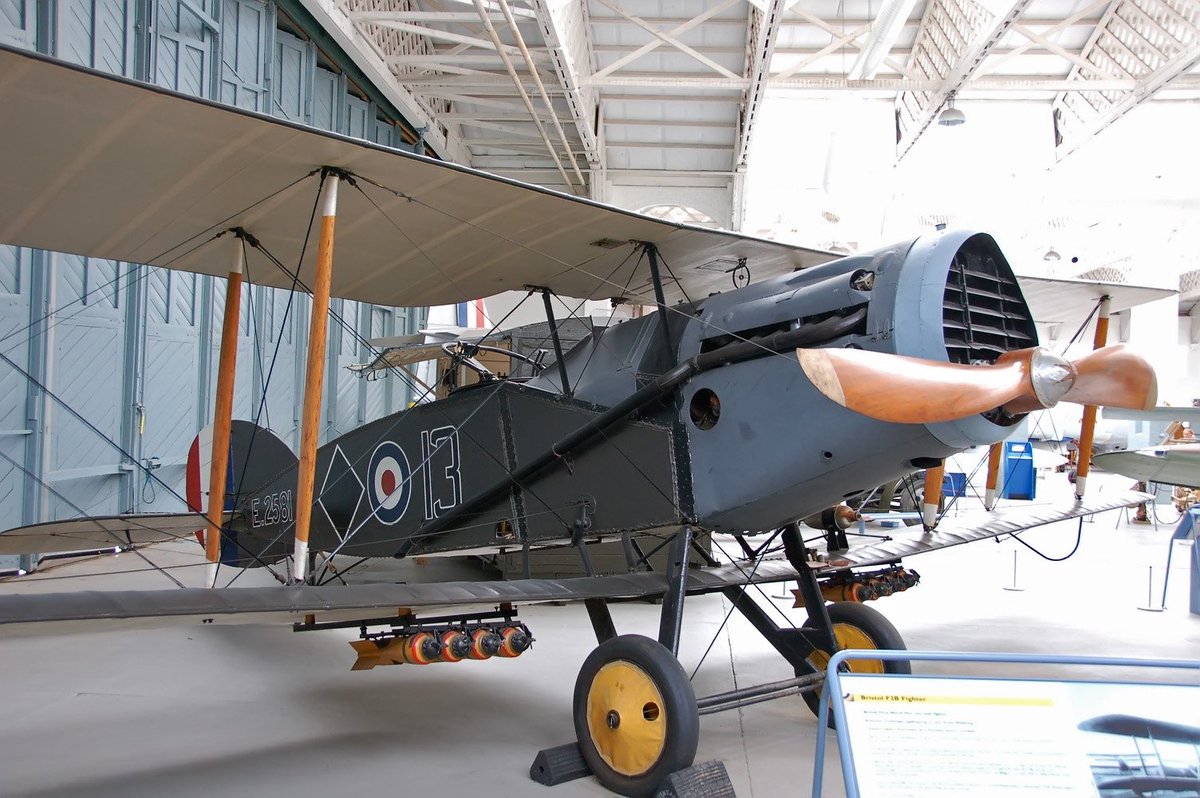
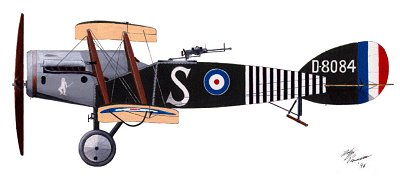
Their aircraft, the Bristol F.2b, was a two-seat fighter that has been described as "arguably the greatest combat machine of the air war." It had a poor debut in mid-1917 but when pilots learned to fly it like a fighter, not a two seater, it came into its own. 3/22
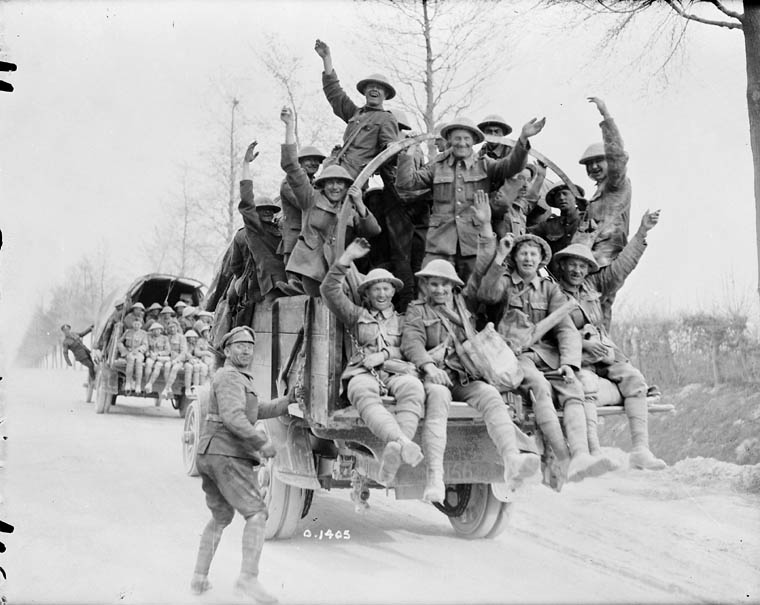
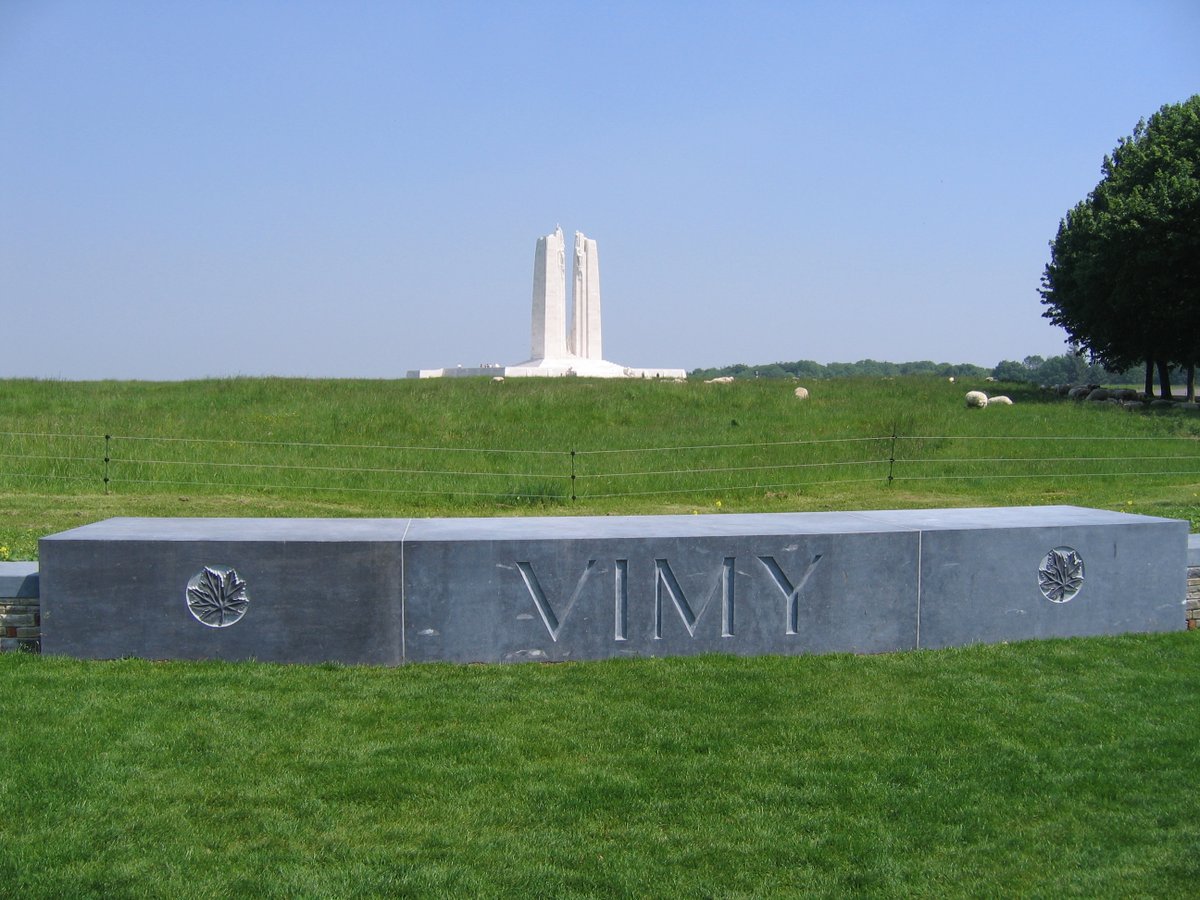
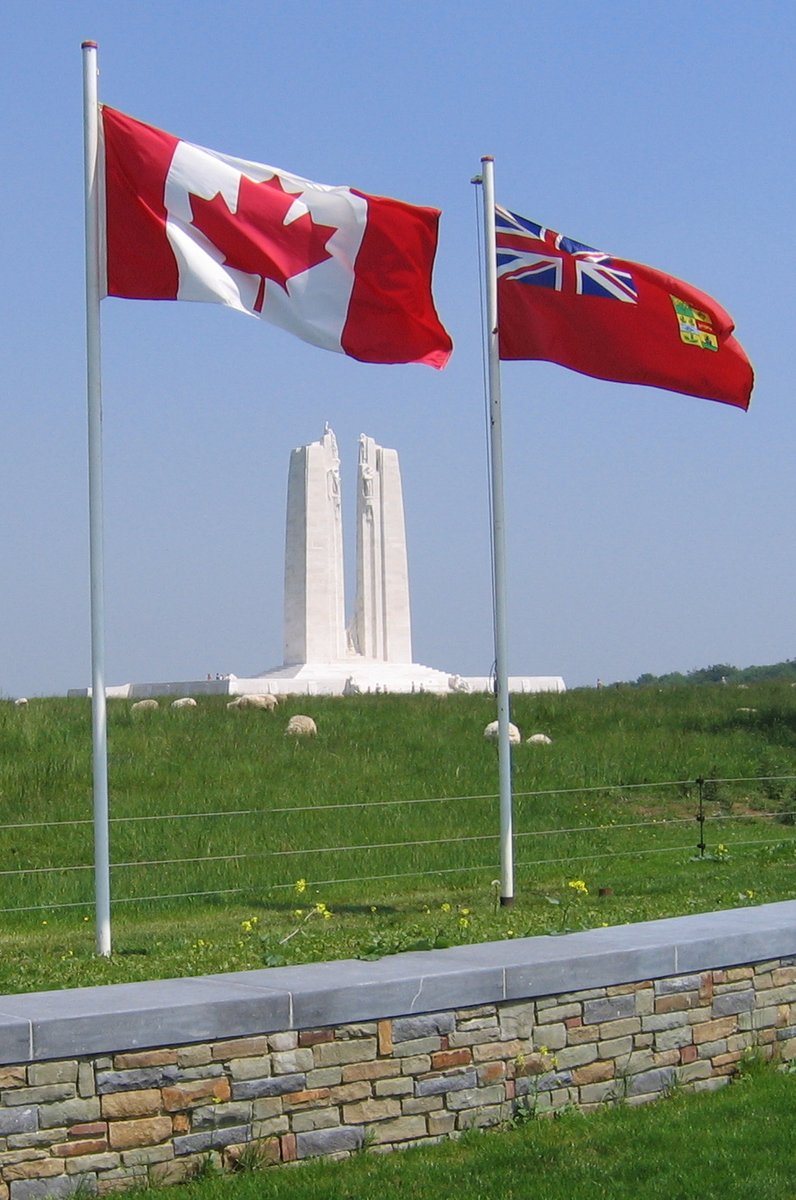
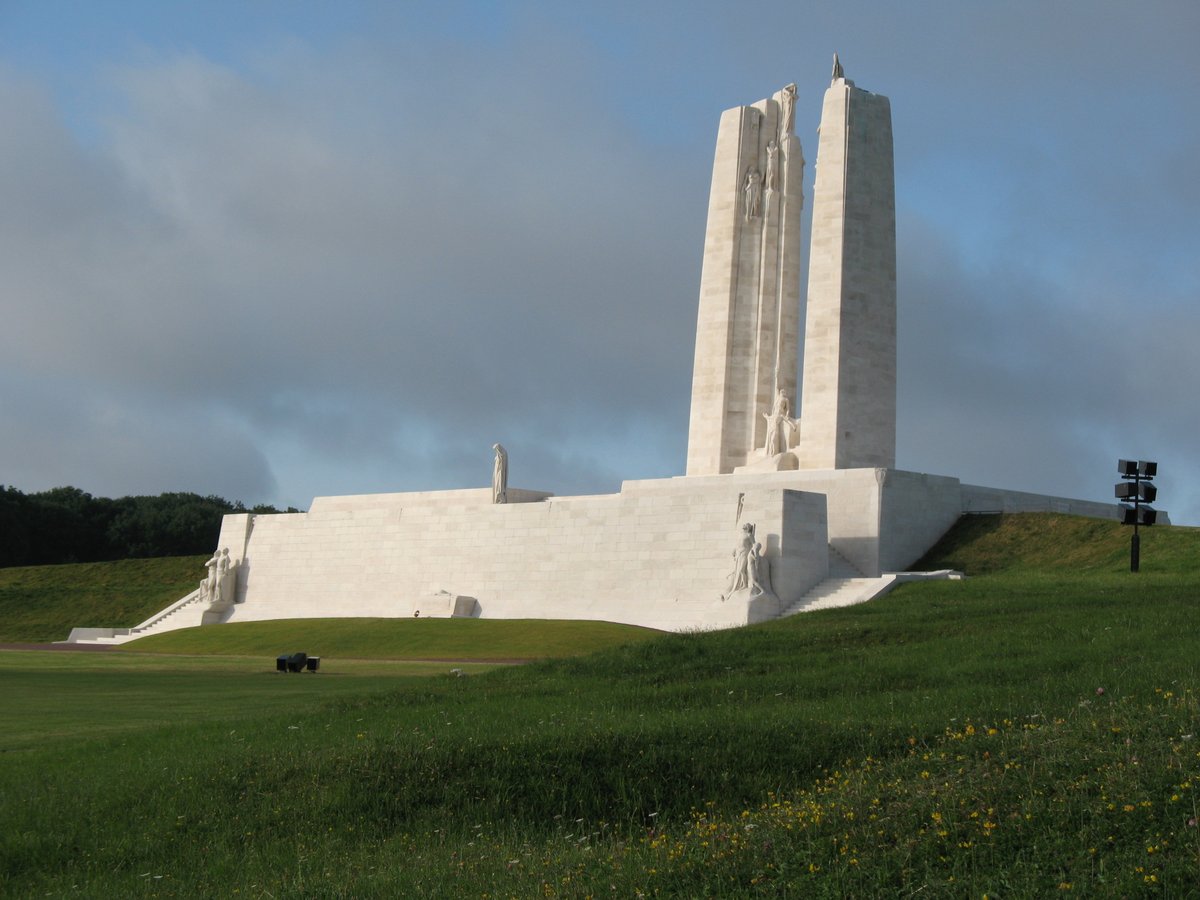
#OTD in 1917, the Canadian Corps advanced into battle together for the first time and captured #VimyRidge. This decisive victory changed the course of the war and transformed Canada from colony to nation.
WAIT. WHAT???!!!
A thread on the myths and reality of Vimy Ridge:
1/19
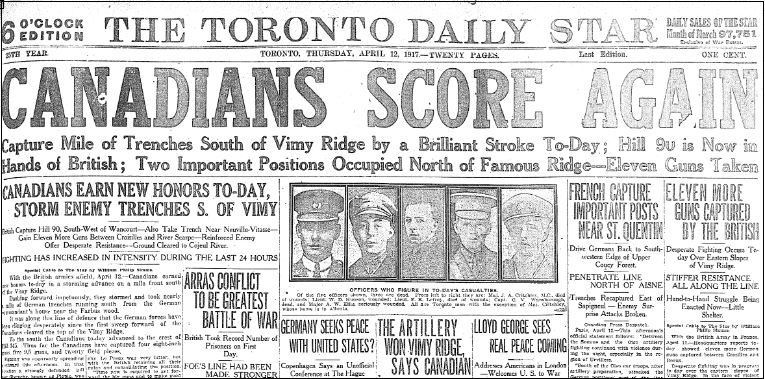
Days after the battle, the Toronto Daily Star proclaimed, “Canadians Score Again” [what’s a Canadian victory without a hockey analogy!] while a Paris newspaper called it "Canada's Easter Gift to France." With victories like this, the end of the war must be close, right?!
2/19
The battle is important in Canadian history, but not for the reasons above. The symmetry of the four Divisions of the Corps, with Canadians from coast to coast, capturing a German position that defeated previous attacks is poetic & romantic, but there is more to the story.
3/19
#OTD in 1918, Lieutenants Alan McLeod and Arthur Hammond, while flying over Albert, France, shot down a German Fokker Triplane before being bounced by eight more enemy aircraft. They shot down three more before crashing. A THREAD 1/10 #VictoriaCross
McLeod and Hammond served in No. 2 Squadron, RAF flying the Armstrong Whitworth F.K 8, a two-seater. It was an effective and dependable aircraft that was used for reconnaissance, artillery spotting, ground attack, contact patrols, and bombing. 2/10
McLeod & Hammond were wounded by MG fire which also set their petrol tank on fire. McLeod side-slipped his craft to keep the flames away but it was still too hot in the cockpit, so he lept onto the wing and crouched low with the joystick pulled hard over in his right hand. 3/10
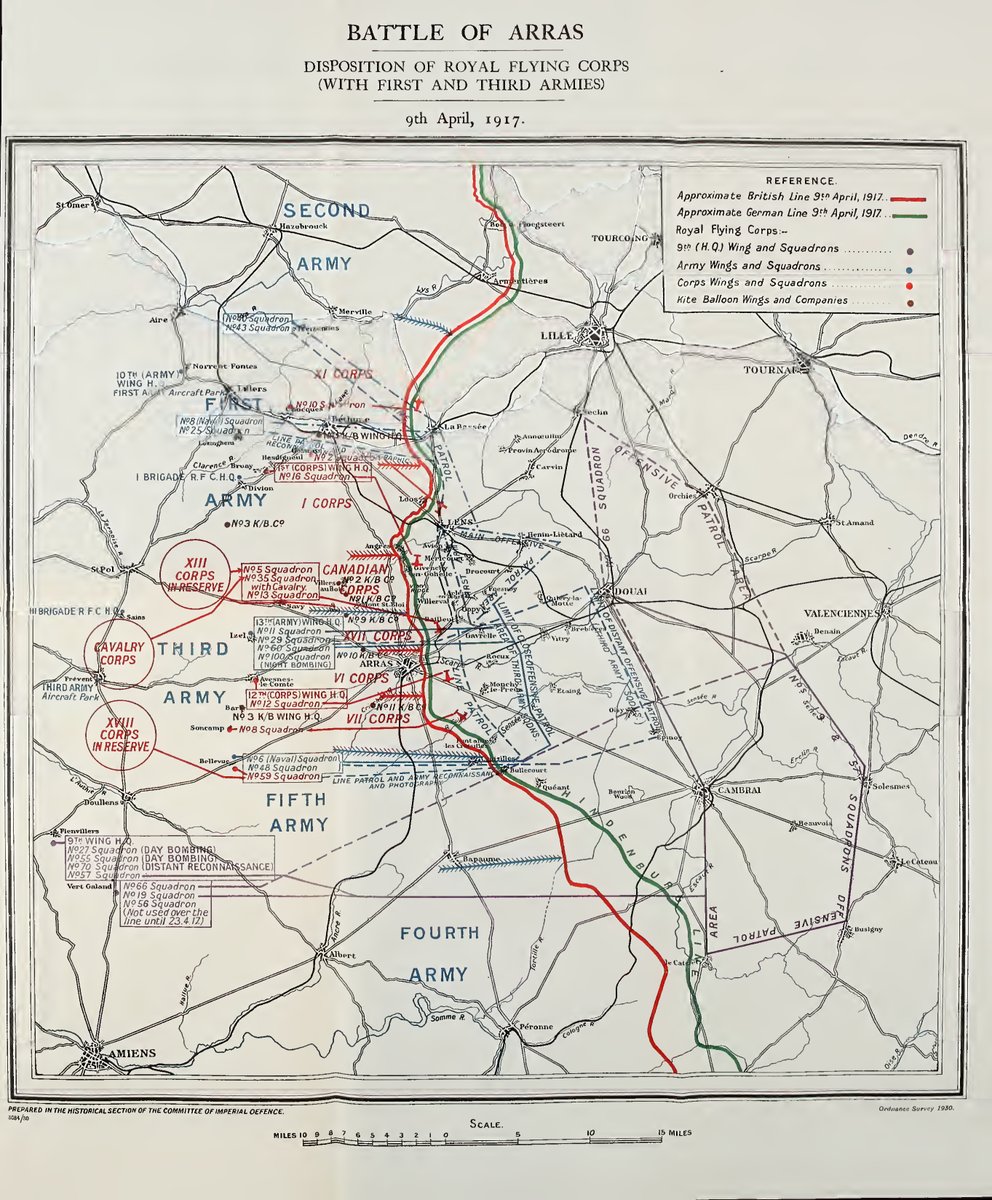
“Bloody April” and the RFC...A thread! #OTD in 1917 the Battles of #Vimy and Arras began.
The Battle of Arras is considered the nadir of the Royal Flying Corps’ fortunes in the FWW. It was their worst month of the war – 275 aircraft lost & 421 casualties, half fatal.
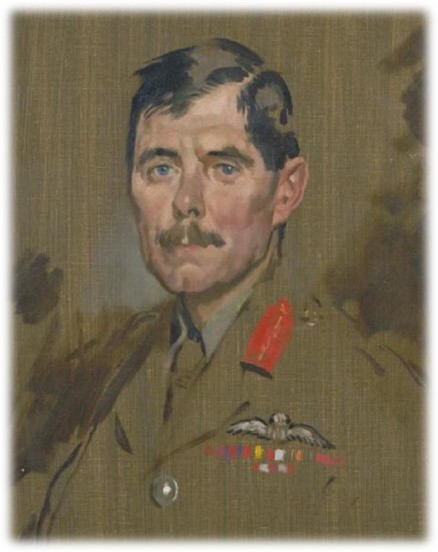
Major-General Hugh Trenchard, the RFC commander in France, stated on 10 Apr '17: “The utmost vigour must be shown by all pilots and observers.” This policy worked over the Somme in 1916 but changes in the balance of power in early 1917 eliminated many RFC advantages.
At Arras we see the genesis of the modern air campaign. Underpinned by Trenchard’s offensive concept, the air battle was more nuanced than generally acknowledged. By 1917 the ground and air battles were inextricably linked.