

1) In today's market it's increasingly hard to select high quality cryptocurrencies.
Most eventually fade away and as such we need to search for the best fundamentals.
A thread🧵on $APTOS and why you should take a look at this cryptocurrency.
Read on 👇
@AptosLabs #Aptos
Most eventually fade away and as such we need to search for the best fundamentals.
A thread🧵on $APTOS and why you should take a look at this cryptocurrency.
Read on 👇
@AptosLabs #Aptos
2) I know what you are thinking.
Not another layer 1 right?
While it's true that new blockchain protocols are popping up left and right it's also due to the fact the perfect one doesn't exist yet.
Not another layer 1 right?
While it's true that new blockchain protocols are popping up left and right it's also due to the fact the perfect one doesn't exist yet.
3) In today's market Layer 1 projects are not secure or scalable enough for widespread adoption.
While a lot of emerging protocols are trying to solve this complex problem only a few will actually succeed.
It takes the most bright minds of this industry to achieve that.
While a lot of emerging protocols are trying to solve this complex problem only a few will actually succeed.
It takes the most bright minds of this industry to achieve that.
4) APTOS might be looking to be one of those and you'll soon see what separates this one from the competition.
APTOS is a brand new Proof-Of-Stake L1 blockchain.
Its founders are Ex-Facebook (or Meta) employees.
APTOS is a brand new Proof-Of-Stake L1 blockchain.
Its founders are Ex-Facebook (or Meta) employees.
5) Previously, they were tasked to build the Diem blockchain for Meta.
This came to an end when regulators voiced opposition to Meta’s planned stablecoin issuance.
Its developers have stepped out to build APTOS, based on Diem’s technology.
This came to an end when regulators voiced opposition to Meta’s planned stablecoin issuance.
Its developers have stepped out to build APTOS, based on Diem’s technology.

6) In doing so, they founded Aptos Labs and set out to achieve their vision without Meta’s help.
APTOS was born on February 24th, 2022.
In their first medium post, the team states their vision clearly.
APTOS was born on February 24th, 2022.
In their first medium post, the team states their vision clearly.
7) They hope to build their project:
- As a Layer 1 project for everyone.
- With a focus on absolute safety, extensible scalability, and credible neutrality.
-To create universal and fair access to decentralized assets for billions of people.
- As a Layer 1 project for everyone.
- With a focus on absolute safety, extensible scalability, and credible neutrality.
-To create universal and fair access to decentralized assets for billions of people.
8) Knowing Facebook (Meta) and it's billions of dollars worth of funding and high quality requirements you can be sure the team is probably nothing less than OVERLY qualified.
Pretty impressive foundation behind this upcoming blockchain.
Pretty impressive foundation behind this upcoming blockchain.
9) It turns out we are not the only one that think like this...
The team and its technology have such a huge amount of trust and promise (ex Facebook after all) that it got the attention from the biggest VCs.
APTOS has raised a total of $350 million from VCs like FTX and a16z.
The team and its technology have such a huge amount of trust and promise (ex Facebook after all) that it got the attention from the biggest VCs.
APTOS has raised a total of $350 million from VCs like FTX and a16z.
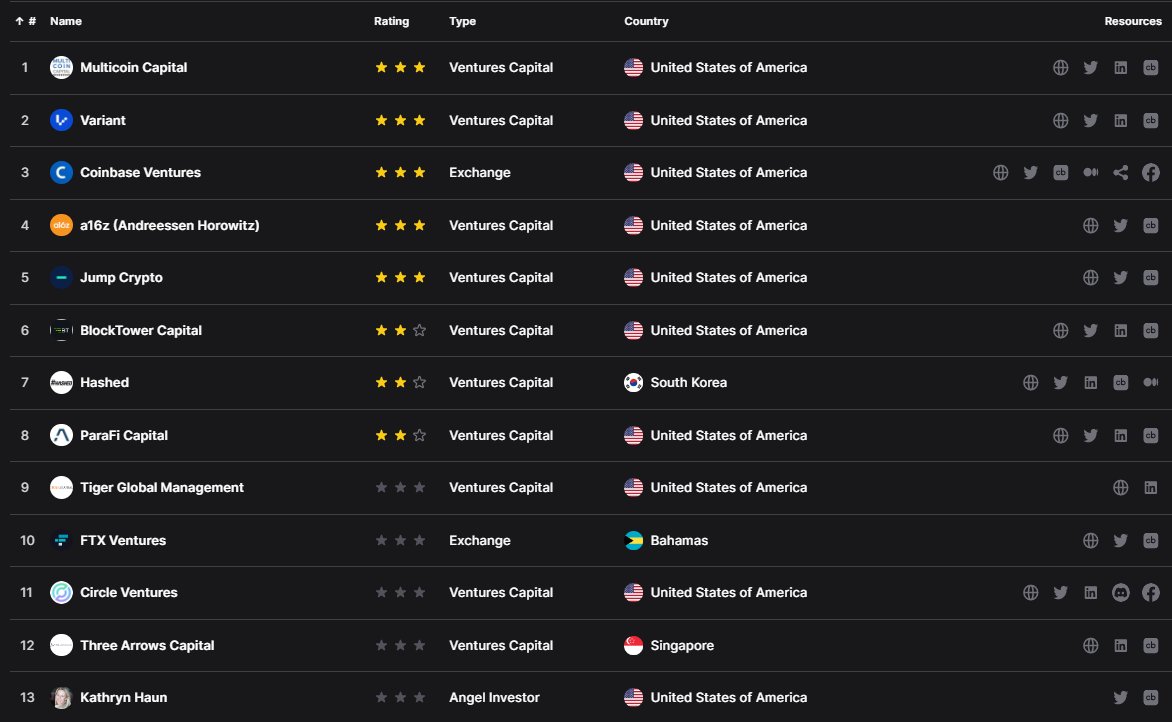
10) Knowing how FTX was able to launch Solana to one of the most valuable blockchains before in a very short time makes us wonder if they can do the same this time.
Background aside let's take a look what makes this project so advanced.
Background aside let's take a look what makes this project so advanced.
11) Number 1.
APTOS uses a Byzantine Fault Tolerant (BFT) consensus protocol which promises high performance.
From the original “Hotstuff” BFT consensus, Aptos Labs spent 3 years and 4 iterations building their BFT V4 engine.
APTOS uses a Byzantine Fault Tolerant (BFT) consensus protocol which promises high performance.
From the original “Hotstuff” BFT consensus, Aptos Labs spent 3 years and 4 iterations building their BFT V4 engine.
12) With this, APTOS has the following capabilities:
- Zero downtime with a diverse set of operators.
- Sub-second finality of transactions.
- Immutability and Safety: The blockchain cannot be forked.
- Suited for Decentralization: The project singles out unresponsive validators
- Zero downtime with a diverse set of operators.
- Sub-second finality of transactions.
- Immutability and Safety: The blockchain cannot be forked.
- Suited for Decentralization: The project singles out unresponsive validators
13) Number 2.
APTOS also has a special feature known as parallel execution.
With this, APTOS can run multiple chains at the same time.
In comparison, today’s blockchains, such as Bitcoin or Ethereum, use serial execution.
APTOS also has a special feature known as parallel execution.
With this, APTOS can run multiple chains at the same time.
In comparison, today’s blockchains, such as Bitcoin or Ethereum, use serial execution.
14) Simply put, they can only process the next transaction once the previous one has been verified.
With AptosBFT V4 and parallel execution, APTOS can achieve high throughput.
With AptosBFT V4 and parallel execution, APTOS can achieve high throughput.
15) Number 3.
APTOS uses a programming language called Move.
In the past, Move was built specifically to develop Diem.
Today, it helps developers build APTOS.
MOVE’s programming language has several benefits.
APTOS uses a programming language called Move.
In the past, Move was built specifically to develop Diem.
Today, it helps developers build APTOS.
MOVE’s programming language has several benefits.
16) Which specifically are:
- Easy customization of digital assets.
- Secure storage of information.
- Easy resolution of bugs.
Quick code verification and testing.
- Easy multi-chain development for applications.
- Easy customization of digital assets.
- Secure storage of information.
- Easy resolution of bugs.
Quick code verification and testing.
- Easy multi-chain development for applications.
17) In comparison to Solidity (the most used language today), Move has better features and more tools for developers to build their smart contracts.
We know the team behind Aptos is nothing short of impressive right?
But who are they exactly 👇
We know the team behind Aptos is nothing short of impressive right?
But who are they exactly 👇
18) The 2 founders.
Mo Shaikh - Previously director of Strategy at ConsenSys and CEO of Meridio.
Today, he serves as an advisor and board member to multiple companies.
Avery Ching - More than 10 years of experience in software engineering.
Also served as VP of Apache Giraph.
Mo Shaikh - Previously director of Strategy at ConsenSys and CEO of Meridio.
Today, he serves as an advisor and board member to multiple companies.
Avery Ching - More than 10 years of experience in software engineering.
Also served as VP of Apache Giraph.
19) Normally I would be looking at the tokenomics next as this is one of the most important metrics we need to look at.
APTOS is an upcoming blockchain however and hasn't been released yet.
The tokenomics is one of the only things unreleased today.
APTOS is an upcoming blockchain however and hasn't been released yet.
The tokenomics is one of the only things unreleased today.
20) As such we can't analyze this last piece of info BUT once we do I'll be sure to update my thread or re-release on.
It's particularly important for us as retail investors to know what we are getting into AND to see we are not getting dumped upon by VCs.
It's particularly important for us as retail investors to know what we are getting into AND to see we are not getting dumped upon by VCs.
21) My takeaways:
It's hard to deny APTOS incredible promise as a L1.
We are still missing 1 ingredient though to make our overview complete but up untill now it's nothing short of promising.
I’ll be keeping an eye out for the project’s ecosystem growth and tokenomics.
It's hard to deny APTOS incredible promise as a L1.
We are still missing 1 ingredient though to make our overview complete but up untill now it's nothing short of promising.
I’ll be keeping an eye out for the project’s ecosystem growth and tokenomics.
22) The mainnet and release of the token should still be on schedule for this year.
Hopefully the tokenomics are favorable.
Stay tuned 📘⏰
Hopefully the tokenomics are favorable.
Stay tuned 📘⏰
23) If you want to keep up to date to most of my content and interesting projects give me a follow @CryptoGirlNova.
I also research the communities top voted cryptocurrency every sunday so you can keep track of all the most exciting projects.
Your favorite writer Nova ❤️
I also research the communities top voted cryptocurrency every sunday so you can keep track of all the most exciting projects.
Your favorite writer Nova ❤️
24) If you had value from this and liked this thread, it would really bring a smile to my face if you could retweet the first post so this can help as many people as possible.
Everyone deserves free knowledge 📘
Love you all ❤️
First post 👇
Everyone deserves free knowledge 📘
Love you all ❤️
First post 👇
https://twitter.com/CryptoGirlNova/status/1566879565401784322?t=flrqUu4SOf9gcPmmc3V86g&s=19
• • •
Missing some Tweet in this thread? You can try to
force a refresh





