This thread is to teach English people about the livery companies. All the references are provided.
#Corruption #BritishCorruption #Colonialism
Treasure Island is an allegory to City of London. Read this excellent book when you have time. For those who do not have time. I will summarize. Image
This the dark heart of Britain, the place where democracy goes to die, immensely powerful, equally unaccountable. But British do not know how City of London works
Start perusing little bit about City of London from its website. I dare you. cityoflondon.gov.uk/about-us/law-h…
Here is what City of London claims about its rights. Image
Guardian blew the lid on this scam in 2012. It was quickly voted down by the search engines. The article describes the voting done by the subjects of City of London. Image
From the Guardian article. It is basically a frat boy club of white people. These clubs are called livery companies. Image
United Kingdom is silent about lack of democracy within the City of London. Image
This square mile is the largest tax dodger of the world. Roughly 50 percent of financial transactions of the world get stamped here. This is the area where British tax law is dodged.
Clement Atlee, former British prime minister (the one who pushed for India Independence Act) said this about City of London.
"over and over again we have seen that there is in this country another power than that which has its seat at Westminster."
"The City has exploited this remarkable position to establish itself as a kind of offshore state, a secrecy jurisdiction which controls the network of tax havens housed in the UK's crown dependencies and overseas territories."
"This autonomous state within our borders is in a position to launder the ill-gotten cash of oligarchs, kleptocrats, gangsters and drug barons. "
If you've ever dithered over the question of whether the UK needs a written constitution, dither no longer. Imagine the clauses required to preserve the status of the Corporation. "The City of London will remain outside the authority of parliament.
Domestic and foreign banks will be permitted to vote as if they were human beings, and their votes will outnumber those cast by real people. Its elected officials will be chosen from people deemed acceptable by a group of medieval guilds …".
Then British talk about Merit and how they introduced merit in India. What a bunch of fake people!
Guardian says about the Lord Mayor's Show. Image
I will update the thread . I am in the middle of important release and hence do not have time to provide additional info. But a good start will be this article.
theguardian.com/commentisfree/…

• • •

Missing some Tweet in this thread? You can try to force a refresh

 

Keep Current with History इतिहास 🇺🇲🛕 🚀

History इतिहास 🇺🇲🛕 🚀 Profile picture

Stay in touch and get notified when new unrolls are available from this author!

Read all threads

This Thread may be Removed Anytime!

PDF

Twitter may remove this content at anytime! Save it as PDF for later use!

Try unrolling a thread yourself!

how to unroll video
  1. Follow @ThreadReaderApp to mention us!

  2. From a Twitter thread mention us with a keyword "unroll"
@threadreaderapp unroll

Practice here first or read more on our help page!

More from @ShreeHistory

Dec 16, 2025
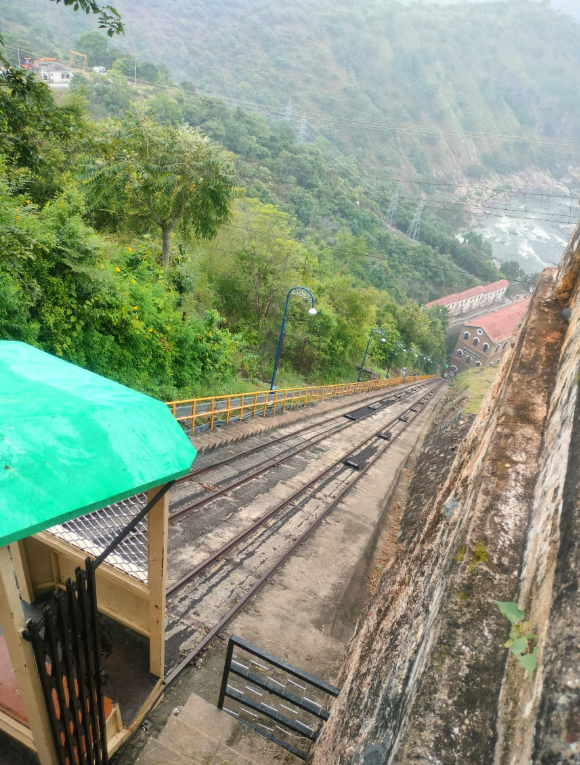
Engineering students who visit Shivanasamudra hydroelectric plant are never told the significance of that plant and how India taught the world the long-distance transmission of electricity! It is this plant which made the steam power obsolete!

This is to fix that gap in the knowledge. I wish I had been made aware of this in 1991 when I visited the site as an Engineering student.

In June 1902, something occurred at a remote Indian waterfall that should have shocked the Western world. A transmission line, 92 miles long, carried 30,000 volts of electrical current through the jungle from Shivanasamudra Falls to the Kolar Gold Fields. It was the longest commercial high-voltage power line on Earth.

Nothing comparable existed in America or Europe.

The achievement emerged from the vision of K. Seshadri Iyer, Dewan of Mysore, and Major Alain Chartier Joly de Lotbiniere, a Canadian engineer in the Hindu kingdom's service. De Lotbiniere saw something others had missed: the Cauvery River's 400-foot drop could turn turbines and generate power sufficient to replace steam engines at Kolar's deep mines, where fuel costs had become prohibitive.

Seshadri Iyer understood that a kingdom's survival depended on economic capacity, not military might alone. In 1898, he commissioned engineers to travel to Niagara Falls to study George Westinghouse's alternating current transmission system. When they returned, the plan crystallized. Mysore would not simply purchase foreign solutions. It would understand every component and build the system itself.

The venture carried substantial risk. The capital was considerable for the 1890s. The technology was unproven. The line would stretch across malaria-infested terrain, requiring 5,000 laborers. The court skeptics outnumbered believers. Yet Seshadri Iyer proceeded with methodical confidence.

Construction began in 1899. Generators came from General Electric in America. Turbines came from Escher Wyss in Switzerland. But the transmission system design and execution remained under Indian leadership. Civil engineers designed channels to divert the Cauvery's flow through penstocks. Electrical engineers stepped voltage upward to 30,000-35,000 volts using transformers, transmitted it across 92 miles of copper line, then stepped it downward at Kolar for mining machinery.

The frequency selected was 25 cycles per second, not arbitrary but deliberate. Heavy rotary converters used in mining operated efficiently at lower frequencies than the 50 or 60 hertz that would eventually become standard globally. This reflected sophisticated understanding of end-user requirements.

In June 1902, high-voltage power generated at Shivanasamudra flowed across 147 kilometers to the gold fields. For the first time, machines in one location could be powered by water falling in a completely separate location, separated by jungles and hills. The mining operations transformed. Deep extraction became economically viable. Steam dependence was broken.

This distinction matters. The Shivanasamudra project was not Western technology imposed on an Indian kingdom. It was an Indian administration studying Niagara Falls, acquiring knowledge, and implementing a solution that exceeded what any Western nation had accomplished in this specific domain. Technologies were sourced globally. Vision and execution were profoundly local.

The surplus power enabled Bangalore to become Asia's first city with meaningful electric street lighting in 1905. Nearly 100 streetlights appeared suddenly, not from gradual urban accumulation of infrastructure, but from a distant river harnessed with precision. Within a year, Bangalore had 861 streetlights and 1,639 domestic connections.

The Shivanasamudra project reveals patterns that extend beyond technical accomplishment. It demonstrates that innovation does not flow exclusively from wealthy Western nations. A kingdom positioned as subordinate within the British Indian Empire could perceive a technological opportunity, acquire knowledge globally, and implement a solution exceeding established industrial powers. It shows that engineering excellence is not the monopoly of any nation or culture. And it illustrates what becomes possible when vision, resources, and technical competence align in common purpose.

The subsequent obscuring of credit should not overshadow the original achievement. The Hindu kingdom of Mysore, through Seshadri Iyer's leadership and de Lotbiniere's engineering, seized a technological frontier and transformed the region's future. That accomplishment deserves recognition as evidence of what is possible when aspiration meets capability.Shivanasamudra skip car track. I remember taking them and going down to the generator hall in 1991. Time flies.
@grok check kar lena.
While Sidrapong(Darjeeling) holds the historical title of being the first to generate hydroelectricity in India, Shivanasamudra was the first to demonstrate the industrial potential of hydropower on a large scale.

I have never claimed Shivanasamudra as the first to get electricity. But Shivanasamudra demonstrated high voltage transmission lines and commercial production of electricity (3.35 MW compared to Sidrapong's 130 kW generation).

BTW Surat got electricity before Darjeeling. I am not discussing who got the electricity first. I am just discussing how Mysore proved high voltage transmission lines and AC's superiority over DC for transmission.
My apologies if I was not clear to you.
Read 4 tweets
Dec 16, 2025
Without these twelve Hindu textbooks copied by Arabs, Math as we know today would not exist. Image
Image
Image
Read 10 tweets
Sep 26, 2025
Mythbusting that Bhakthi movement was from poor Hindus. (10 panel comic)

This visual narrative powerfully refutes the oversimplified characterization of Bhakti as merely a "religion of the poor," revealing instead a sophisticated movement led by some of medieval India's most privileged and educated individuals.Image
Purandara Dasa (1484-1564) was originally known as Srinivasa Nayaka, earning the title "Navakoti Narayana" for his immense wealth worth ninety million. Born into a prosperous diamond merchant family in Karnataka, his transformation from affluent trader to devotional composer demonstrates that Bhakti attracted those who had achieved material success yet sought spiritual fulfillment.Image
Mirabai (1498-1546) was born into Rajput royalty as the daughter of Ratan Singh, brother of Merta's ruler. Her marriage to Prince Bhoj Raj of Chittor solidified her position within medieval India's highest nobility. Her Krishna devotion was a conscious spiritual choice, not social marginalization.Image
Read 12 tweets
Sep 17, 2025
How India gave every medicine it knew to Europe in 1675!

Indian Physicians laid foundation for evidence base medicine as we know it today!

🧵 Image
Image
Image
Read 4 tweets
Sep 9, 2025
India paid 7.4 lakh crores rupees to fund Britain's WW2.
India carried Britain on her shoulders.
🧵
By 1945, India had accumulated £1.32 billion in sterling balances—approximately $5.28 billion at the 1945 exchange rate, which represents about $84 billion in today's purchasing power. Almost close to 7.4 lakh crore Rupees!
British Personnel's Pensions: Under post-independence agreements, India committed to paying the pensions of British officers and civil servants who had served in India before 1947, including many who returned to the UK after independence. Indian taxpayers funded these pensions for nearly 60 years after independence.
Read 4 tweets
Sep 7, 2025
Almagest pushed by the Church is not original.

See how the table gets fudged. Red is Greek residuals

Blue is corresponding residuals in the Latin translations.

Full article in the thread. Image
When Ptolemy Lost His Footing: The Almagest, Western Claims, and the Forgotten Indian Source
For centuries, the West has built the legend of its scientific awakening on a single towering narrative: ancient Greece, cradle of rational thought, handed its wisdom to Rome, which the Church preserved through turmoil, from which it was triumphantly revived in Renaissance Europe. Perhaps nowhere is this story more prominent than in astronomy, with the Almagest, supposedly translated from Greek originals, serving as the crown jewel of this heritage. Yet recent scholarship and the testimony of medieval manuscripts reveal a different and far more complicated truth.
The claim that the Church, through its Latin scholars, translated the Almagest directly from Greek is repeated in history books and museum placards alike. But a careful reading of manuscript history shows this idea does not withstand scrutiny. The version of the Almagest most widely read and circulated in the West is not a direct descendant of Ptolemy's 2nd century work. It is a layered hybrid, pieced together from Arabic translations, by then already centuries old, and subjected to both intentional and accidental modification, especially as it was rendered into Latin in the 12th century by Gerard of Cremona in Toledo.

The oldest Latin manuscripts are based not on surviving Greek texts, but on Arab intermediaries. The first reasonably complete Greek codices only date from the 9th century and were not consulted in the making of Gerard’s seminal Latin translation, which instead relied on the Arabic corpus enriched in part by Indian sources, including the Surya Siddhanta.
Read 6 tweets

Did Thread Reader help you today?

Support us! We are indie developers!


This site is made by just two indie developers on a laptop doing marketing, support and development! Read more about the story.

Become a Premium Member ($3/month or $30/year) and get exclusive features!

Become Premium

Don't want to be a Premium member but still want to support us?

Make a small donation by buying us coffee ($5) or help with server cost ($10)

Donate via Paypal

Or Donate anonymously using crypto!

Ethereum

0xfe58350B80634f60Fa6Dc149a72b4DFbc17D341E copy

Bitcoin

3ATGMxNzCUFzxpMCHL5sWSt4DVtS8UqXpi copy

Thank you for your support!

Follow Us!

:(