1/ What is #Chainlink Economics 2.0?
- Increasing network revenue
- Reducing operating costs
- Cryptoeconomic security via staking
In this 🧵 I’ll break down how $LINK is rapidly evolving to become a productive asset that captures real value
- Increasing network revenue
- Reducing operating costs
- Cryptoeconomic security via staking
In this 🧵 I’ll break down how $LINK is rapidly evolving to become a productive asset that captures real value

2/ The economics of a decentralized Web3 services platform like Chainlink is crucial
Not only for accelerating adoption but for ensuring the long term sustainability of the network where service providers are paid for their work
Not only for accelerating adoption but for ensuring the long term sustainability of the network where service providers are paid for their work

3/ That last part is important, this isn’t paying value to passive actors who contribute nothing
But rather enabling service providers to get paid for the value they provide
Oracle nodes :: computation
Data providers :: data provisioning
Stakers :: cryptoeconomic security
But rather enabling service providers to get paid for the value they provide
Oracle nodes :: computation
Data providers :: data provisioning
Stakers :: cryptoeconomic security
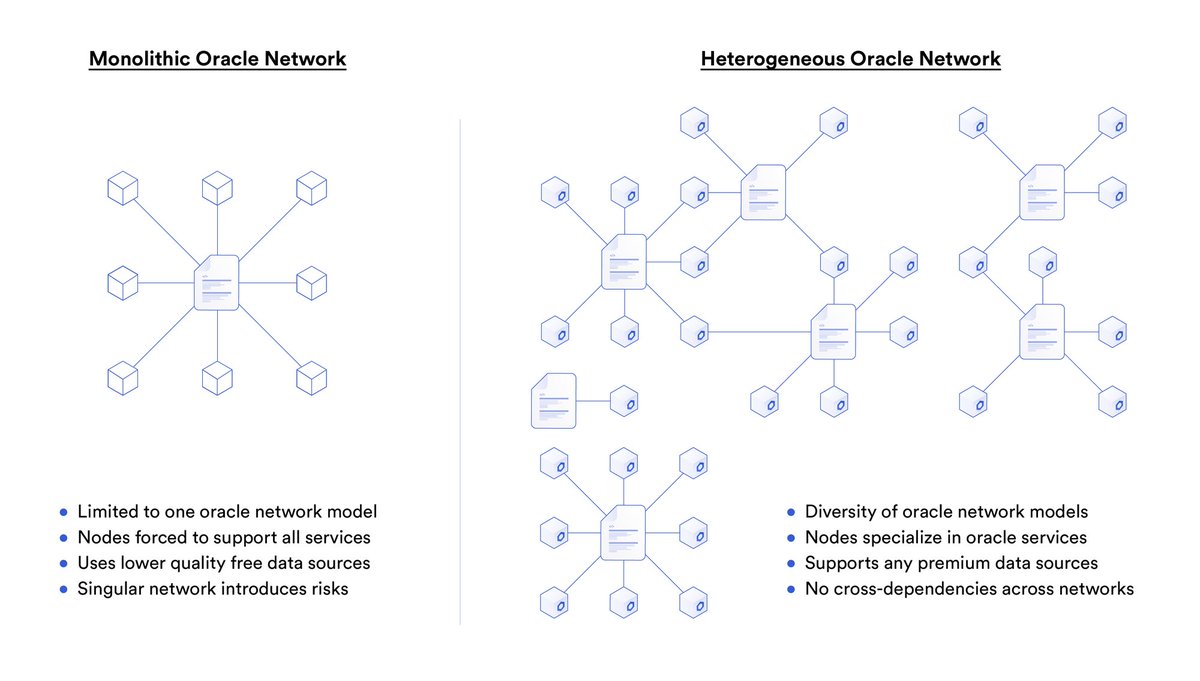
4/ Since mainnet, the Chainlink Network has been in growth mode, deploying resources to capture market share
With market dominance established for key services like Data Feeds, the Chainlink Network is now shifting towards value capture and monetizing its network effect
With market dominance established for key services like Data Feeds, the Chainlink Network is now shifting towards value capture and monetizing its network effect
https://twitter.com/ChainLinkGod/status/1502041125158154243
5/ REVENUE
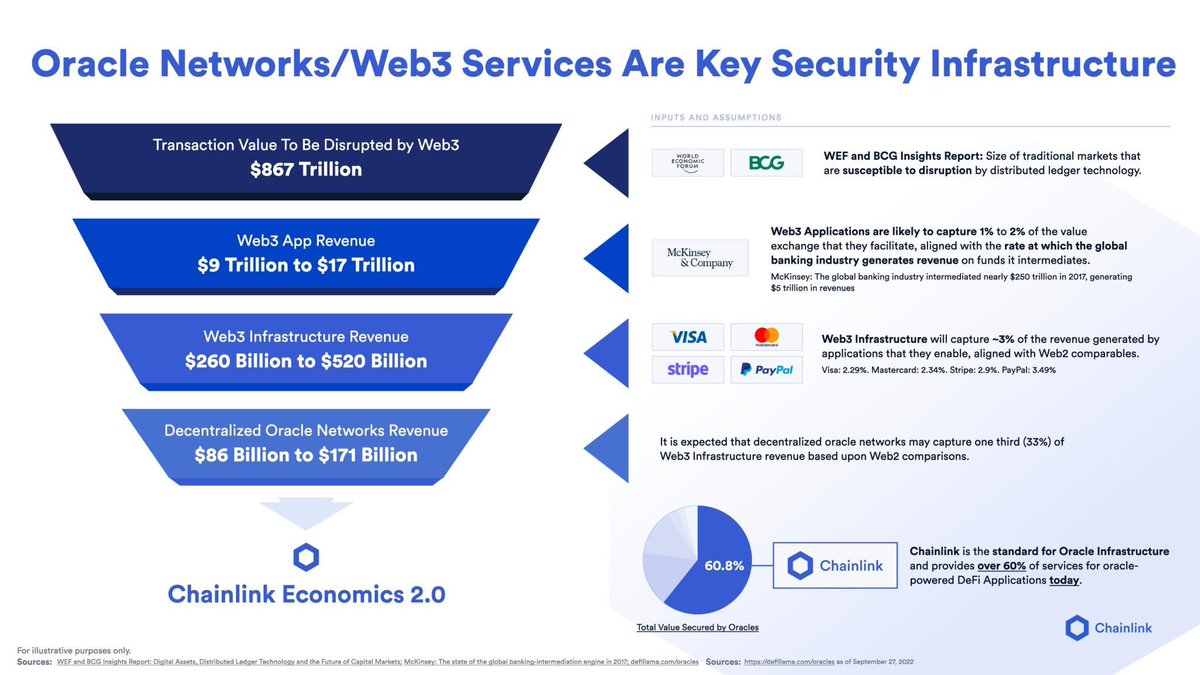
The first step in accelerating value capture is increasing revenue / revenue opportunities for Chainlink service providers
Historically, revenue opportunities has been driven by the deployment of new services and supporting new chains (which will continue)
The first step in accelerating value capture is increasing revenue / revenue opportunities for Chainlink service providers
Historically, revenue opportunities has been driven by the deployment of new services and supporting new chains (which will continue)
6/ In addition to increasing fees paid by existing users, new ways for pre-revenue early stage projects was needed
Such projects don’t have the resources to pay in traditional ways but they do have a lot of their own tokens
This is where Chainlink BUILD comes into play
Such projects don’t have the resources to pay in traditional ways but they do have a lot of their own tokens
This is where Chainlink BUILD comes into play
7/ Chainlink BUILD is a new Econ2 program where projects pay a significant portion (3-5%) of their native token supply in exchange for oracle services and technical support
Such tokens can then flow to service providers in the Chainlink ecosystem like stakers
Such tokens can then flow to service providers in the Chainlink ecosystem like stakers
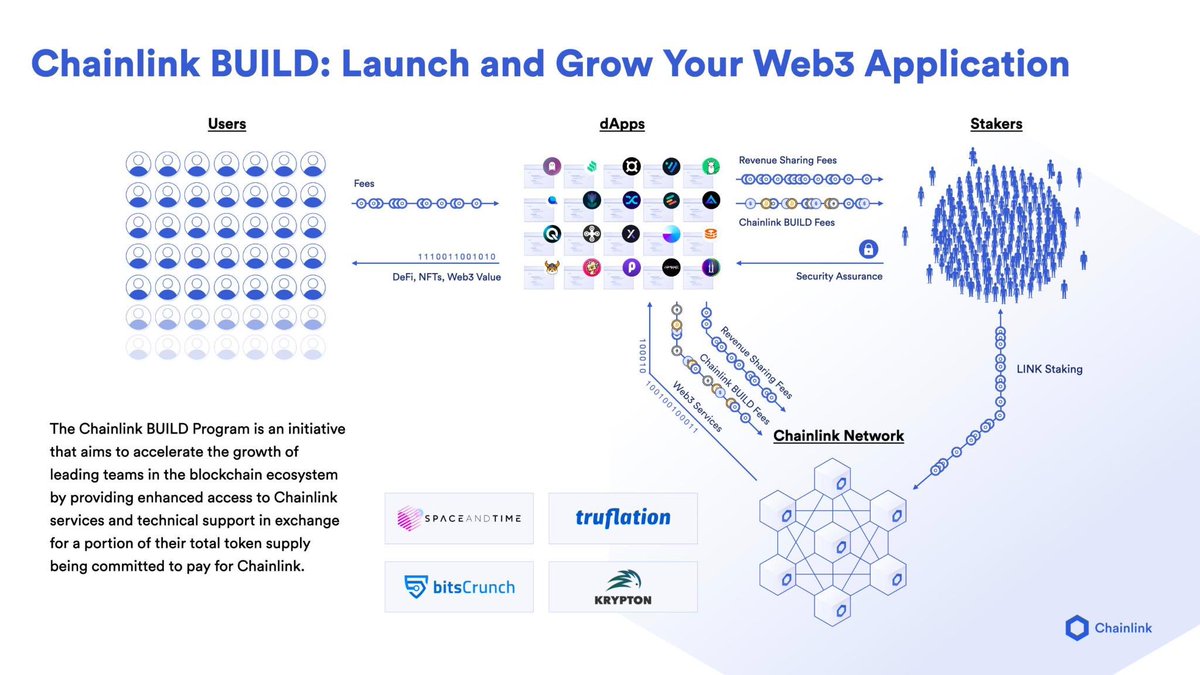
8/ More specifically, BUILD partners get access to wide range of benefits
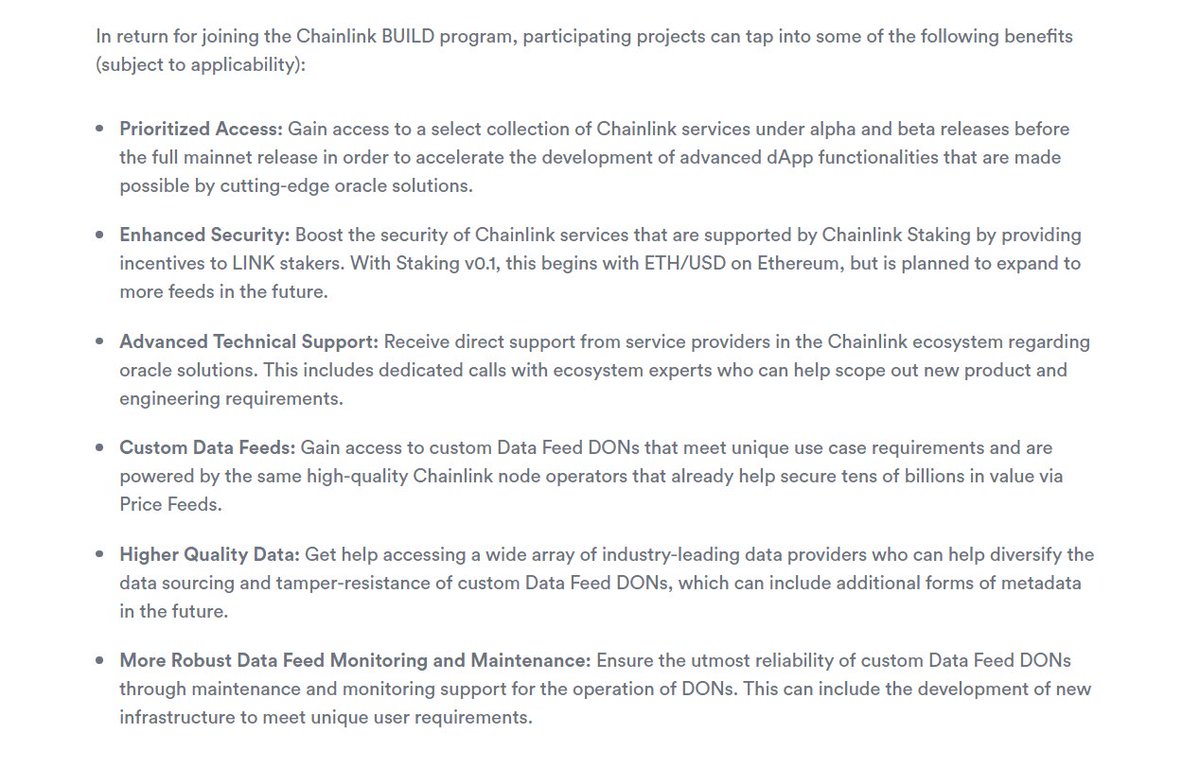
This includes early access to beta-stage Chainlink services, custom oracle networks, and the ability to boost the security of services they use by incentivizing stakers
A win-win economic relationship
This includes early access to beta-stage Chainlink services, custom oracle networks, and the ability to boost the security of services they use by incentivizing stakers
A win-win economic relationship
9/ As BUILD participants scale up and begin to generate their own revenue
This revenue can be shared with the Chainlink Network on a percentage point basis (or other schedule if that works better)
Revenue that can be converted to $LINK and paid to service providers
This revenue can be shared with the Chainlink Network on a percentage point basis (or other schedule if that works better)
Revenue that can be converted to $LINK and paid to service providers
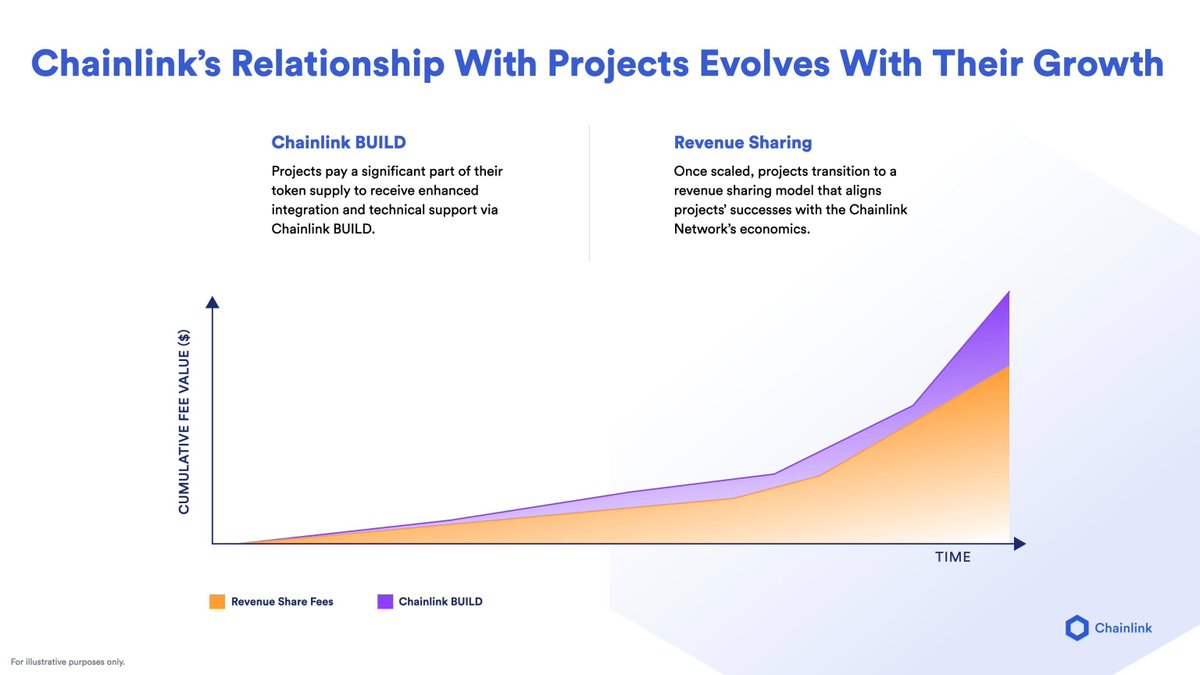
10/ As a $LINK staker, this effectively means that in addition to $LINK rewards, you’ll also have the chance to earn a basket of tokens from projects in the Chainlink ecosystem
Congrats, you’re now effectively seed investors in some of the most promising early-stage projects
Congrats, you’re now effectively seed investors in some of the most promising early-stage projects
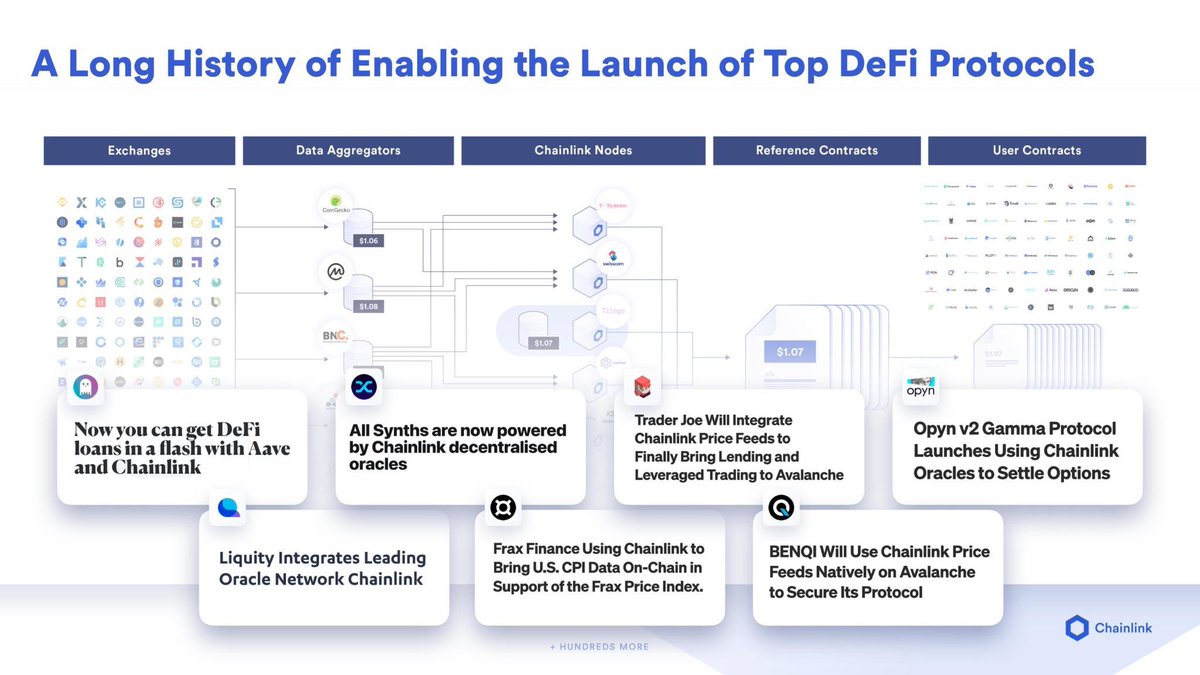
11/ More info on Chainlink BUILD, including initial participating projects, can be found here
blog.chain.link/chainlink-buil…
blog.chain.link/chainlink-buil…
12/ COSTS
The flip side to revenue is costs, specifically operating costs
The operation of oracle networks is not free, as there are associated on-going costs like on-chain transaction (gas) fees
Minimize these costs and profit margins can increase
The flip side to revenue is costs, specifically operating costs
The operation of oracle networks is not free, as there are associated on-going costs like on-chain transaction (gas) fees
Minimize these costs and profit margins can increase
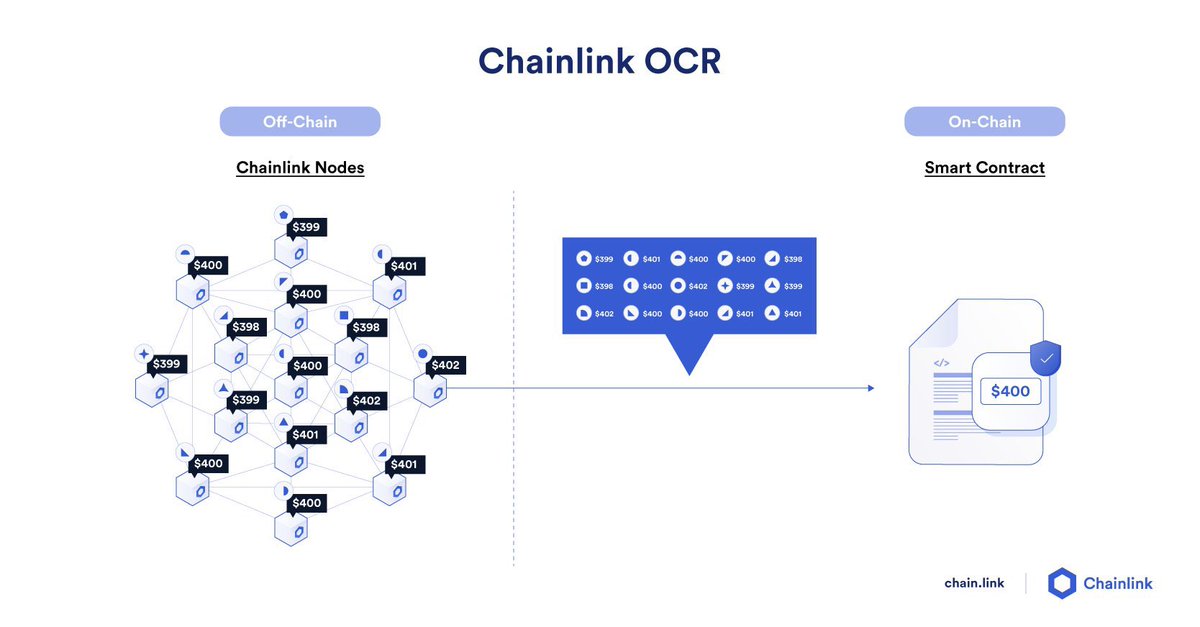
13/ There’s already been major strides made in this direction over time like the Off-Chain Reporting (OCR) protocol in 2021 reducing gas costs of oracle network by up to 90%
OCR 2.0 will further reduce gas costs by another 25%, allowing for even more data to be brought on-chain
OCR 2.0 will further reduce gas costs by another 25%, allowing for even more data to be brought on-chain
14/ In parallel blockchains are finally starting to scale
Rollups, sidechains, subnets, supernets, shards, etc
As chains become more efficient, the costs for oracle networks on those chains also reduce
But that’s the beginning
This is where Chainlink SCALE comes into play
Rollups, sidechains, subnets, supernets, shards, etc
As chains become more efficient, the costs for oracle networks on those chains also reduce
But that’s the beginning
This is where Chainlink SCALE comes into play
15/ Chainlink SCALE is a new Econ2 program where blockchain projects commit to offsetting the operating costs of Chainlink oracle networks on their chain
The significantly increases profit margins and eliminates the need for subsidized oracle rewards for those networks
The significantly increases profit margins and eliminates the need for subsidized oracle rewards for those networks
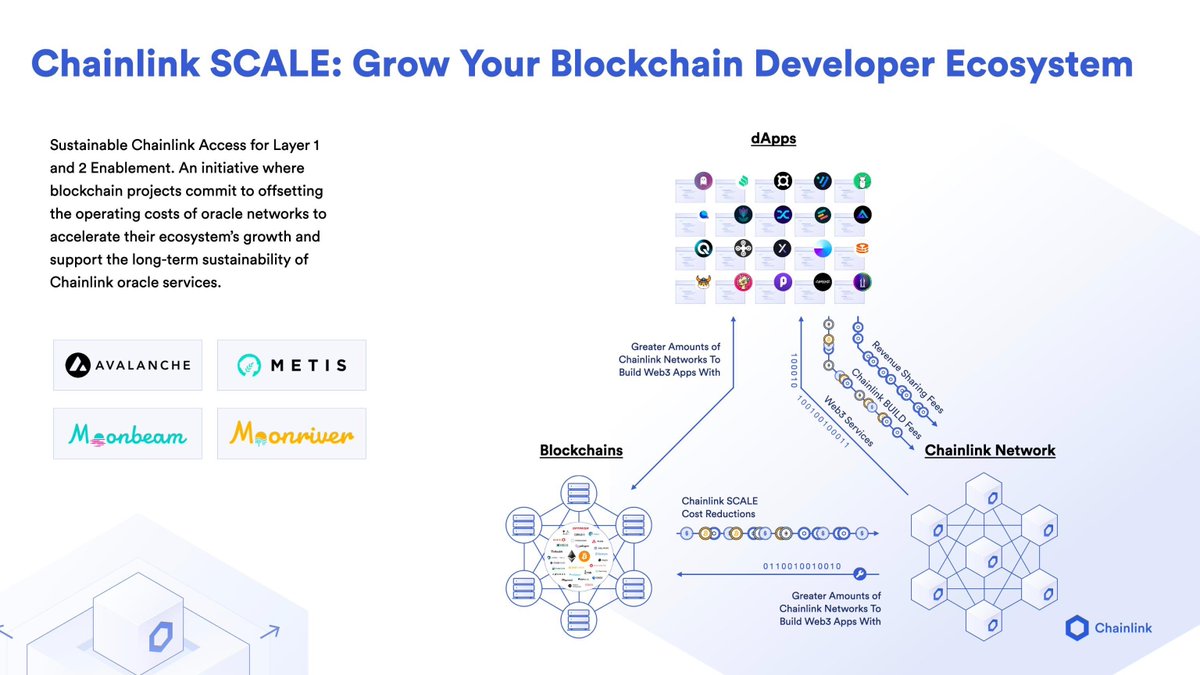
16/ For example, @avalancheavax joined SCALE meaning Chainlink oracle networks will receive grants in AVAX to cover on-chain gas fees on their chain
This is another win-win relationship as chains need more oracle data to fuel their dApp ecosystems (as has been historically seen)
This is another win-win relationship as chains need more oracle data to fuel their dApp ecosystems (as has been historically seen)
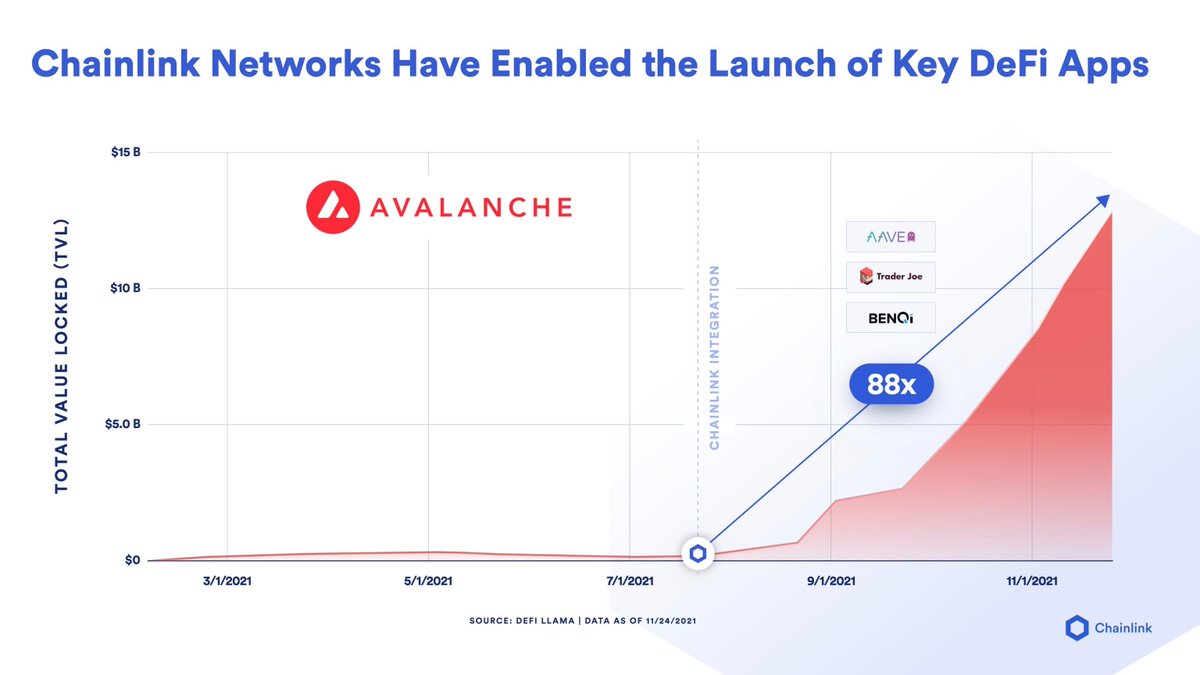
17/ Even as blockchains scale, the gas costs won’t be zero and data delivery delivery throughput is usually also increased
Chainlink SCALE covers the primary costs of oracles, meaning economic resources can be used more efficiently like driving more revenue opportunities
Chainlink SCALE covers the primary costs of oracles, meaning economic resources can be used more efficiently like driving more revenue opportunities
18/ More info on Chainlink SCALE, including initial participating blockchains, can be found here
blog.chain.link/chainlink-scal…
blog.chain.link/chainlink-scal…
19/ STAKING
The last major part of Chainlink Econ2 is the long-awaited staking
By locking up $LINK in smart contracts, Chainlink service providers can prove their commitment and increase the cryptoeconomic security of oracle services
The last major part of Chainlink Econ2 is the long-awaited staking
By locking up $LINK in smart contracts, Chainlink service providers can prove their commitment and increase the cryptoeconomic security of oracle services
20/ As explored in a June blog post, Chainlink Staking will rollout in stages and evolve with more functionalities over time
This starts with an initial v0.1 beta which is launching this December 👀
blog.chain.link/chainlink-stak…
This starts with an initial v0.1 beta which is launching this December 👀
blog.chain.link/chainlink-stak…
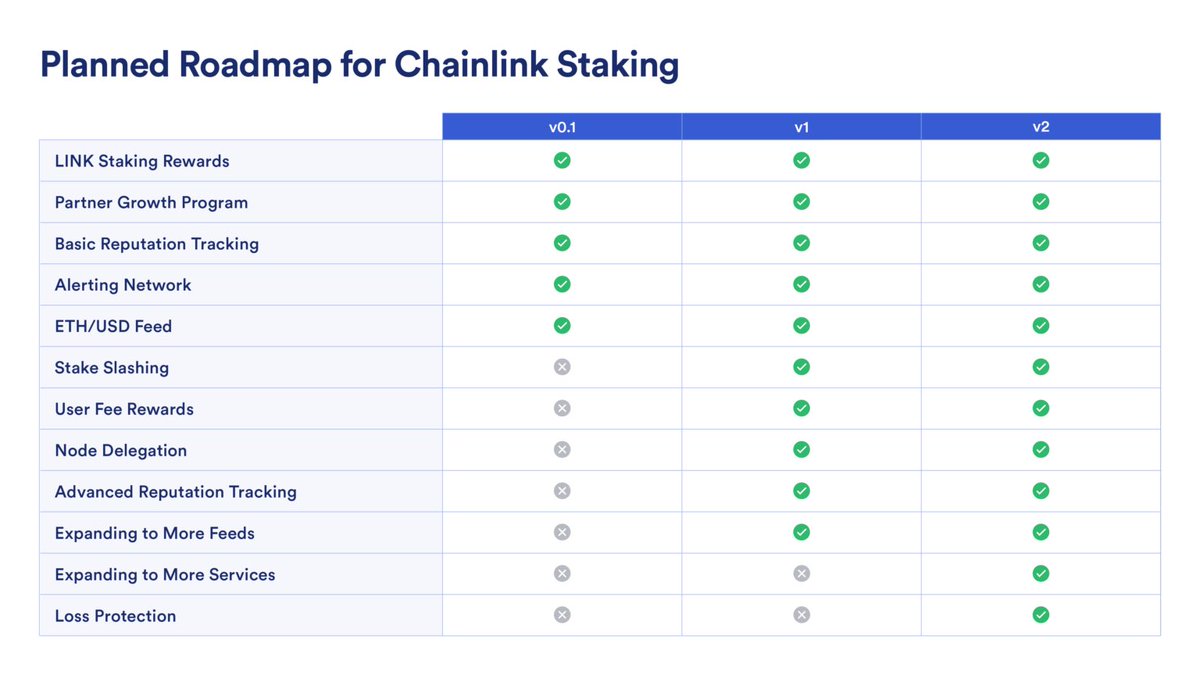
21/ v0.1 sets the groundwork for staking by introducing a decentralized alerting system for reporting node mal-performance
For future versions, this enables stake slashing and eventually Loss Protection as a form of insurance for users if an oracle network breaks its SLA
For future versions, this enables stake slashing and eventually Loss Protection as a form of insurance for users if an oracle network breaks its SLA
22/ In Staking v0.1, the pool is capped at 25M LINK and will expand to 75M LINK over time
Initially there will 22M LINK available for the community to directly stake and 3M for node operators
Rewards will start with subsidized LINK and evolve to revenue sharing and BUILD fees
Initially there will 22M LINK available for the community to directly stake and 3M for node operators
Rewards will start with subsidized LINK and evolve to revenue sharing and BUILD fees
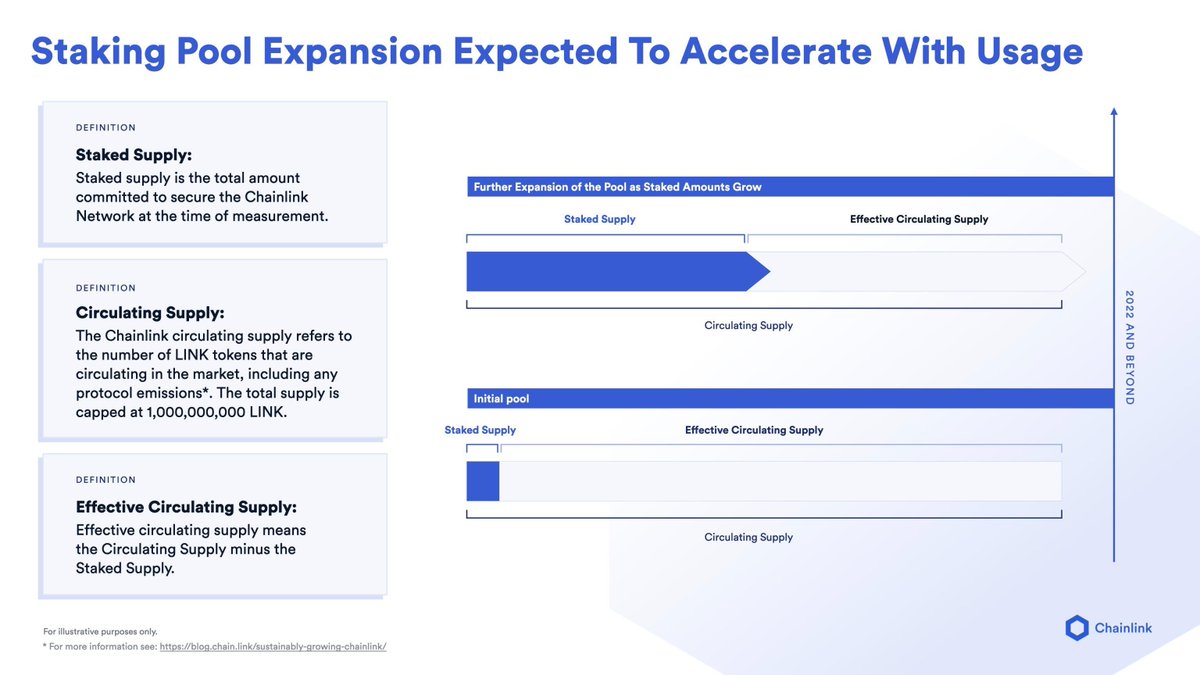
23/ v0.1 will start with an Early Access period and then later open up to a General Access phase
Early Access eligibility is based upon historical on-chain and off-chain activity
Check your Early Access eligibility for v0.1 below 👇
blog.chain.link/chainlink-stak…
Early Access eligibility is based upon historical on-chain and off-chain activity
Check your Early Access eligibility for v0.1 below 👇
blog.chain.link/chainlink-stak…
23/ Introducing staking to the most widely adopted oracle standard is no small feat, hence the progressive rollout where feedback can be incorporated before scaling up
Excited for what the future brings here
Excited for what the future brings here
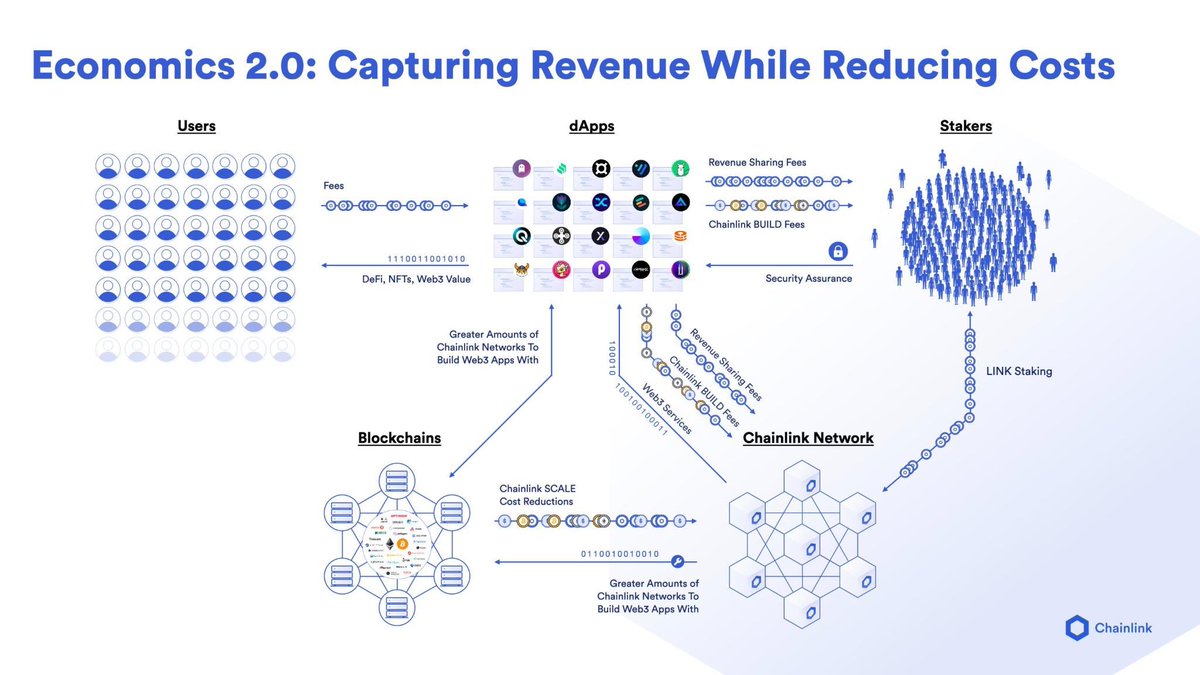
24/ To sum it up, the Chainlink Network is evolving from a growth oriented approach to growth + value capture approach:
Chainlink BUILD increases revenue
Chainlink SCALE reduces costs
Chainlink Staking increases security and participation
Welcome to Economics 2.0
Chainlink BUILD increases revenue
Chainlink SCALE reduces costs
Chainlink Staking increases security and participation
Welcome to Economics 2.0
• • •
Missing some Tweet in this thread? You can try to
force a refresh