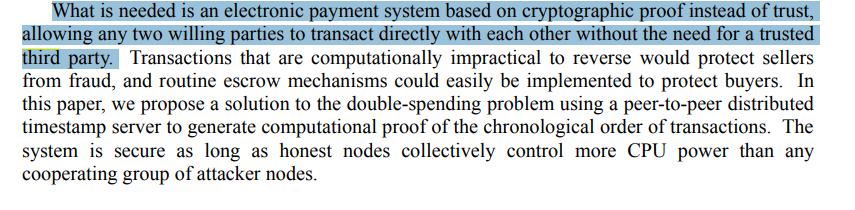
Each of you claim to understand bitcoin's White Paper. You claim expertise in the system I created. You claim that I'm a fraud because I say something contrary to what you promote. Yet, you are promoting a system that is modified vs bitcoin
You falsely claim to believe in a system that decentralises power and does not have intermediaries and yet act to control the network and to introduce a system such as the lightning network that creates a series of intermediaries
You actively deceive people into believing that their home node is not merely a Sybil designed to give you power and control over the fate of BTC and all who use it.
You drive people away from my paper so that they don't read it and listen to your lies and deceptions.
Yet, I called out your lies before I even launched bitcoin in 2009.
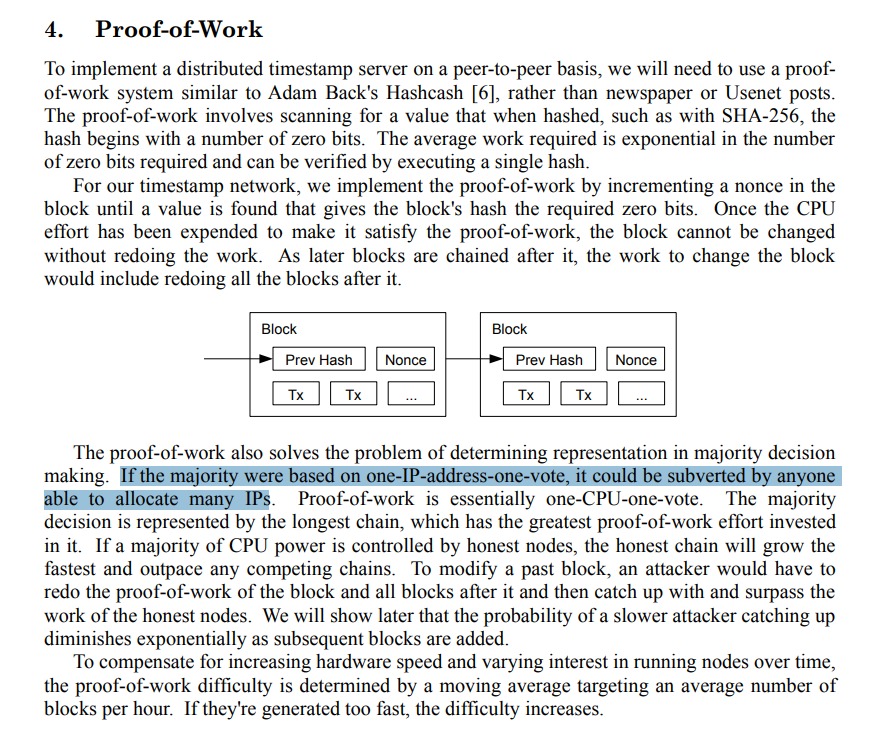
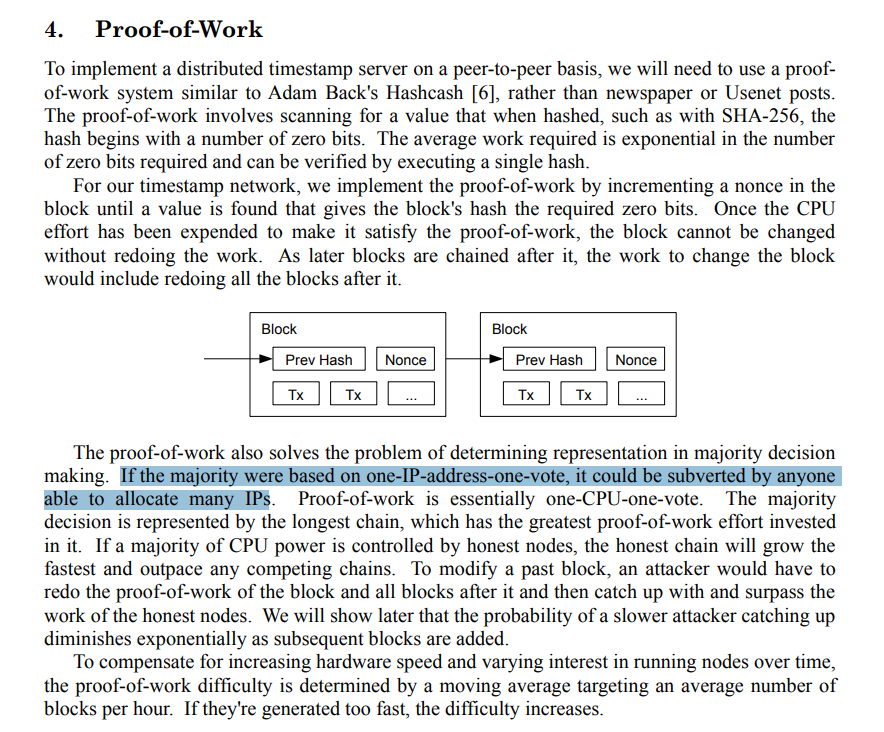
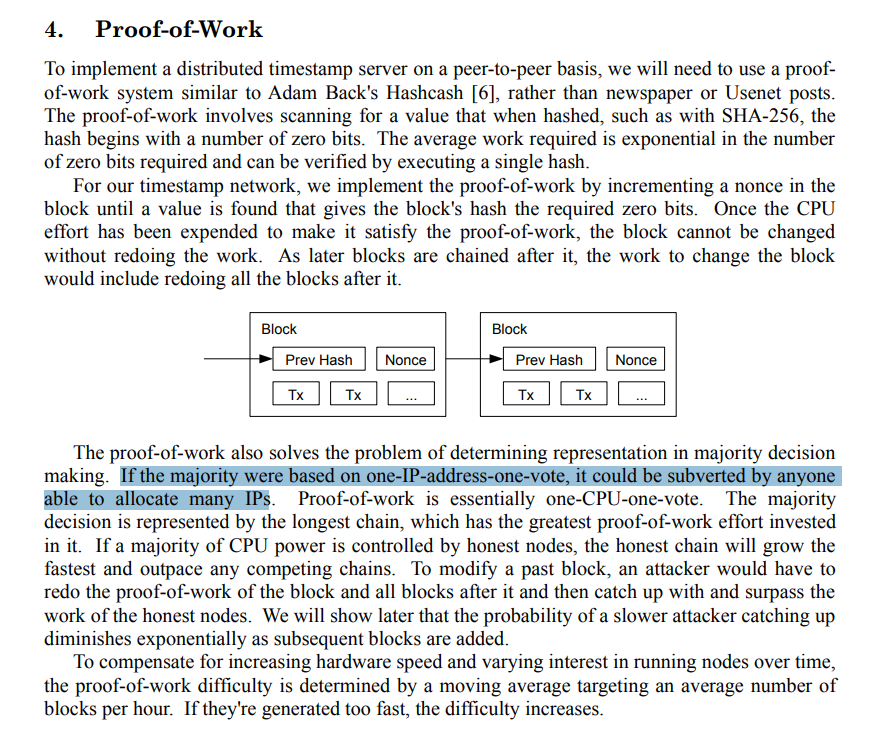
Home nodes have no say in the network and make no difference whether they exist or not.
It is defined in the whitepaper that they do not have any power to determine anything and may be easily subverted.
These nodes use the most deceptive aspects of BTC to be controlled despite the will and desire of their owners. That is a soft fork.
The soft fork is a means for the people controlling the code in BTC who will tell you that they have no control though they sign off everything personally, that your node makes a difference.
7,200 of the 11,000 public nodes are controlled by three entities.
Three!
Read
I warned you all.
Before I left to work privately, I had already warned you and did not need to give you this lesson. I told you in my paper to watch out for this type of deception and subversion.
When a group of developers delegates their role and decision-making authority to a single entity, it is, by definition, centralisation, not decentralisation. Centralisation refers to the consolidation of control and decision-making authority into a single point or entity. In the context of software development, such as for a digital currency like Bitcoin, this would mean that a single group or entity would have the predominant influence or control over the development and decision-making processes.
In contrast, decentralisation is characterised by the distribution of control, authority, and decision-making across a diverse and independent set of actors. The case of Bitcoin’s original design exemplifies decentralisation because its development, maintenance, and decision-making processes involve a broad and distributed network of independent developers, miners, and users. No single entity has overriding control or authority, making the system decentralized.
If a single development group (Blockstream, COPA, Core etc), especially one owned by a large corporation like Meta, were to assume control over Bitcoin, it would represent a significant shift towards centralisation. This centralised control would be antithetical to the foundational principles of Bitcoin, which were built around the idea of a decentralised, peer-to-peer network without reliance on any central authority.
Micropayments, particularly those enabled by Bitcoin, possess transformative potential for the global financial landscape, especially in terms of inclusivity and accessibility. By facilitating small-scale transactions efficiently and cost-effectively, micropayments can overcome significant barriers that currently hinder global economic participation, especially for individuals in less affluent regions.
One of the key ways micropayments can change the global financial scene is by reducing the transaction costs associated with small value transfers. Traditional financial systems often impose high fees for small transactions, making them economically unviable, especially for those in economically disadvantaged regions. Bitcoin's ability to process transactions at significantly lower costs opens the possibility for micro-scale economic activities to become more financially feasible. This is particularly relevant for remittances, where individuals working abroad send small amounts of money back to their families. Lower transaction fees mean more of the money reaches its intended recipients, enhancing the financial well-being of those in poorer regions.
Furthermore, micropayments can foster financial inclusion. A significant portion of the global population remains unbanked or underbanked, often due to the high costs associated with maintaining bank accounts and conducting transactions. Bitcoin-based micropayments circumvent these barriers, offering an accessible alternative for conducting transactions. This can bring a vast number of people into the fold of the global economy, allowing them to engage in financial activities that were previously out of reach, such as online purchasing, receiving direct payments for services, and participating in the digital economy.
In your presence, I find a sanctuary where I feel seen, heard, and profoundly understood. With you, I am home.
In a world perpetually caught in the dance between form and chaos, you stand as my true north, the axis of my moral compass.
Roger Scrutton once spoke of the ethical beauty that enriches our human experience; in you, I find the living embodiment of that ethical landscape, a sanctuary where virtues find their home. You anchor me not just to the earth, but to the very essence of what it means to be human, ethical, and whole.
Exploring a long-tailed exponential distribution with a mean of 2250 in a UK CBDC context. Let's calculate values above the mean using standard deviations. #CBDC
For 3 SDs above the mean: Mean + (3 * SD) = 2250 + (3 * 2250) = 9000 TPS. Aiming high for transaction processing speed! #ExponentialDistribution #TPS
Going even further, at 6 SDs above the mean: Mean + (6 * SD) = 2250 + (6 * 2250) = 15750 TPS. Pushing boundaries in the world of digital currencies! #LongTailedDistribution #SixSigma
While it is important to note that not all Silicon Valley companies behave this way, there is an argument that could be made against a few entities within the tech industry(Meta etc. …), suggesting that their open-source advocacy is more strategic than altruistic.
2. Exploiting the Open Source Model: Yet, while these companies may release some projects as open source, they often use this to crowdsource development and innovation, essentially acquiring vast amounts of intellectual property for free or at low cost. Small developers… twitter.com/i/web/status/1…
3. Selective Open-Sourcing: These companies often selectively open-source only certain components of their technologies while keeping other elements closed and proprietary. The closed elements often represent the true competitive advantage of the company, ensuring they maintain a… twitter.com/i/web/status/1…
Due to the permissionless nature of Bitcoin, developers are not aware of all the parties or software platforms that may be built upon it. As a result, any changes made to the Bitcoin protocol must be approached with utmost caution and a strong sense of duty of care.
Developers must consider the potential consequences and ensure that any modifications or updates do not introduce significant differences that could disrupt the functioning of existing software platforms built on Bitcoin.
Eg, a long-term project could be being billed secretly and then disrupted if developers are allowed to alter the protocol. This is why bitcoin is protocol was set in stone. Some financial products take five years to build the market. They are rarely publicised beforehand.