The winter months approach in #Ukraine. It will have an impact on the war, but it won’t shut down the war as some have theorised. A thread on the likely impact of winter on the war in #Ukraine. 1/25 🧵
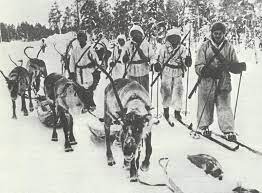
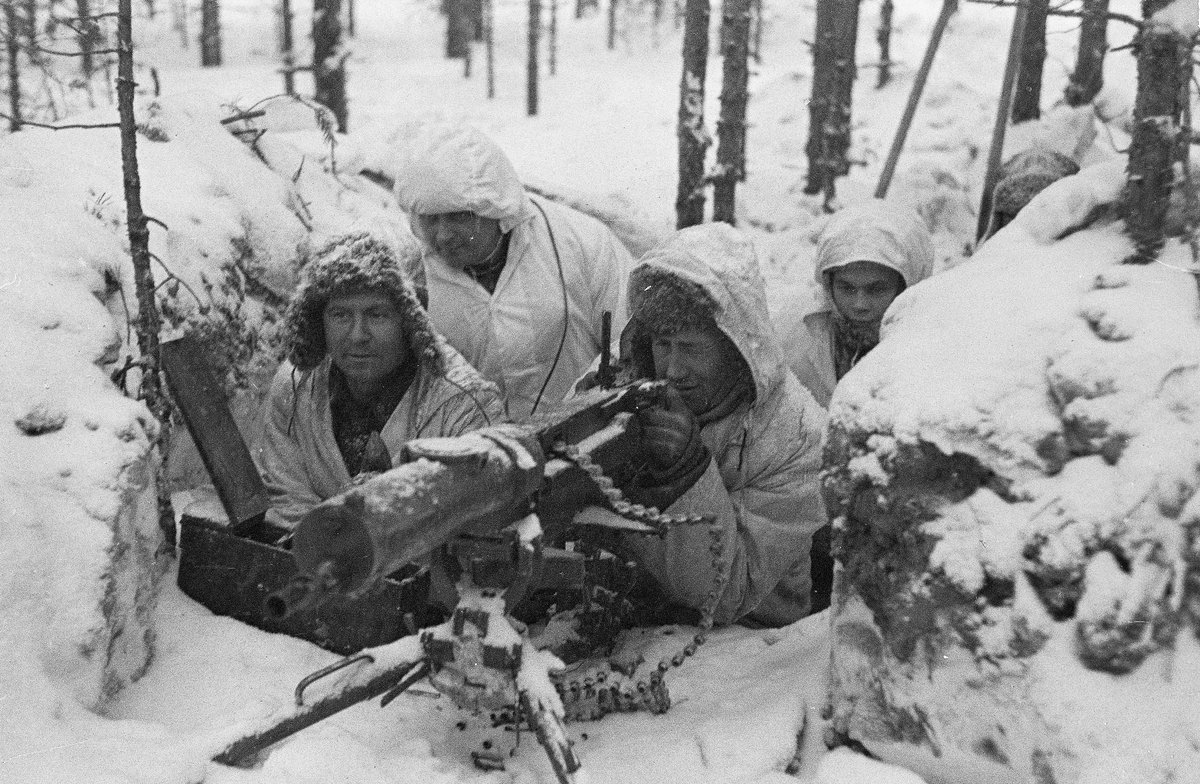
2/ Recently, it has become common to compare the coming winter in #Ukraine with the Russo-Finnish Winter War, fought from November 1939 through to March 1940.
3/ The Finns resisted a massive Soviet invasion of their nation, resulting in a peace agreement temporarily ending hostilities. The Winter War is used as a historical example of David versus Goliath, as well as the clever use of terrain and weather by a defending military force.
4/ But it also offers another important lesson for observers of the war in Ukraine; wars can be fought, and battles can be won, during the most extreme weather, including the depths of winter. smh.com.au/world/europe/w…
5/ Both the Russian and Ukrainian strategies are predicated on a continuation of hostilities over winter. However, they will have different approaches. For Russia, their aim is to draw the war out over winter and well into 2023.
6/ A key element of this is the insertion of masses of newly mobilised troops into Ukraine to stabilise the front line. But the most important aspect of Russia’s strategy for winter is its strategic energy warfare.
7/ Putin’s energy war, which has already affected 30% of power generation capacity in Ukraine, will see heating restricted, more burst water pipes and a range of other hardships for the population.
8/ While stockpiling of warm clothing and firewood commenced some time ago, many Ukrainians are either displaced from their homes, or living in damaged residences, making them more vulnerable to the ravages of winter.
9/ This ‘denial of heat’ by Putin during the coldest months of the war is a deliberate strategy to both terrorise the population, and to pressure the Ukrainian government for either a ceasefire or some other accommodation with the Russian invaders. kyivindependent.com/national/russi…
10/ But, as we have seen from the hardy Ukrainians, their resilience and very high support for expelling the Russian Army means that this is an unlikely outcome for Putin.
11/ Putin, by now, probably hoped that his strategic energy warfare would have had a greater impact on the populations of European nations that had become reliant on Russian energy. reuters.com/business/energ…
12/ However, a combination of new energy sources, rationing and stockpiling means that Putin has not yet been able to exert leverage over Europeans to reduce their support for Ukraine. That could change, however.
13/ For Ukraine, they have fought hard for eight months to seize the initiative from the Russians in this war. They will want to continue to use the momentum & use the winter as an opportunity to continue seizing back their territory.
14/ There will be challenges, though. The cold saps the energy from soldiers faster than in warmer conditions. Warm weather clothing, hot food and protection from the elements are key to preserving a military force.
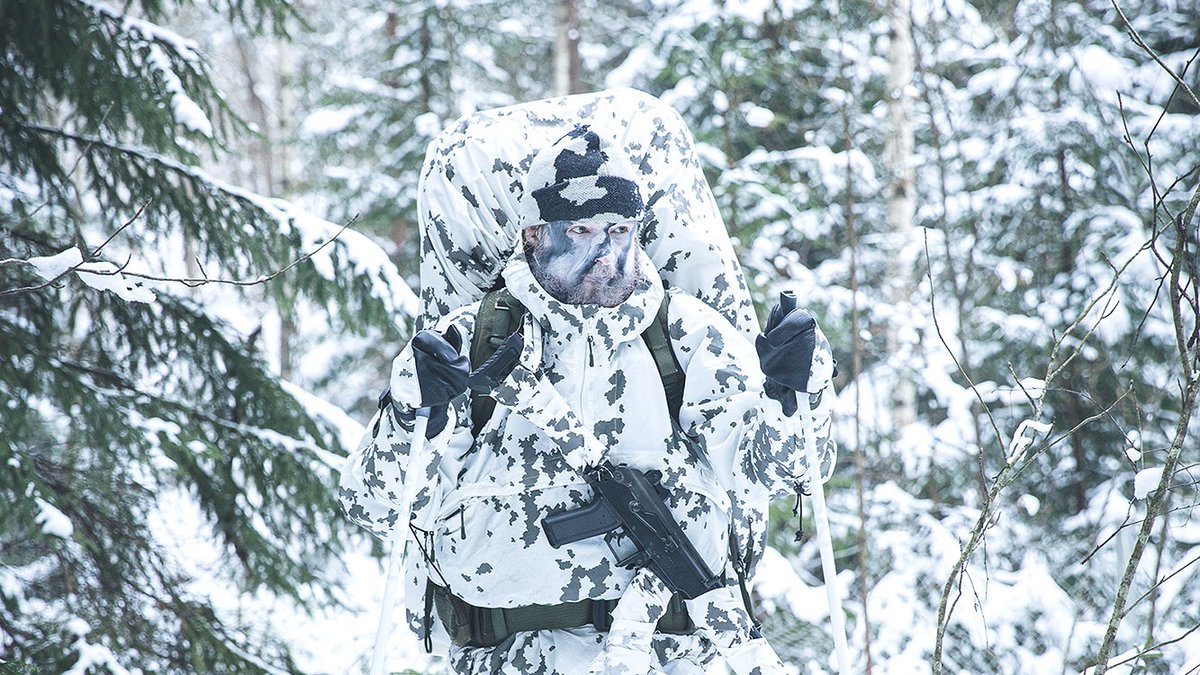
15/ Vehicle mobility is problematic. Wheeled vehicles in particular struggle in cold and boggy conditions, and this will have an impact on the logistic support for both sides. Tracked vehicles, however, have superior mobility in such conditions.
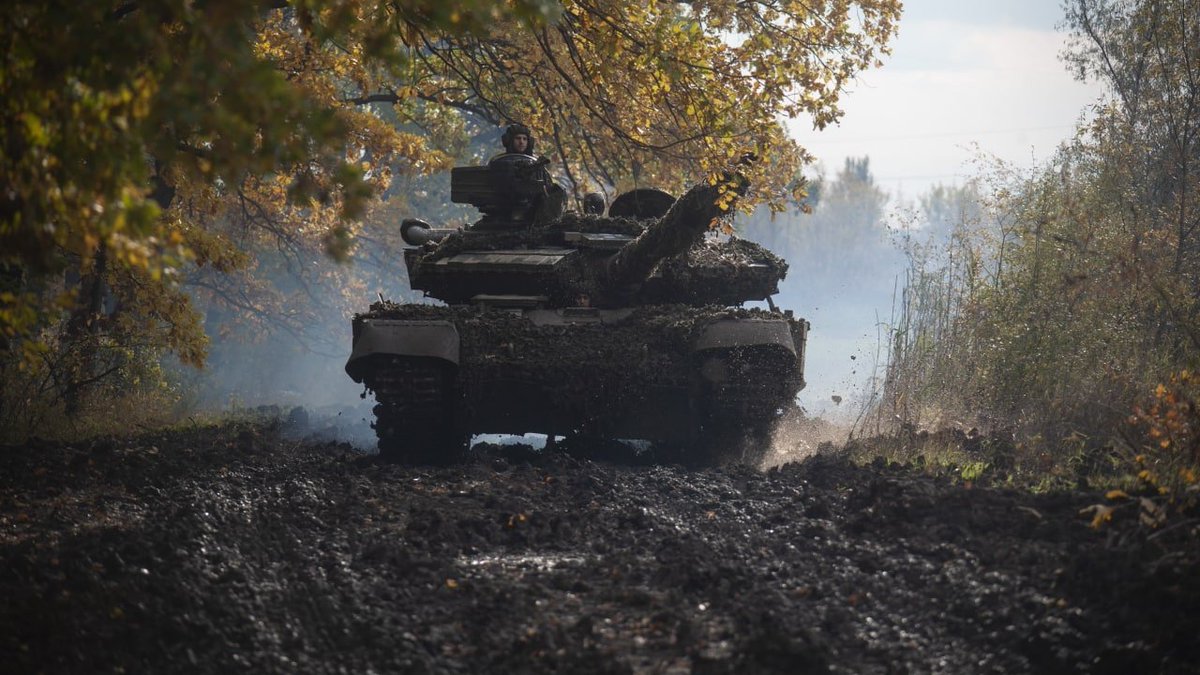
16/ Concealment in winter is difficult. Foliage disappears & the green colours that most military vehicles are painted makes them stand out against the stark white of snow. The heat of humans & equipment stands out more against the cold environment.
17/ Making up for this however is that flying in winter months can be more challenging for both crewed and autonomous aerial vehicles.
18/ There are many other tactical impacts of cold weather on military operations. But as historical examples such as the Battle of the Bulge, the Winter War, Chosin Reservoir and the more recent conflict around Siachen Glacier demonstrate, winter does not shut down wars.
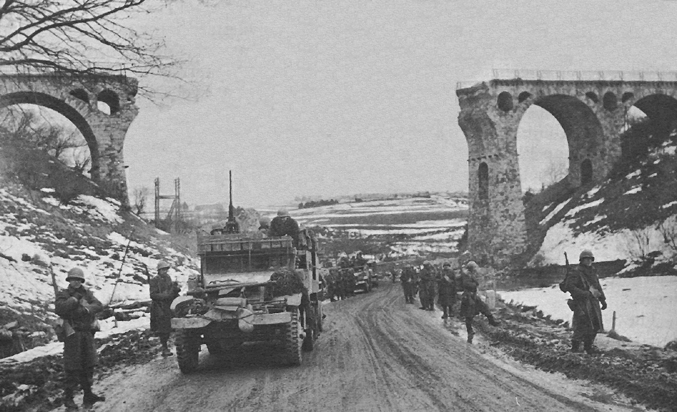
19/ The Ukrainians, who have been clever strategists and tacticians throughout this war, may take the advice of the Finns from the Winter War. warontherocks.com/2016/07/lesson…
20/ They found that it was “not sufficient to adapt to a harsh geography. Rather, the goal should be to develop new forms of operational art that enable one to leverage that same geography against an ill-adapted foe.”
21/ We may see more adaptations by the Ukrainians to use winter to their advantage. Regardless, Ukraine and Russia will continue to pursue their war aims throughout the winter, albeit at a lower tempo. engelsbergideas.com/essays/how-ukr…
22/ There is a final salutary lesson when making comparisons between Ukraine in 2022 and Finland in 1939. The Winter War of 1939-1940 was actually the beginning of a longer conflict between Finland and the Soviet Union.
23/ Known as The Continuation War, this conflict lasted until September 1944 and resulted in over one million dead, wounded and missing between the belligerents.
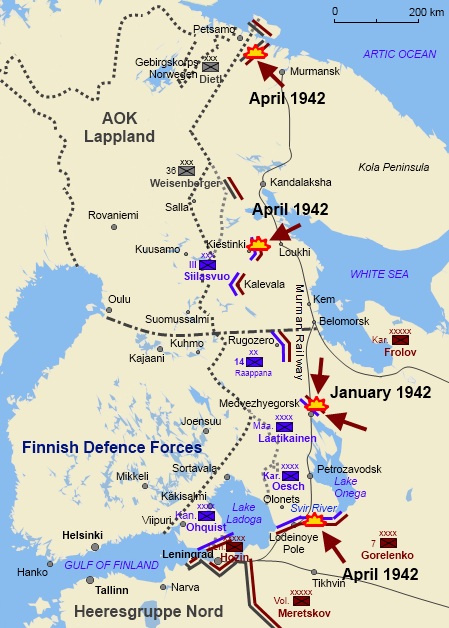
24/ It is an uncomfortable scenario, but one possible future for the current war. End. smh.com.au/world/europe/w…
“The advantages of threatening an American ground intervention are real. The advantages of actually committing boots on the ground are also real but more limited. The disadvantages could be numerous.” My weekly update on Iran, Ukraine and the Pacific. 1/6 🧵
2/ Ukraine has achieved something significant in the south. Ukrainian attacks there have disrupted Russian offensive planning, consumed Russian reserve forces, and demonstrated that Ukrainian combined arms operations can impose genuine operational costs. But there is also a trade-off in these southern operations. Gains in the south have come at some cost to northern Donetsk, and Russian forces retain the initiative on what is Russia’s main effort on the ground: the envelopment of Ukraine’s fortress belt and the remainder of Donetsk.
3/ In Iran, the oldest lesson in strategy keeps surfacing: military success in the air and at sea does not automatically translate into political outcomes on the ground. Iran has not been beaten. The question being probably being considered in the Pentagon, Congress and the White House is whether ground forces would ensure that the military campaign achieves a decisive political outcome - or whether it would lead to a larger and more difficult American military commitment to the Middle East with uncertain results.
The latest update on drone and missile attacks on the UAE has just been released. With this as context, I thought I would share some initial insights arising from this Iranian retaliatory campaign and the overall war against #Iran. 1/9 🧵
2/ First, the battlespace is not transparent. It is highly visible but high visibility is not the same as high wisdom about what is seen. And we must not fall into the trap of assuming that we actually are seeing everything we need to see rather than what the enemy wants us to see. Finally, no tech can see into the hearts and minds of soldiers and combat leaders, especially when they are functioning under conditions of existential threat.
3/ Second, Understanding the enemy, and how resilient it is, matters. The Iranians have been preparing for this fight for decades, will have many caches of weapons and have strategised how this might play out. And assuming that a few bombs from the sky topple a regime (especially when it has never been achieved before) badly under estimated the Iranians.
"America & Iran are fighting two very different wars and have two different theories of victory. China & others in the authoritarian learning & adaptation bloc are observing closely & learning." An assessment of where we are, & who is learning from the Iran War. 1/6 🧵
2/ This assessment examines the two wars in and around Iran: the military campaign that Washington is fighting, and the economic campaign that Tehran is waging. It then asks the following question: what are the respective theories of victory, and how does that theory play out differently for each belligerent?
3/ A theory of victory is not simply a list of military objectives. It is a coherent account of how the application of military force produces a political outcome that endures. The Trump administration entered Operation Epic Fury with a theory of the means, and a range of constantly changing ends (at least in public). It might be able to use the military to win the war, but it is unclear whether it has a longer-term plan to win the peace.
Wars are never simple. Despite the efforts of governments, war resists the clarity, certainty & clever narratives supported by AI slop videos, we wish to impose on them. The #Iran war & developments in #Ukraine, were exemplars of this during the week. 1/7
2/ Welcome to my weekly update on war and strategic competition. This week, shifting strategic initiative in Ukraine, the war in Iran, politics in the Pacific & my Big 5 reading recommendations.
3/ In #Ukraine, Ukrainian forces achieved some of the most operationally significant gains of the past year, reclaiming territory in the south while striking deep into Russia’s military-industrial complex. Diplomacy continued its chaotic and erratic journey.
"At some point, Putin will have to reckon with the failure of his strategic bombing campaign against Ukraine’s cities to shift Ukraine’s political posture, and the slow-rolling military failure that is Russia’s bloody ground campaign." A comprehensive update of the big #Ukraine & Pacific issues this week. 1/6 🧵🇺🇦
2/ In Europe this week, the annual Munich Security Conference was held. Lots of interesting speeches, but not a lot of progress on ending the war in Ukraine.
And as Zelenskyy stated: "A lot of time now is spent on negotiations. We truly hope that the trilateral meetings next week will be serious, substantive, and helpful for all of us. But honestly – sometimes it feels like the sides are talking about completely different things."
3/ In Ukraine, the armed forces were able to undertake opportunistic counter attacks against Russian forces deprived of Starlink.
But otherwise, as I describe in my assessment of the trajectory of the war in 2026, "the brutal calculus of the past four-years will continue into 2026 unless there is a significant breakthrough in technology, tactics or strategy that changes the deep, close and rear aspects of the overall battlefield dynamic.
The only other thing that might significantly change the trajectory of the war is if there is a significant shift in political will in Kyiv or Moscow."
America has just released its 2026 National Defense Strategy (NDS). Not seeing much press activity from the Dept of Defense/War on this. While I need time to ponder the deeper implications of the document, a few things stand out on first reading. 1/11 🧵
2/ First, the document is consistent with the 2025 National Security Strategy (NSS) released by the Trump Administration in November 2025. Key priorities in the NDS align with the NSS, as you would expect. However, while the NSS has priorities, the NDS has "Lines of Effort". whitehouse.gov/wp-content/upl…
3/ There are four Lines of Effort in the new NDS:
1. Defend the U.S. Homeland. 2. Deter China in the Indo-Pacific Through Strength, Not Confrontation. 3. Increase Burden-Sharing with U.S. Allies and Partners. 4. Supercharge the U.S. Defense Industrial Base.