1/ Volunteers from Russia's republic of Bashkortostan spent weeks living in tents under constant Ukrainian bombardment, with little equipment, scavenged ammunition and officers who ordered them to tie grenades to their bodies and detonate themselves under Ukrainian tanks. ⬇️ 

2/ In May-June 2022, the Bashkortostan authorities announced the formation of two volunteer battalions named after Bashkirs who had distinguished themselves in past wars. Bashkir leader Radiy Kabirov held a ceremony for them in Ufa in July.
https://twitter.com/RALee85/status/1545418438742626306
3/ In July 2022, the soldiers travelled aboard a fleet of buses to the Mulino training ground in Nizhny Novgorod region. They were assigned to the newly formed Russian 3rd Army Corps along with 'national battalions' from other Russian republics.
https://twitter.com/i/status/1544654950860455936/video/1
4/ The soldiers were apparently given about six weeks' training at Mulino. They were sent to Ukraine in late August, according to an announcement by Radiy Khabirov on 29 August.
https://twitter.com/PrateekRoutray/status/1563669438431240192?s=20&t=Teik8oJ-tybMLxyfTmzX3g
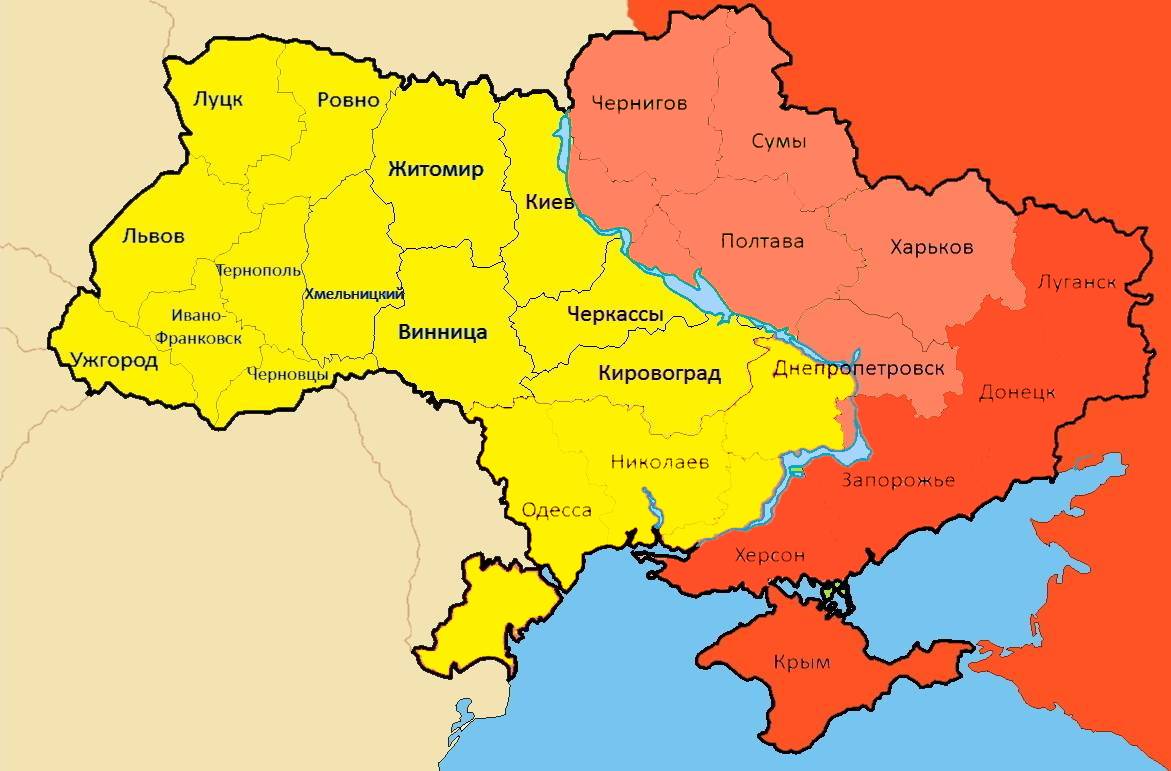
5/ However, the Ukrainian counter-offensives at the end of August meant that the original plan was abandoned. Instead, the national battalions were scattered to fill gaps along the length of the front line. They were seen in the Kherson, Kharkiv, Melitopol and Mariupol regions.
6/ By September, the Bashkirs had clearly suffered severely in the fighting. They were said to have suffered 'colossal' casualties. Official figures were not published, but many deaths were reported by local authorities or relatives on social media.
https://twitter.com/KilledInUkraine/status/1551854140481060866
7/ One Telegram blogger with a relative in the Bashkir battalions wrote on 11 September that the soldiers were "immediately thrown into hell. A third of them 200 [killed], a third of them 300 [wounded], a third fled." They were reportedly sent to the front near Kherson.
8/ On 26 September, the same blogger posted a video described as being of "Bashkirs from the Beloretsk region of the Republic of Bashkortostan". They said they had been "dumped in the forest" under Ukrainian fire with no food, water or commanders.
9/ On 29 September, a hint of their fate was provided in an intercepted conversation between two Russian soldiers, published by the Ukrainians:
"There's some fucking Bashkirs there, a special fucking battalion, they came in too, they got burned too and got fucked too."
"There's some fucking Bashkirs there, a special fucking battalion, they came in too, they got burned too and got fucked too."
10/ Perhaps in an attempt to refute these claims, the Baskhir authorities published a report with posed photos in late September, claiming that everything was fine.
11/ In an evidently stage-managed social media post, the men supposedly said that they were undertaking "round-the-clock duty in positions, “trench life, endless shelling of the enemy and faith in our Victory.”"

12/ "Morale among the troops is high, and in the conditions of combat operations the relations strengthen," the post claimed. "The elders look after the juniors and the commanders look after all of us."
The reality appears to have been very different.
The reality appears to have been very different.
13/ Relatives became increasingly alarmed when they found they could not contact their men, either directly or via the army.
One Telegram blogger spoke of relatives' experiences in trying to contact a family member:
One Telegram blogger spoke of relatives' experiences in trying to contact a family member:
14/ "My friend's relative was a platoon commander in the Shaymuratov battalion. He disappeared on the very day they were thrown into the fire. His phone stopped working and his relatives never got through to him.
15/ From time to time, about once a day, his phone shows up on WhatsApp, but he hasn't called his relatives. I have a feeling someone is switching his phone on on purpose so that the relatives think he is alive, he just can't write... This is the kind of trick commanders pull."
16/ According to one of the surviving Baskhirs, they were at the front line for two and a half weeks. They were not even given ammunition, but had to scavenge it from supplies left behind in the forest by other Russian troops. Their weapons were old and unusable.
17/ "Some of them had crooked muzzles, someone had a machine gun jammed on the second shot. As for heavy weapons, we had nothing at all: the attached BMP which was brought from somewhere in Buryatia in the 1970s "shaggy" years, was always breaking down.
18/ Of the other vehicles, we were given an old Ural truck with all the benches in the back. The vehicles wouldn't start, the radiators were leaking, everything was rusty... In general, no equipment, nothing.
19/ Our battalion commander, of course, tried to achieve something, but they said to him: "Why are you twitching? You will go to the front with what you were given".
20/ The volunteers were subjected to continuous highly accurate Ukrainian artillery and drone bombardments, which killed and wounded hundreds.
"Ukrainian artillery and drones were working on us in the trenches.
"Ukrainian artillery and drones were working on us in the trenches.
21/ And their artillery was so precise that it [could] hit a trench measuring one metre by one metre. And it would be fine only in one trench. Let's say we had ten trenches and they hit all ten in a row. And what are the responses from our side?
22/ We ask for [return fire], but there is no answer. They only tell us over the radio: "That's it, we have worked it out". And where they fired, what they fired at – nothing is clear. And it was like that from the very first day, as we drove into position."
23/ The former volunteer says that the battalion had more than 200 killed and wounded, of whom 40-50 were killed. The Shaymuratov battalion had 420 men when it was formed, meaning that it suffered around 50% casualties.
24/ The men had no equipment to build dugouts and had to live in the open in tents, under constant bombardment. They had only small hand shovels to dig with, they had only one axe per platoon, and the local acacia trees were unsuitable for building shelters.
25/ "In general, we were under the open sky all the time, covered with rain tents. It was hard, especially for the elderly – people, 40-50 years old, could not bear the weight of battle."
26/ The men's commanders were hopelessly incompetent. The worst, according to the former volunteer, was the unit's deputy commander, a man named Yerin, who on one occasion ordered his men to tie grenades to their bodies and throw themselves under a Ukrainian tank.
27/ On another occasion, the same officer misidentified a column of Russian BMPs from Tatarstan as being Ukrainian. "We saw a column of BMPs coming out from our right, with "Alga" written on their sides.
28/ Something stuck in Yerin's head and he started shouting: "The enemy's on the right! Destroy!" Everyone says to him: "It's ours, the Tatars!" He's still yelling: "Destroy!" Until he was stunned, he kept shouting..."
29/ 43 of the men decided to quit and on 17 September they wrote a refusal report. They were taken away to a former children's camp, where a colonel attempted to change their minds. They were then taken to the border between Kherson and Crimea, but were turned back.
30/ The men were told that a new decree by Putin meant there were now tougher penalties for unauthorised departure from their unit, and they could no longer resign. They protested that they had given their resignation before the decree was issued and informed their relatives.
31/ The wife of one of the men made an appeal to Bashkortostan's leader, Radiy Kabirov, on his social media page. She wrote:
32/ "About 40 people broke their contracts on 17 September and were supposed to be taken out, but at the border their documents were torn up and they were not allowed to leave!

33/ They are now in the middle of nowhere, no money and no communication, they are trying to call but haven't been heard from properly!"
34/ An official responded: "The Shaymuratov battalion is fulfilling its tasks. There is no evidence that the Shaimuratov battalion has left the territory where it was performing its tasks."
35/ The wife replied incredulously, "Are you kidding me? My husband is there, they terminated their contracts, but they were not allowed back into Russia."
After being held in the village of Chkalove, the men were transported to the commandant's office in Nova Kakhovka.
After being held in the village of Chkalove, the men were transported to the commandant's office in Nova Kakhovka.

36/ All 43 men were imprisoned in a 25 m² (269 sq ft) garage. Two videos emerged in late September showing them there, appealing to Baskir leader Radiy Khabirov for help. In the second video, they say they were punished for filming the first.
37/ "After yesterday's video, we were warned that conditions would be even worse. From today, trips to the toilet have already been reduced. We were promised food and water, but they decided to lock us up for a longer time."
38/ The officers used a shipping container as a punishment cell and threw men into it, dressed in T-shirts and slippers, to endure freezing nighttime temperatures. Any attempt at protest was punished. Some of the men were wounded and shell-shocked, but were denied treatment.
39/ "As far as I know, one of them is now losing his sight, he has gone deaf, he stutters. The other has a compression fracture of the spine. So they've been riding with us for eleven days.
40/ Nobody believed them that they were shell-shocked, they said: "You are just pretending; nobody will give you a 300 [wounded] certification of shell-shock."
41/ The videos came to Kabirov's attention. They were particularly politically embarrassing, as the volunteer battalions were a high-profile project of his. His chief advisor, Alik Kamaletdinov, went to Nova Kakhovka to deal with the situation.
42/ Bizarrely, Kamaletdinov brought 500kg of honey with him for the men. It turned out that he had taken supplies meant for the other Bashkir battalion and told them that the truck carrying them had been destroyed. He attempted to persuade the men to go back to the front line.
43/ "The conversation with Kamaletdinov was in a raised tone. He suggested that we should be split up into different units in the corps, but we all said no. He replied: "Suit yourself," and left.
44/ The next time he came to us, on 16 October, he called us dogs, mutts, threatened that we would be considered traitors at home and "put down", and warned that our relatives would also "not have a life". Then he left and we never saw him again."
45/ The psychological pressure evidently worked; by late October, according to a relative, 32 of the refuseniks had agreed to return to the front line with a transfer to other units. The men were willing to fight, but not with the commander they originally had.
46/ A relative says it was "because the commander did not rectify the situation in any way. More than once he was reported to [senior commanders] about certain problems, but the higher command made stupid decisions, to which the guys then decided to write their reports.
47/ They were given the opportunity to transfer to other units and they continue to work."
The remaining 13 refuseniks were kicked out of the garage after two weeks when it was needed to accommodate more refusing soldiers, described as "either DPR-sheep, or LPR-sheep".
The remaining 13 refuseniks were kicked out of the garage after two weeks when it was needed to accommodate more refusing soldiers, described as "either DPR-sheep, or LPR-sheep".
48/ The men were held at a nearly metallurgical plant for another 9 days. Eventually the commandant came to them and told them, in effect, to get lost. They hitch-hiked individually to Crimea and from there back to Ufa; only five of them made it back home.

49/ Despite promises of generous payments, the Bashkirs received very little recompense. The refuseniks were denied the promised 200,000 rubles ($3,280) enlistment fee, the 2,000 rubles ($328) daily allowance or their travel allowances. They now face prosecution.
50/ A video was published on the battalion's Telegram page on 22 October purportedly showing men from the Shaymuratov battalion denying that they had suffered heavy casualties.

51/ The soldiers in the video call the reports "rumours" spread by "500s" (refuseniks) and describe them as "runaway cowards." However, one of the refuseniks says that "These are not our people at all, I have never met them in the battalion."
52/ In what was likely a tacit recognition that the battalions had been inadequately equipped, Kabirov has recently organised a second 'humanitarian convoy' for the Bashkiri battalions. A local news outlet proclaimed:
53/ "The soldiers were sent the essentials. There are thermal underwear, warm clothes, shoes, thermoses, tools, first aid kits, sleeping bags. All this should make life and work easier for the Shaymuratov and Dostavalov battalions on the front line."

54/ It didn't explain why the soldiers hadn't received those essentials in the first place. Despite the problems with the current battalions, Bashkortostan is to raise a third named after Baskhir national hero Salawat Yulaev. This is more than ironic. /end
https://twitter.com/LatypovaLeyla/status/1577708277793755137
Sources:
🔹 t.me/kushtay/19089
🔹 t.me/kushtay/19608
🔹 t.me/ChDambiev/17665
🔹 d2mxdcp90jyf6i.cloudfront.net/a/32101502.html
🔹 telegra.ph/Vas-doma-budut…
🔹 resbash.ru/news/news75/20…
🔹 i-gazeta.com/news/novosti/2…
🔹 ufatime.ru/news/2022/10/2…
🔹 t.me/kushtay/19089
🔹 t.me/kushtay/19608
🔹 t.me/ChDambiev/17665
🔹 d2mxdcp90jyf6i.cloudfront.net/a/32101502.html
🔹 telegra.ph/Vas-doma-budut…
🔹 resbash.ru/news/news75/20…
🔹 i-gazeta.com/news/novosti/2…
🔹 ufatime.ru/news/2022/10/2…
• • •
Missing some Tweet in this thread? You can try to
force a refresh