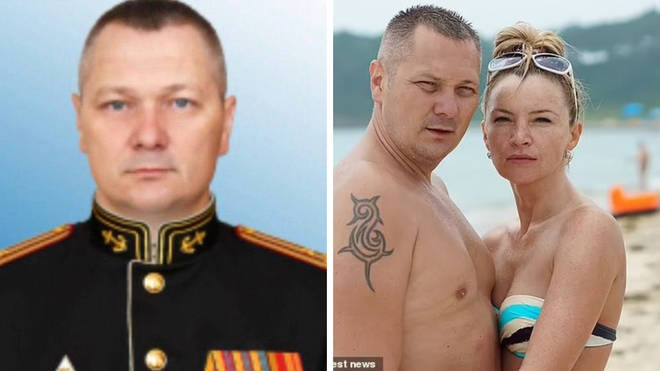
1/ Mikhail Nosov, a mobilised soldier from Primorsky Krai in the Russian Far East, has submitted a complaint to Russia's Investigative Committee following his release from an illegal basement-prison operated by the Russian Army in occupied Ukrainian territory. ⬇️ 

2/ I've covered Mikhail's story before (see the thread linked below). He was one of several hundred mobilised Russians who have been held in improvised prisons after they refused to fight on the front lines, citing poor training and inadequate supplies.
https://twitter.com/ChrisO_wiki/status/1594352903946395649
3/ Mikhail was released apparently due to his pre-existing medical condition – a traumatic brain injury sustained in 2018 – which meant he should never have been mobilised in the first place. He has vowed to bring to justice those holding Russian soldiers captive illegally.
4/ In his complaint to the Investigative Committee (which investigates corruption in state bodies), Mikhail says that he and his colleagues were promised that they would only serve in the rear areas, but this was broken as soon as they were deployed to Ukraine:
5/ "[We] were immediately thrown into the front line with machine guns against tanks and artillery. Sometimes we came under fire from our own artillery, including Grads [BM-21 rocket launchers].
6/ As explained to us by our commanders, Grad is not a high-precision weapon, so the spread of shells is very large, and if they hit their own side, this is normal. Many of the mobilised men who came with me from Primorsky Krai were killed or wounded.
7/ Their bodies were not taken away for a long time because of constant mortar attacks."
Mikhail blames his commanders for "tactical and strategic miscalculations, ... constant lies to their own subordinates, insufficient medical and material support."
Mikhail blames his commanders for "tactical and strategic miscalculations, ... constant lies to their own subordinates, insufficient medical and material support."
8/ His unit retreated from the front line on 12 October after taking many casualties. He and 13 others signed reports that they would refuse to fight, which led to officers having repeated "educational conversations" with the men.
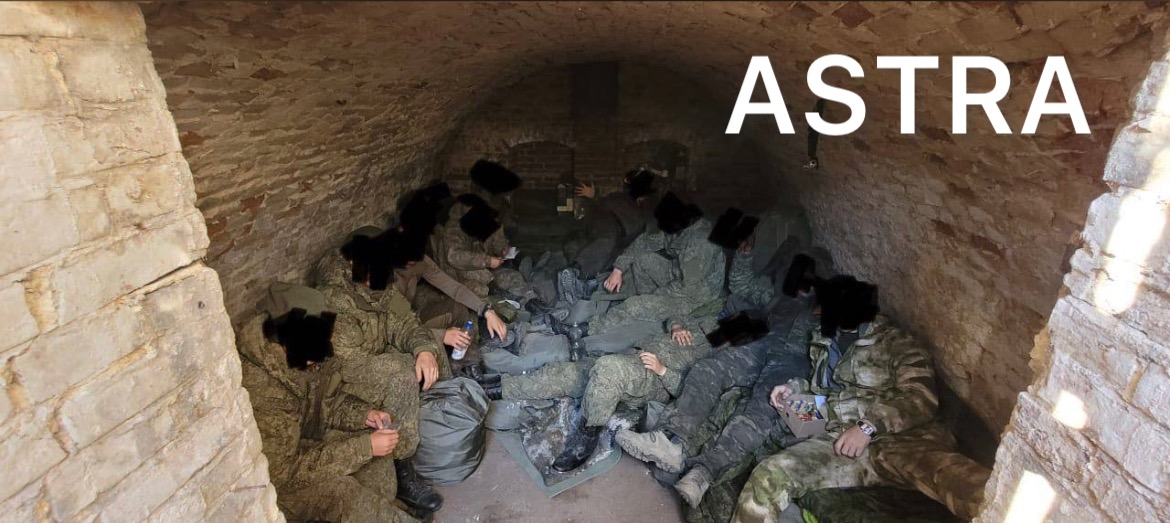
9/ On 14 October they were disarmed and taken away to be imprisoned in a basement in Staromlynivka, Donetsk region (pictured here). They were used as labourers in a wooded area near Fedorovka to build earthworks for about two weeks.
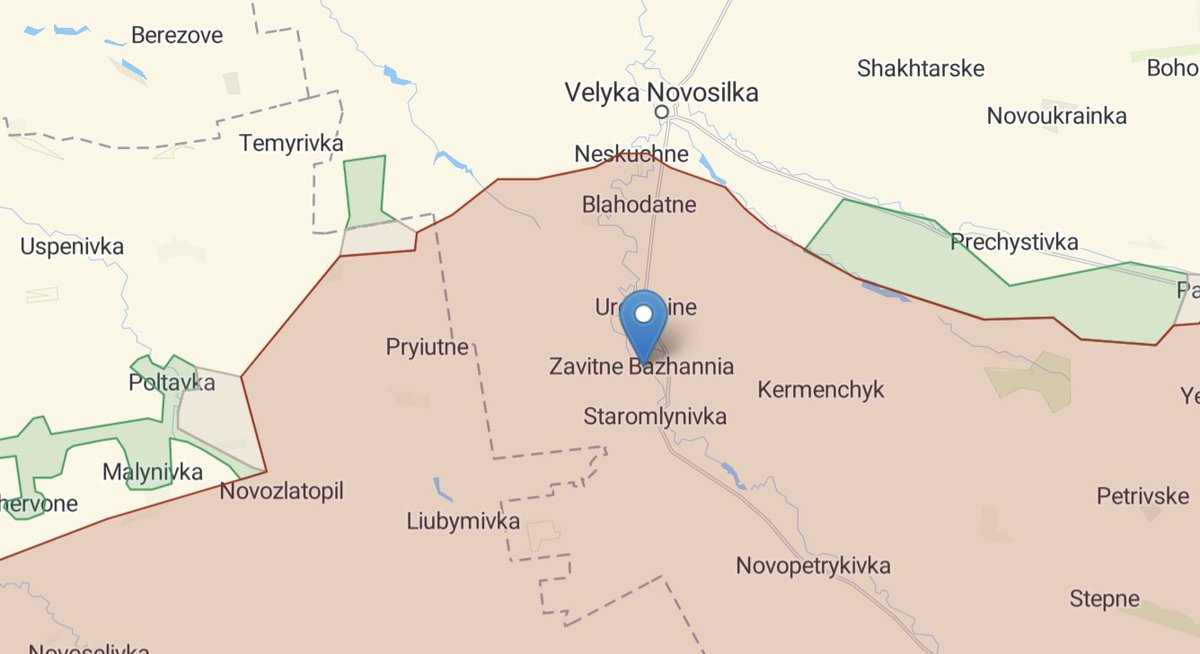
10/ The men were asked again on 31 October if they had changed our minds about refusing to take part in the fighting. When they said they had not, they were sent to another basement-prison in Zavitne Bazhannya which was guarded by contract soldiers.
11/ Some mobilised soldiers who had, like the prisoners, refused to fight, were also being employed as guards. Mikhail writes of this place, where he was held for two weeks:
"There were two rooms in our basement with a concrete floor. My room was about 5 by 3 meters.
"There were two rooms in our basement with a concrete floor. My room was about 5 by 3 meters.
12/ We slept in sleeping bags on planks. We had to close the holes that let in light and fresh air to keep the heat in. As a result, both day and night in the basement it was constantly dark. The door to the cellar had an iron door which was locked from the outside.
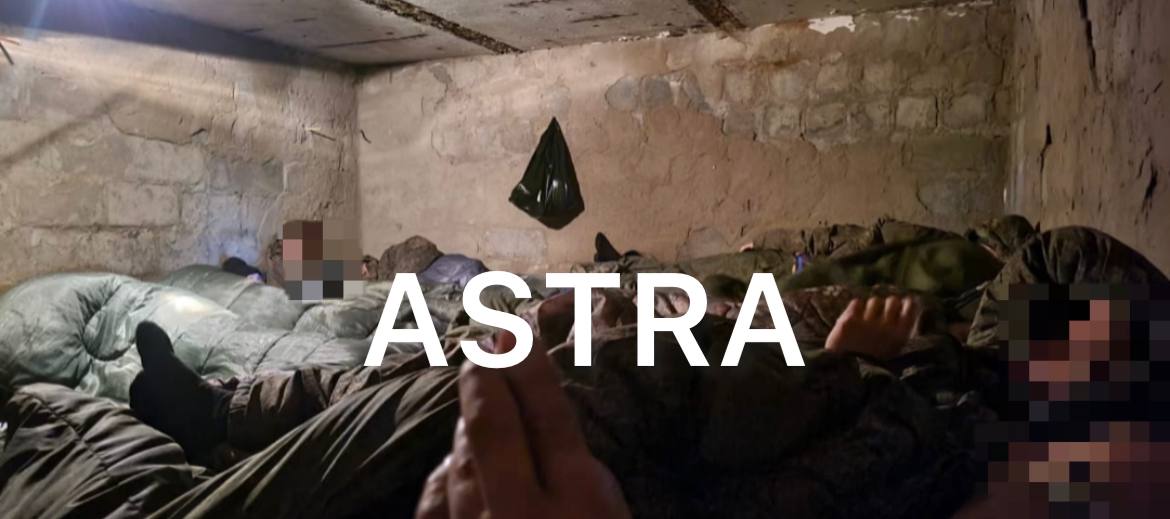
13/ We were completely deprived of freedom of movement. We had to go to go to the toilet one by one. We often had to pee in a tank of about 50 liters."
14/ The prisoners were initially denied any food and then given minimal rations:
"We were not fed for the first three days. We were given three expired rations [to share between] 9 people, which we ate for three days. Then they started feeding us once a day.
"We were not fed for the first three days. We were given three expired rations [to share between] 9 people, which we ate for three days. Then they started feeding us once a day.
15/ Then we were allowed to use our own money to buy a cooker and gas cylinders to boil water for tea and noodles, which the guards bought us."
16/ The basement was dirty and infested with rodents. "Mice were constantly running around in the basement next to us. One of them we caught in a box where it was gnawing on our expired rations."
17/ The prisoners were also denied any access to personal hygiene and were unable to wash themselves. Not surprisingly, this was bad for their health.
"Many who were kept in the basement had various diseases. Many, including me, suffered from headaches.
"Many who were kept in the basement had various diseases. Many, including me, suffered from headaches.
18/ Almost everyone coughed and suffered from fever. In response to our complaints about the state of health, we were given analgin and other pills, which practically did not help."
19/ Mikhail complains of the behaviour of the deputy commander of the 5th Army and his officers, who "periodically talked to us, behaved rudely, threatened us with criminal cases for desertion and evasion of military service duties." He says normal procedures were ignored.
20/ "Many [of us] were ready to initiate cases and transfer to normal conditions of pre-trial detention facilities, with procedural registration. We asked to be sent to the Military Prosecutor's office or a military court.
21/ However, we continued to be punished by being kept in inhumane conditions, without any legal grounds." He says the officers refused to give them any documentation stating on what grounds they were being held.
22/ Mikhail and another colleague with pre-existing medical conditions were released from the basement on 13 November and taken to Rostov-on-Don, where they were told to go to the hospital on their own. However, the hospital wouldn't admit them without a referral.
23/ Instead, Mikhail says, "I rented a hotel [room] at my own expense and waited to see what would happen to me next. My phone number was known to my commanders, but no one was looking for me. I was simply abandoned in a strange city."
24/ Mikhail reached Moscow on 27 November, where he contacted the investigating authorities with the aid of a lawyer. He says (despite his medical condition) that "I have no intention of evading the duties of military service.
25/ I do not refuse to continue my service, but I want to serve closer to home. I'm in need of medical and psychological rehabilitation."
26/ (Note though that while such statements are common among refusenik mobiks, they probably doesn't reflect their true intentions in every case – it's a formula that helps to defend them against accusations of betrayal of a lack of a patriotism.)
27/ Mikhail asks "to bring to criminal responsibility unidentified military officials for exceeding their official powers, illegal imprisonment and abduction of me, Mikhail Pavlovich Nosov and other military personnel." It remains to be seen if his case will ever be heard. /end
Source:
t.me/astrapress/165…
t.me/astrapress/165…
• • •
Missing some Tweet in this thread? You can try to
force a refresh