#ChandrasekharAzad#Thread
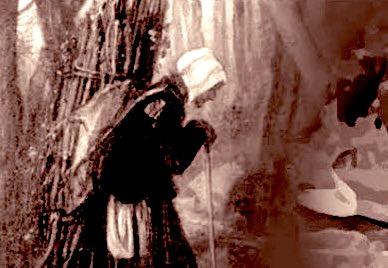
“O old woman, don't come here, your son was a thief-dacoit, so the Goras killed him, the Bhil standing there laughingly said to an old woman wrapped in a dirty dhoti who was collecting wood in the forest.”
No, Chandu has sacrificed his life for freedom, said the old woman proudly. The name of that elderly woman was Jagrani Devi. This mother lovingly called that son Chandu and the world freed him”. Yes, we all know him by the name of Chandrashekhar Azad.
After father's death, Azad's poor destitute old mother instead of reaching out to anyone, used to collect wood and cow-dung from the forests and kept feeding herself by selling sticks and wood. Shameful thing is that his condition continued till 2 yrs (1949) after independence.
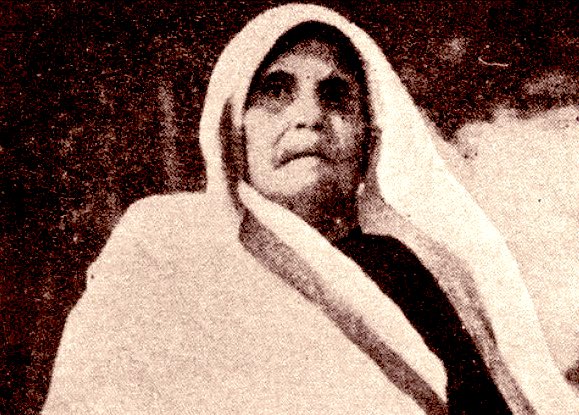
After this, Sadashiv ji brought her with him to Jhansi, keeping his promise with Chandrashekhar Azad, but his house was very small, so he arranged for Azad's mother to stay at the house of another friend of Azad, Bhagwan Das Mahore. Managed and served them.
In March 1951, when Azad's mother Jagrani Devi died in Jhansi, Sadashiv ji himself performed her last rites. After the death of Azad's mother, the people of Jhansi built a bench in her memory at a public place in her name.
The then Congress government of the state declared this construction as an illegal and illegal work done by the people of Jhansi. But the citizens of Jhansi decided to install the statue of Chandrashekhar Azad's mother, not giving importance to that mandate of the government.
When the government came to know that the statue of Azad's mother has been prepared and many former revolutionaries including Sadashiv Rao, Rupnarayan, Bhagwan Das Mahor are going to install the statue with the help of the people of Jhansi.
So he declared the establishment of the statue of the immortal martyr Chandrashekhar Azad's Matashree as a threat to the country, society and law and order of Jhansi and banned the program of establishment and imposed curfew in the entire Jhansi city.
But the public and the revolutionaries together set out to install the statue of Azad's mother. The then government, shocked by this horrendous flying on the streets of Jhansi under its order, ordered its police to shoot Sadashiv.
But keeping the statue of Azad's mother on his head, Sadashiv, who was moving towards the back, was surrounded by the public from all sides. Then the police lathi-charged the procession. Hundreds of people were injured, dozens were crippled and some even died.
The statue of Chandrashekhar Azad's mother could not be installed. Even 5 feet of land was not found in the country for a 2-3 feet statue of that great mother for whom Azad had sacrificed his life.
• • •
Missing some Tweet in this thread? You can try to
force a refresh

The Brutal Rape And Murder Of Kashmiri Pandit Woman, Girija Tickoo.
“After the Kashmiri Pandits Exodus on the 19 January 1990, the Jihadi terrorists sponsored by Pakistan were constantly attacking the Kashmiri Hindus who didn’t flee the valley and various reports of atrocities keep coming quietly. When tragedy became the new normal for Kashmir, the public with a very limited memory ignored many stories of pain and anguish; one heart wrenching unfortunate story was of Girija Tickoo’s brutal rape and murder that happened thirty years ago in June 1990.
Girija Tickoo was a Kashmiri Pandit married woman from Bandipora and worked as a laboratory assistant at a government school in the Kashmir valley. She fled the Kashmir region alongwith her whole family and settled in Jammu in the aftermath of the “Azadi Movement” by the JKLF(Jammu Kashmir Liberation Front, headed by Yasin Malik) militants. One day, she received a call from someone who told her that the communal separatist movement in the valley had subsided and she can come back and collect her salary dues. She was assured that she would return home safely and the area was now safer.
The Samudra Manthan embodies the journey of life undertaken by Jeevatma during its tenure on earth.
This one minute thread 🧵 will give you good insight, read this till the end:
The Mandara mountain represents the virtues of steadiness and concentration. The tortoise symbolizes the spiritual withdrawal of a person into his own Consciousness.
Vasuki embodies the desire in us to attain liberation by steadying our minds, concentrating and contemplating on the higher Self.
When Hanuman Ji scared Aurangzeb when he came to destroy his temple!
This one minute thread 🧵 will give you goosebumps, read this till the end:
It was the period of 12th century (around 1143). King Prola II of Kakatiya dynasty had gone for hunting in the forest. When he got tired and started resting under a tree, he heard the chanting of Lord Rama in the middle of that dense forest.
The king was surprised that who is in this forest, who is chanting Lord Rama. When the king reached that place, he saw a wonderful sitting statue of Hanuman ji there. The sound of chanting of Lord Rama was heard from within this statue.
Indore's ruler Subedar Tukoji Rao Holkar I, who defeated Tipu Sultan in the war, is missing from the pages of history.
Take out 2 minutes and read this thread, it will give you goosebumps!
Ruling Period (1795-1797) Tukoji Rao Holkar always assisted his uncle Subedar Malhar Rao Holkar in the war fields.
After Malhar Rao Holkar's death, Mateshwari Ahilyabai made him her commander. He always remained a trusted devotee of Matoshree Ahilyabai Holkar and Peshwa. He was born in 1723.
During Matoshree's reign, he participated in many wars. After Mahadji Scindia's death in 1794, Subedar Tukoji Rao Holkar was the head of the Marathas.
After Matoshree's death, all the rights of Indore state were handed over to Subedar Tukoji Rao. During his tenure, the condition of the state was completely satisfactory.
Subedar Tukoji Rao Holkar was a skilled commander and a brave warrior and a simple living fearless person. He was also honoured by the Peshwa by giving him a place in the advisory committee of 12 brothers.