Read on Twitter
@QuincyInst @WilliamHartung 1/25》Which "ravages of climate change" are you thinking of, precisely?
Sea-level rise?
sealevel.info/learnmore.html
I presume not, since sea-level trends haven't significantly accelerated. I trust that's obvious from this graph, of the highest-quality mid-Pacific measurement record:
Sea-level rise?
sealevel.info/learnmore.html
I presume not, since sea-level trends haven't significantly accelerated. I trust that's obvious from this graph, of the highest-quality mid-Pacific measurement record:
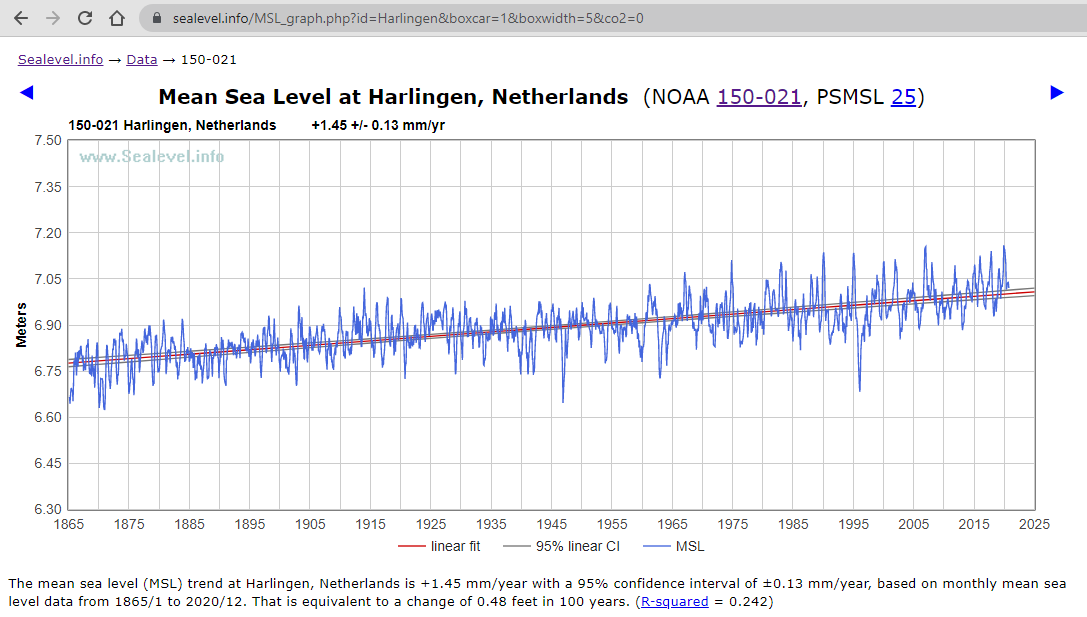
@QuincyInst @WilliamHartung 2/25》The Dutch have done an especially good job of measuring sea-level (for obvious reasons). Here's one of their best measurement records:
sealevel.info/MSL_graph.php?…
sealevel.info/SL_Harlingen_2…
sealevel.info/MSL_graph.php?…
sealevel.info/SL_Harlingen_2…

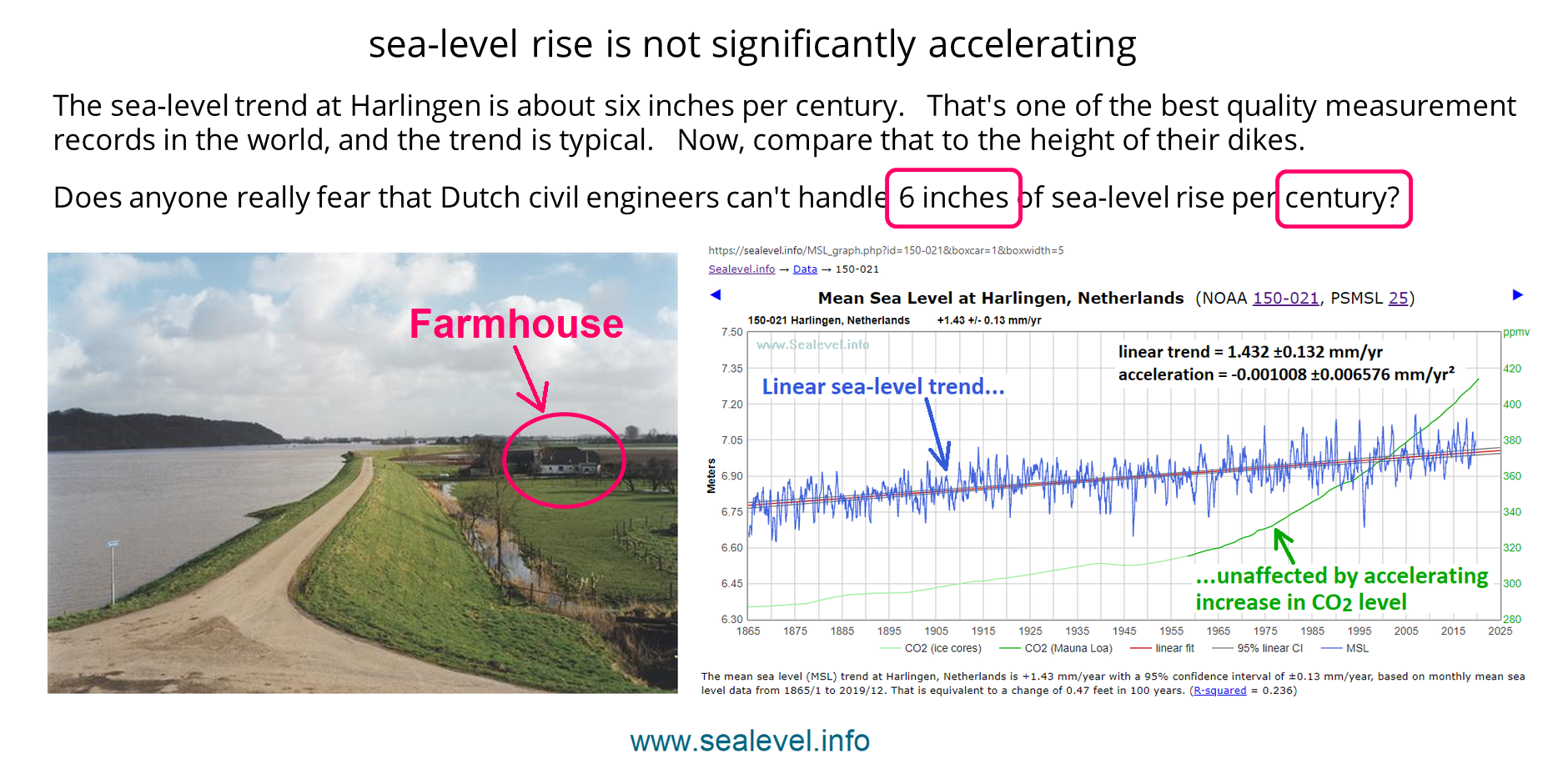
@QuincyInst @WilliamHartung 3/25》Here's that measurement record juxtaposed with a photo of one of their famous dikes. A farmhouse in the picture gives a sense of the scale:
sealevel.info/Dutch_dike_vs_…
sealevel.info/Dutch_dike_vs_…

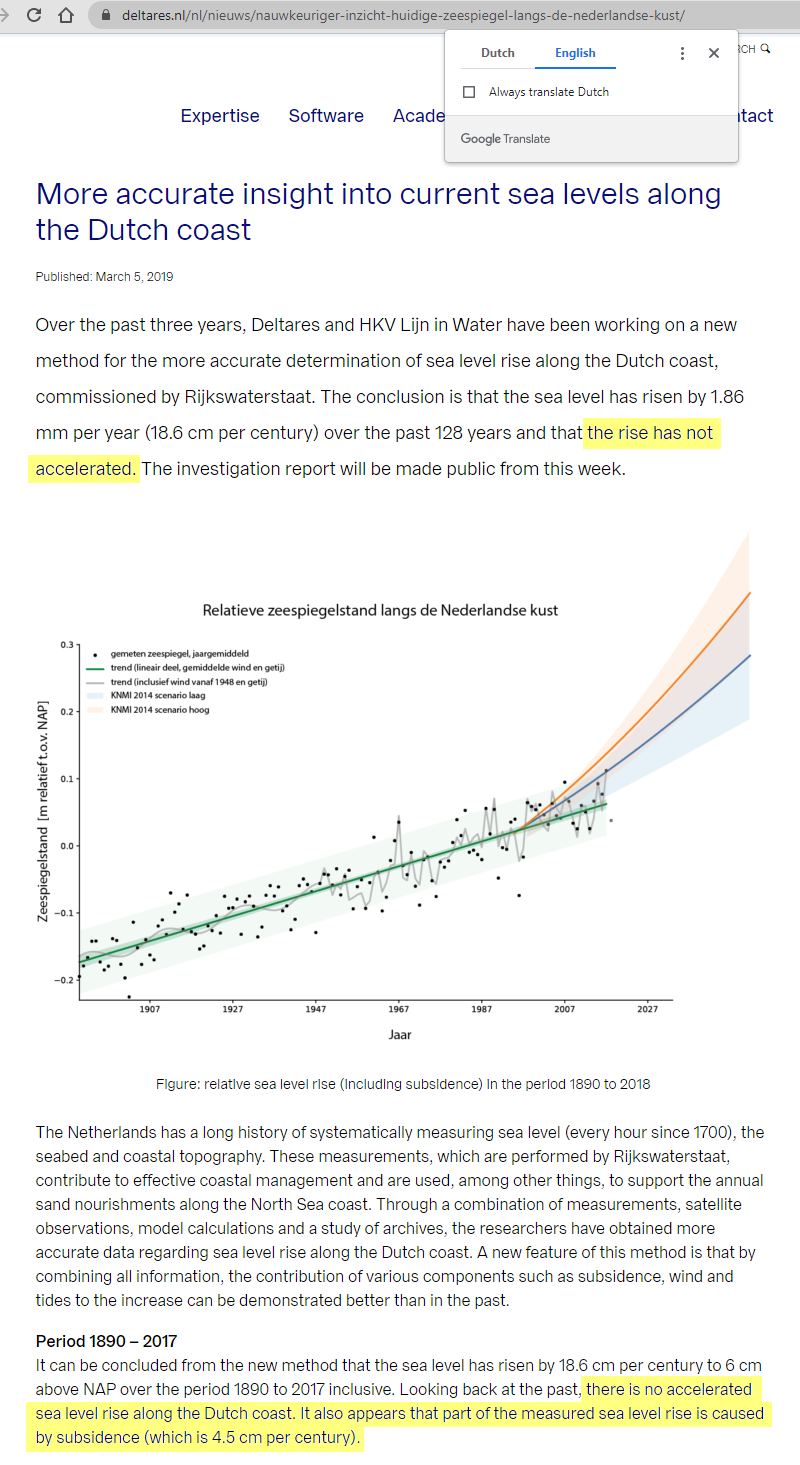
@QuincyInst @WilliamHartung 4/25》A recent Dutch Report found that climate change has not accelerated sea-level rise there:
web.archive.org/web/2022081604…
Excerpt:
>"De conclusie is dat de zeespiegel de afgelopen 128 jaar met 1,86 mm per jaar (18,6 cm per eeuw) is gestegen en dat de stijging niet is versneld."
web.archive.org/web/2022081604…
Excerpt:
>"De conclusie is dat de zeespiegel de afgelopen 128 jaar met 1,86 mm per jaar (18,6 cm per eeuw) is gestegen en dat de stijging niet is versneld."
@QuincyInst @WilliamHartung 5/25》Here's a Google Translation of the web page, to English:
sealevel.info/nauwkeuriger-i…
Excerpt:
>"The conclusion is that the sea level has risen by 1.86 mm per year (18.6 cm per century) over the past 128 years and that the rise has not accelerated."
sealevel.info/nauwkeuriger-i…
Excerpt:
>"The conclusion is that the sea level has risen by 1.86 mm per year (18.6 cm per century) over the past 128 years and that the rise has not accelerated."

@QuincyInst @WilliamHartung 7/25》Do you think that hurricanes are "ravages of climate change?" But hurricanes, nor'easters, and tropical cyclones have not worsened.
sealevel.info/learnmore.html…
sealevel.info/learnmore.html…
@QuincyInst @WilliamHartung 9/25》Droughts, maybe?
sealevel.info/learnmore.html…
No. It's just the opposite, in fact! Not only are droughts not worsening, scientists know that rising CO2 levels help mitigate drought impacts, by making plants more water-efficient and drought-resistant.
sealevel.info/learnmore.html…
No. It's just the opposite, in fact! Not only are droughts not worsening, scientists know that rising CO2 levels help mitigate drought impacts, by making plants more water-efficient and drought-resistant.
@QuincyInst @WilliamHartung 10/25》Elevated CO2 reduces drought impact by improving CO2 stomatal conductance relative to transpiration. I.e., it helps plants get needed carbon with less expenditure of water. That's extremely helpful when water is short. Here's a paper about corn:
sciencedirect.com/science/articl…
sciencedirect.com/science/articl…
@QuincyInst @WilliamHartung 11/25》Did you think climate change was worsening wildfires?
sealevel.info/learnmore.html…
Guess again.
sealevel.info/learnmore.html…
Guess again.
@QuincyInst @WilliamHartung 12/25》Neither current temperatures nor recent temperature trends are unprecedented or worrisome. In fact, we're enjoying what scientists call a "climate optimum."
sealevel.info/learnmore.html…
sealevel.info/learnmore.html…
@QuincyInst @WilliamHartung 13/25》Nor has anything else of consequence worsened significantly due to manmade #ClimateChange. The polar bears, coral reefs & pikas are all doing fine. NONE of the significant predicted harms from global warming are real.
Just the opposite, in fact:
Just the opposite, in fact:
https://twitter.com/ncdave4life/status/1361063480804192258
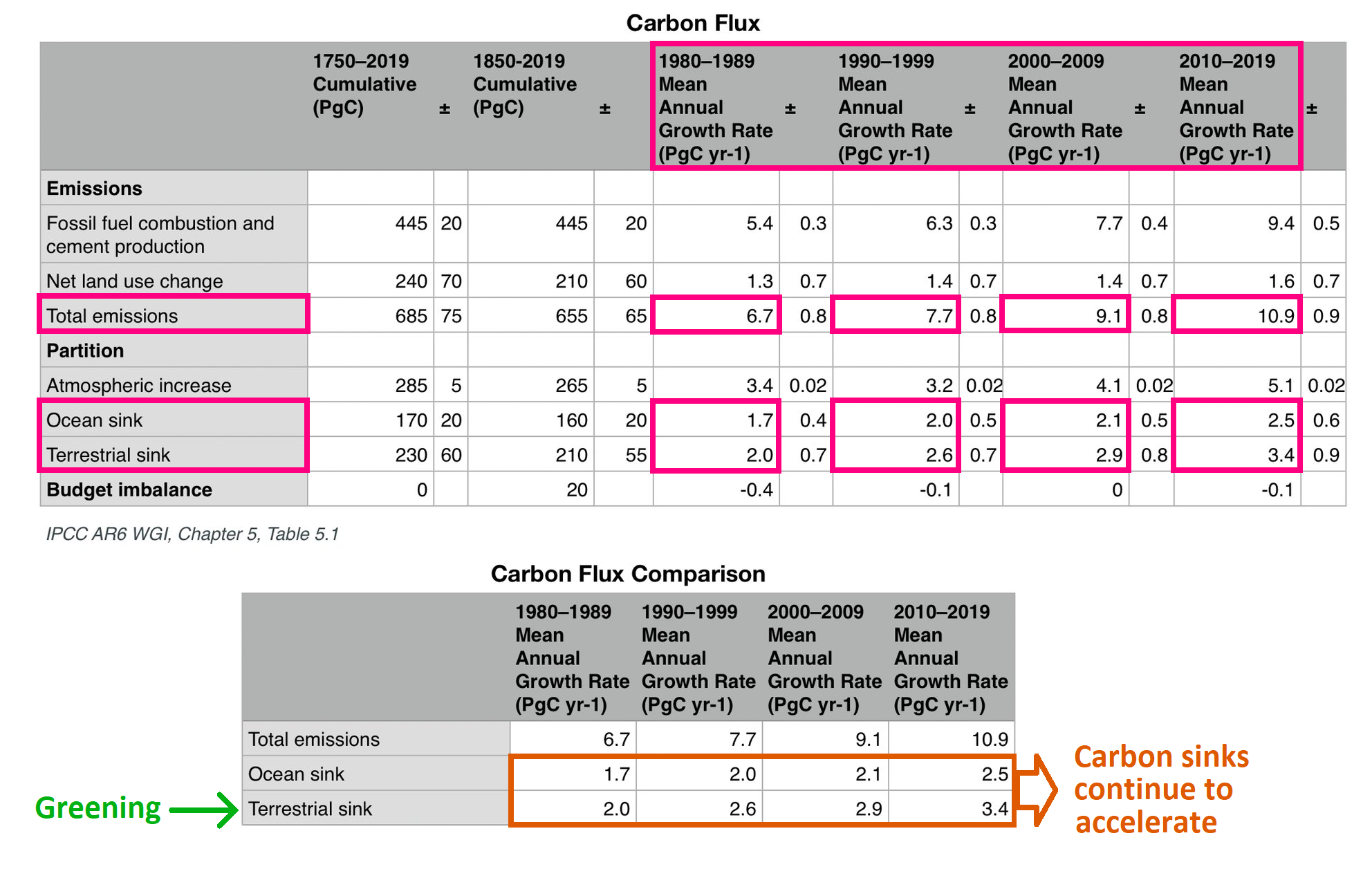
@QuincyInst @WilliamHartung 14/25》Rising CO2 levels ARE having significant effects, but I'd hardly call this "ravages."
nasa.gov/feature/goddar…
nasa.gov/feature/goddar…

@QuincyInst @WilliamHartung 16/25》Even National Geographic @NatGeo noticed the improvement (though they've since scrubbed this article from their website):
sealevel.info/Owen2009_Sahar…
sealevel.info/Owen2009_Sahar…
@QuincyInst @WilliamHartung @NatGeo 18/25》That's especially beneficial for the world's most vulnerable people, who live in arid regions, where agriculture is difficult and famines used to be frequent, like the Sahel. Here's @newscientist reporting the "remarkable environmental turnaround."
sealevel.info/Pearce2002_Afr…
sealevel.info/Pearce2002_Afr…
@QuincyInst @WilliamHartung @NatGeo @newscientist 19/25》This seems to be another version of the same article:
newscientist.com/article/dn2811…
newscientist.com/article/dn2811…
@QuincyInst @WilliamHartung @NatGeo @newscientist 19/25》Note their report of "70% increase in yields of local cereals such as sorghum and millet in one province in recent years." Those are C4 plants.
It was once thought that C4 plants would benefit little from rising CO2 levels. But C4 crops are favored for their…
It was once thought that C4 plants would benefit little from rising CO2 levels. But C4 crops are favored for their…
@QuincyInst @WilliamHartung @NatGeo @newscientist 20/25》
…drought-hardiness and elevated CO2 is especially beneficial under dry conditions, even for C4 crops.
(Most crops are C3, and they benefit even more.)
…drought-hardiness and elevated CO2 is especially beneficial under dry conditions, even for C4 crops.
(Most crops are C3, and they benefit even more.)
https://twitter.com/ncdave4life/status/1296144881849643010
@QuincyInst @WilliamHartung @NatGeo @newscientist 21/25》The benefits of elevated CO2 have been heavily studied by agronomists for over a century. The "CO2 fertilization" effect on crop yields, and the improvements to water-efficiency and drought-resilience, greatly improve food security & reduce famines.
sealevel.info/negative_socia…
sealevel.info/negative_socia…
@QuincyInst @WilliamHartung @NatGeo @newscientist 22/25》E.g., here's a study about how elevated CO2 ("eCO2") benefits wheat:
ncbi.nlm.nih.gov/pubmed/26929390
ncbi.nlm.nih.gov/pubmed/26929390
@QuincyInst @WilliamHartung @NatGeo @newscientist 23/25》Elevated CO2 is especially beneficial for high protein legumes, like beans, peas & alfalfa, so it helps mitigate protein shortages in poor countries. Here's a paper about it:
frontiersin.org/articles/10.33…
All major crops have been studied. They all benefit from more CO2.
frontiersin.org/articles/10.33…
All major crops have been studied. They all benefit from more CO2.
@QuincyInst @WilliamHartung @NatGeo @newscientist 24/25》Plus, scientists call the warmest climate periods (including times warmer than now, like the mid-Eemian) "climate optimums," because they're objectively better than cold times. More CO2 is unambiguously beneficial.
Is this what you call "ravages?"
sealevel.info/learnmore.html…
Is this what you call "ravages?"
sealevel.info/learnmore.html…
@QuincyInst @WilliamHartung @NatGeo @newscientist 25/25》To understand a politicized topic like #ClimateChange, you need to hear from BOTH sides.
I'm here to help:
I'm here to help:
https://twitter.com/ncdave4life/status/1432810945017962505
• • •
Missing some Tweet in this thread? You can try to
force a refresh