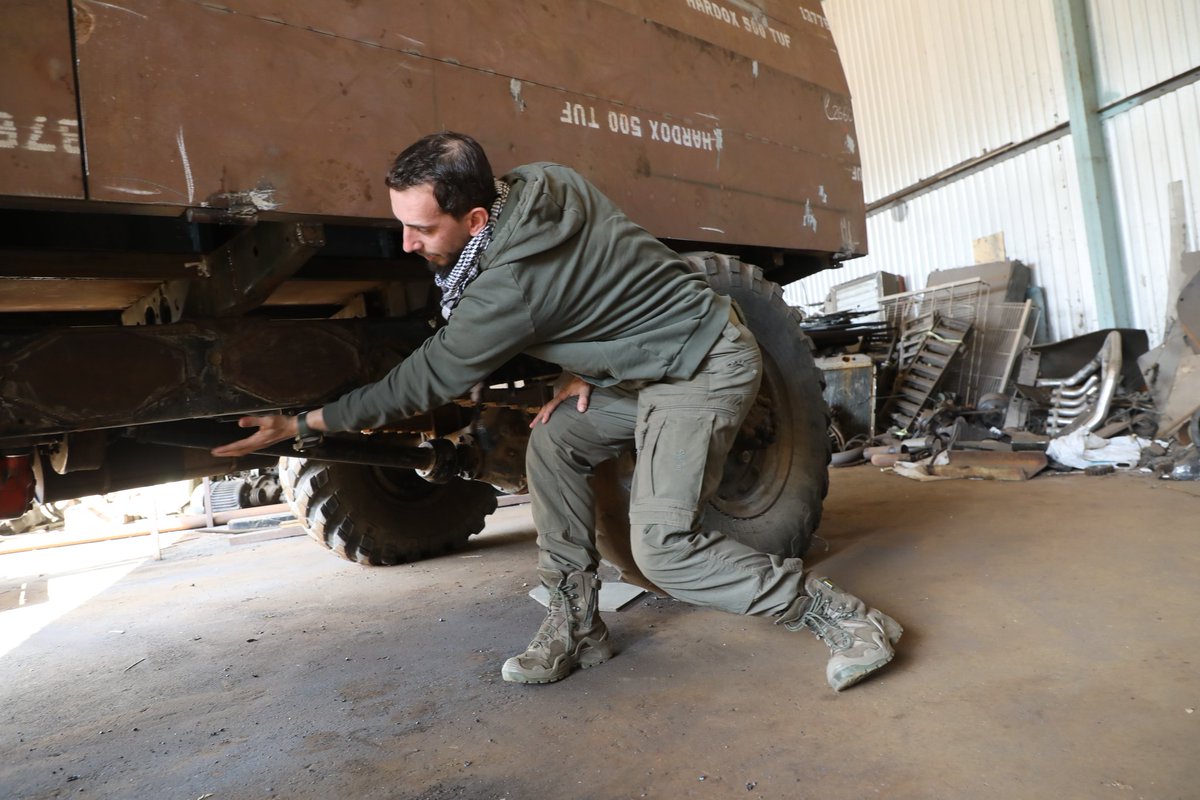
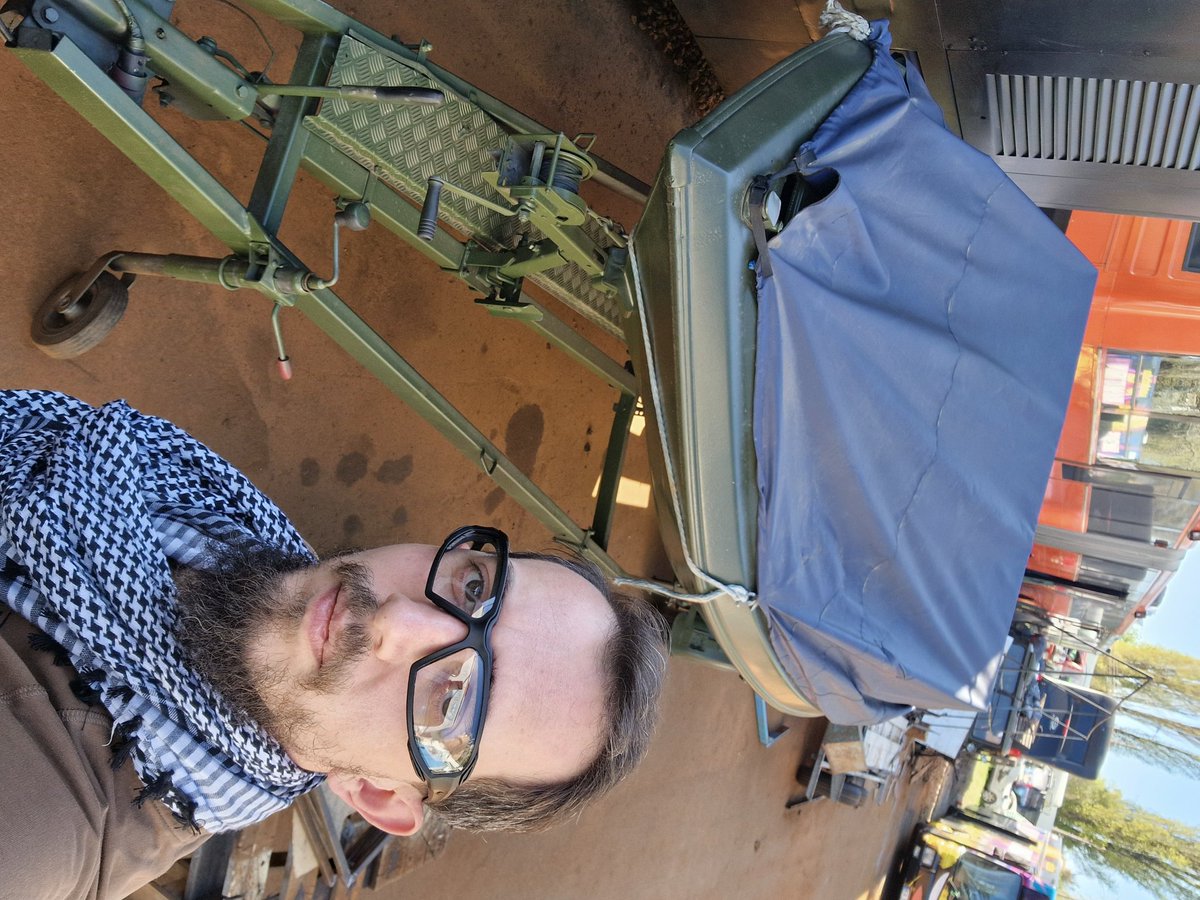
This is not MadMax. This is the MEDIVAC for Oleg Gubal Mobile Hospital Complex 100% funded by #Romanian donors on my Facebook page. This Vehicle is 90% ready. Tires will be changed. It will be anti-mine NATO standard protected. This will take the wuunded from 0 line. Thread: 1/N
This is the logistical vehicle. I know, right? Terminator 2 movie Peterbuild? Same model. Just that this is armored and will have 6 beds for medics. Kitchen. Satinization for surgery tools used in the Emergency Room (below). Generators room. All armor is NATO standard 2/N
Since Ujraine has lots of rivers and bodies of water: This is a speed boat for crossing rivers, modified for wounded soldiers. Stay with me here: 3/n
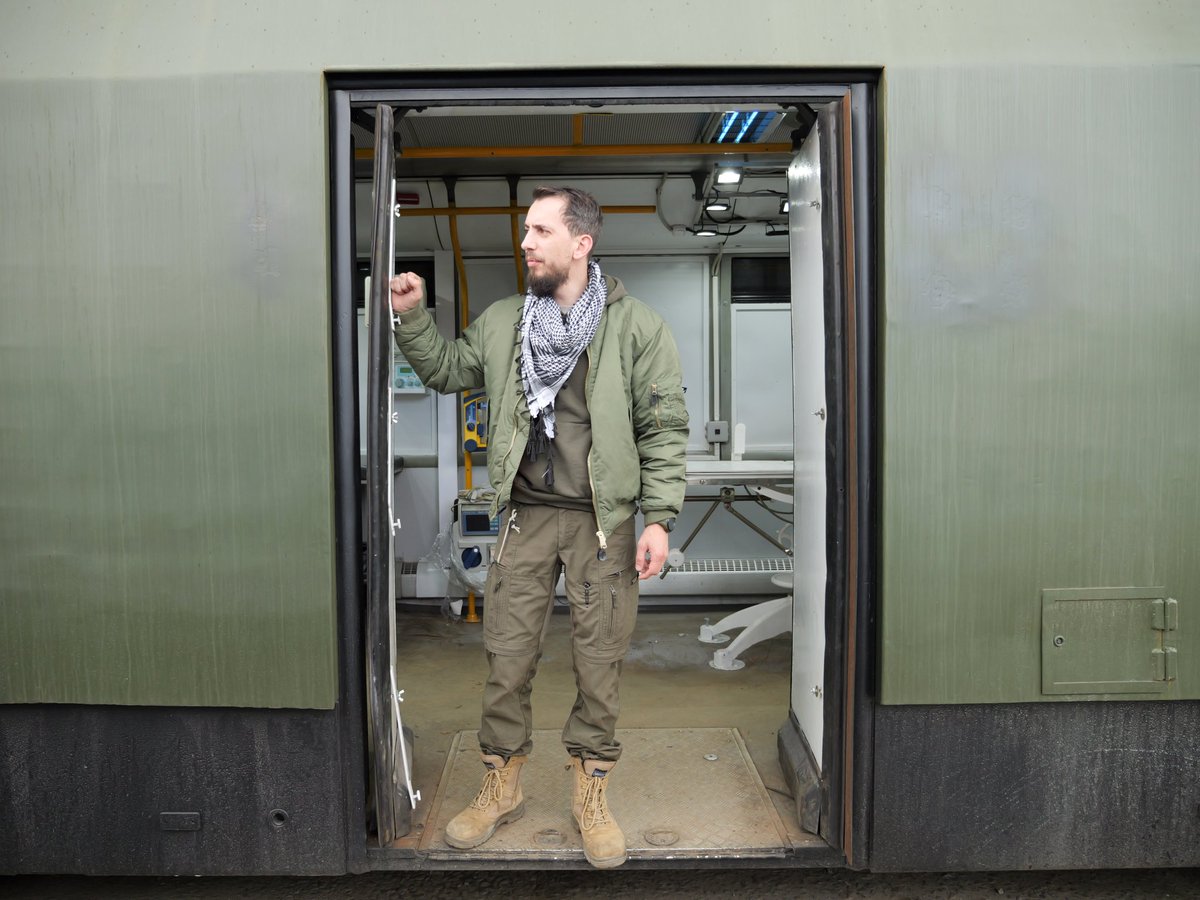
This is the "Emergency Room". It has double NATO standard armour. Spevial developed pneumatic suspentions. Thisnwill stay around 15 to 20 km from the front lines to receive wounded soldiers from the MEDIVAC. It was a capacity of at 30 surgeries a day. That's 30 lives saved 4/n
That means 900 people in a month will be able to stay alive and see their families again. 2700 in 3 months. And those are the low expectation numbers. 5/n
Inside it there is state-of-the art medical equipment. Not for simple interventions, but for vritical and conplex ones. I have no expertise in this domain, but people with expertise say this is quite an amazing achievement in thensense of the conplexity of the equippment. 6/n
All of this cost around 130.000 euro and all was croundfunded on my facebook page and managed by autorota.com.ua Charity Fundation (one of the few ones i trust) created by Misha, a Ukrainian-Romanian soldier who is supervising the project. 7/n
If i could do it, you could do it too. This is an unique project and will serve a radius of about 25km (50 km lenght of the front lines). So we need more. Retweet this if you want. Or crouwdfund yourself. Angel, the paramedic with the idea want to offer its know-how to anybody8/n
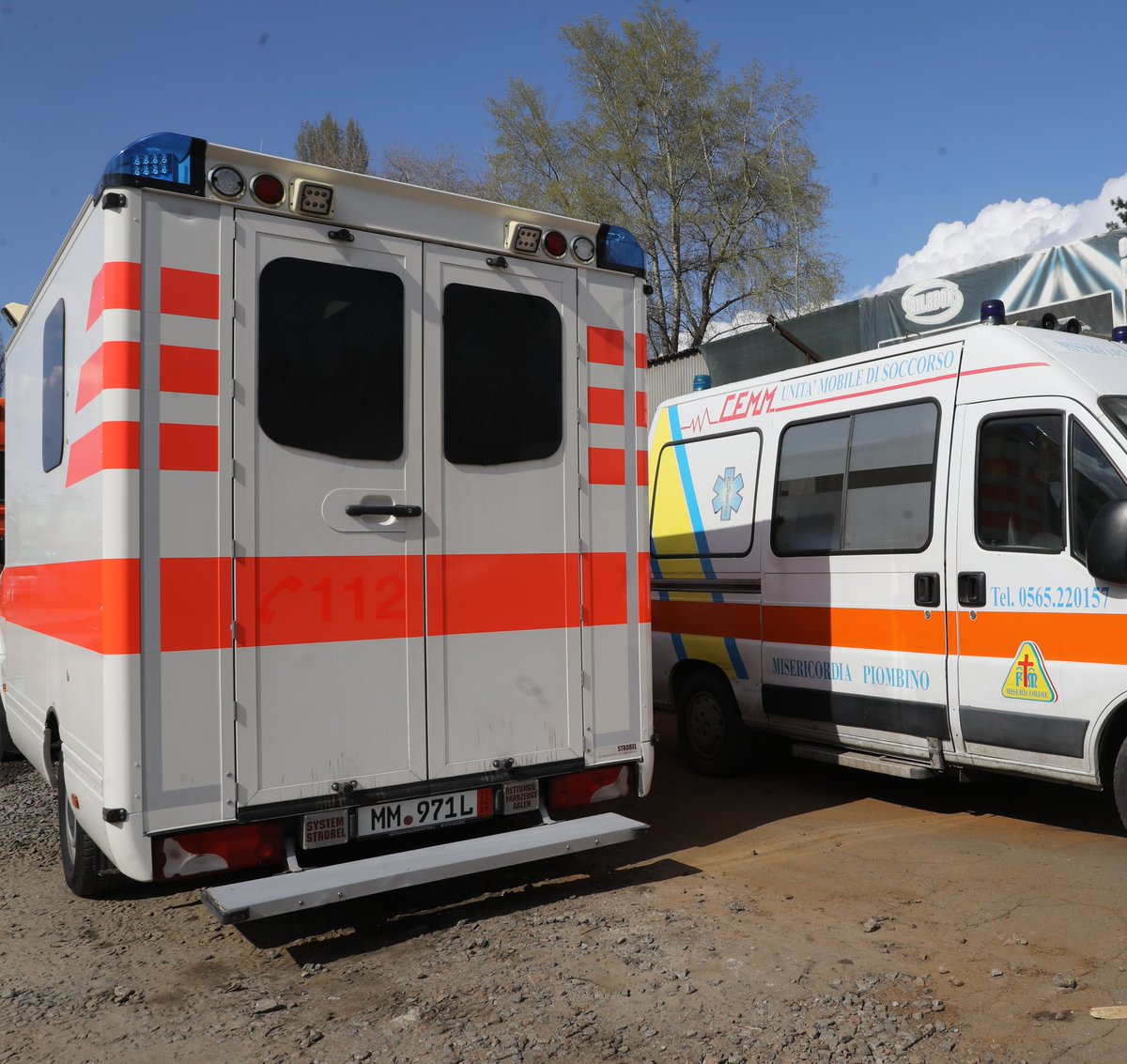
After the wounded will be stabilisd in the "Emergency Room" they will be taken by Intensive Care Ambulances to the nearest hospitals that i purchased from Romanian donors too. Fron 3 to 5 ambulances will serve this Mobile Hospital Complex. 9/n
Spread the word! Let people known what regular fellas can make a huge difference in this war! This complex is planned to go into it's first missions 2 weeks from now in Bakhmut/Avdiivka area.
The dynamics of the war are shifting in Ukraine’s favor for the first time since 2023. And I can back up what I’m saying with several arguments:
1. Unsustainable russian losses:
- Over the past 5 months, Russia has mobilized 148,000 troops. Also over the past 5 months, the Delta information system—where Ukrainians can view the entire front line and where targets, attacks, and combat reports are uploaded—has recorded 156,000 Russian dead and wounded.
Added to these are those taken out of action by artillery, those for whom there is no video evidence, and those eliminated inside buildings for whom there is no evidence (only those for whom there is video evidence are counted).
Over the past 18 months, since Ukrainian drones have filled the sky, the russian army has changed its assault tactics, shifting from mechanized strikes to infantry infiltrations. Mechanized units are nearly impossible to use in Ukraine at this time.
Tanks and infantry fighting vehicles are easy targets for swarms of drones. The use of infantry to infiltrate positions behind Ukrainian lines has worked (with massive casualties) in Chasiv Yar (where we first saw this tactic used on a large scale), Pokrovsk, Kupyansk, and Myrnograd. This tactic worked because the russians have a deeper recruitment pool, being a larger country and offering much higher contracts and salaries than the Ukrainian Armed Forces.
However, russia’s human resources are not infinite, and for the first time since the war began, they are dwindling.
In the absence of a massive mobilization of russians, or innovations and inventions in infantry protection, and in the absence of a dramatic change in Ukrainian drone production or some extraordinary event, this will continue to happen for a long time.
This will lead to the constant, continuous, and irreversible degradation of russian forces. This, in turn, will allow Ukraine to create and exploit vulnerabilities in russian defensive lines. 1/
2. Freezing of the contact line:
- The last 3 months have been the worst from a territorial perspective for the Russians.
February 26 marked a loss of 37 km² for the Russians. March 26 saw a gain of only 25 km². And in April, a gain of 94 km² (data provided by Black Bird Group), meaning a total of +84 km².
For perspective: during the same period in 2025, the Russians occupied 613 km², and in 2024—311 km².
The infantry losses from point 1 led to a virtual freeze of the front along nearly its entire 1,200 km length. This does not mean that russia will not attack again in the summer with greater success. Yes, that will happen, but the direction the war is taking is by no means toward a russian victory.
2/
3. Reform of the Ukrainian Army:
- President Zelenskyy announced that starting in June-July of this year, a reform of the Army will be implemented, with pay raises for those fighting on the front lines to between 5,000 and 8,500 euros per month.
Another component of the reform is limiting contract terms and allowing those who have been fighting for too long to return home. Another would be ensuring a front-line rotation of approximately 45 days. All these reforms will take time to implement, and we will most likely see the first effects in the fall or winter of 2026.
An increase in Ukrainian mobilization, a reduction in casualties through the widespread introduction of UGVs, an improvement in the quality of the Army through continuous rotations, combined with a decline in Russian numbers and the constant deterioration of the Russian military, will lead to a very bad year in 2026 for Russia;
4/
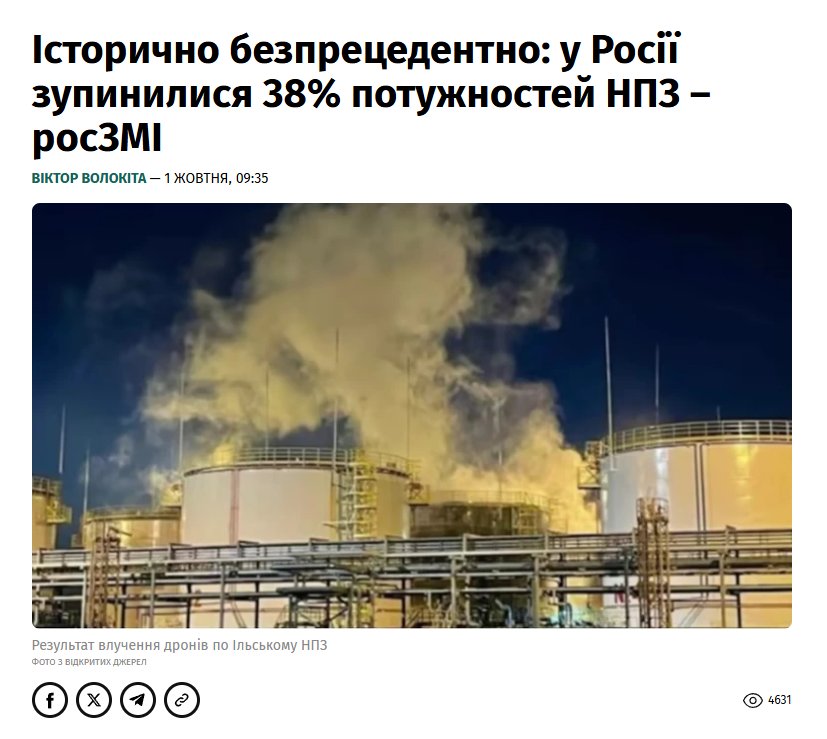
Ukraine continues its kinetic sanctions. The Russians admit: 38% of refining capacity has been shut down.
On September 20, I made a personal analysis based on information from open sources. My estimate at the time was 40%. 1/
I detailed figures, data, and sources on my substack to visually attest to the destruction. Nothing mattered to the flood of Russian bots and a few dozen real people incapable of reason who threatened me, insulted me, and attacked me in every way possible.
2/
Yesterday, RBS, a Russian news agency based in Moscow, published a comprehensive analysis stating that 38% of total refining capacity is shut down. The Russians also say that only 70% of this total is due to "Ukrainian drone debris." The rest is due to scheduled repairs and maintenance or other reasons. Should we believe them? I say they are trying to gloss over reality, at least a little.
Ukraine's kinetic sanctions: 40% of Russia's refining capacity affected in August and September!
The campaign of sanctions against Russia imposed by the Ukrainian Armed Forces is working, and even though the number of strikes this month has halved, the affected refining capacity has doubled. Before we get to the effects, here are some details about this campaign, which is at least as effective as SpiderWeb or the destruction of the Russian fleet in the Black Sea:
image source: @Tendar
1/
Russia has 46 oil refineries, with an estimated annual refining capacity of 316.9 million tons per year. For comparison, Romania has a capacity of 13 million tons per year, Germany 104 million tons per year, Italy 87.1 million tons per year, Austria 10.2 million tons per year, and France 60.4 million tons per year. To match Russia, I would add the UK to the list with 58 million tons per year. So indeed, as John McCain said, "Russia is a refinery masquerading as a country."
Of the 46 refineries, 19 were hit by the Ukrainian Armed Forces. One was hit by the Russian Forces of Corruption in collaboration with the Natural Forces of God (the Omsk Refinery was flooded and damaged after a dam broke on April 5, 2024).
2/
In August and September alone, Ukraine hit 14 different refineries 21 times (for example, the Saratov refinery was hit three times in those two months). The total refining capacity affected was 126.9 million tons per year. This represents 40.5% of Russia's total annual refining capacity. To give you an idea, this is equivalent to the entire refining capacity of Romania—known for its oil fields used in World War II—Germany—the economic engine of Europe—and Austria—home to the giant OMV—combined. All this capacity in just two months.
What does affected mean? Well, some of the refineries were shut down indefinitely, while others were only temporarily shut down and later resumed operations. That's why we see Ukraine hitting one refinery eight times, as in the case of Ryazan, with an annual refining capacity of 17.1 million tons of crude oil.
3/
A new world is beginning! Are we prepared? Do not just read the headline!
1. The Axis of Evil:
Improperly said, it was born. It had been in the making for some time. A few years ago, I was also talking about the Russia-China-North Korea-Iran as the Axis of Evil. Many, many years ago, serious and respectable analysts were pointing to such a future. That future is now beginning. In Beijing, in addition to the military parade that sought to showcase the scale, range, and modernity of the PLA (People's Liberation Army—i.e., the Chinese Army), China wanted to show something else:
1/
That it is the center of a new political, social, and economic construct that will shape the global future. And it succeeded in doing so. It succeeded in making Kim Jong-Un's diplomatic debut on the international stage, with the North Korean dictator attending such an important event for the first time, having previously only made appearances for bilateral meetings with Xi Jinping, Putin, or Trump.
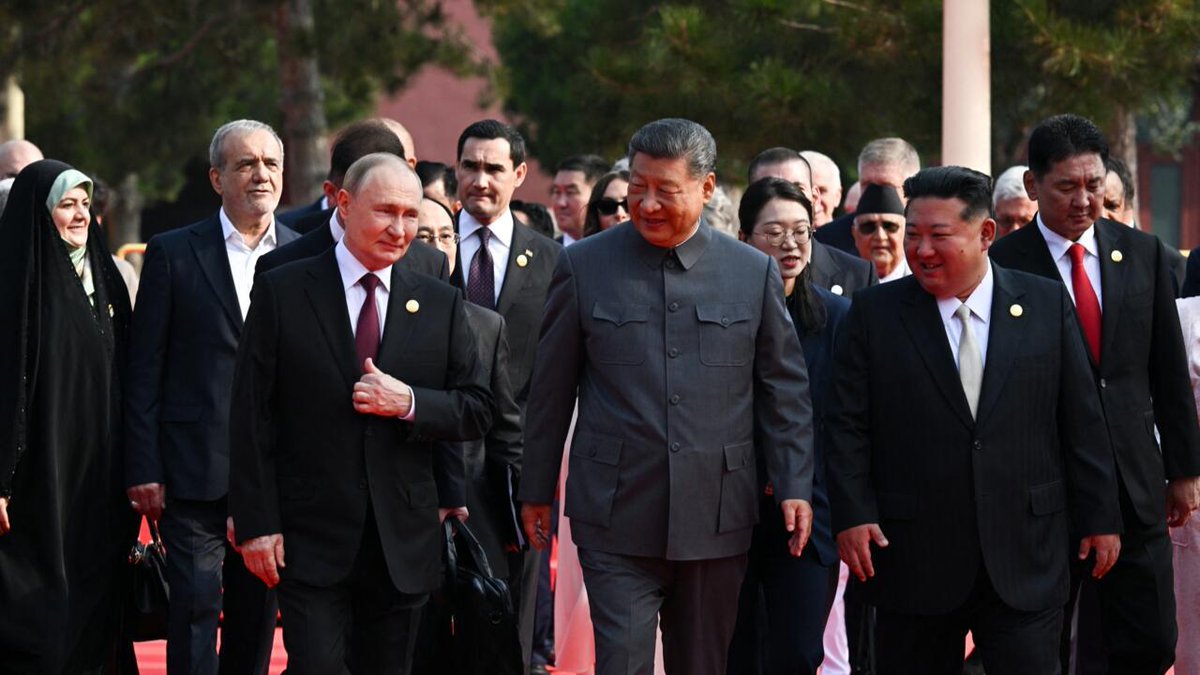
In the family photo, as the photo where the guests stand on a stepped podium and sit next to each other is called, we also have two former prime ministers of Romania: Adrian Năstase and Viorica Dăncilă. In the bottom row, we have Xi Jinping, Vladimir Putin—a war criminal, Kim Jong Un—another bloody criminal, this time only of his own people, and other leaders from Africa and Asia. Europe was represented by Slovakia and Serbia. Another dictator, Erdogan, could not be missing from such an event. The devil is in the details, of course. This bloc is not equal, uniform, or perfectly coordinated either. russia, for example, is a poor vassal to China, doing its dirty work in Ukraine, because it keeps an important part of the Western bloc occupied and stuck in endless bureaucracy and the indecision of weak leaders.
2/
2. The axis of decline:
Trump has already changed the pH of the United States. At least in terms of foreign policy. But he has also accelerated the erosion of the internal social fabric. The US is a hegemon in moral and cultural decline, unfortunately for all of us who grew up with the image of America as the world's policeman.
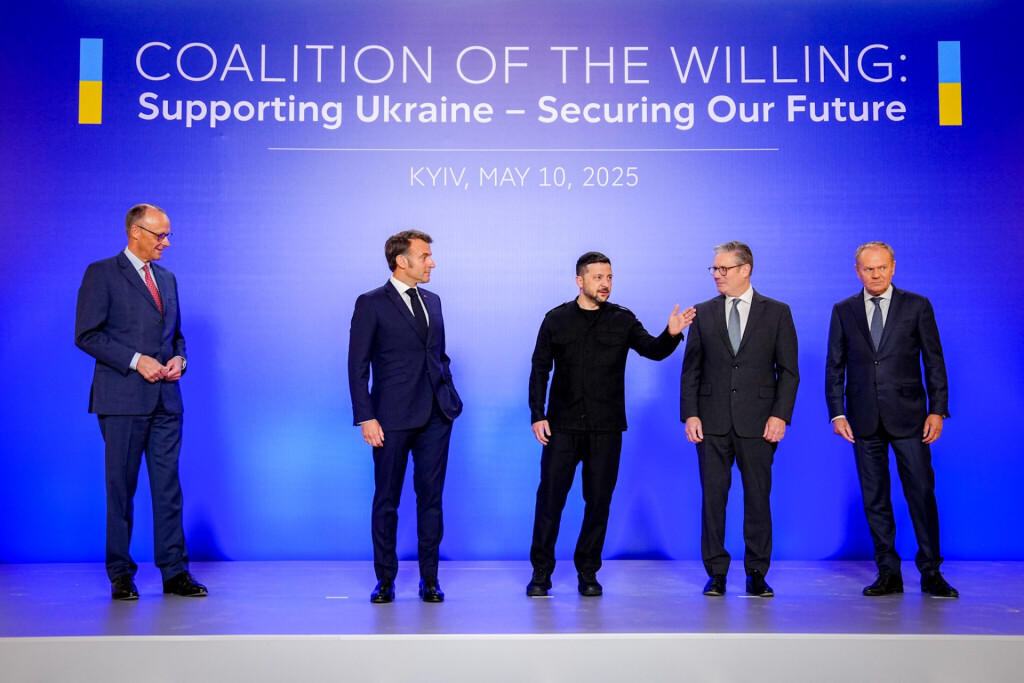
Europe, poisoned by russia's hybrid war, is failing to make the leap towards its only salvation: a much better defined form of union of states: the United States of Europe. It is the only long-term salvation. It is not possible for obvious reasons (different cultures, historical wounds that have not yet healed, and the multiple problems of operationalizing such a plan). It is pointless for Mertz to say that "Putin is the greatest war criminal" as long as Slovakia is in the picture meeting with him, Xi Jinping, and Kim Jong Un. It is pointless for Ursula von Der Leyen to talk about common defense if the toxic nationalism fed by Russia divides us more and more every day.
russia officially wants to get *at least to the Danube. On August 30, two days ago, Valri Gherasimov, Chief of Staff of the Russian Army, gave a presentation on the situation on the Ukrainian front, showing a map with the percentages of each Ukrainian region that had been illegally occupied. 1/
What the Romanian and international media failed to notice, but Perun did (search for him on YouTube), was another, much more important map: a map that most likely shows at least part of Russia's intentions: the total occupation not only of the Donetsk and Luhansk (Donbas) and Zaporizhia and Kherson regions east of the Dnieper, but also of three more: Kherson west of the Dnieper, Mykolaiv, and Odesa. 2/
It is no longer a secret that the Russians use symbolism and information they want to make public in such events. This means that what I noticed in the clip was intended for everyone to see: Russia wants to reach the Danube Delta and practically border Romania.
If until now there were only speculations or serious statements (such as those of former President Traian Băsescu) that were ridiculed by many, now we have a map behind the head of the Russian army that shows us how the Kremlin wants Ukraine to be divided. This is clear, indisputable proof of Russia's desire to reach the Danube in order to exert extraordinary economic, military, and political pressure on Romania and NATO.
After this event, which took place two days ago, questions need to be asked, especially for Russia's supporters in Romania/Europe:
- If until now you laughed at those who warned about this objective, cursed and threatened us, now that you have proof, do you still think it is okay to support Russia's narratives?
- If until now the argument that Ukraine and its resistance are directly linked to Romania's and Europe's security and its borders seemed abstract, distant, or perhaps foolish (to you), do you now think that the heroism and sacrifice of the Ukrainians deserve at least a little more respect from you?
- Do you think you will still be able to shout about dredging the Bâstroe Canal, as you wrongly did against Ukraine based on the lies spread in the public sphere by former Romanian Minister of Transport Sorin Grindeanu, and against imperialist Russia, which will feel encouraged and invincible and will obviously ignore you? 3/
Zelenskyy submits a new law that will guarantee the independence of the fight against corruption
1. After the infamous Law 12414, which placed independent anti-corruption institutions under the direct control of the Prosecutor General of Ukraine and thus the Zelenskyy administration, Ukrainians took to the streets in all major cities.
Key points: Ukrainians took to the streets during wartime to protect their democracy, the rule of law, and their European path.
🧵
2. President Zelenskyy announced the following day that he would propose a law (in Ukraine, the president can directly propose laws) to the Verkhovna Rada (Ukraine's parliament). Yesterday (July 24, 2025), he sent Law 13533 to the Verkhovna Rada (Ukraine's unicameral parliament), a new law that would restore the independence of these anti-corruption institutions (NABU and SAPO), introducing several changes to their functioning, mainly changes related to ensuring that these institutions will not abuse their powers and will be more difficult for Russia to infiltrate.
What to remember: The president of a country at war with the world's second largest army listened to society and international partners (yes, I know, some would say he was forced by circumstances) and proposed a new law. 2/
3. Independent civil society actors praise the initiative, and NABU issued a press release stating that it believes the new law will restore the independence it needs and lost under Law 12414, and that it participated, alongside SAPO, in drafting the new law.
Key takeaway: Civil society appreciates the new bill, so it is not just a smokescreen. 3/