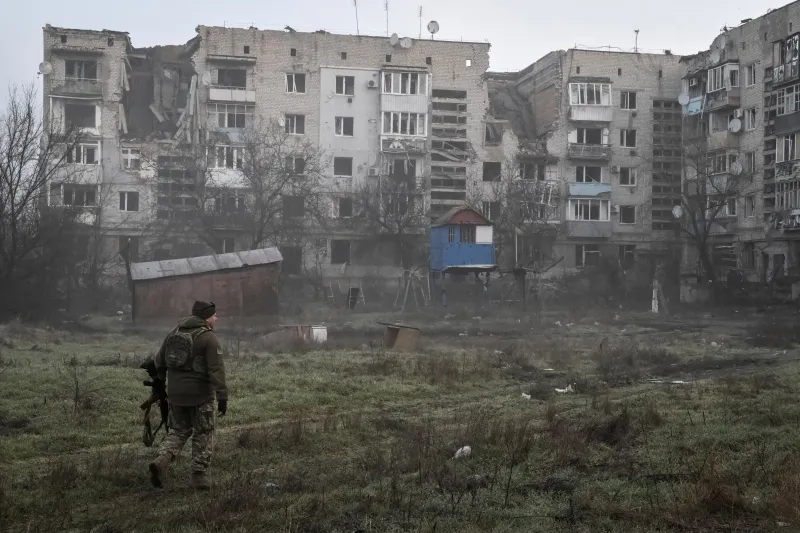
I was in Dnipro today. A missile hit this building earlier this year. 46 people burned and evaporated.
Dnipro is close to the border and missiles can come any time without warning.
Yesterday, there was an attack and more people died.
But the city lives. 1/
Just next to the destroyed building there is a new development full of live. 2/
There is beautiful architecture and art 3/
People open and operate upscale stores, designed by Ukrainians, and giving a shockingly different vibe. 4/
The authorities put up shelters around the city so that people can get to some kind of safer if there is no warning attack. 5/
The city is clean, garbage collection is working. 6/
They appear to be playful and in good mood. But the moment you talk to them you see trauma, fear, exhausting, commitment, resilience and anger. All at once. 7/
The drinks are innovative. This is a lemonade with raspberries. 8/
Our waiter was giving attitude :))9/
I have not slept well for weeks now, but even my mood got lighten up. 10/
And the colors of the city are beautiful. 11/
Dnipro city is wonderful, and it is horrible crime what Russians are doing to it. There are good people in Dnipro, goof humans, who want to live free. Without Russia. And it will happen. 12X
• • •
Missing some Tweet in this thread? You can try to
force a refresh

Donald Trump is implementing a 21st-century version of the Monroe Doctrine.
The United States is shifting toward direct control, military scale, and bilateral dominance.
Recent White House actions show how Trump plans to govern and project power. 1/
Military power sits at the core of this strategy.
Trump announced plans to raise the U.S. military budget for FY2027 to $1.5 trillion, the largest defense budget in history.
Trump: “We will build the Dream Military and keep America SAFE and SECURE.” 2/
It signals preparation for sustained global coercion, not short-term deterrence. Trump frames military scale as the foundation of U.S. leverage abroad and discipline at home. 3/
130 days in solitary confinement. Beatings up to 20 times a day. Electric shocks. Teeth ripped out. Hunger that forced him to eat a rat.
This is the story of Ukrainian soldier Oleksii Anulia, who survived 10 months in Russian captivity — UP. 1/
Oleksii is a professional athlete and former bodyguard. Before the full-scale invasion, he trained in kickboxing, crossfit, and long-distance swimming. Among the people he protected were WhatsApp founder Jan Koum and the son of Libya’s prime minister. 2/
On February 24, 2022, Oleksii reported to the draft office. His father joined the army the next day. His brother followed shortly after. The entire family went to war. 3/
Cuban POW captured in Ukraine: "Russian comander just said, go to Kupyansk. You have to go to Kupyansk. I said it was impossible. I couldn't walk. They told me, it's no problem. So I went to Kupyansk through the forest with a bullet in my leg [friendly fire].” 1/
POW: "I didn't sign a contract. I was supposed to be deported to Cuba. The immigration officer replied that I was being deported to Cuba. After 6 days I left in a metal car. I didn't understand why. It wasn't true. I was going to war." 2/
POW: "I worked in Moscow for eight months. I worked every day, every night. I sent all the money to Cuba, to my family. My visa in Russia was only for three months. After three months, you become an illegal." 3/
How effectively Ukraine uses manpower will define the battlefield balance in 2026.
Victory will not hinge on new weapons alone, but on whether Ukraine can keep enough trained, motivated infantry on a 1,000+ km front without breaking unit cohesion — Kyiv Independent. 1/
Ukraine’s so-called “firefighter” units are central. Assault formations are repeatedly thrown into crisis sectors to stop Russian breakthroughs, stabilizing the line fast, but burning through mobilized troops faster than the system can replace them. 2/
These assault-heavy tactics turn older, minimally trained mobilized men into rapid losses.
At the same time, standard mechanized brigades — designed for long, static defense — remain chronically understaffed and slowly bleed out. 3/