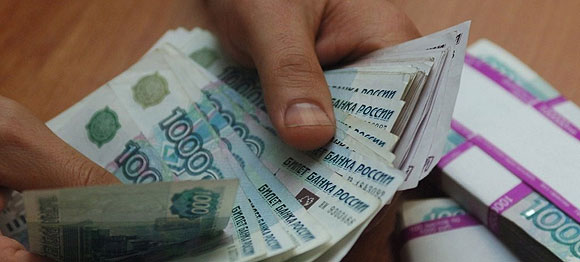
1/ Yevgeny Prigozhin's wealth and wigs got a lot of attention last week, but his medal collection is much more significant. The 30 medals on his jacket show that he is one of the most highly decorated members of the Russian elite. Here's an analysis of what they indicate. ⬇️ 
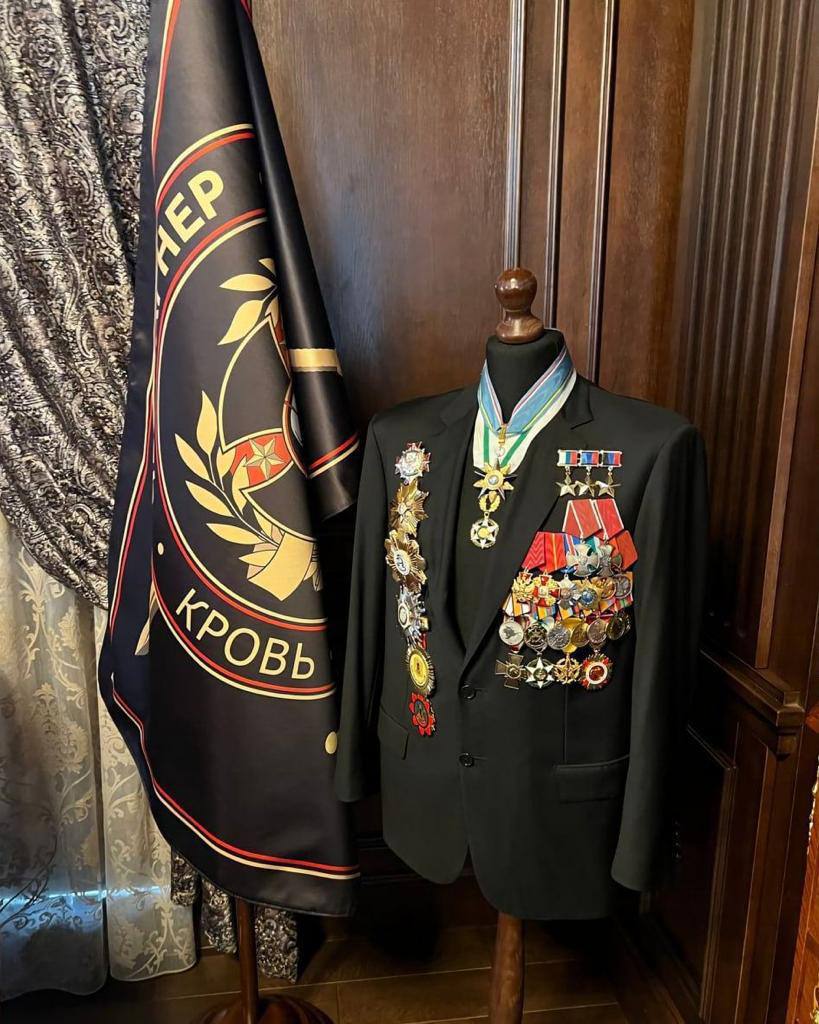
2/ Like the Russian Defence Minister Sergei Shoigu, Prigozhin is not and never has been a soldier. This has not stopped either of them amassing an impressive collection of medals. (See below for an analysis of Shoigu's 60 decorations.)
https://twitter.com/ChrisO_wiki/status/1662937444310827008
3/ Prigozhin's medals fall into three categories: awards from the Russian state, awards from the self-declared Luhansk and Donetsk 'People's Republics' (LNR/DNR), and awards from African states where the Wagner Group has been active.
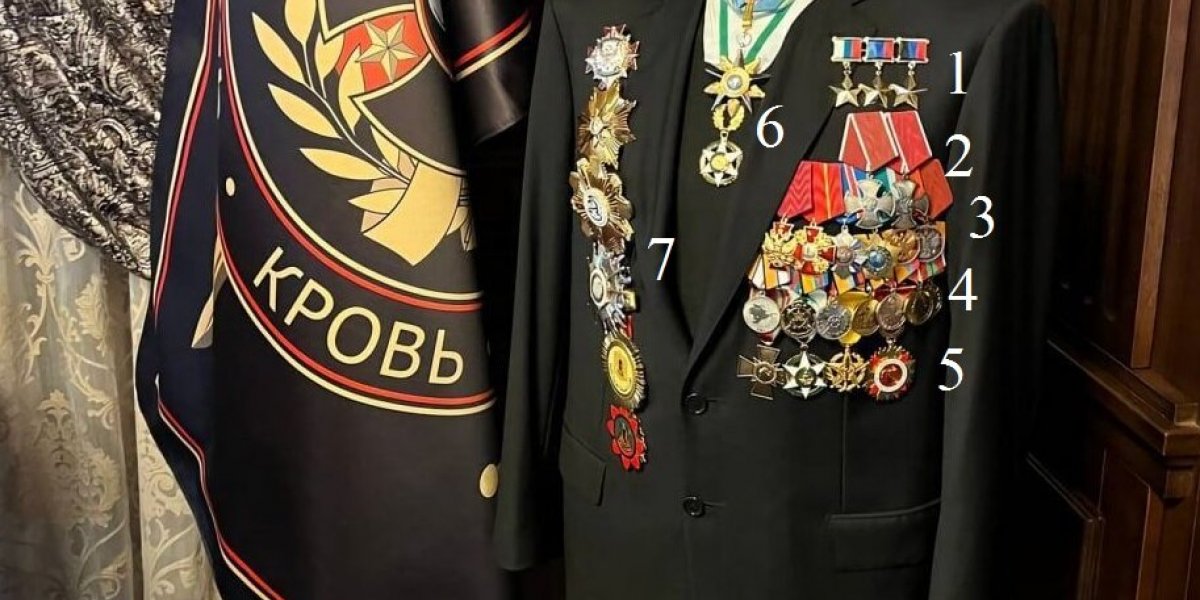
4/ Starting with the awards on the top row of the left breast of his jacket, Prigozhin has a Gold Medal of the Hero of the Russian Federation and equivalent medals for the LNR and DNR. This is the highest award for all three states or entities.
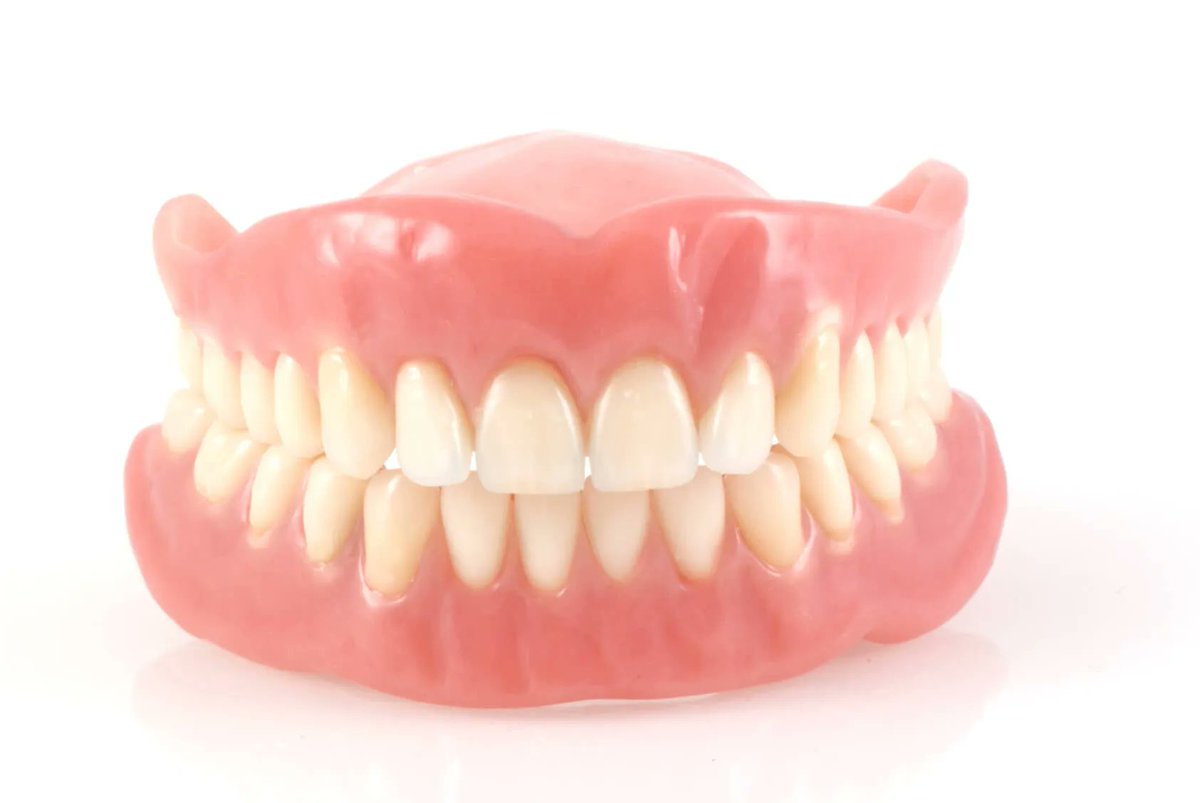
5/ The Hero of the Russian Federation award was reportedly given by decree of President Putin on 22 June 2022. It entitles the bearer to a monthly stipend of 100,000 rubles ($1,096), tax exemption and free dental prosthetics.
6/ In row 2 are two Orders of Courage, awarded for courageous and decisive actions committed in the performance of military, civic or official duty in life-threatening conditions.
7/ Row 3 includes:
- Order "For Merit to the Fatherland", 4th class (civilian, without swords)
- Order of Alexander Nevsky
- Order of Military Merit
- Order of Friendship
- Medals of the Order "For Merit to the Fatherland" 1st and 2nd class
- Order "For Merit to the Fatherland", 4th class (civilian, without swords)
- Order of Alexander Nevsky
- Order of Military Merit
- Order of Friendship
- Medals of the Order "For Merit to the Fatherland" 1st and 2nd class
8/ Several of the awards recognise achievements in strengthening Russia's defence capabilities. They entitle Prigozhin to an increase in his state pension, free medical treatment, aid with housing and free public transport.
9/ The Order of Military Merit seems to have been awarded in violation of the eligibility criteria, however, as it's meant to be awarded to senior officers and civil servants – which Prigozhin is not – for achievements in military science and the defence industry.
10/ The Order of Friendship, perhaps ironically, is inscribed on the reverse with the words "PEACE AND FRIENDSHIP" – not values that Prigozhin is usually associated with.
11/ Row 4 includes:
- Medal for the Return of Crimea
- Medal "For Strengthening Military Cooperation"
- Medal "For Merits in Logistics"
- Medal "For Combat Excellence"
- Army General Khrulev Medal
- Medal of the 300th Anniversary of St. Petersburg;
- Unknown medal
- Medal for the Return of Crimea
- Medal "For Strengthening Military Cooperation"
- Medal "For Merits in Logistics"
- Medal "For Combat Excellence"
- Army General Khrulev Medal
- Medal of the 300th Anniversary of St. Petersburg;
- Unknown medal
12/ The Khrulev Medal is an curious award, as the Russian MOD seems to have broken its own rules to award it to Prigozhin. It's awarded to senior, high-ranking or long-serving military logistics officers – none of which describes Prigozhin.
13/ Similarly, the medal "For Combat Excellence" is supposed to only be awarded to servicemen. Not only has Prigozhin never been a soldier, the very existence of Wagner is in violation of Russian law, which forbids mercenary activity.
14/ The Medal of the Return of Crimea has an interesting history, as it was minted well before Russia took over the Crimean peninsula. Wagner was founded shortly after that event. It's not clear what role Prigozhin played in it.
https://twitter.com/ChrisO_wiki/status/1662937494495657984
15/ Row 5 comprises four foreign medals:
- Cross of Military Valour of the Central African Republic (CAR)
- Medal of the Order of Commercial Merit of the CAR
- Star of Military Merit of the CAR
- Unknown decoration
- Cross of Military Valour of the Central African Republic (CAR)
- Medal of the Order of Commercial Merit of the CAR
- Star of Military Merit of the CAR
- Unknown decoration
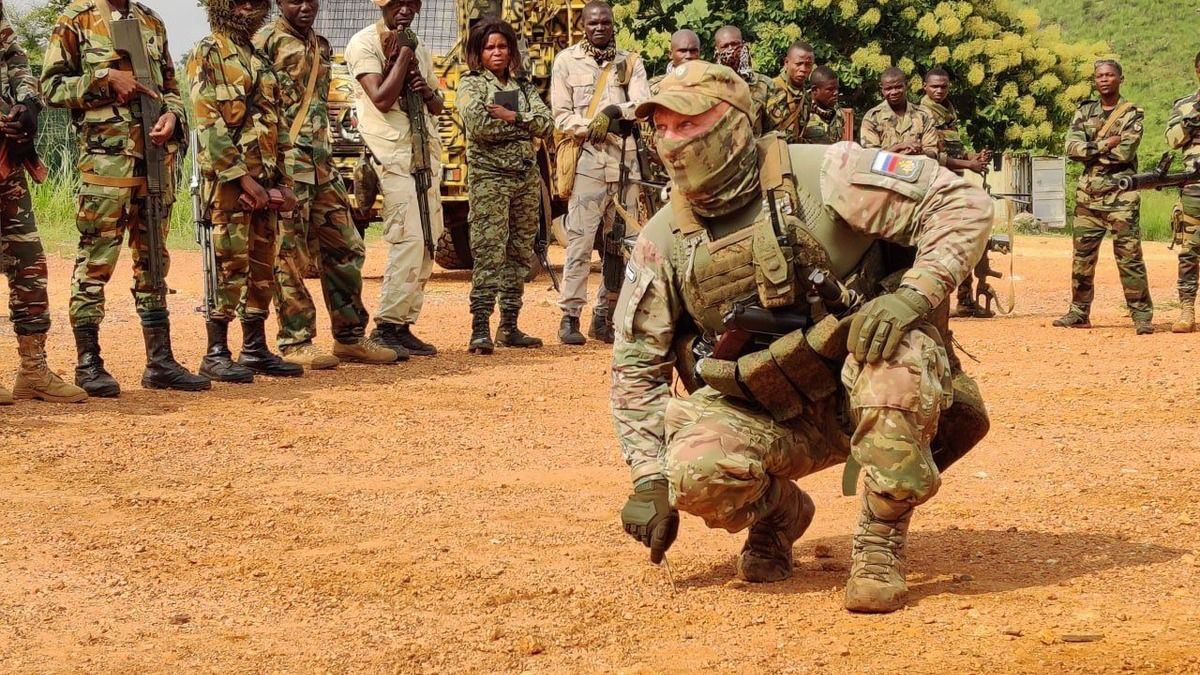
16/ The Order of Commercial Merit recognises individual contributions to the development of trade in the CAR, where Wagner runs mining and logging operations, provides security and customs services, and even produces vodka and beer locally.
17/ The two medals around the neck (row 6) are also from the CAR. They are:
- Order of Recognition of the CAR. The neck placement indicates the rank of Commander of the Order.
- Order of Trade Merit of the CAR.
- Order of Recognition of the CAR. The neck placement indicates the rank of Commander of the Order.
- Order of Trade Merit of the CAR.
18/ The final row (7) displays other African medals:
- Unknown award
- Knight Grand Cross of the Order of the Stallion - National Order of Burkina Faso
- Order of the Two Niles (Sudan)
- Order of the Republic (Sudan)
- Unknown decoration
- Order of Courage (Libya)
- Unknown award
- Knight Grand Cross of the Order of the Stallion - National Order of Burkina Faso
- Order of the Two Niles (Sudan)
- Order of the Republic (Sudan)
- Unknown decoration
- Order of Courage (Libya)
19/ As notes, Prigozhin's large number of medals indicates his formerly exalted position in Vladimir Putin's inner circle. Only a few of Putin's top supporters have more or as many medals – Shoigu (60), Yakunin (40), Kadyrov (38), Patrushev (30). /endAgents.Media
Sources:
🔹
🔹 https://t.co/YYbdao3qhd
🔹 https://t.co/KH5QkDtfXMurfonews.ru/20230707/36815…
fontanka.ru/2023/07/08/724…
agents.media/prigozhin_nagr…
🔹
🔹 https://t.co/YYbdao3qhd
🔹 https://t.co/KH5QkDtfXMurfonews.ru/20230707/36815…
fontanka.ru/2023/07/08/724…
agents.media/prigozhin_nagr…
• • •
Missing some Tweet in this thread? You can try to
force a refresh