1/9 Sometimes you've projects you enjoy and you have a lot of fun. When they work... It's awesome!!!
Well, in the last year we've learnt how to make the thinnest possible ommelettes and we ended up using them to fabricate field-effect transistors 🤯
🧵👇 nature.com/articles/s4169…

Well, in the last year we've learnt how to make the thinnest possible ommelettes and we ended up using them to fabricate field-effect transistors 🤯
🧵👇 nature.com/articles/s4169…
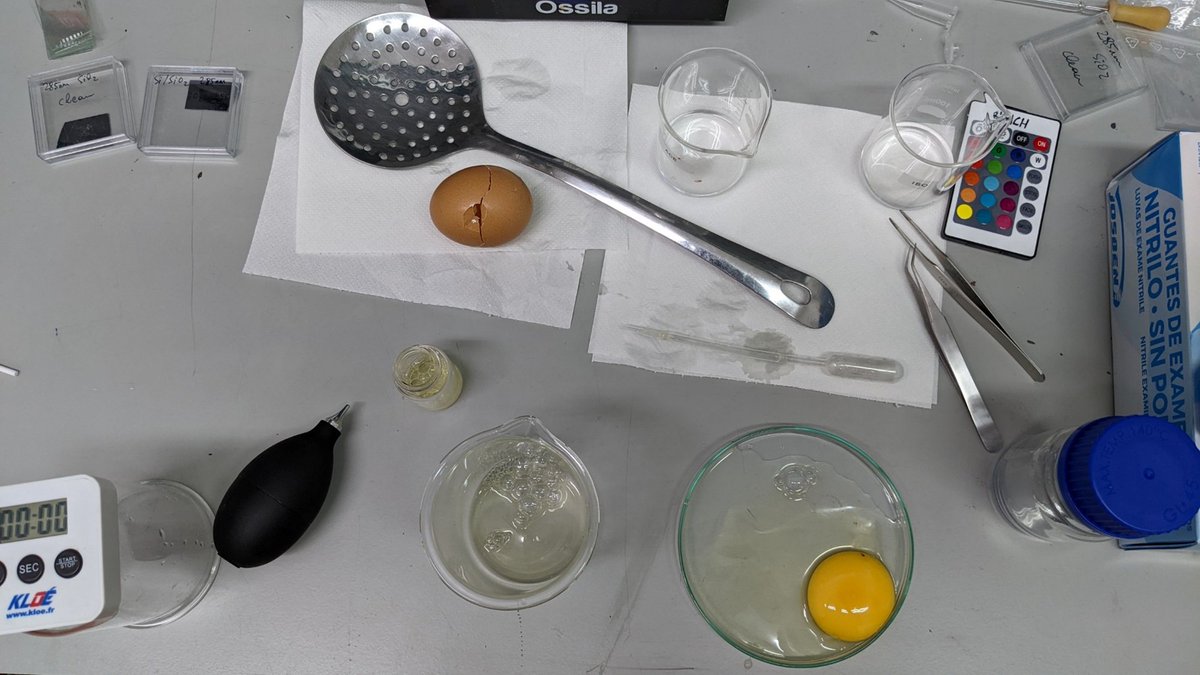
2/9 First thing is to explain that the idea of using albumen as dielectric has been used already in organic semiconductors (cool stuff 👇), but we wanted to use it with 2D materials and nobody had tried yet.
onlinelibrary.wiley.com/doi/epdf/10.10…
onlinelibrary.wiley.com/doi/epdf/10.10…
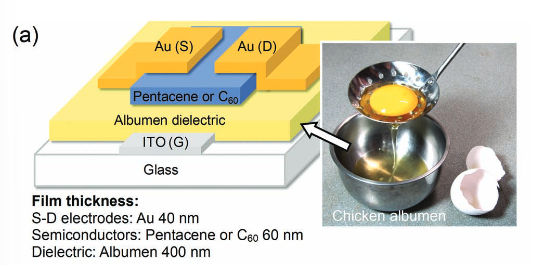
3/9 So we went to the supermarket (@Mercadona, we used your botteled eggwhite) we filtered the eggwhite, spincoat it (~400-600 nm thick) over a silicon chip and evaporate Ti/Au electrodes with an @OssilaScience shadow mask.

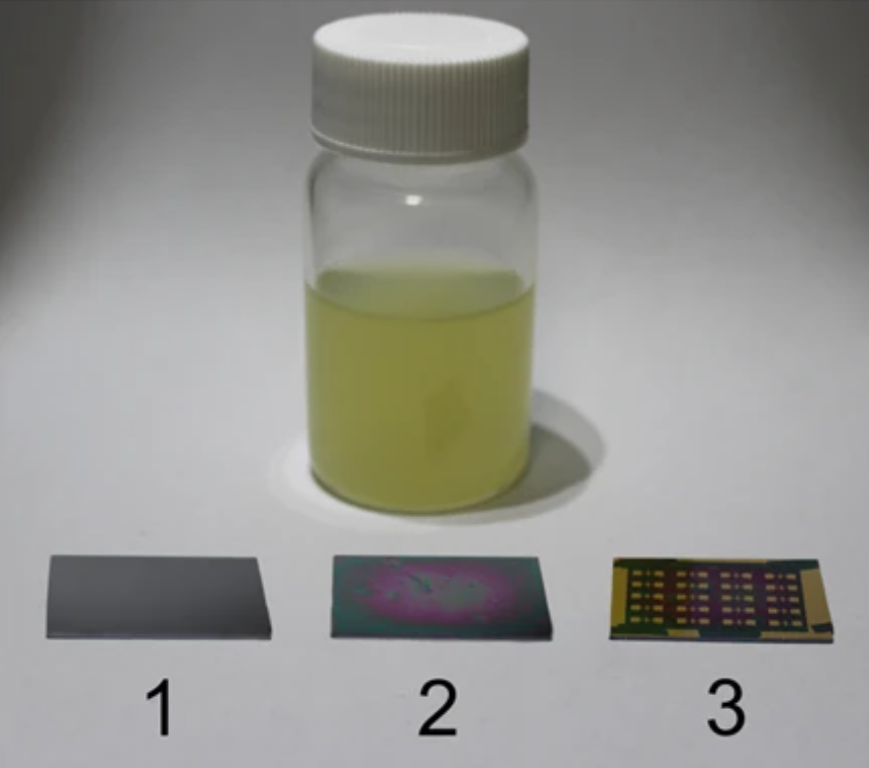
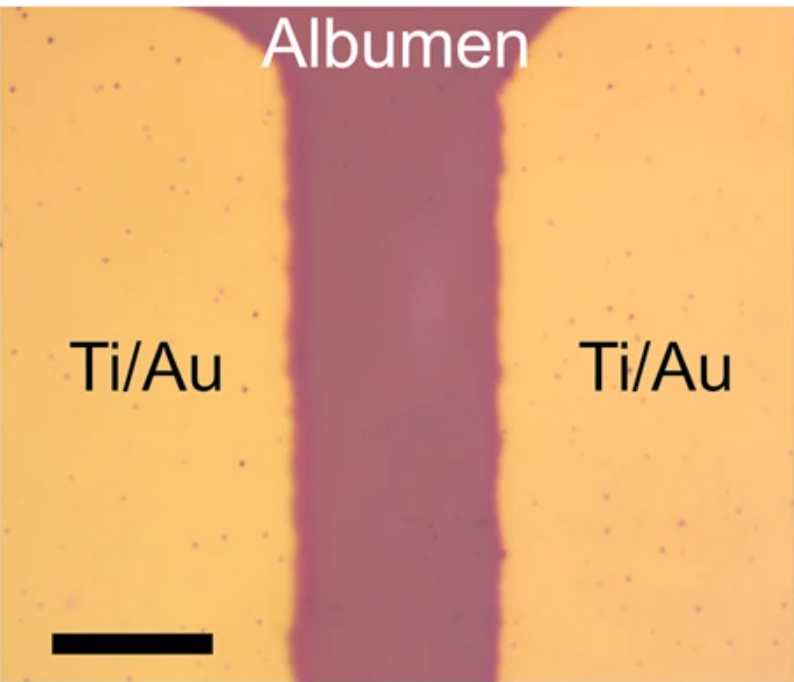
4/9 We then exfoliate a single-layer MoS2 semiconducting flake and we transferred by deterministic transfer () bridging the two electrodes. iopscience.iop.org/article/10.108…
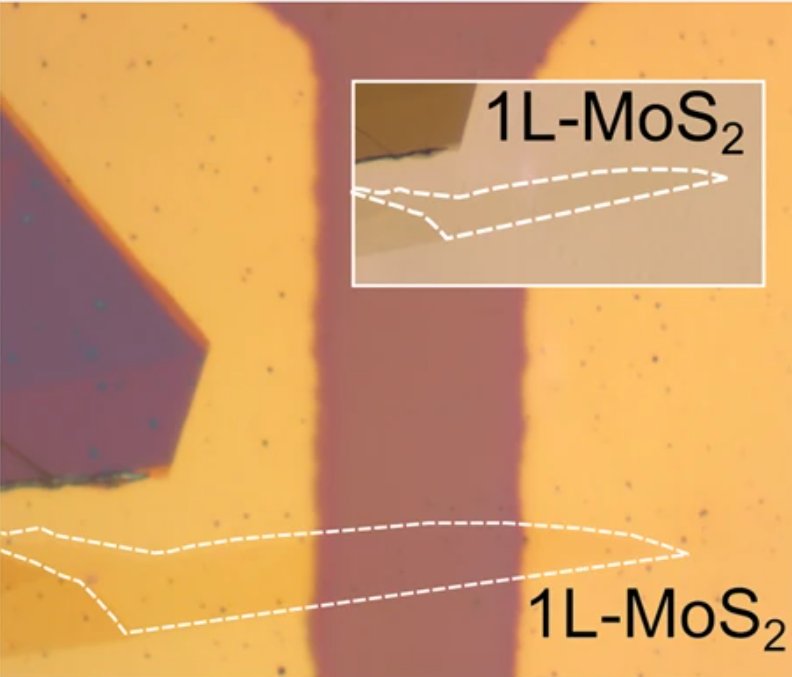
5/9 When we start probing the electrical properties of the devices the things become really interesting. The transfer curves and the gate sweeps indeed indicates that the device behaves as a field-effect transistor.
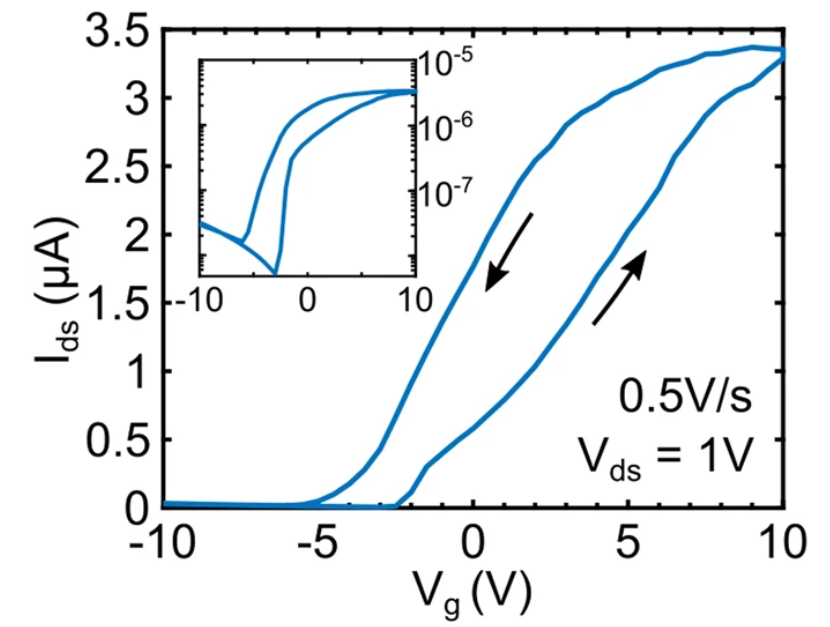
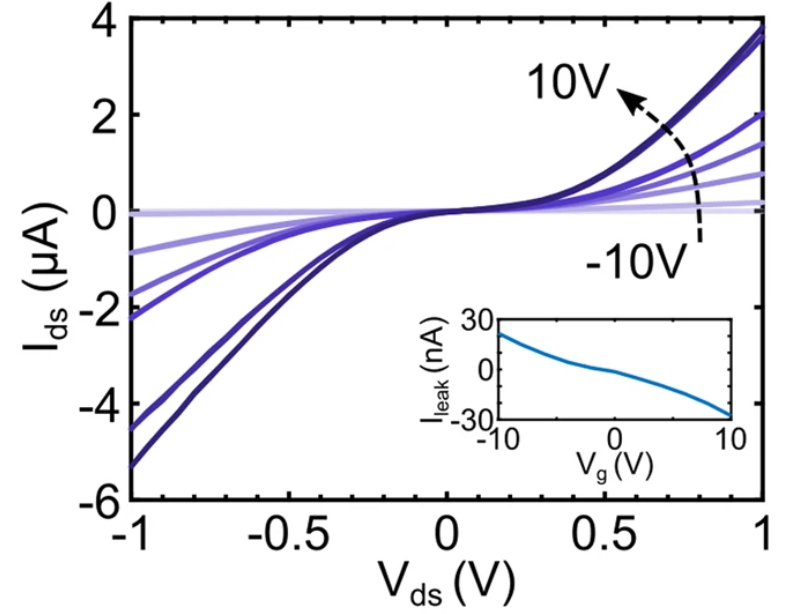
6/9 But here is when it becames wild... When we compare the performance of the devices with that of MoS2 transistors fabricated the same way but using standard SiO2 dielectric, the chicken eggwhite outperforms them
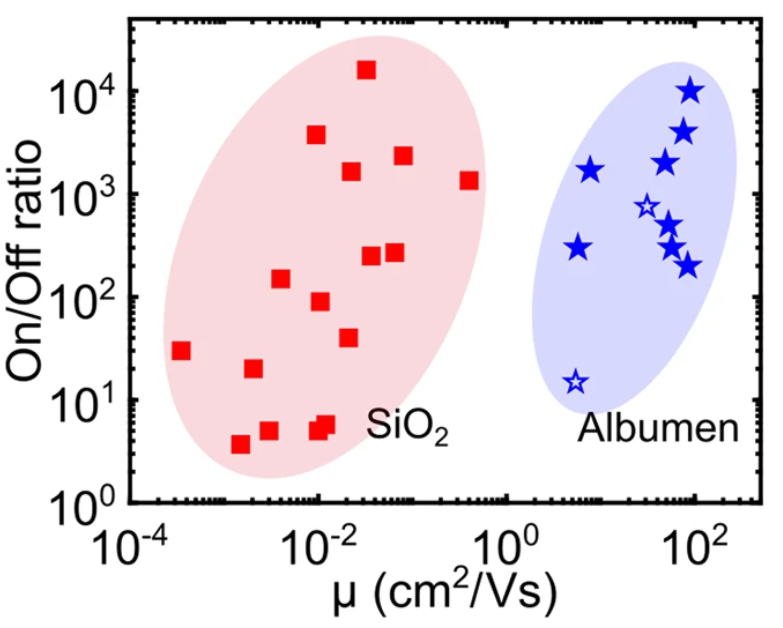
7/9 We've evidence that the eggwhite film acts as an ionic conductor leading to a efficient electric field gating and Coulomb scatterers screening, thus the high mobility. We have plenty of material in the paper, if interested take a look it's #OpenAccess
doi.org/10.1038/s41699…
doi.org/10.1038/s41699…
8/9 BONUS
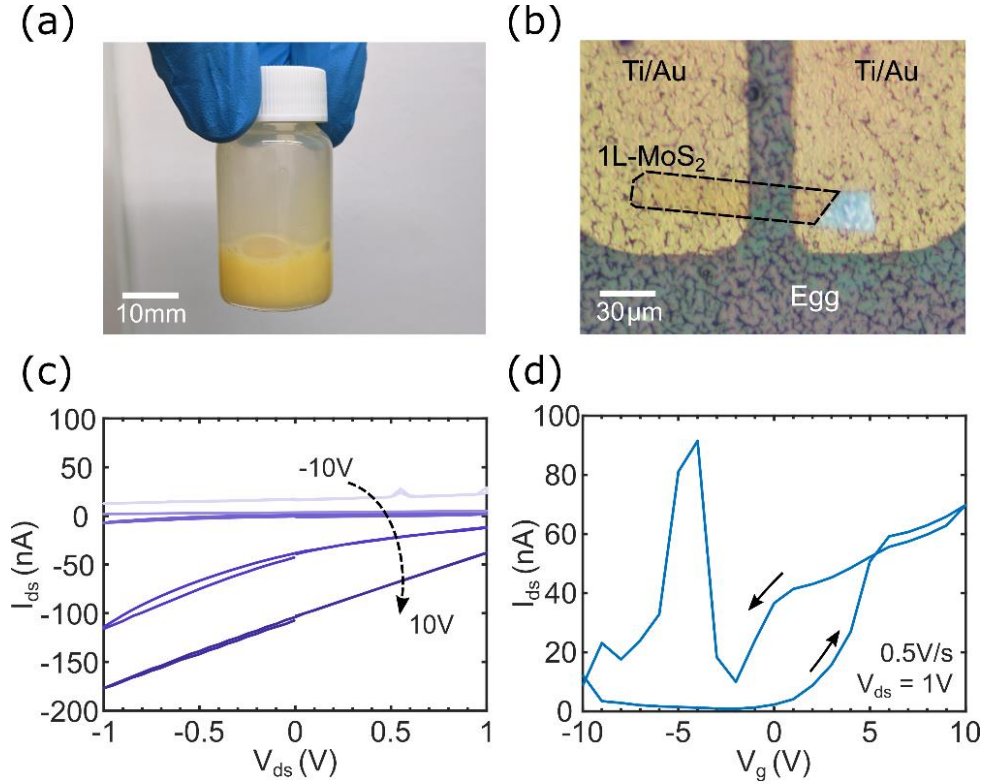
Of course we tried fabricating devices with the whole egg, making (as promissed) the thinnest omelette possible! The devices work, we see current through the MoS2 channel, tunability... But they have a huge gate leakage and some weird polarizability... Keep working
Of course we tried fabricating devices with the whole egg, making (as promissed) the thinnest omelette possible! The devices work, we see current through the MoS2 channel, tunability... But they have a huge gate leakage and some weird polarizability... Keep working
9/9 I would like to thank the @2d_foundry folks Thomas, Pablo and Yong. Specially to Thomas for the heavy-lifting and steering this weird project. And Gianluca's team for the support with the dielectric characterization

• • •
Missing some Tweet in this thread? You can try to
force a refresh