All the videos of the Azerbaijan Airlines flight showing the damage show holes in the wreckage have entry holes on the port side and exit holes on the starboard side, likely with a slight angle from below.
Here one can see the difference between the port and starboard side of the aircraft’s vertical stabilizer.
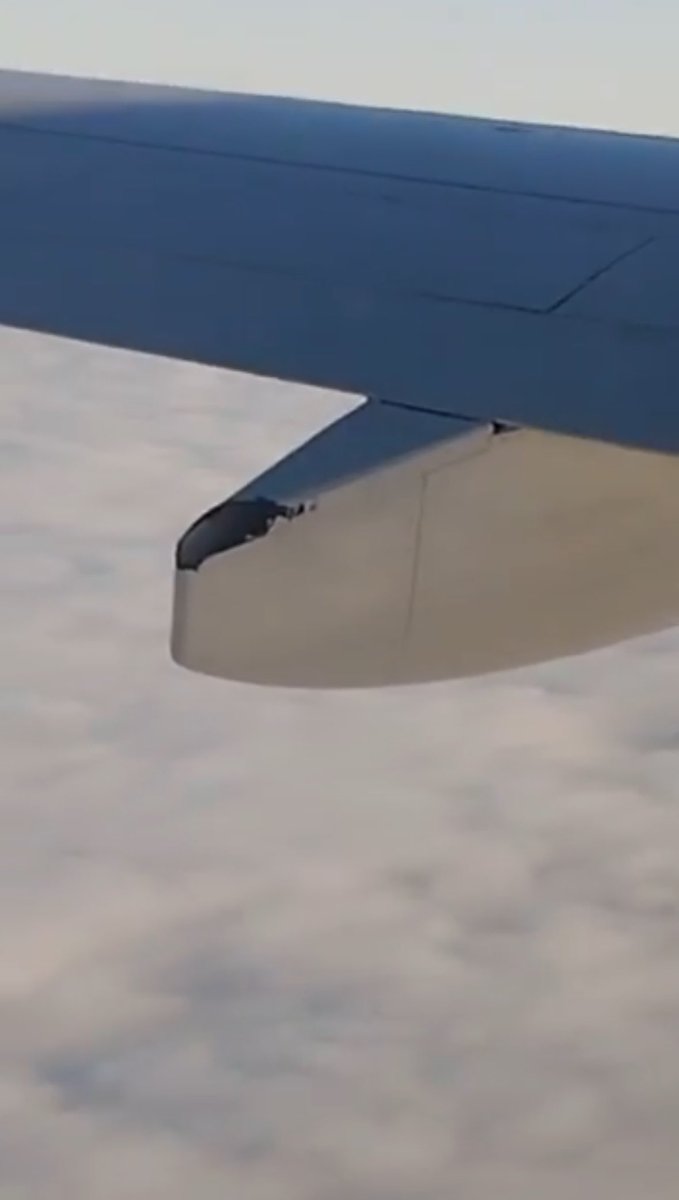
Visible damage to the port side flap hinge fairing prior to the crash.
If the damage was cause by bird strike or debris during the crash, I would expect a lot more dents on the fuselage around the holes.
It appears that every singe piece of debris that hit the aircraft had enough kinetic energy to punch through the skin and not just dent it.
No visible signs of a massive uncontained turbine failure on the footage we have of the aircraft just prior to the crash.
Both engines appear to be intact.
Life jacket from the aircraft pierced by shrapnel/debris prior to the crash, after the aircraft had diverted from Grozny.
• • •
Missing some Tweet in this thread? You can try to
force a refresh

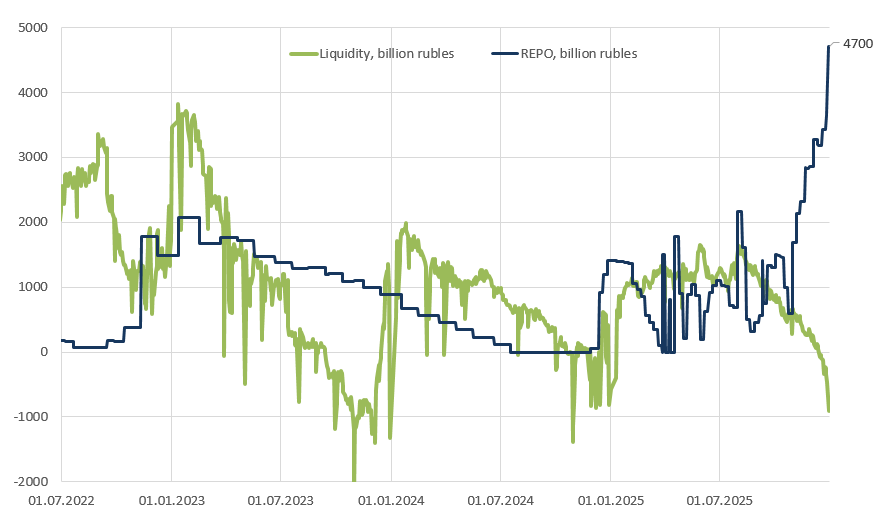
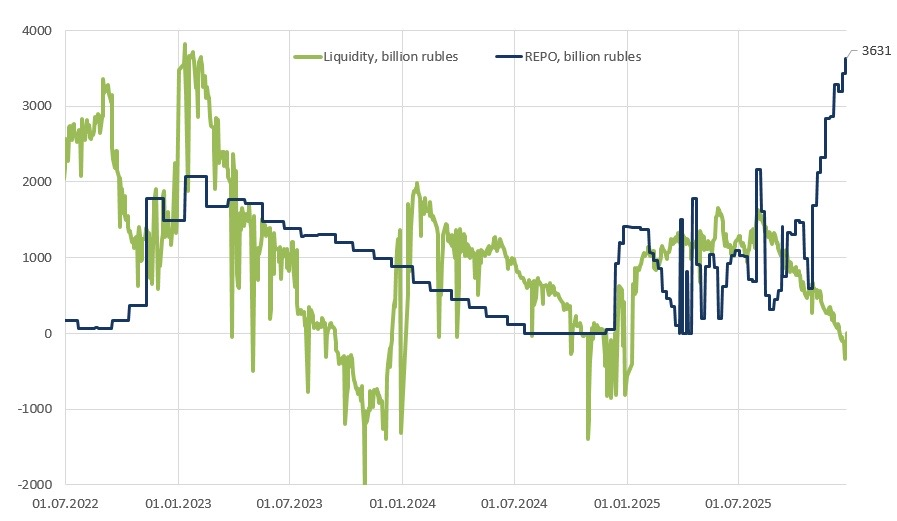
🧵1/10: Since the last thread, several things have shifted at once. Liquidity is tighter, REPO use is higher, household stress is clearer, and fiscal pressure is rising. The system is still working, but on thinner margins.
2/10: REPO has crossed an important line. It no longer spikes and fades. It keeps stepping higher and staying there. Recent auctions near ₽4.7tn show banks now rely on the central bank as a permanent funding source.
3/10: At the same time, net system liquidity has fallen deeper into negative territory. This means REPO is replacing lost deposits, not smoothing temporary gaps. That makes the system more fragile.
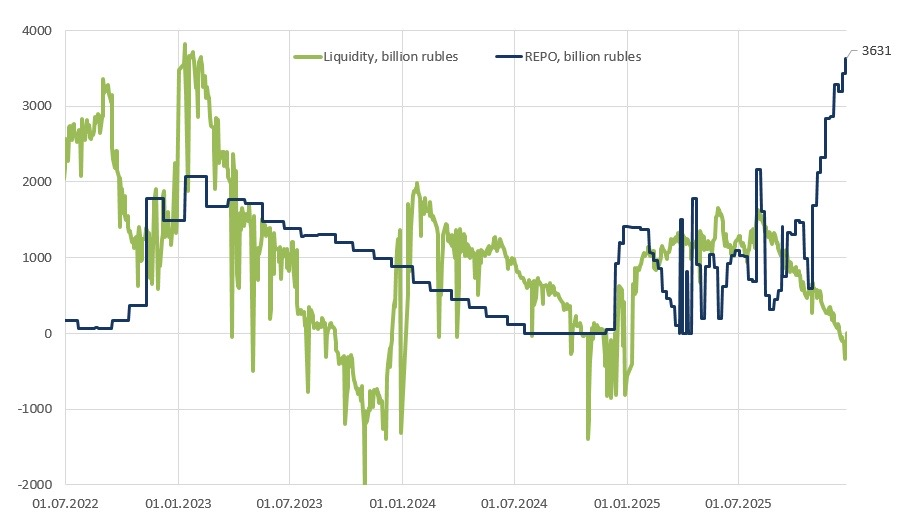
🧵1/12: Russia’s economy hasn’t collapsed, but it is suffering immensely. It still runs, but only because the central bank keeps it alive with constant REPO liquidity. What was once emergency support is now the daily operating system.
📷:@evgen1232007
2/12: REPO usage shows the stress clearly. Trillions of rubles are borrowed week after week by the banks with no unwind. Banks aren’t smoothing short-term shocks anymore. They are refinancing theirs and the economy's survival on a rolling basis.
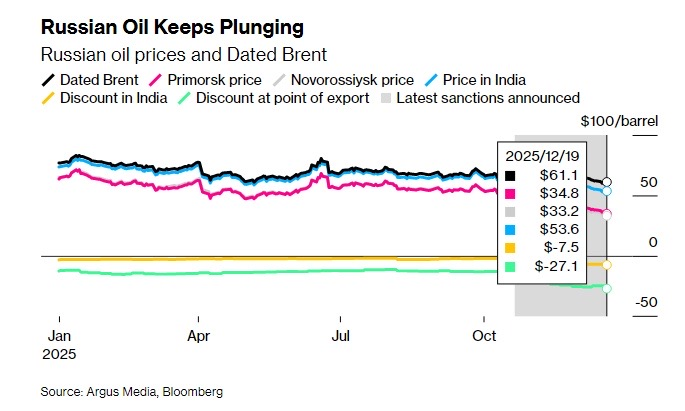
3/12: Oil used to stabilize everything. Now it doesn’t. Russian crude sells at deep discounts due to Western and kinetic sanctions, and tax revenue per barrel keeps falling. Even when export volumes hold, the state earns far less from each barrel.
Elvira Nabiullina is by far the most competent person in the Russian government and has almost single-handedly managed to keep the Russian economy afloat for the past year despite increasing pressure from above to change key policies.
She is however rapidly running out of black magic and the creative accounting required to continue her success. With Israel/Iran not causing the expected oil price surge, the record deficit is increasing and the methods of financing it are dwindling.
OFZs are being sold at record levels to state owned banks, but the high interest rate means the income is only just enough to cover the payments due on last year’s bonds.
The NWF’s liquid assets dipped below the government deficit last month further adding to the headaches.
Summary of the significant evidence that the B-2s currently airborne are a strike package heading directly for Iran:
1. Immediate refuelling after departing from Whiteman Air Force Base indicates that the aircraft are carry close to their maximum payload.
If not an immediate strike, it is highly likely that the ordnance would have be pre-positioned at Guam or Diego Garcia with C-5 or C-17 transport aircraft in order to save the logistical headache of the additional aerial refueling and airframe stress.
2. If the B-2s continue onward to Iran they will arrive on target a few hours prior to opening of the Futures market at 6PM ET Sunday. This will give the Trump administration time to host a press briefing to calm the markets before they open.
🧵The Ursa Major was heading to Vladivostok and not en route to aid in the evacuation of Tartus.
Given cargo it carried, this is in fact even worse for Russia than if it had been heading to Tartus.
The Ursa was carrying two Liebherr 420 mobile cranes for the harbor in Vladivostok that is heavily backed up due to a lack of cranes and two 45-ton hatches for the construction of the new Project 10510 nuclear powered icebreaker.